

Crimson Desert has unveiled a comprehensive look at its gameplay systems beyond combat, revealing an ambitious scope that includes base building, faction management, a crime and wanted system, extensive character customization, and numerous life skills. The open-world action adventure releases March 19, 2026 on PlayStation 5, Xbox Series X|S, and PC.
Quick answer: Crimson Desert features a Greymanes camp that players rebuild through resource gathering and construction, a dispatch system for sending companions on timed missions, full character appearance customization including hair and gear dyeing, a bounty system for crimes, and activities like fishing, farming, cooking, and hunting.
Greymanes Camp and Base Building
The Greymanes faction serves as the central hub for progression. After the mercenary group is scattered by the Black Bears, protagonist Kliff must rebuild the camp from a small tent settlement into a fortified base. Players gather resources—wood, minerals, food—through exploration, mining, chopping trees, hunting, and fishing. These materials feed directly into camp construction and crafting systems.
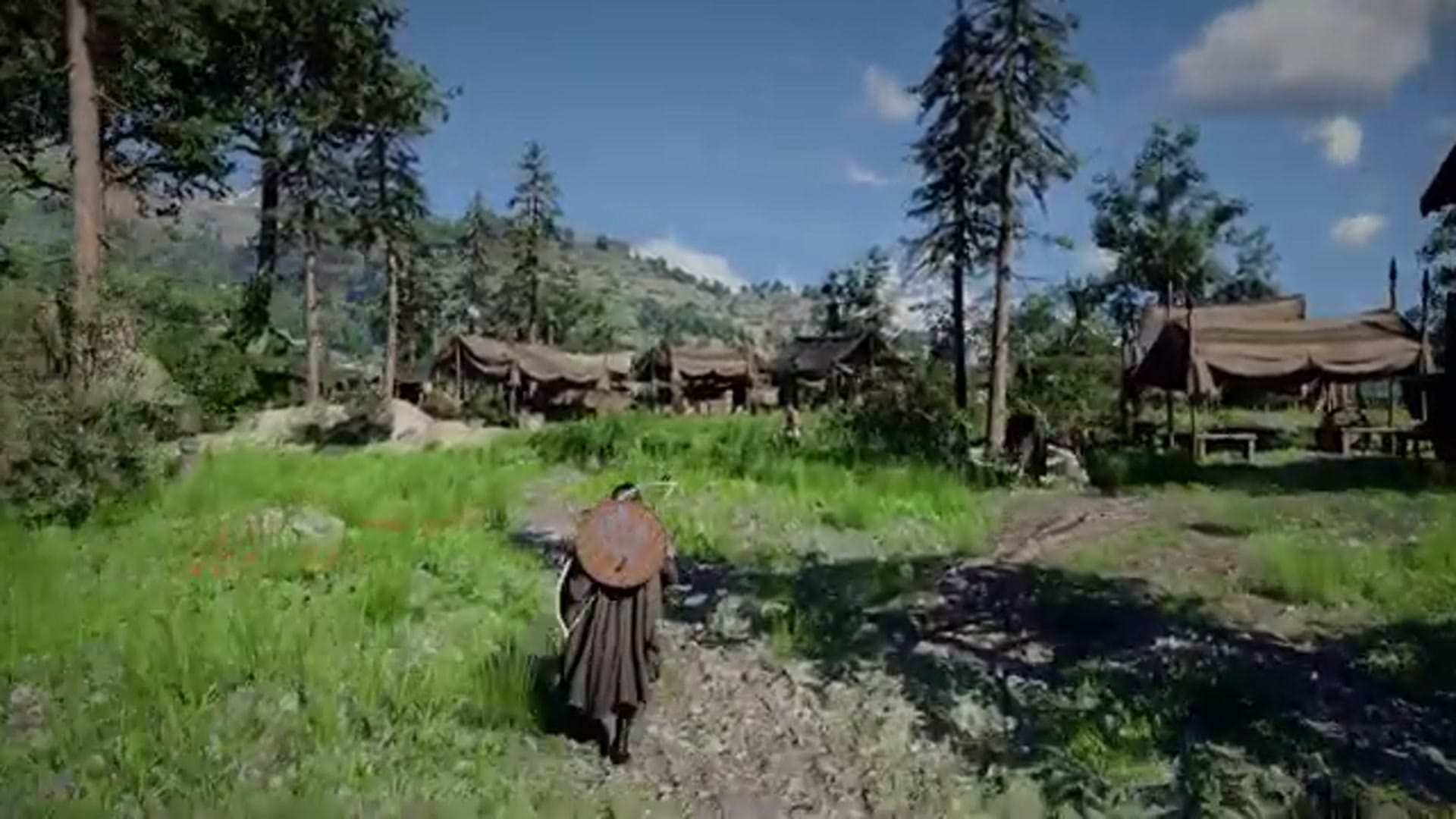
Building structures happens in real-time. Players physically place furniture and watch buildings take shape as they contribute materials. The camp includes functional buildings like a food shop run by vendor Ronnie, a trading center with merchants, farms for livestock and crops, and workshops. Each structure unlocks new services or progression options tied to character abilities and equipment upgrades.
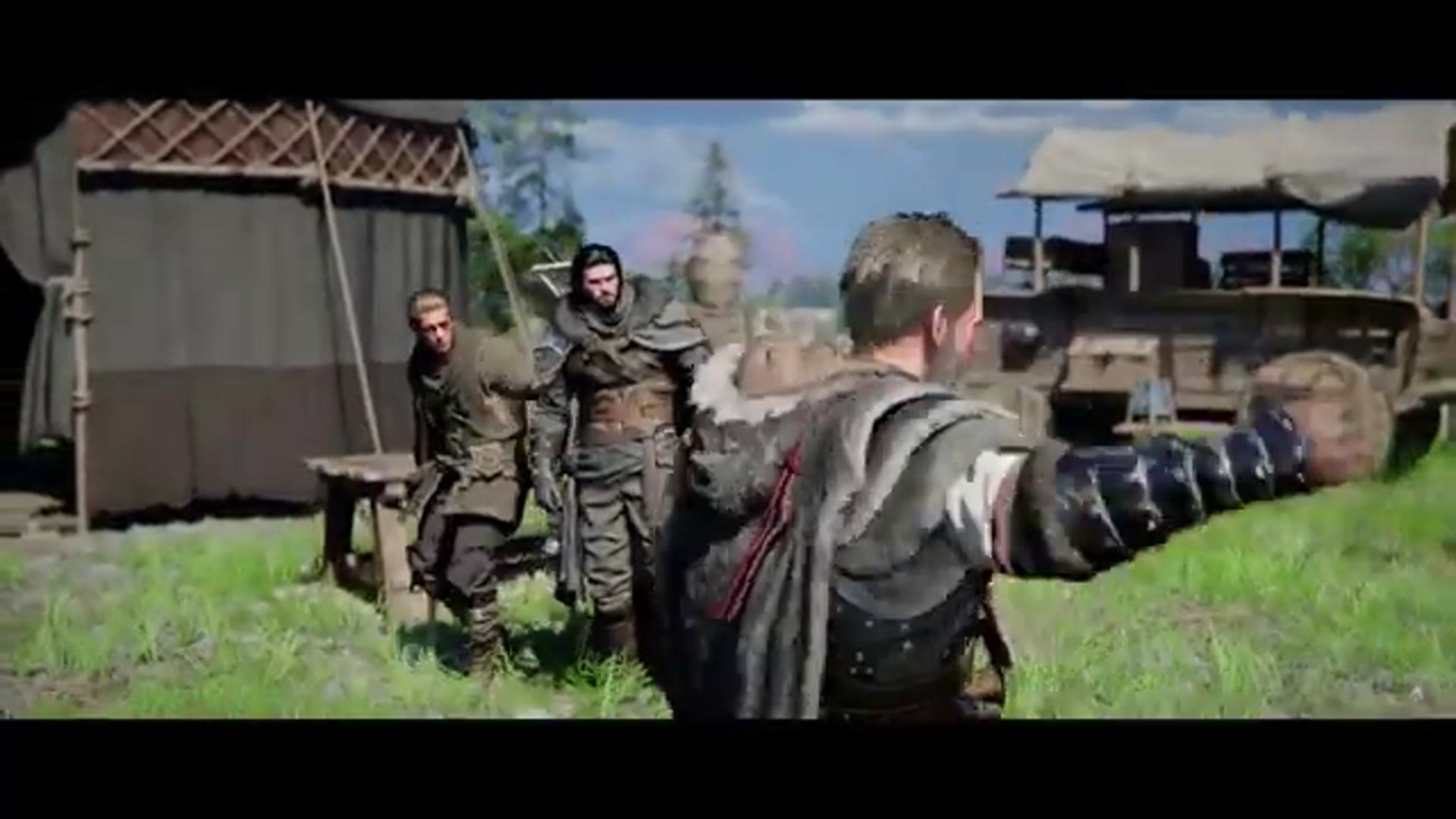
The base is not purely cosmetic. Upgrading the camp directly improves character stats, unlocks new skills, and expands the roster of available companions. Resource management balances immediate crafting needs against long-term infrastructure investment.
Freesword Dispatch System
The Steinfell Fortress management interface allows players to assign companions—called Freeswords—to off-screen missions. Each companion has individual stats: Health, Attack, Defense, Attack Speed, Movement Speed, and Critical Hit Chance. Missions display requirements for number of people (typically 4-6), duration (ranging from hours to multiple days), and resource costs in silver, wood, clay, or other materials.
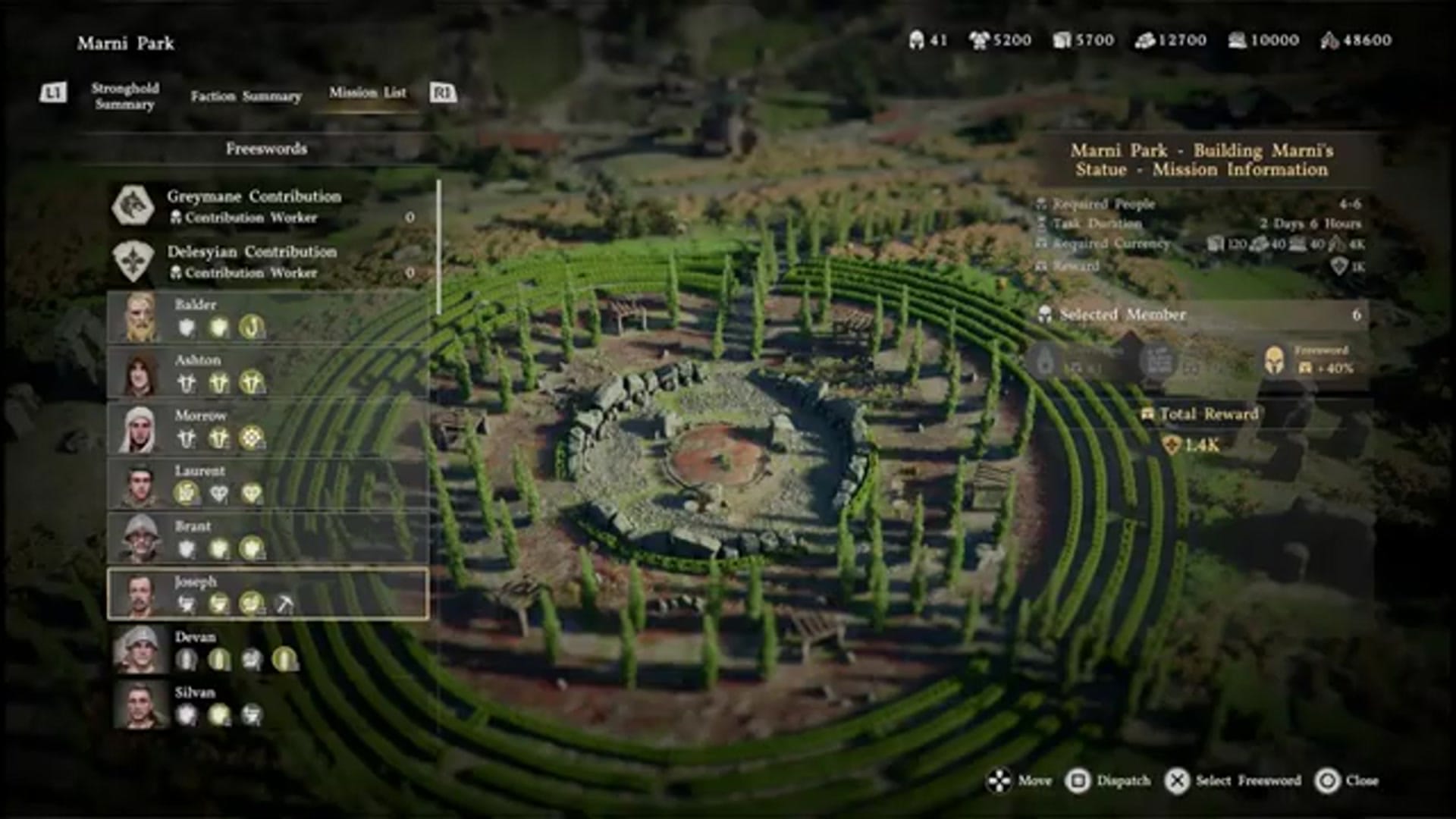
Missions include tasks like building statues, recapturing blockaded forts, or gathering specific resources. Selecting the right number and type of companions affects success rates and rewards. A conversion bonus percentage indicates how well the chosen team matches mission requirements. Completed missions yield currency, materials, or unlock new areas and services.
Players can monitor mission progress through the Mission List tab, which shows active tasks with countdown timers. This system runs passively, allowing players to explore or engage in combat while companions handle resource gathering or construction off-screen.
Crime and Wanted System
Committing crimes triggers a bounty system similar to open-world action games. Pickpocketing NPCs or stealing items generates a "Crime - Theft" notification and awards stolen goods like coin pouches. Each crime reduces Hernandian Contribution, a reputation metric that tracks standing with regional factions. Contribution EXP penalties range from -5 for minor offenses to -30 for serious crimes.
Accumulating crimes raises a bounty value displayed in the UI. Guards and patrols become hostile, and a "Wanted Poster" appears on-screen with the character's face and bounty amount. Getting caught results in arrest and imprisonment in a wooden holding cell. The system discourages crime through overwhelming guard numbers—players face dozens of enemies simultaneously when wanted, making escape difficult without preparation.
Bounty status persists until cleared through arrest or other means. The system affects NPC interactions and access to certain towns or services while active.
Character Customization
Crimson Desert offers extensive appearance customization despite featuring a fixed protagonist. The Barber Shop menu includes tabs for hair type, beard, eyebrows, face tattoos, and body tattoos. Each category allows color changes across a full palette. Players can switch hair colors to bright purple, green, or any other shade, and modify facial hair and tattoo designs independently.
The Dyehouse system extends customization to equipment and mounts. Armor pieces, weapons, and even mechs can be recolored using a palette interface. One example shows a large metallic robot being customized with gold and blue tones. Horse armor and other mount equipment also support dye options, allowing players to match their aesthetic preferences across all gear.
Gear customization appears granular, with individual armor slots visible in the dye interface. This suggests players can mix and match different armor pieces and apply unique color schemes to each component.
Life Skills and Activities
The game includes multiple non-combat activities integrated into the world. Fishing involves casting lines in rivers and lakes, with catches used for cooking or sold to vendors. Farming requires tending crops by watering plants and managing livestock—players physically carry pigs to pens and care for animals. Cooking happens at camp cauldrons, where players stir ingredients to create food items that likely provide buffs or restore health.
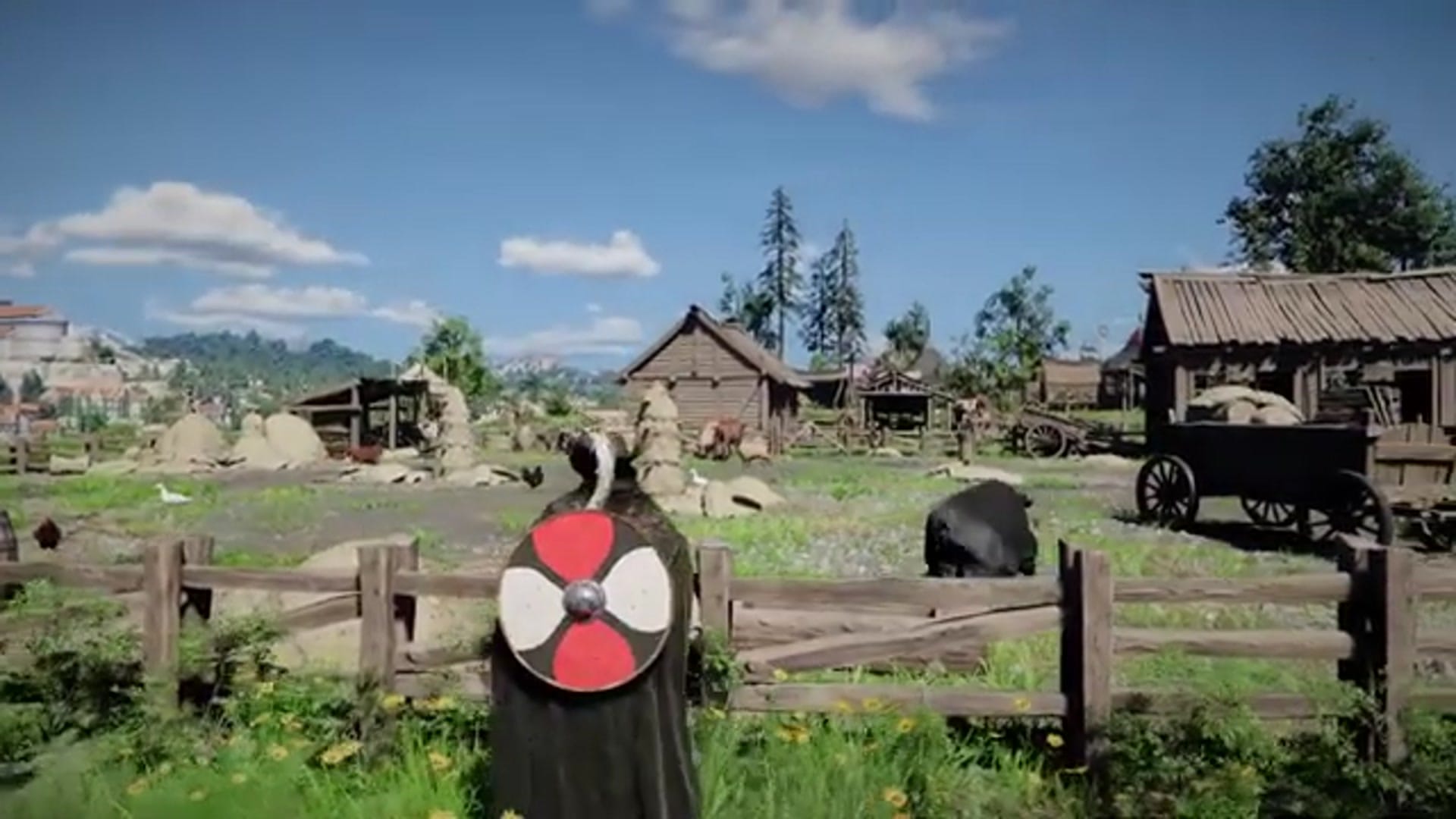
Hunting involves tracking animals in the wild, with a camouflage mechanic shown for stalking prey. Resource nodes for mining and logging appear throughout the environment, marked for interaction. Trading occurs at dedicated centers where NPCs buy and sell goods, with menus listing items like barley, meat jerky, salt-grilled fish, and fruit juice.
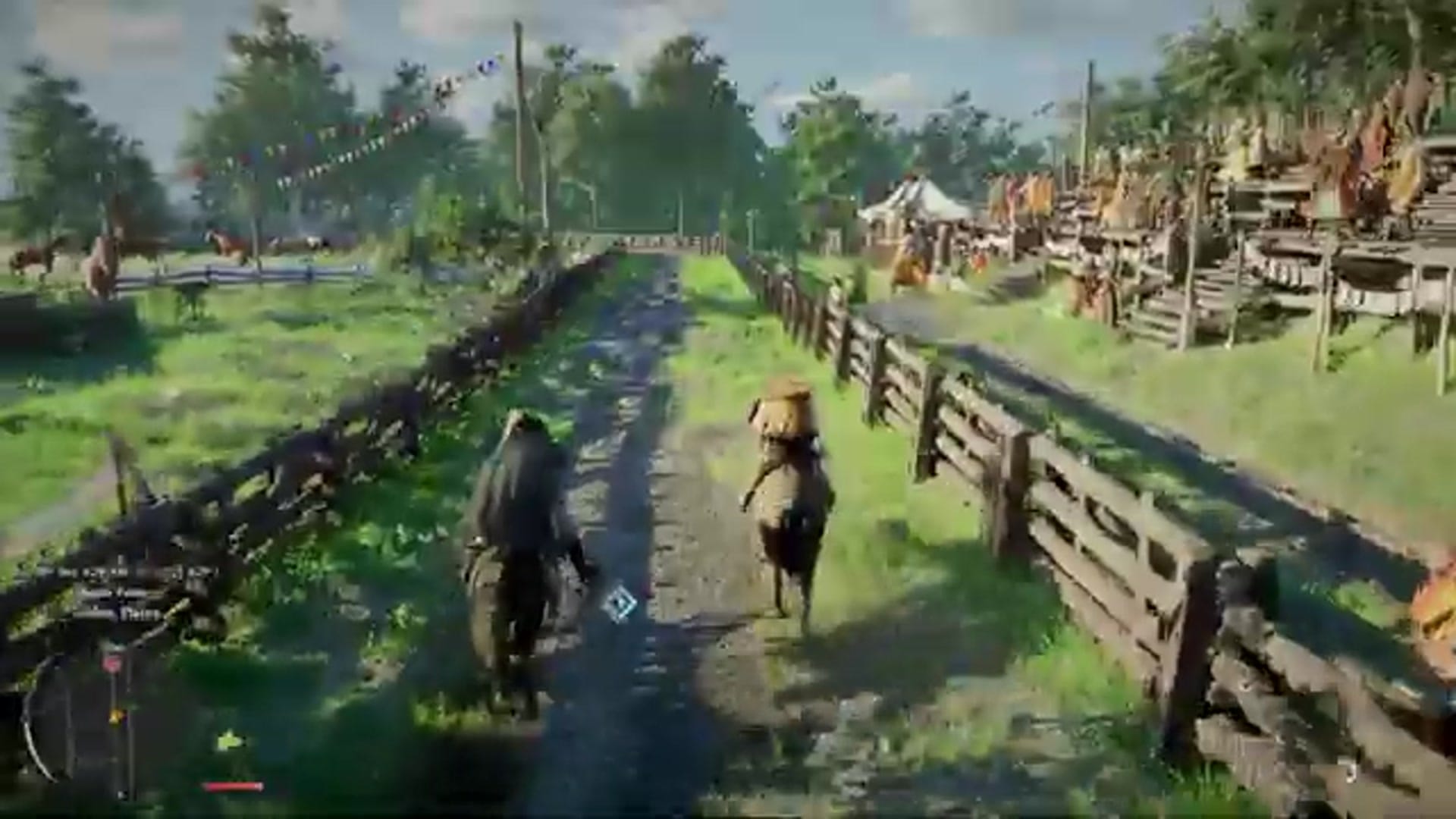
Mini-games include a fighting arena for one-on-one brawls, table games resembling dice or board games, and arm wrestling contests. Horse racing appears as a competitive activity. These diversions offer breaks from main quests and combat encounters.
World Scale and Exploration
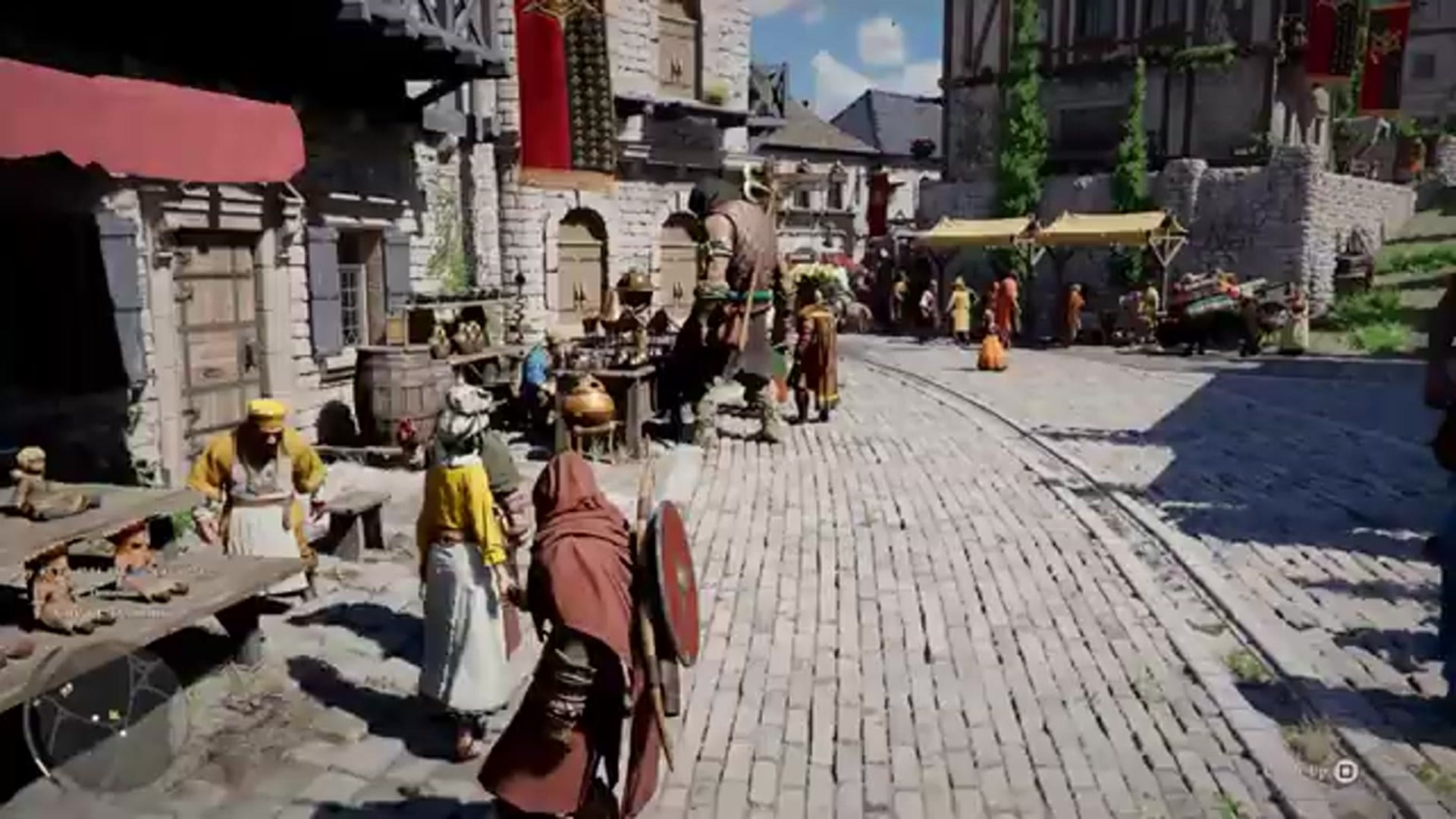
The continent of Pywel spans approximately 74.2 square kilometers, comparable to Skyrim and larger than many open-world RPGs. The map divides into five major regions, each with distinct geography and cultures. Hernand, the starting region, features mountains, rivers, and cliffside cities. Other areas include open fields, ruins, underground caves filled with puzzles, and floating sky islands called the Abyss.
Traversal mechanics include climbing sheer rock faces, gliding with a paraglider toward distant landmarks, and using a grappling hook for vertical movement. Mounts range from horses to mechs equipped with rocket launchers. Dragons become available later, allowing flight across the map. A hot air balloon also appears as a travel option.
Side quests vary in scale from massive fortress sieges to small village errands. A bounty board offers miscellaneous tasks for additional rewards. Exploration rewards include hidden weapons, artifacts that increase stats, and skills learned by discovering specific locations rather than through menus.
Combat and Progression
Combat emphasizes fast, animation-driven action with weapon variety including swords, shields, spears, greataxes, and ranged weapons. Players can fight on foot or mounted, with mount combat fully animated rather than cosmetic. Mechs introduce ranged firepower and change encounter dynamics. A radial menu during combat suggests stance or elemental ability switching.
Boss fights are cinematic and multi-phase, testing movement and timing over raw damage output. Defeating bosses grants unique rewards beyond loot—some provide special abilities inspired by the boss itself, such as summoning a giant spectral soldier for a ground slam attack. Artifacts found through quests and exploration increase health, stamina, and skill effectiveness.
Gear progression involves buying, finding, crafting, and upgrading weapons and armor. Equipment can be modified to roll special stats, allowing build customization. Skills unlock through exploration and discovery rather than purely through leveling menus, incentivizing thorough world exploration.
NPC Interactions and Dynamic World
NPCs perform contextual actions based on player purchases. Blacksmiths forge swords when players buy one, switching to armor crafting if armor is purchased instead. Random encounters include pickpockets attempting theft, NPCs challenging players to duels, and beggars who join the Greymanes if given coins. Helping attacked soldiers or completing side quests recruits new faction members.
The world reacts to weather with dynamic rain and environmental effects. A downpour sequence shows detailed water simulation and lighting changes. Day-night cycles and time progression appear in the UI, with timestamps like "Day 107 Tue 5:29 PM" indicating a persistent calendar system.
Quest design includes interconnected objectives. Multiple quest markers may point to the same problem—such as goblins threatening a village—and resolving the core issue completes all related quests simultaneously. This reduces repetitive tasks while maintaining world coherence.
Technical Features
Crimson Desert runs on Pearl Abyss' proprietary engine, updated specifically for this project. The studio confirmed PS5 Pro support with enhanced visual features, though specific enhancements remain unannounced as optimization continues. PC performance targets include native 4K at 60 FPS with ray tracing on high-end hardware like the RX 9070XT.
Visual technologies include atmospheric scattering, volumetric clouds, ray marching illumination, and ray regeneration. Official gameplay videos released so far have these features disabled, meaning final visual quality will exceed what has been publicly shown. Console versions will offer customization options to balance performance and fidelity based on hardware capabilities.
The game has gone gold, meaning the master build is complete. The development team is now focused on day-one patch optimization to ensure stable performance across all platforms at launch.
Crimson Desert's feature set positions it as a comprehensive single-player experience combining action combat with deep simulation systems. The integration of base building, faction management, life skills, and exploration mechanics alongside the core combat loop creates a dense gameplay loop. Whether the systems cohere into a polished whole or feel disconnected will be clear when the game launches in March.