

Minecraft and Hytale share the same first impression: a chunky, voxel world made of blocks. Under the surface, they chase very different goals. One is a wide-open sandbox that hands you a pickaxe and gets out of the way. The other leans into RPG structure, authored adventure, and built-in creation tools.
Putting them side by side is useful, not to crown a winner but to understand what kind of experience each game is trying to deliver.
Core vision: Sandbox survival vs adventure RPG sandbox
Minecraft is a survival sandbox first. You spawn with nothing, punch a tree, craft tools, and slowly push from wood to stone to iron to diamond. Story is minimal, and the “goal” is whatever you decide it is: building, automation, exploration, or beating the Ender Dragon once and going back to building.
Hytale is framed very differently. It combines a sandbox world with the structure of a role‑playing game. The world is built around dungeons, towers, and handcrafted encounters. Lore, factions, and quests are not side dishes; they define how you move through the world. The gameplay loop leans toward exploration, combat, and progression rather than pure survival friction.
That shift shows up in small design decisions. A famous example is the opening moment: instead of rewarding the instinct to punch a tree, the character reacts with an “Ow,” signaling that you should not expect a 1:1 copy of Minecraft’s loop. The intention is to say: this is a block game, but it plays by different rules.
World structure: Seamless biomes vs distinct zones
Minecraft’s overworld is one continuous map where biomes blend into each other. You can walk in a straight line for thousands of blocks and move from plains to desert to jungle with no hard borders. Major moments of structure come from dimensions like the Nether and the End, but the overworld itself is deliberately loose and ambient.
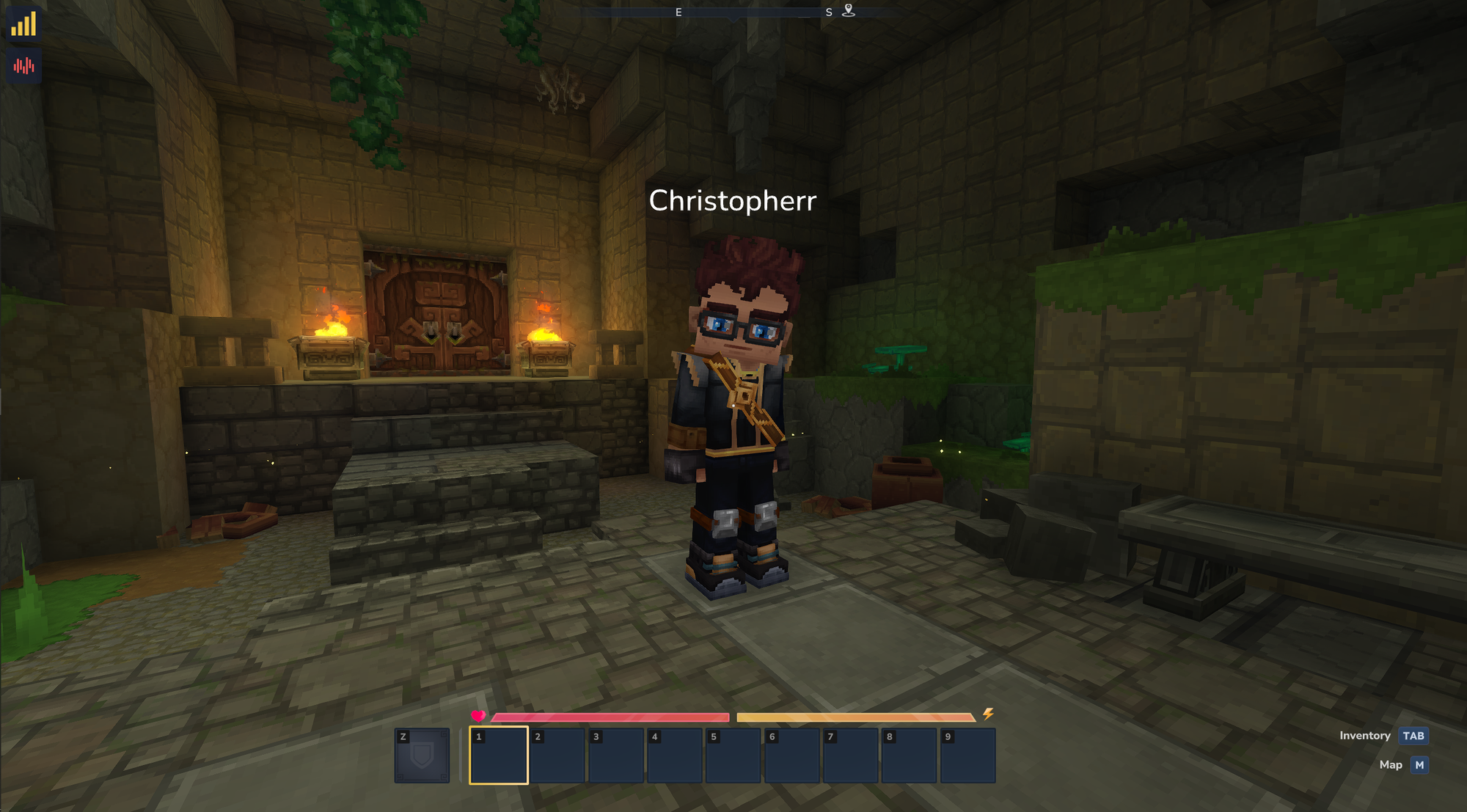
Hytale organizes its world into zones. Each zone has its own climate, terrain style, enemy sets, and progression expectations. Deep dungeons and vertical structures are placed as explicit challenges rather than emergent cave networks. The overworld holds more of the game’s content instead of hiding most discovery underground.
This matters for how each game feels to explore. Minecraft is about wandering until something interesting happens. Hytale is closer to an RPG playthrough, where different regions signal different risks and rewards and you push into them intentionally.
Gameplay focus: Survival friction vs conquest and progression
In Minecraft, survival is sharp at the start and fades quickly. The first night can kill you; a few in‑game days later, armor, food farms, and beds turn danger into background noise. The long-term play pattern turns into construction, redstone engineering, and self‑directed projects.
Hytale treats survival as one ingredient among many. Food, health, and shelter still matter, but they support an adventure arc instead of being the whole point. Gear defines your role more than abstract skill trees, closer to Terraria’s class-by-equipment model. Weapons, armor, and items are tuned for tactical combat and distinct playstyles, nudging you toward builds rather than generic “best armor” setups.
A practical way to think about it: Minecraft is “build a world and stay alive while you do it.” Hytale is “gear up, take on dungeons and factions, and build along the way.” They sit on the same spectrum, but at different ends.
Combat and enemies: Simple loops vs tactical encounters
Minecraft’s combat is intentionally simple. Timing windows, shields, and knockback add some depth, but most fights are short, readable exchanges against a small roster of mobs. New updates add a handful of enemies at a time, and the design deliberately avoids overwhelming players with complexity.

Hytale pushes in the opposite direction. Enemy variety is a headline feature, with hundreds of creatures spanning basic wildlife, elite foes, bosses, and faction units. Zones, dungeons, and quests are constructed around combat scenarios, not just incidental mobs in the dark. The combat system is billed as more tactical, with positioning, pattern recognition, and gear choice combining into something closer to an action RPG than a pure sandbox.
This is not a simple case of “more mobs is better.” Minecraft’s small cast keeps the game approachable and easy to memorize. Hytale’s broader bestiary supports a more RPG‑like progression curve and gives designers more levers to pull for difficulty and spectacle.
Story, quests, and NPCs
Minecraft has lore, but it largely lives outside the game or in subtle environmental hints. Villages, strongholds, temples, and the End dimension suggest a backstory, yet there are no formal quests, dialogue trees, or faction systems in the core experience. Any narrative arc tends to be self-imposed.
Hytale leans hard into explicit narrative. NPC factions, scripted dungeons, and quest-lines define much of the content. Teetering towers, deep dungeons, and themed regions are designed to deliver specific stories and rewards, not just random loot and building materials. Players still have freedom to wander off, but there is a clear “main road” if you want it.
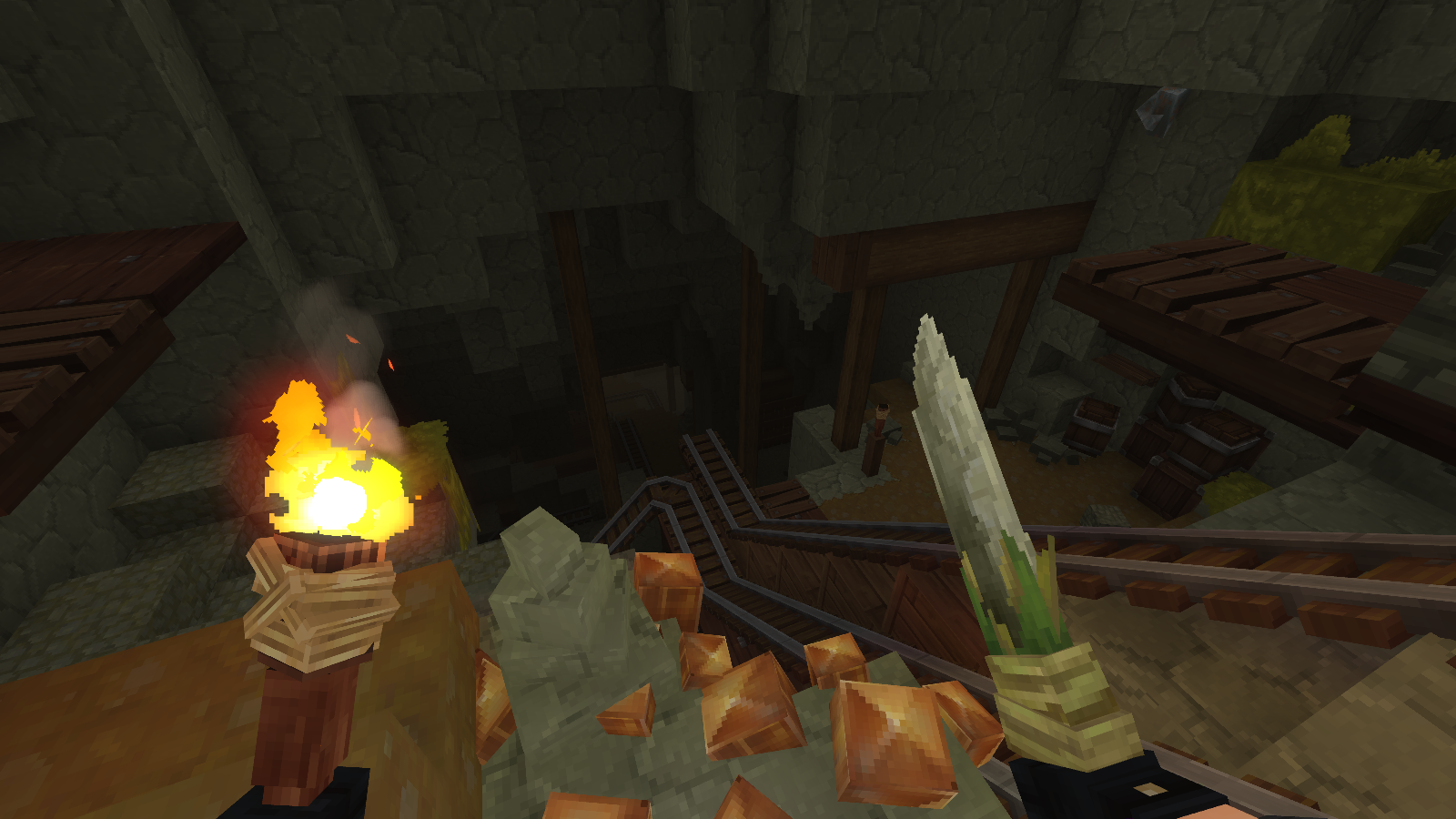
If Minecraft is a box of LEGO bricks with a few suggested builds, Hytale is closer to a tabletop campaign starter set: you get pieces and tools, but you also get a world with named places and people baked in.
Creative tools: emergent building vs integrated editors
Both games are built on voxels, and both let you build large structures block by block. The difference lies in how much they expose the engine’s toolset to players.
In Minecraft, creative power comes from in-game blocks, redstone systems, commands, and external tools. Structure editors, world painters, and modeling software are separate applications that feed assets back into the game or its mods. This ecosystem is huge, but loosely connected and often intimidating for newcomers.
Hytale bakes creation tools into the package. Asset editors, world tools, and scripting interfaces are part of the game’s official feature set rather than an afterthought. The goal is to make it normal for players to move from “I want to tweak this” to actually editing assets, logic, or environments without juggling half a dozen third‑party programs.
For builders and modders, that changes the entry curve. In Minecraft, the jump from player to creator is steep. In Hytale, the expectation is that more people will sit somewhere on that creator spectrum by default.
Modding: Minecraft client-side mods vs Hytale server-side mods
The biggest technical split between the two games sits in the modding model.
| Aspect | Minecraft | Hytale |
|---|---|---|
| Where mods run | Mainly client-side, often mirrored on servers | Server-side only |
| Player installation | Manual download, mod loaders, version matching | Automatic when joining a server |
| Single-player modding | Directly modded client, no server required | Local server required for modded play |
| Client-only cosmetics | Shaders, HUD mods, personal QoL tools | Not supported in the same way |
| Creation interface | Java or other languages via loaders, no native visual scripting | Visual scripting plus Java for custom nodes |
Minecraft modding: Power with friction
Minecraft’s mod scene grew from the ground up. Today it revolves around client-side mod loaders like Forge or Fabric. To play a modded pack, you typically install a specific game version, add the correct loader, drop a collection of .jar files into a mods folder, then hope nothing conflicts.
Multiplayer stacks another layer of friction. Every player connecting to a modded server needs the exact same mods, often the same configuration, and sometimes complementary client-side tweaks for performance. A missing or outdated file can block you from joining at all. The upside is huge freedom: players can install client-only enhancements such as shaders, UI overhauls, and convenience mods that do not affect the server state.
This openness has produced thousands of modpacks and total conversions, but it also demands technical literacy and a willingness to troubleshoot crashes and conflicts.
Hytale modding: Server-driven and automatic
Hytale flips that model. Mods are designed to live on the server. When you join a modded world, the client receives everything needed to participate automatically. There is no manual download, no hunt for the correct loader version, and no need to line up your local files with a friend’s stack of mods.
That approach simplifies a few key pain points:
- Onboarding becomes trivial. Joining a new modded server is as straightforward as connecting to a vanilla one. The server dictates the experience.
- Version mismatches disappear. If you can connect, you have what you need. Mod authors and server operators control compatibility instead of each player managing their own setup.
- Security is tighter. With no arbitrary client-side code injection in the usual sense, there is less surface for cheats and malicious mods that quietly alter the game on a player’s machine.
The cost is flexibility on the player side. In Hytale, you give up purely personal enhancements like independent shaders, HUD tweaks that only you see, or offline single-player modding without a server process. Modded single-player is still possible, but it runs through a local server rather than a directly modded client.
Visual scripting and accessibility for creators
Modding Minecraft typically means writing code. Even content-oriented tools like data packs or command frameworks skew toward people comfortable with scripting or configuration languages. Community tools lower the barrier, but formal support in the base game is thin.
Hytale includes a visual scripting system inspired by node-based editors. Creators can build game logic by connecting nodes rather than writing raw code. For many types of content—quests, simple enemy behaviors, triggered events—that is enough to build something substantial. More experienced developers can extend the node system using Java to unlock deeper behavior while keeping the top layer approachable.
That design does two things at once. It gives non-programmers a path to create sophisticated content, and it speeds up prototyping for experienced developers who want to sketch ideas quickly before deep optimization.
Single-player and server expectations
Minecraft treats single-player as a first-class, offline mode. You can run heavily modded setups without ever touching a dedicated server. Local worlds are easy to create, back up, and share as saves or world files, and multiplayer is something you opt into later.
Hytale orbits around servers. Even solo play for modded content is expected to run through a server instance, whether hosted locally or rented from a provider. That lines up with the game’s origins in large multiplayer experiences and its emphasis on server-side control. It also matches its modding design, where the server packages the entire ruleset, assets, and logic.
For players, that means thinking in terms of “which server experience do I want right now?” rather than “which local world do I load?” For hosting providers, it means the game is built to live in server environments from day one.
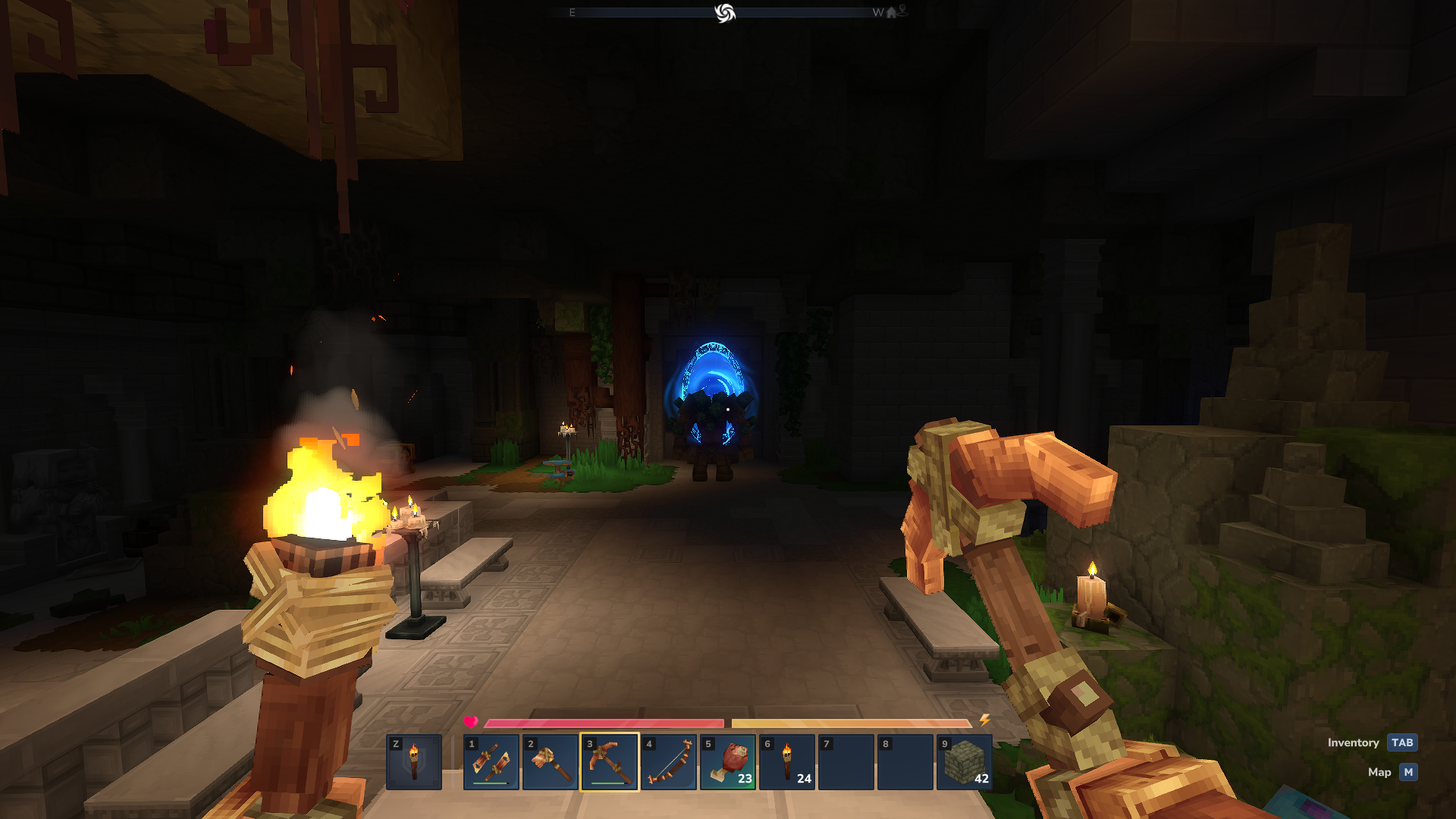
How similar are they really?
The visual overlap between Hytale and Minecraft is obvious: block worlds, pixel art textures, and familiar silhouettes for tools, terrain, and structures. That makes it tempting to call one a clone of the other or frame Hytale as “Minecraft 2.” The design choices do not support that simplification.
On a practical level, the similarities include:
- Voxel-based building with block-by-block construction.
- Procedurally generated worlds that differ between playthroughs.
- Survival elements such as health, food, and hostile environments.
- Support for community servers and large-scale multiplayer.
The differences shape how you spend your time:
- Hytale leans into tactical combat, elaborate dungeons, and quests; Minecraft gives you sparse combat and more unscripted space.
- Hytale’s zones and factions push you through a rough narrative arc; Minecraft lets you drift, automate, and build grand projects without a script.
- Hytale’s server-side modding and built-in tools invite more people to tinker; Minecraft’s open client and established ecosystem reward players who invest in learning its quirks.
In that sense, the comparison that often fits best is the old “Minecraft vs. Terraria” debate. All of these games belong to a loose family of blocky sandboxes, but they chase different fantasies: one about building anything anywhere, another about conquering a dangerous world with gear and skill.
For players, the takeaway is simple. If you enjoy Minecraft’s calm creativity, redstone contraptions, and the familiarity of its survival loop, nothing else replicates that blend exactly. If you want a more guided adventure in a voxel world, with heavier combat and deep built-in tools for server operators and creators, Hytale is designed to live in that space. Comparing them is fine; expecting one to erase the other misses the point.