

Deadpool’s arrival in Marvel Rivals does more than add another DPS to the roster. Wade Wilson is the game’s first true triple-role hero, able to queue as Vanguard, Duelist, or Strategist with a single shared core kit. That flexibility makes him powerful and confusing in equal measure, especially in the early days of Season 6.
At his core, Deadpool is a short‑range brawler who snowballs through damage, upgrades, and ultimates that punish missed enemy abilities. Around that spine, each role layers different survival tools, disruption, and healing.
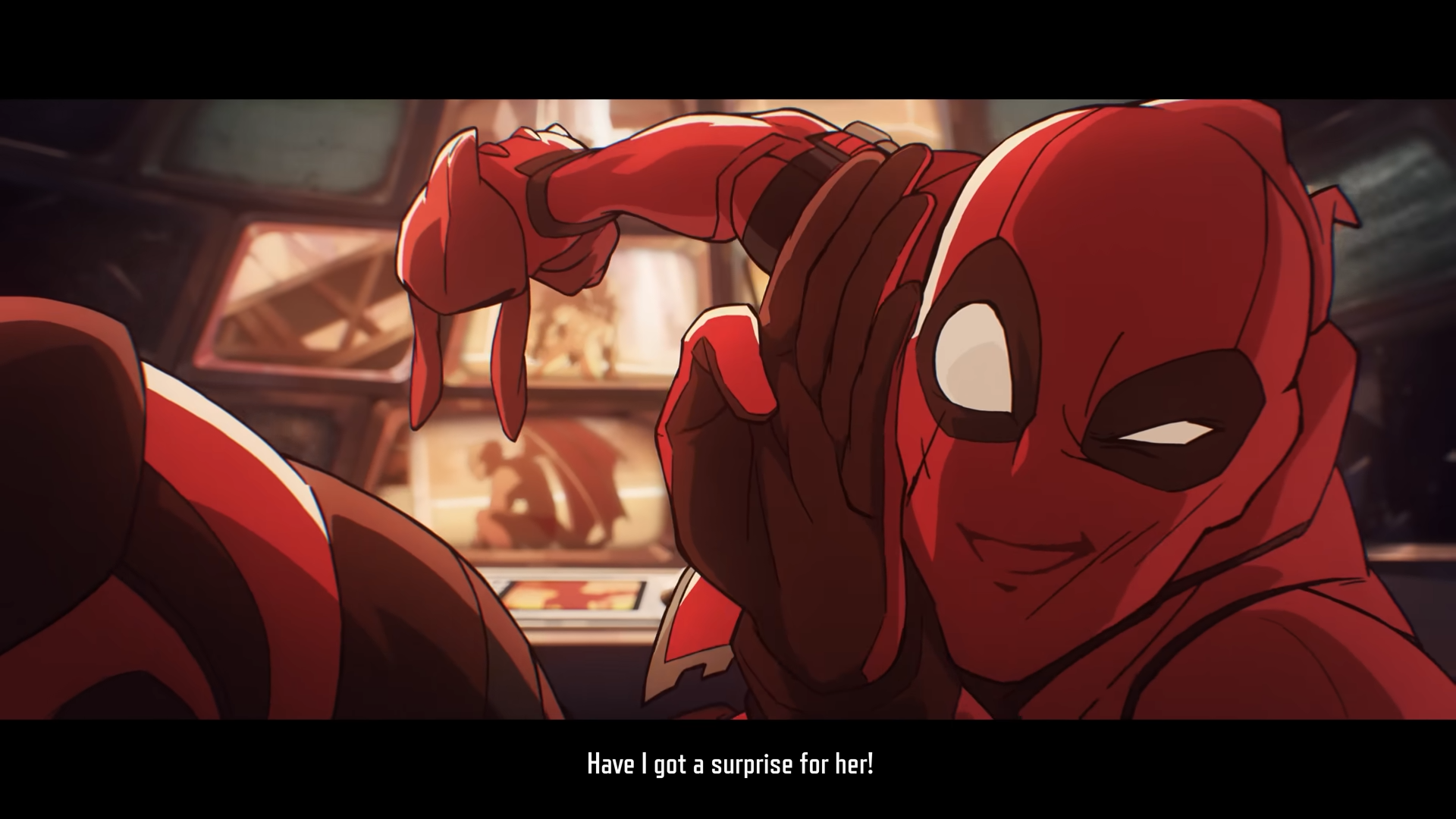
Deadpool’s core kit and progression
Deadpool always spawns with the same base tools, no matter which role you select at hero pick.
Primary weapons. He alternates between Dual Desert Eagles and Kick@$$ Katana using Slice and Dice / Lock and Load (Shift). Pistols give him mid‑range poke; katanas turn him into a close‑range threat and, in Strategist, a mobile fountain of healing.
Mobility. His jump is a double jump variant: Bunny Hop or Healing Hop on Space. It lets him bounce off walls and player heads. On enemies, the stomp deals damage and grants bonus health; on allies as Strategist, it heals. In Vanguard and Duelist, successful head bounces or wall kicks can refresh the cooldown, especially during specific ultimates.
Sustain. Healing Factor is always active. Deadpool passively regenerates health out of combat and, after taking heavy damage, briefly becomes invincible and rapidly heals. Played well, that lets him re‑engage faster than most frontliners.
Style gauge and ultimates. Every landed ability increases his Maximum Flair rating. At “S” rank he can fire one of his ultimates tied to Q, which always involves taunting a single target or starting a self‑challenge. The exact effects differ by role and weapon, but they all share one rule: enemies who whiff abilities during the taunt take extra punishment or feed extra healing.
In‑match upgrades. Deadpool has a built‑in progression layer via Upgrade! (F). Dealing damage fills an XP bar under his HP. When full, he can pause briefly to pick an ability upgrade from a comic‑book‑style menu. Last hits and taking an on‑screen selfie with a defeated enemy grant bonus XP, and he is invincible during that selfie animation. Upgrades modify shots (adding explosive Boom Emojis), extend dashes, bulk up shields, or add extra healing and damage reduction depending on role.
All of this means Deadpool scales hard with time and performance. Early in a round he feels like an aggressive Duelist; after a few upgrade cycles he becomes a flexible win‑condition.
Vanguard Deadpool (Tankpool): Shielding and disruption
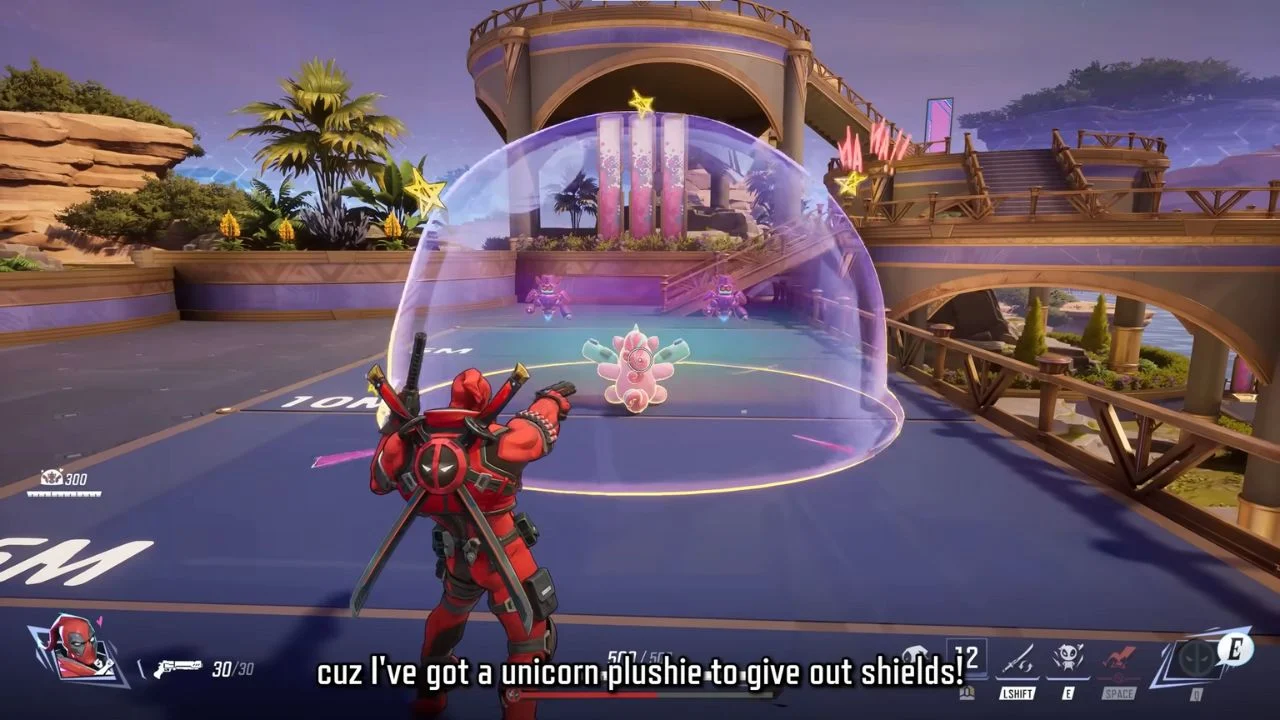
Vanguard Deadpool leans into space‑making and disruption while keeping enough damage to threaten backlines.
Key tools.
- Magical Unicorn Shield (RMB, Desert Eagles). Throws a plush unicorn that creates a spherical barrier on landing. Enemies’ shots and abilities are blocked until the shield is broken. With its upgrade, the bubble gets larger and becomes a serious zoning tool.
- Deadpool In Your Area – Vanguard (E). An area‑of‑effect taunt around Deadpool that deals continuous damage, disrupts enemy vision, and boosts his attack speed. The upgraded version also gives nearby allies damage reduction and further blocks the lower part of enemy screens if they remain inside.
- Hazardous Hijinks (RMB, Katanas). A short dash slash that can be chained up to two times on hit. With the upgrade, each hit refreshes the cooldown, effectively giving him rapid repositioning as long as he connects.
- The Ban Hammer (Q, Desert Eagles). Single‑target taunt that grants Deadpool bonus health and healing over time while dealing continuous damage to the victim. Missed abilities by that enemy add extra damage and more bonus health.
- The Big Test (Q, Katanas). A timed “challenge” that gives him speed and healing over time and instantly recharges Hazardous Hijinks attempts. Hitting enough enemies with the listed abilities refreshes Healing Factor and grants a stronger burst of speed, healing, and later, bonus health for him and allies when upgraded.
How to play Tankpool. Vanguard Deadpool wants to occupy the front of a fight and force bad trades.
Open with Magical Unicorn Shield slightly behind enemy tanks or in front of your supports to cut off angles. Swap to katanas, walk up with Deadpool In Your Area active, and chain Hazardous Hijinks slashes to slice through anyone trapped in the AoE. Use Bunny Hop aggressively: stomping a squishy target mid‑fight not only deals damage but also powers up his next katana stab if upgraded.
For ultimates, most lineups get more value from The Big Test over The Ban Hammer. The challenge version amplifies his movement, self‑healing, and team survivability, and during that window he can repeatedly bounce, slash, and force enemies to fight in a cluttered, visually noisy zone where their aim and awareness drop.
On the upgrade side, prioritise:
- Magical Unicorn Shield if your team needs a stronger frontline or to break sightlines on narrow maps.
- Deadpool In Your Area for more team‑wide mitigation.
- Hazardous Hijinks when you’re consistently connecting dashes and want better gap‑closing.
Duelist Deadpool (DPSpool): Short‑range damage and pressure

Duelist Deadpool strips away some of the defensive padding in exchange for more raw damage and better chase tools.
Key tools.
- Dual Desert Eagles – Duelist. Higher baseline DPS than the Vanguard and Strategist guns, with an upgrade that adds explosive Boom Emojis after a string of shots.
- Headshot! (RMB, Desert Eagles). Deadpool literally throws his HUD avatar forward as a boomerang that damages enemies along its path and in a small radius. Upgraded, catching it lets him throw it up to two extra times, with an explosion on the third toss.
- Hazardous Hijinks – Duelist (RMB, Katanas). Similar dash slash to the Vanguard version, but its upgrade can refresh infinitely as long as each dash hits an enemy, turning it into a lethal mobility loop in tight fights.
- Deadpool In Your Area – Duelist (E). Same AoE damage and vision disruption as other roles, but here it grants damage reduction rather than attack speed or team buffs.
- Skill Issue (Q, Desert Eagles). Single‑target taunt that inflicts damage whenever the victim misses an ability; upgraded, it adds vulnerability so they take more incoming damage and receive worse healing.
- Pop Quiz! (Q, Katanas). Challenge ultimate that gives him speed, healing over time, and a damage boost. Landing enough Hazardous Hijinks or Bunny Hop hits unlocks a higher tier of speed, healing, damage, and a near‑full reset of his cooldowns (Healing Factor excluded).
How to play DPSpool. Duelist Deadpool thrives when he can stick to a target and cycle through pistol chip damage and katana bursts.
You generally want to open with Dual Desert Eagles at mid‑range, weaving in Headshot! whenever enemies stack or peek predictable angles. Once you’ve chipped someone low or drawn cooldowns, switch to katanas and dive with Hazardous Hijinks, keeping Deadpool In Your Area active to blunt return fire.
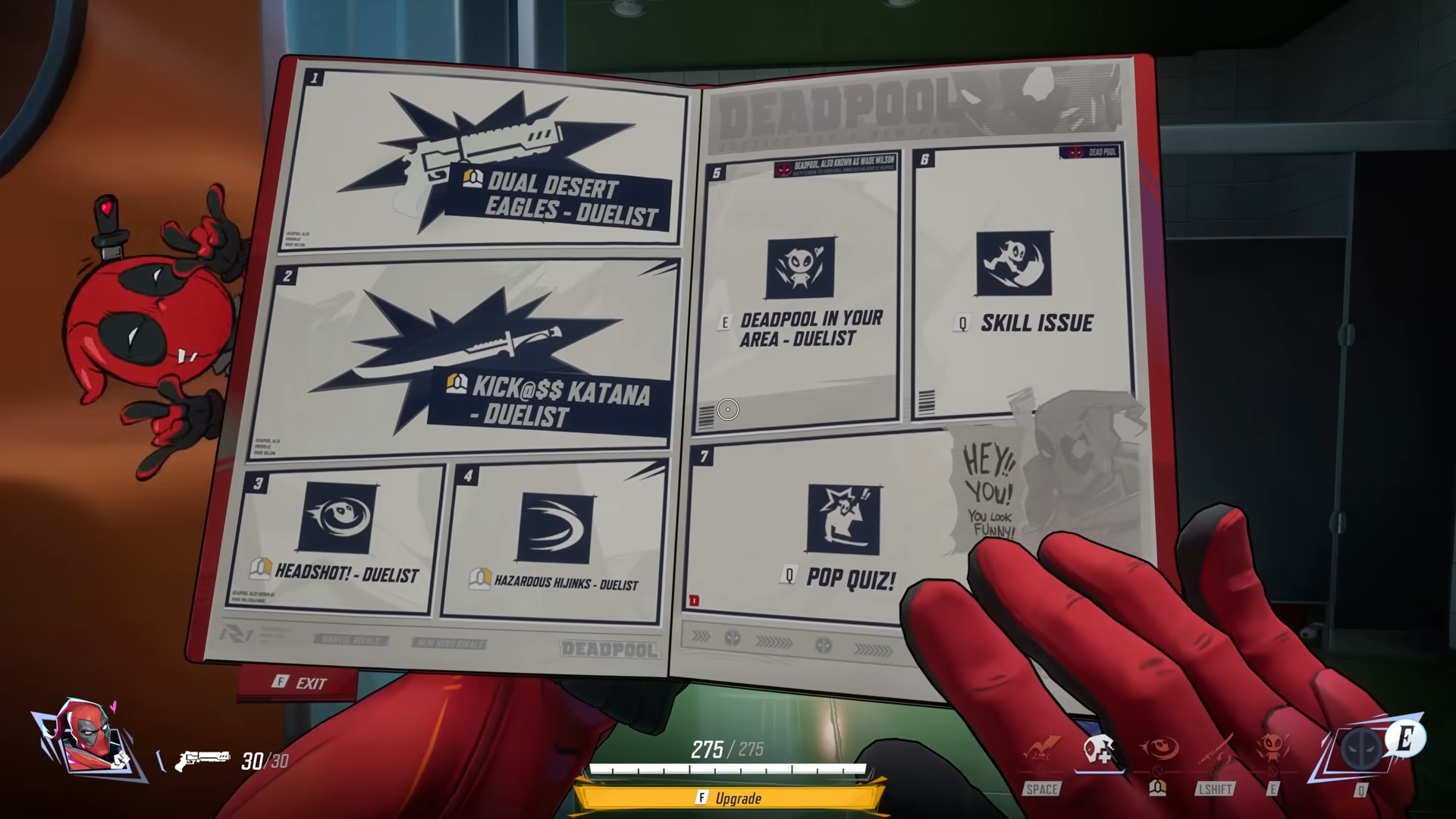
Pop Quiz! is the defining ult in this role. It creates a short window where you move faster, heal as you deal damage, and, after fulfilling the challenge condition, can spam dashes and abilities with near‑zero downtime. Used on objective fights, it lets Deadpool carve through multiple backliners before they can react, especially when combined with Bunny Hop resets off walls and heads.
For upgrades, DPS‑focused players usually go:
- Dual Desert Eagles for consistent poke and Boom Emojis that soften grouped enemies.
- Hazardous Hijinks if you’re confident in your melee aim and want near‑permanent mobility.
- Headshot! when the enemy team clumps behind shields or corners and you need safe chip to build Maximum Flair.
Strategist Deadpool (Healpool): aggressive, damage‑driven support
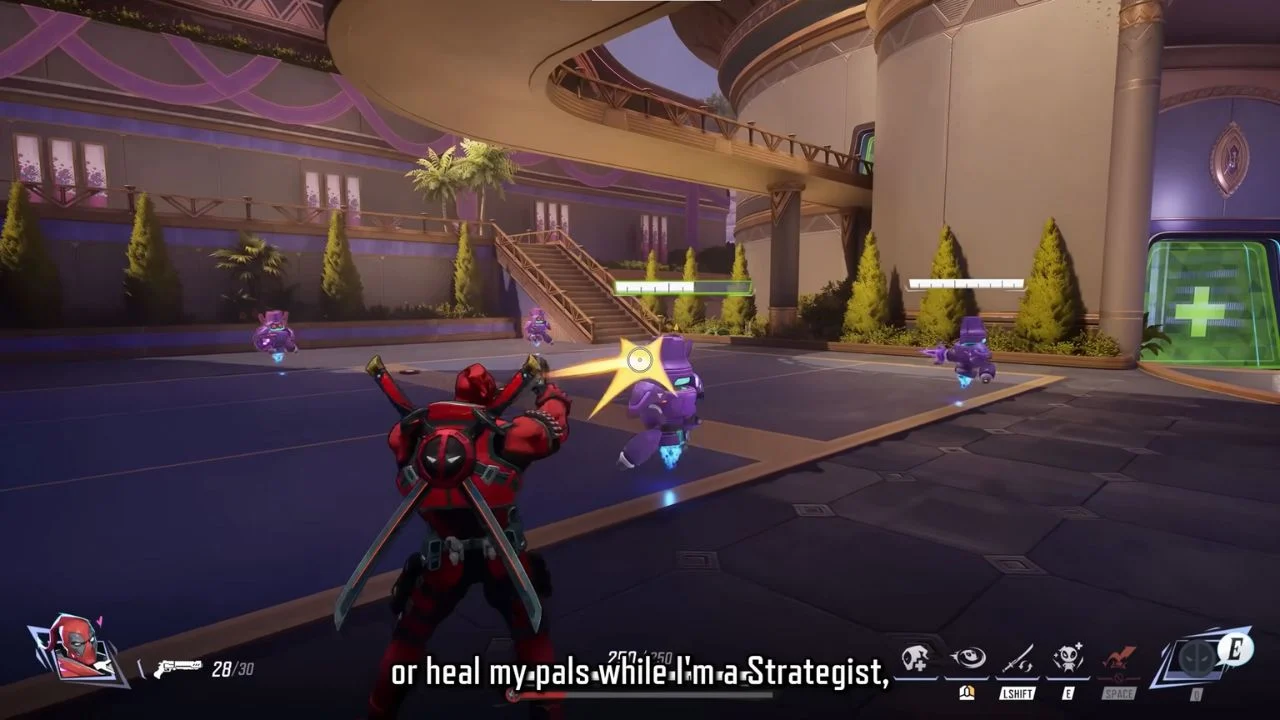
Strategist Deadpool is not a traditional backline healer. He turns damage and movement into healing pulses, forcing him to live inside the fight instead of behind it.
Key tools.
- Dual Desert Eagles – Strategist. Shots heal allies on impact and still damage enemies. The upgrade adds an explosive Boom Emoji that simultaneously hurts enemies and heals allies in the blast radius.
- Kick@$$ Katana – Strategist. Hits on enemies emit healing for nearby teammates. After the upgrade, a Healing Hop guarantees his next attack is a crit‑style stab.
- Bouncing Bobblehead (RMB, Desert Eagles). A boomerang avatar that damages enemies and heals allies along its path. Upgraded, it can be recast twice more if caught, with an area explosion on the final toss.
- Healing Hijinks (RMB, Katanas). A dash slash that damages enemies and heals allies near his path. With its upgrade, each hit refreshes the cooldown up to two times, giving him chainable mobility and healing.
- Deadpool In Your Area – Strategist (E). AoE that damages enemies, heals allies, and, when upgraded, adds a damage boost for teammates inside the zone while further blocking enemy vision.
- Pwnage Pound (Q, Desert Eagles). Single‑target taunt that deals continuous damage. If the target misses abilities, Deadpool and allies in range gain extra healing over time, and the enemy takes additional damage.
- Final Exam (Q, Katanas). Healing‑focused challenge ultimate that applies healing over time to Deadpool and nearby allies. Completing the challenge with enough Hijinks or Hop hits amplifies healing, grants bonus health, and refreshes Healing Factor.
How to play Healpool. Strategist Deadpool’s healing output scales directly with how bravely you position.
When allies are in front of you, shoot them deliberately with Dual Desert Eagles to top them up while tagging enemies in the same lane. When they’re brawling in close quarters, swap to katanas and carve through enemy hitboxes so the green healing waves bathe your team.
Healing Hop doubles as a mobility and sustain tool. Bouncing off allies’ heads repeatedly inside a fight keeps healing ticking; stomping an enemy mid‑combo adds damage and feeds XP. Layer Deadpool In Your Area – Strategist on top of that cluster and you get a dense zone of damage, healing, and ally damage buffs.
For ultimates, both weapon stances are viable:
- Final Exam is stronger for entrenched objective fights where your team can stay in range long enough to fully ramp its healing and bonus health.
- Pwnage Pound suits situations where a single diver or flanker is threatening your backline; the taunt forces them to commit and punishes every missed skill with more team‑wide sustain.
On the upgrade tree, support‑oriented players usually focus on:
- Dual Desert Eagles and Bouncing Bobblehead for reliable ranged healing and poke.
- Healing Hijinks for mobile triage when fights spread out.
- Deadpool In Your Area – Strategist when your team plays tightly together and can fully exploit the damage buff.
Deadpool’s team‑up with Jeff the Land Shark
Deadpool anchors a single Team‑Up with Jeff the Land Shark called Comical Chaos or, in Jeff’s own kit, “Mr. Pool’s Interdimensional Toy Box.” When active, Jeff spits out a plush toy that squirts water in an area, healing allies inside while blocking enemy vision and UI elements similar to Deadpool’s E. The cooldown is long enough that it needs to be timed for key engages or objective contests, but its disruption pairs naturally with Deadpool’s already chaotic fight style.
General Deadpool gameplan and role swapping
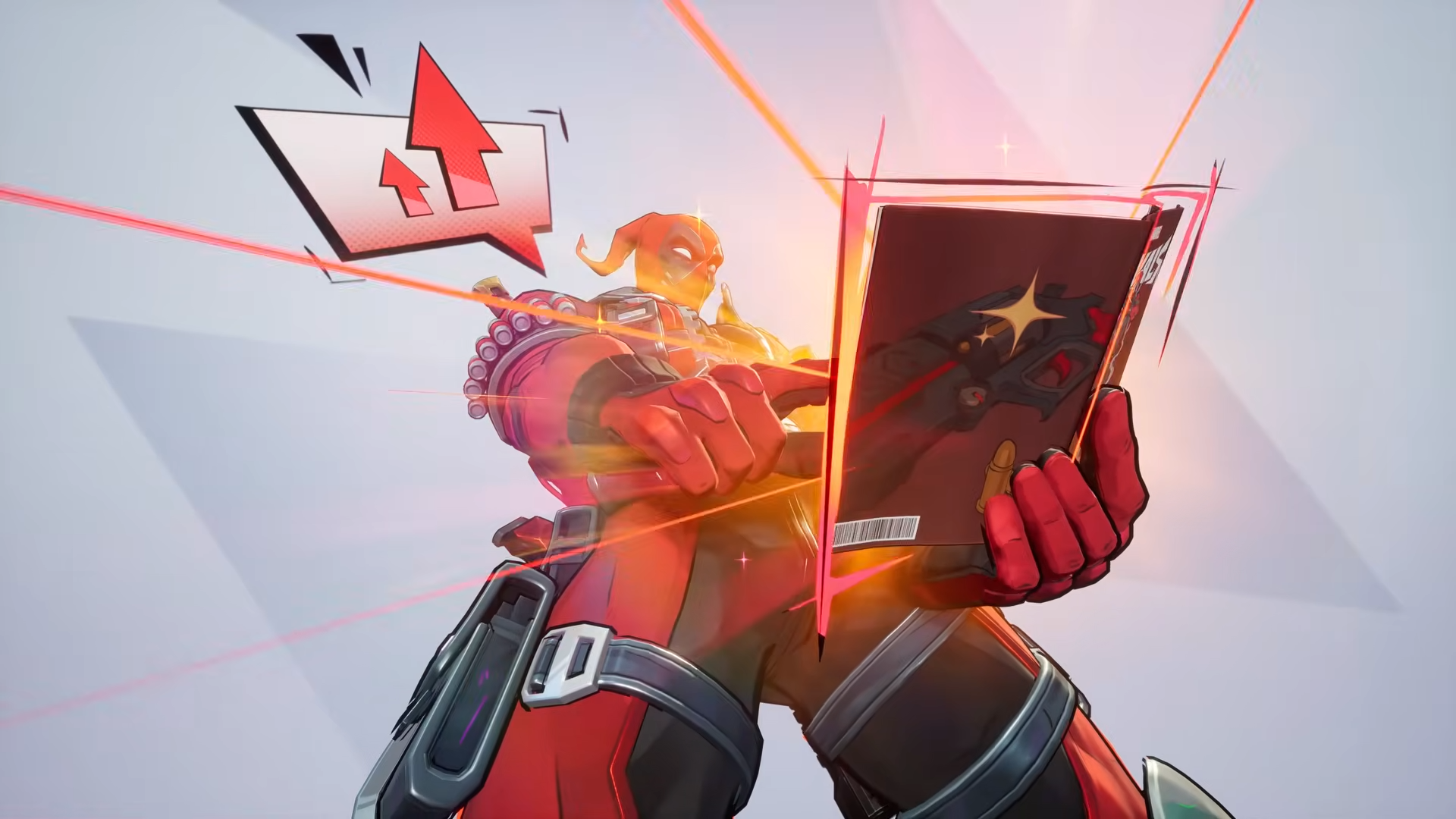
Regardless of role, Deadpool follows a few broad principles.
Damage first, utility second. His XP system, Maximum Flair gauge, and many of his heals are all tied to landing hits. Even as Strategist or Vanguard, you are incentivised to stay in range, trade aggressively, and finish off low enemies for selfies.
Late‑round scaling. He rarely dominates from the first engagement. As you stack upgrades and ult charges, his shield size, dash uptime, damage, and healing all climb noticeably. Team comps that buy Deadpool time to ramp—extra peel, another tank, or a traditional backline healer—can unlock his full toolkit.
Role swapping. Deadpool can change roles in the spawn area between deaths. That flexibility is often more useful than perfect mechanical play. Typical patterns include:
- Starting as Duelist to build Flair and upgrades quickly through damage, then swapping to Vanguard when your team needs a sturdier frontline for the final push.
- Opening as Strategist on defence to stabilise early fights, then swapping into Duelist if the enemy backline isn’t pressured enough.
At high levels, Deadpool becomes a macro decision piece: the player is expected to read whether the team lacks damage, shields, or healing, and swap roles accordingly before the next major fight.
Deadpool upgrades by role
Deadpool’s upgrade menus are extensive, but they follow the same pattern in each role: minor baseline ability, then an enhanced variant that adds a conditional effect. The table below summarises the most important upgrades.
| Role | Ability | Upgrade effect |
|---|---|---|
| Vanguard | Dual Desert Eagles | After enough hits, fires an explosive Boom Emoji for extra AoE damage. |
| Vanguard | Kick@$$ Katana | Stabs can crit; after a Bunny Bounce, the next attack is guaranteed stabs. |
| Vanguard | Magical Unicorn Shield | Shield radius increases, covering more space. |
| Vanguard | Deadpool In Your Area | Adds ally damage reduction and further UI blocking for enemies who stay inside. |
| Duelist | Dual Desert Eagles | Also unlocks explosive Boom Emojis after strings of shots. |
| Duelist | Headshot! | Catchable boomerang with up to two extra throws; final toss explodes in an area. |
| Duelist | Hazardous Hijinks | Each hit refreshes its own cooldown, allowing near‑continuous dashing if you keep connecting. |
| Strategist | Dual Desert Eagles | Boom Emoji now heals allies as well as damaging enemies. |
| Strategist | Bouncing Bobblehead | Catchable with up to two rethrows, with a healing and damaging explosion on the last toss. |
| Strategist | Healing Hijinks | Each hit refreshes the dash up to two times, extending both damage and healing coverage. |
Other upgrades modify his ultimates, generally deepening their core identity: more bonus health and post‑damage healing for Vanguard, wider cooldown resets and damage for Duelist, and stronger healing and bonus health for Strategist.
Best counters to Deadpool
For all his versatility, Deadpool has a clear weakness: limited mobility outside of short dashes and double jumps. Heroes who exploit that lack of long‑range repositioning and punish his need to be close are natural counters.
| Hero | Why they work |
|---|---|
| Groot | Can wall off or soak Deadpool’s approach, blocking his short‑range pressure and capitalising on his inability to quickly disengage. |
| The Punisher | High‑damage ranged fire makes it hard for Deadpool to safely close distance; forced approaches into Punisher’s angles are often fatal. |
| Hawkeye | Long‑range burst together with stun traps can catch Deadpool mid‑dash or mid‑hop, deleting him before he reaches the backline. |
| Iron Man | Flight and vertical control keep her safely above Deadpool’s effective range, letting her chip him down while he struggles to connect. |
More broadly, any lineup with strong crowd control and consistent long‑range damage can keep Deadpool locked out of fights or force him to burn Healing Factor defensively instead of using it to chain engages.
Deadpool’s design pushes Marvel Rivals toward more fluid role identities and noisier teamfights. Played passively, he feels underwhelming. Played with intent—diving as Duelist, peeling as Vanguard, or brawling for heals as Strategist—he becomes the axis around which a match can turn.