

The Dahlia (Constance) arrives in Honkai: Star Rail as a 5-star Nihility character obsessed with memory, betrayal, and the way stories burn out. Her interaction voice lines about other characters are short, but they’re packed with lore cues and a very specific view of the universe. Taken together, they sketch how a former Memokeeper, Ever-Flame noble, and current Cremator “reads” the people orbiting her.
The Dahlia’s view of Trailblazer
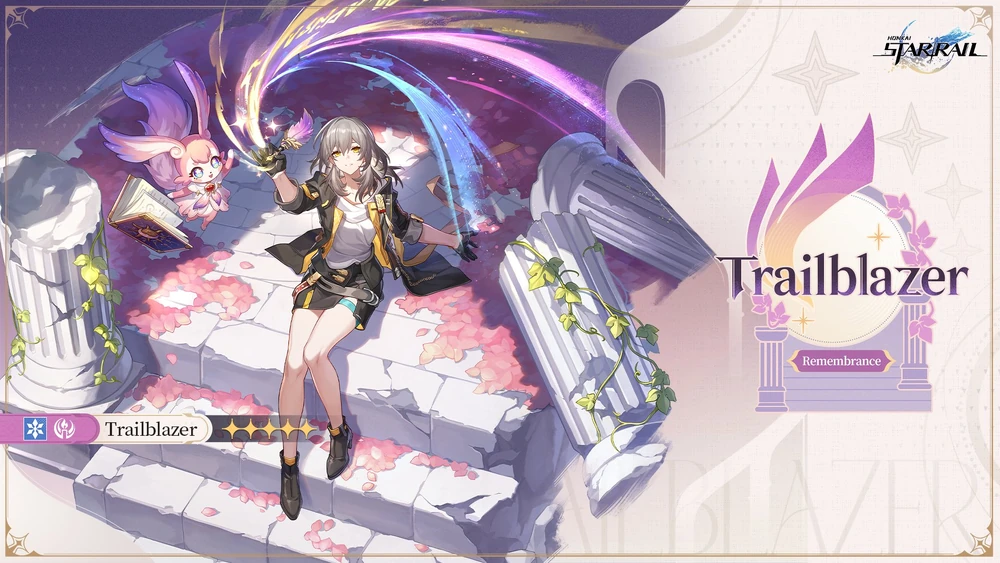
The most important relationship in her voice-overs is the Trailblazer. As a Memokeeper-turned-cremator of memories, Constance treats the Trailblazer as both specimen and muse. She notes that she can “see” the gazes and choices of others inside the Trailblazer’s memories and describes their essence as lively and astonishing. Her promise to “always… follow” the Trailblazer and the marks they leave in the cosmos is not a gentle vow of protection; it’s fixation.
For her, the Trailblazer is a walking archive of branching fates. The commitment to follow their footsteps reads like a professional obsession (a perfect subject whose story keeps changing) and a personal hunger for the moment when all of that will one day be cremated and buried.
What she hears in Acheron

When The Dahlia talks about Acheron, the tone shifts from clinical interest to almost romantic fascination. She calls Acheron “that enchanting lady” and imagines dancing with her, to the point of saying she might bow to Acheron’s charms and describing the prospect as “so… so beautiful.”
Constance’s language here is important. She rarely concedes power to anyone else; yet with Acheron, she openly entertains the idea of yielding. The dance metaphor fits both characters: Acheron’s Path of Nihility expresses itself in an endless, wandering duel with destiny, while The Dahlia choreographs betrayals and cremations of memory. A dance between them suggests a meeting of two different ways of erasing and rewriting futures.
Respect and rivalry with Black Swan
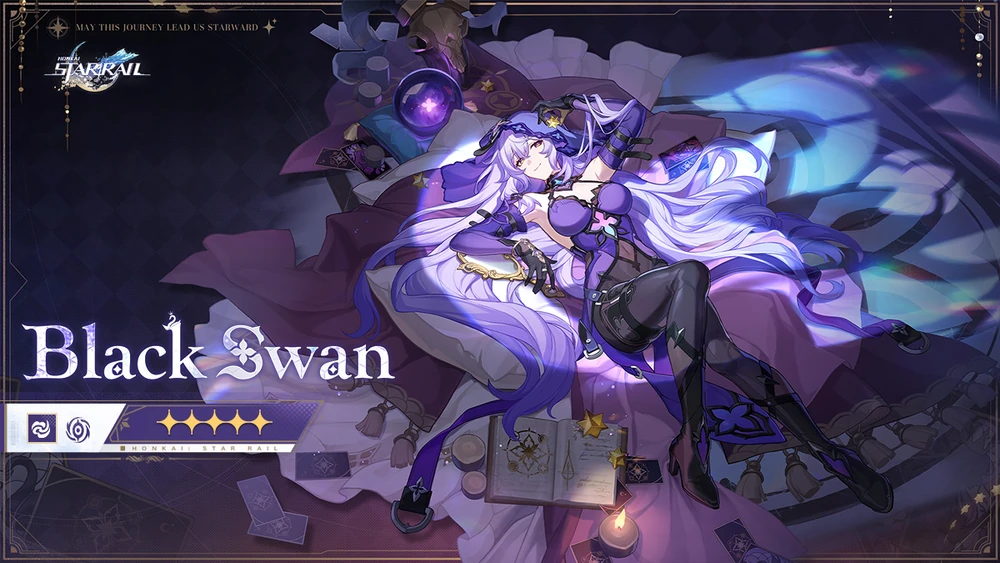
Black Swan prompts a more complicated reaction. The Dahlia calls her “that arrogant woman” and admits she shies away from her airs. That choice of words signals rivalry and a clash of styles inside the Garden of Recollection background, where both functioned as Memokeepers at different points.
Yet in the same breath she credits Black Swan’s mastery of fate and memory, praising her ability to open doors for destiny and create resplendent, almost blinding memories. For Constance, who prefers to let memories rot before carefully burying them, Black Swan represents the opposite technique: displaying memories in dazzling form. The line reads like a professional’s grudging respect for another specialist whose methodology she dislikes but cannot dismiss.
Firefly and the “script” of Stellaron Hunters

Firefly stands out as someone who fights the very idea of predestined roles. The Dahlia describes Stellaron Hunters as prisoners to a “script,” yet singles out Firefly for rebelling against fate again and again. She frames Firefly’s resistance in imagery of blaze and burial, wondering when that fire will finally burn away a past the Swarm has tried to cover up.
This is Constance speaking as both cosmic archivist and executioner. She recognizes that Firefly refuses to be just another prewritten tragedy in someone else’s timeline. The question about when Firefly’s blaze will consume her buried past is less about hope and more about curiosity: The Dahlia wants to witness the exact moment when that destiny snaps, because that’s the kind of turning point she loves to preserve—or cremate.
Duke Inferno and a memory she refuses to burn
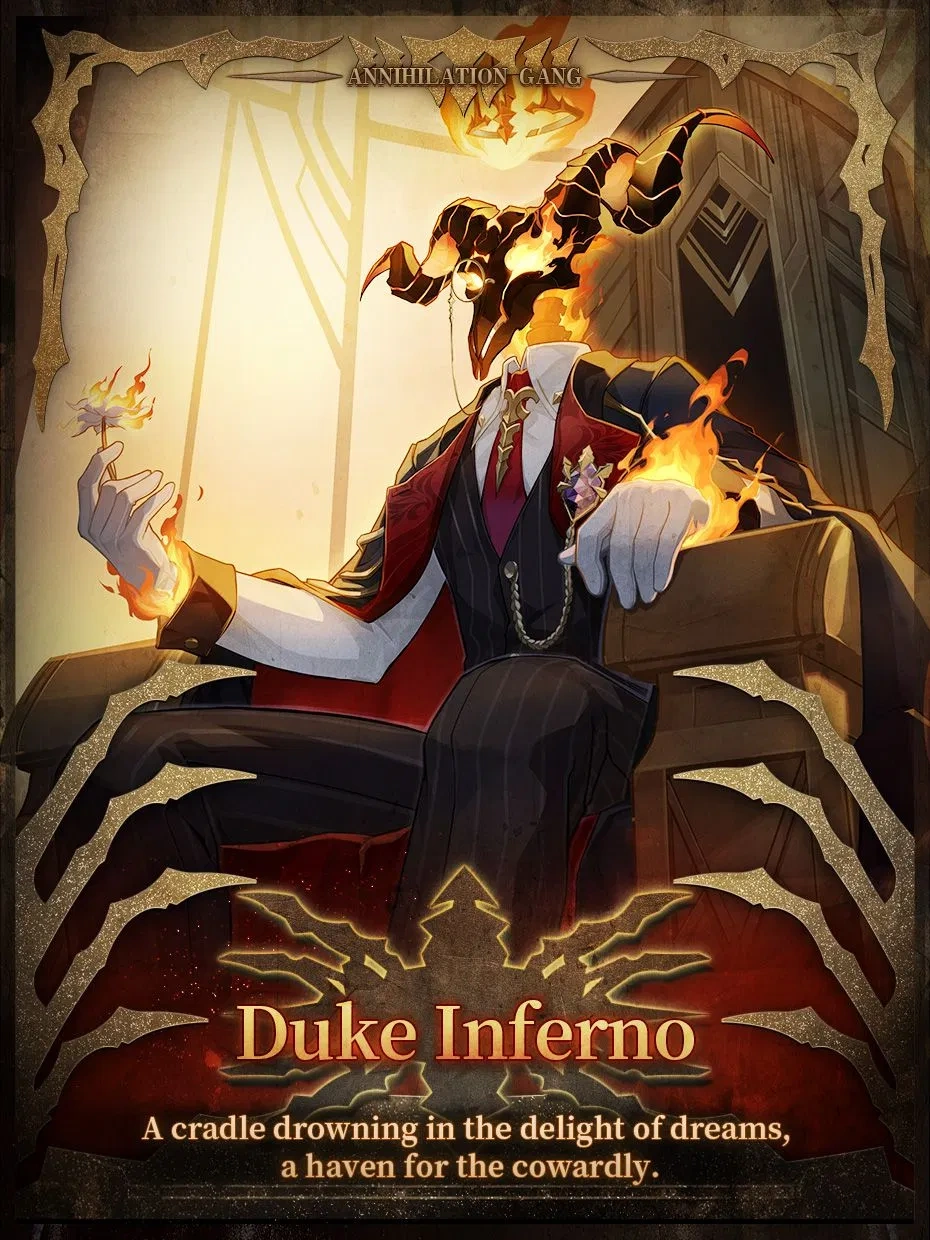
Duke Inferno is more than a passing reference; he is family and an early subject of her work. The Dahlia recalls how his ambitions were snuffed out suddenly, with no “savior” looking his way, and emphasizes that no one will remember his death except her. She insists she doesn’t remember him out of guilt or sorrow, yet admits she cannot forget the look in his eyes when he finally learned the truth.
For someone who preaches detachment and treats memory as material to sort, rot, and burn, holding on to that image is a quiet contradiction. It exposes the personal cost of her Path: she orchestrated and stoked the flames of his ambition, then watched the story end without glory. Her refusal to forget him undermines her claim that every memory can simply be processed and discarded.
Jade and the poison in paper contracts
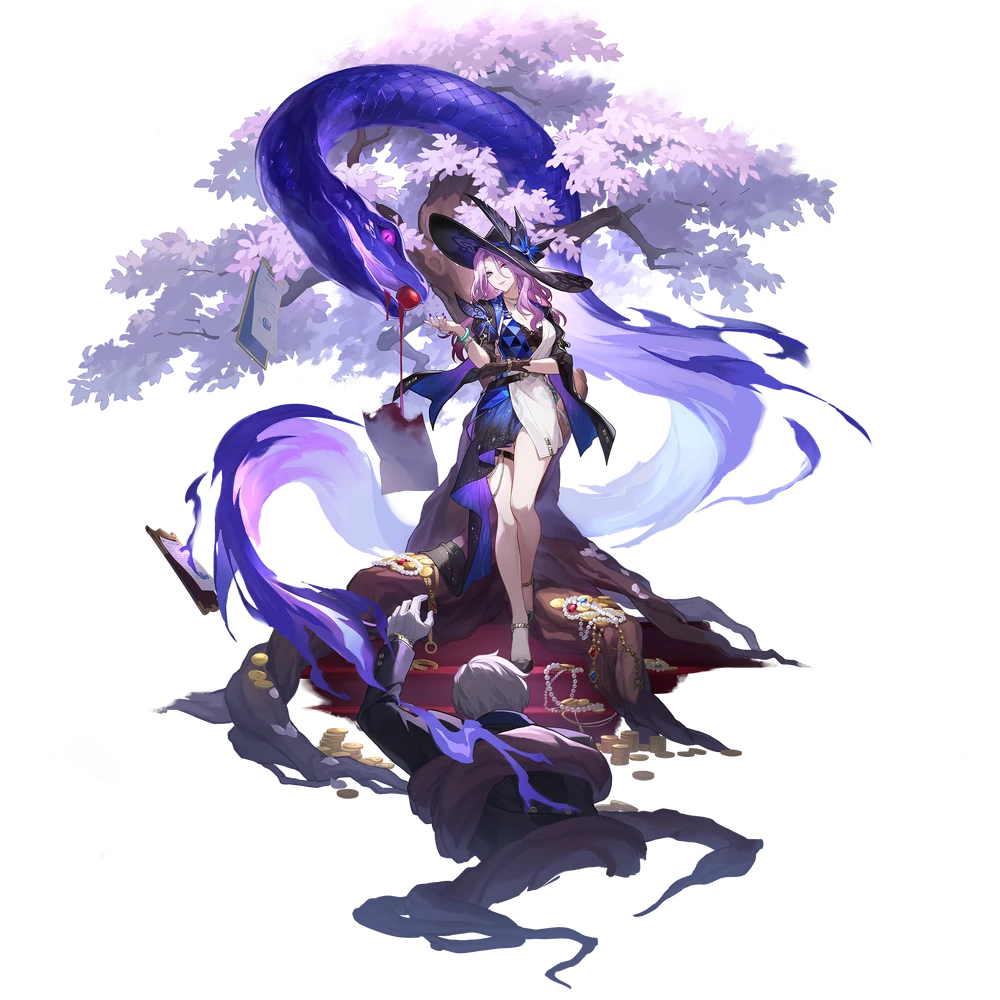
Jade brings out Constance’s distrust of surface-level bargains. The Dahlia questions the idea of binding two parties with a mere paper contract, wondering whether that is naïve or whether a poisonous serpent hides beneath Jade’s petals. She notes that the “strange fragrance” one encounters when entangled with Jade is almost irresistible.
That image layers several ideas at once. On one level, The Dahlia is skeptical of any deal that pretends to capture fate in legal language; contracts are too clean for someone who traffics in messy, decaying memories. On another, she recognizes a predator as skilled in entrapment as she is. The irresistible fragrance evokes her own allure: both women ensnare others, but where Constance uses memories and betrayal, Jade uses debt and obligation.
How these voice lines reflect The Dahlia herself
Each of these references loops back to Constance’s own history and philosophy. She followed the Path of Destruction, then Remembrance, and now walks Nihility as a Cremator. She once joined the Garden of Recollection because she craved change, then grew bored with fixed archives of remembrance and left to wander the cosmos, burning away the past.
Her commentary on Trailblazer underlines her fixation on people whose destinies are still being rewritten. Her response to Acheron and Black Swan reveals how she measures herself against other manipulators of fate and memory. Her framing of Firefly and Duke Inferno shows she gravitates toward moments where fate is challenged or realized in a single, irreversible instant. Her suspicion of Jade reflects a broader mistrust of any system—be it script, contract, or path—that claims to fully control another person’s story.
Listening to these lines in context, The Dahlia is less a neutral observer and more a curator of endings. She is always watching for the exact second when someone’s choices finally catch up with them, when their blaze either dies or consumes what the universe tried to bury. That is the memory she wants to hold, if only long enough to decide whether to keep it… or light the match.