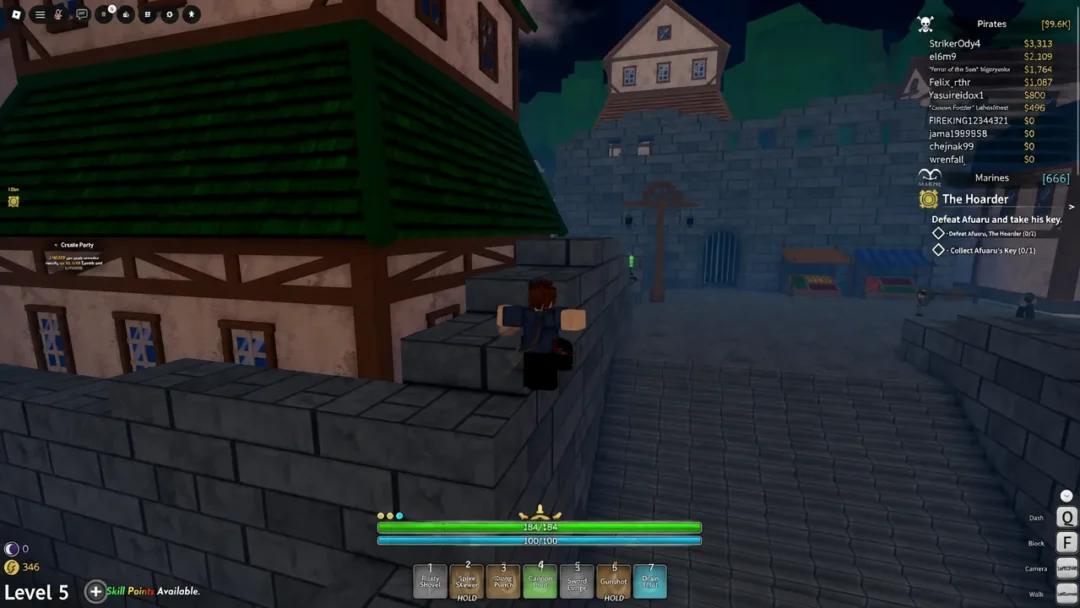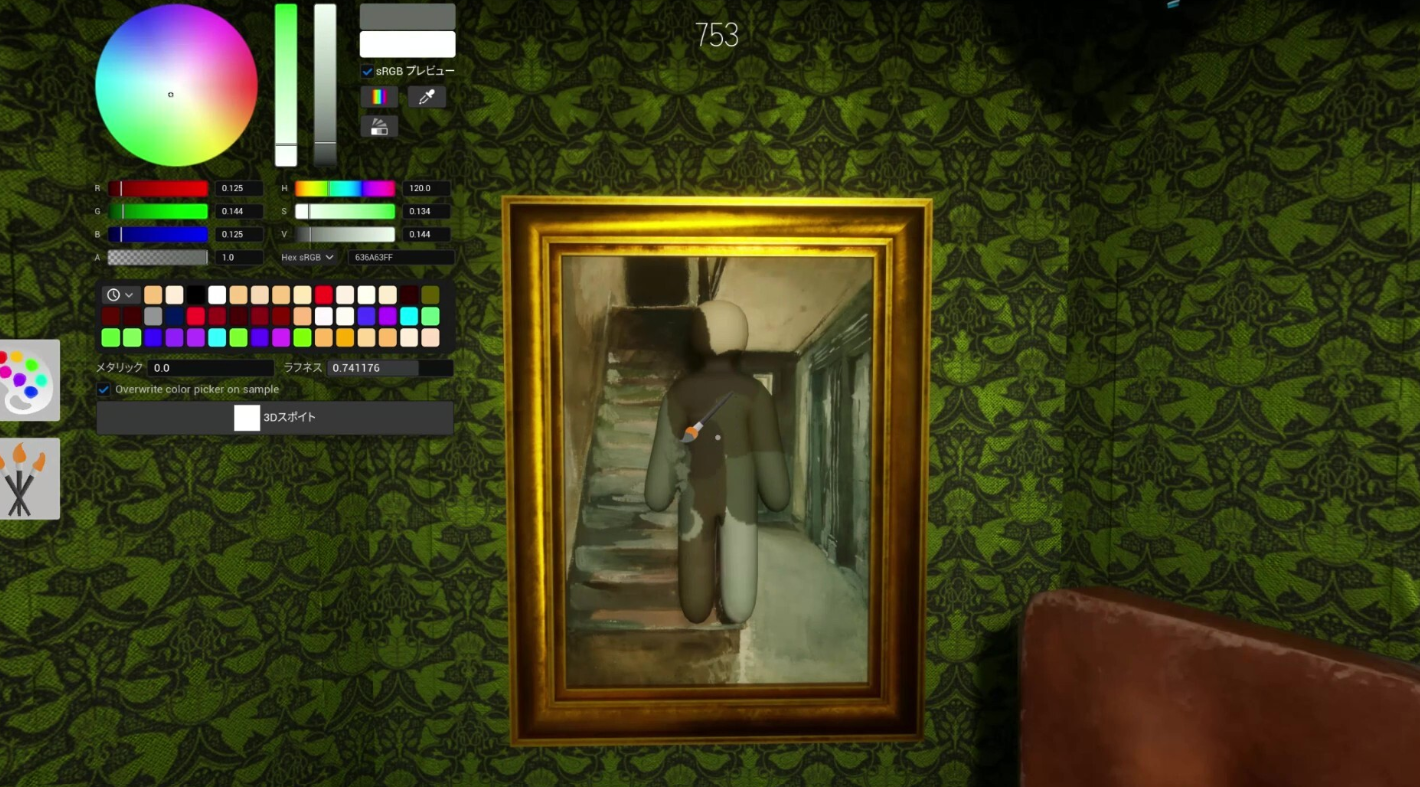
Meccha Chameleon runs every match on the same core idea. Hiders paint their white bodies to match the room and lock a pose, then Seekers hunt them before the timer runs out. What separates the three modes is the win condition and what happens the moment a hider gets tagged. Pick the mode that matches your lobby size and the kind of round you want.
Quick answer: Play Normal for small lobbies of 2 to 4 or new players, Infection (Increasing Oni) for a full group of 6 to 10, and Double for a competitive group of 4 to 8 that wants everyone to hide and hunt.
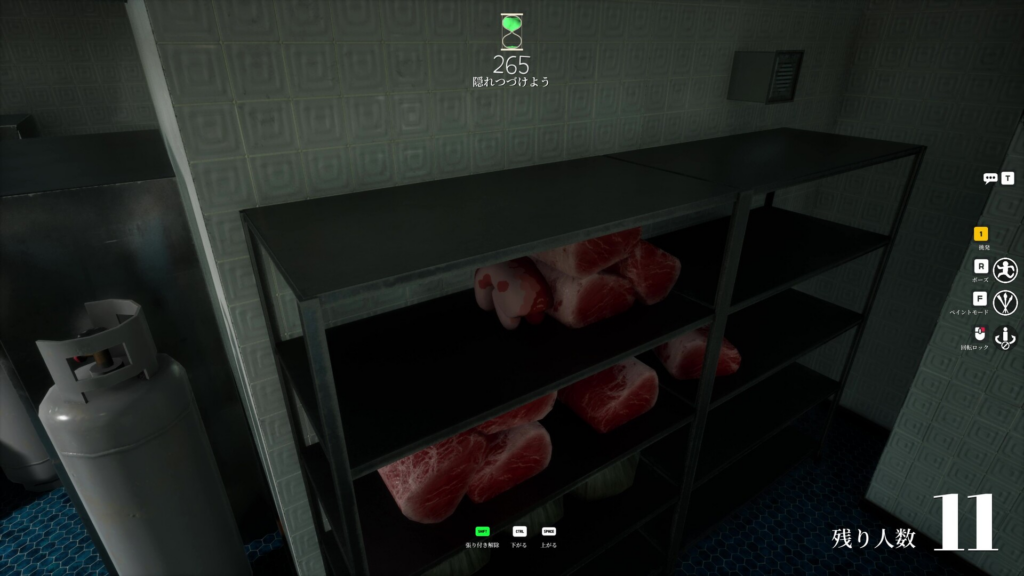
All three Meccha Chameleon modes compared
The host sets the mode, the map, and whether the server is public or private when creating the lobby. Lobbies hold 2 to 10 players. Every mode shares the same prep-and-hunt flow, so the table below focuses on the only things that change: what a tag does and how you win.
| Mode | When a hider is tagged | Win condition | Best player count |
|---|---|---|---|
| Normal | Hider is out for the round | Seekers find every hider; hiders win if one survives the timer | 2 to 4 |
| Infection (Increasing Oni) | Hider joins the Seeker team | Last hider still hidden wins | 6 to 10 |
| Double | Standard tag during the hunt phase | Everyone hides and hunts; fastest, most efficient clear wins | 4 to 8 |
Normal mode: fixed teams, cleanest rules
Normal is the default and the format every new lobby should open with. Players split into hiders and seekers. Hiders paint up and hide, seekers hunt, and a tagged hider is simply eliminated for the rest of the round. Seekers win by finding everyone before the clock hits zero. Hiders win if even one of them is still hidden when time runs out.
Nothing snowballs here, so the seeker count stays fixed and you always know how much pressure is coming. That makes Normal the easiest mode to read and the best place to learn the maps and practice both roles. It works best in small lobbies of 2 to 4, where rounds stay short, and every hide is easy to follow, and it is the friendliest setup for first-timers and stream lobbies.
Infection mode (Increasing Oni): the snowball round
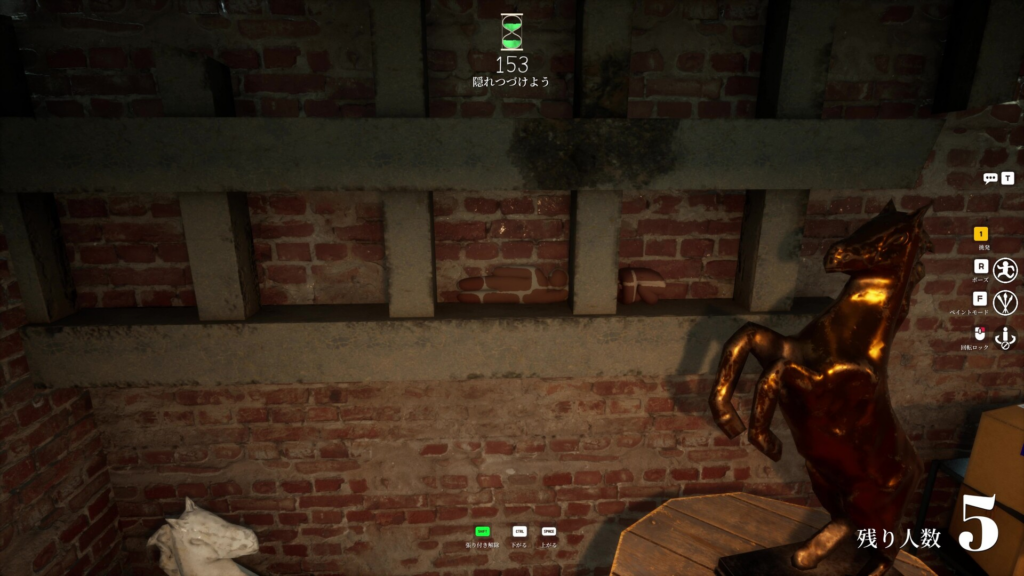
Infection, shown in the HUD by its Japanese name 増え鬼 and sometimes labeled Increasing Oni or Increasing Seekers, starts exactly like Normal. The twist is that a caught hider does not leave. Instead they join the seeker team, so the hunting side grows every time someone gets tagged. Pressure on the remaining hiders climbs the longer the round runs, and the last hider still hidden takes the win.
That changes the math for both roles. As a seeker, tag the easy targets first to grow your team quickly, then spread the larger group across the map. Early conversions decide the round, so a sloppy blend in the first minute costs far more here than in Normal. As a hider, the goal shifts from “do not get found” to “do not get found first,” which means picking a spot that survives a thin two-seeker sweep early and a crowded room of converted seekers late.
Tip: Infection scales best at 6 to 10 players. With only two or three people, the snowball ends almost immediately, so save it for a full lobby.
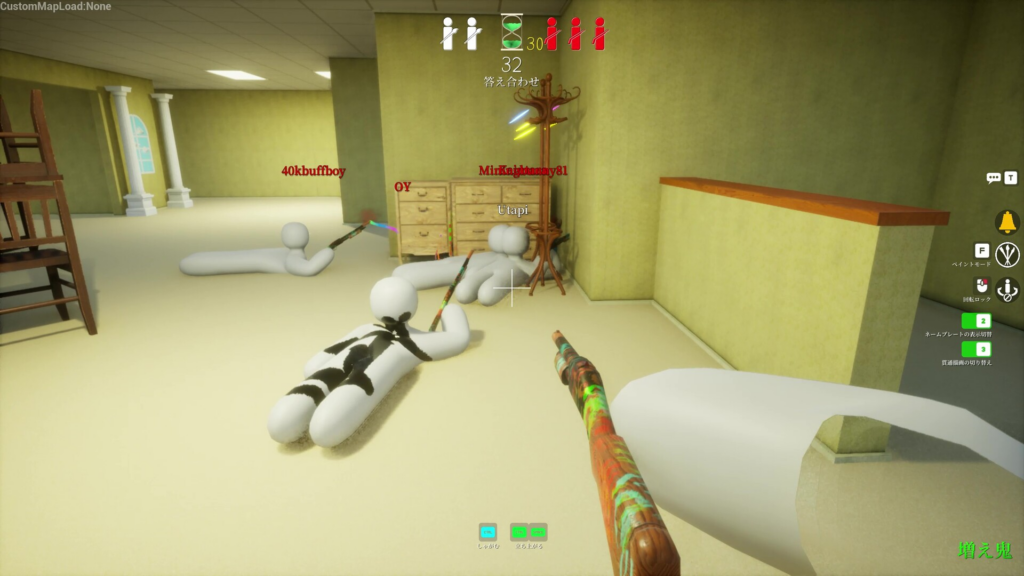
Double mode: everyone hides, then everyone hunts
Double removes the team split entirely. Every player hides for one half and seeks for the other, so each person takes a turn on both sides of the round. The side that clears fastest comes out ahead, which turns the match into a race instead of a standoff. The winner is the player with the fastest, most efficient seeking performance once both halves are complete.
This is the mode for groups that want a fair test, since nobody gets stuck on seekers all night. It rewards the all-rounder who can paint a clean blend and read a bad silhouette across the room. Double works well for competitive friend groups in the 4 to 8 range, enough players to keep the hunt phase interesting without dragging out a single round.
Which mode to pick for your group
The right choice comes down to lobby size and the pace you want. Use the quick read below.
- Normal — small lobbies of 2 to 4, new players still learning the paint tool, or anyone who wants steady, readable rounds.
- Infection — a full lobby of 6 to 10 that wants building tension, comeback pressure, and a clear last-one-standing winner.
- Double — competitive groups of 4 to 8 who want everyone to hide and hunt before a winner is decided.
Many groups rotate through all three in a session. Open with Normal to warm up, switch to Infection once the lobby fills out, and drop into Double when someone wants to settle who is best. You can grab the game on its official Steam page to set up a private lobby with friends.
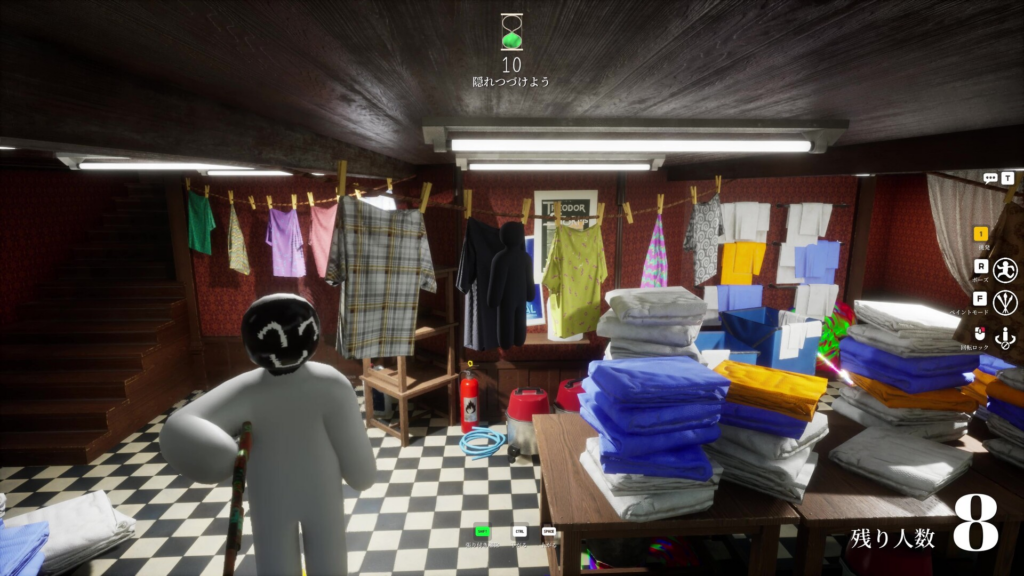
How to switch modes and confirm the round started right
Note: A v2.3.0 cross-mode option adds a Hunter ammo limit. A miss costs one ammo, a hit restores one, and fleeing is free, with all Hunters running out meaning the Hiders win. It can be toggled in options and applies to all three modes, and the same update raised the server-tag limit to 5.
Whichever mode you load, the underlying skills stay the same. Painting a clean, textured blend and spotting one across the room decide every round, so the mode you pick only shapes how that contest unfolds.