

Acupoint striking in Where Winds Meet looks like classic wuxia pressure-point magic, but in the game, it is a defined system of skills and contextual actions that interact with enemies’ “vital points.” Instead of being a single button or menu entry, it behaves as a family of mechanics that sit on top of the core combat loop.
What acupoint striking is in Where Winds Meet
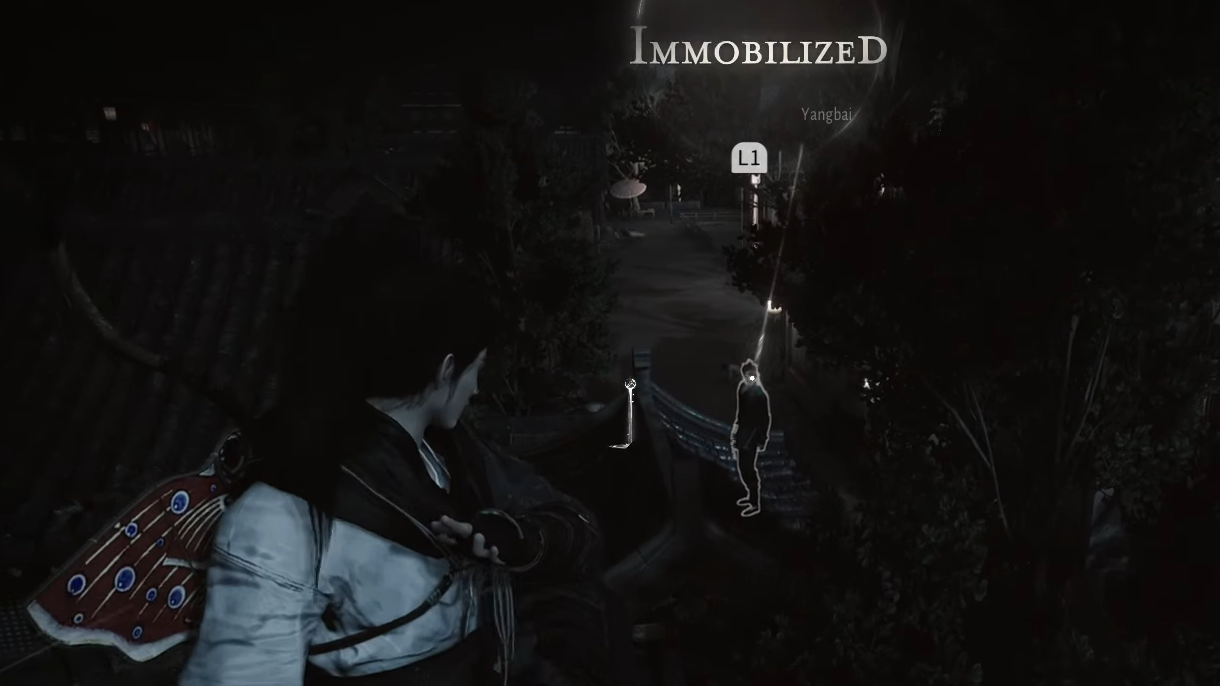
In Where Winds Meet, acupoint striking is a mystic technique that targets an opponent’s vital points to create short-term control effects. It does not replace your normal martial arts forms. Instead, it layers on top of standard attacks, dodges, and weapon skills, letting you momentarily override an enemy’s behavior.
The game presents acupoint interactions under a couple of related labels:
- Acupoint striking for offensive, combat-facing interactions that freeze, stun, or otherwise lock an enemy.
- Meridian touch for “unsealing” or interacting with a character’s internal energy flow in quests or story scenes.
Both rely on the same basic idea: you apply a special technique when a specific prompt appears, or when an enemy is in a defined state, and the game resolves that as a precise strike to a vital point.
How acupoint striking compares to pressure point fighting
Acupoint striking draws on the same fantasy that surrounds real-world pressure point fighting: the idea that a well-placed touch can drop someone instantly. In practice, combat sports and self-defense focus on striking areas where nerves lie near bone or dense muscle, such as the common peroneal or infraorbital region, because those spots reliably produce pain, loss of balance, or short-term disorientation.
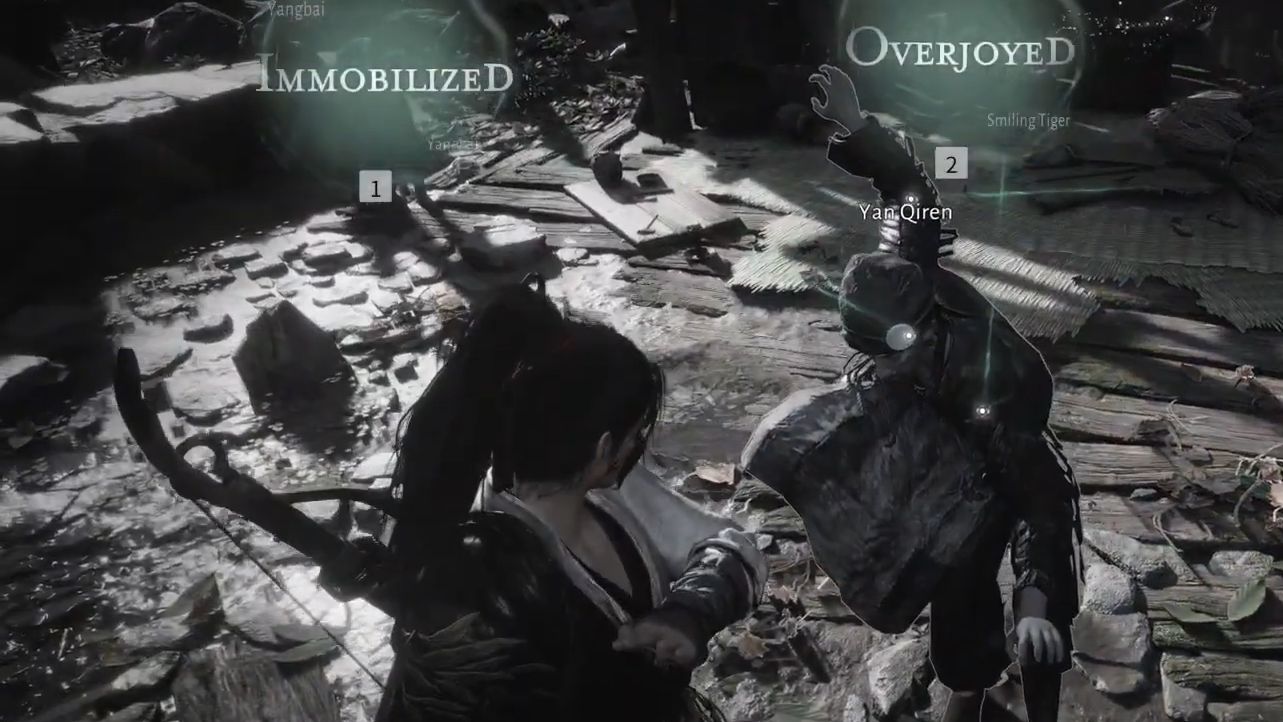
Where Winds Meet abstracts that physiology into status effects. A successful acupoint hit will not model specific nerves or blood flow, but it will:
- Interrupt an attack animation.
- Lock a target into a “frozen” or weakened state for a short window.
- Open up follow-up combos that would be unsafe against an active opponent.
The result feels consistent with wuxia fiction while still operating as a readable combat tool: you are encouraged to wait for windows, land a precise technique, then capitalize on the opening rather than spamming it on cooldown.
Core uses of acupoint striking in combat
Acupoint techniques show up mainly as contextual control tools during fights. Their behavior depends on the enemy’s current posture and the specific skill you are using, but a few patterns repeat:
- Freeze or root – the enemy is locked in place for a short time, letting you reposition or launch a heavy attack.
- Disrupt – the strike cancels a dangerous wind-up, similar to a perfectly timed parry.
- Expose – some enemies enter a staggered state that counts as “vital point exposed,” enabling extra-damage follow-ups.
In all cases, acupoint striking rewards timing and awareness more than raw button mashing. You wait for an enemy to commit, recognize the animation that signals a vulnerable frame, then apply the technique to flip the exchange in your favor.
Meridian touch in story and exploration
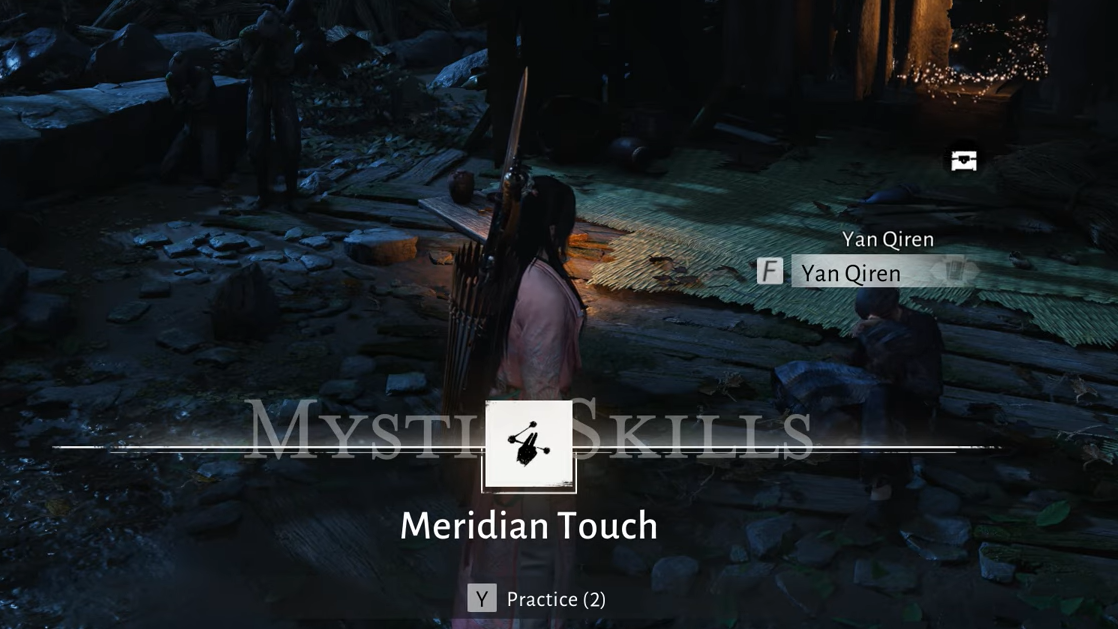
Outside open combat, the game leans on the same vocabulary for more narrative uses. Meridian touch is used to “unseal” or adjust another character’s acupoints, usually as part of a quest or scripted scene.
Typical uses include:
- Helping a character whose meridians have been deliberately sealed in the story.
- Interacting with hidden conditions on NPCs as part of investigation-style objectives.
- Fulfilling specific one-off requests inside larger questlines.
These moments rarely test your reaction speed. Instead, they treat acupoint knowledge as an in-universe skill your character has acquired, similar to medical or alchemical expertise in other RPGs.
Quest example: freezing Zhou Ergou peeking over the wall
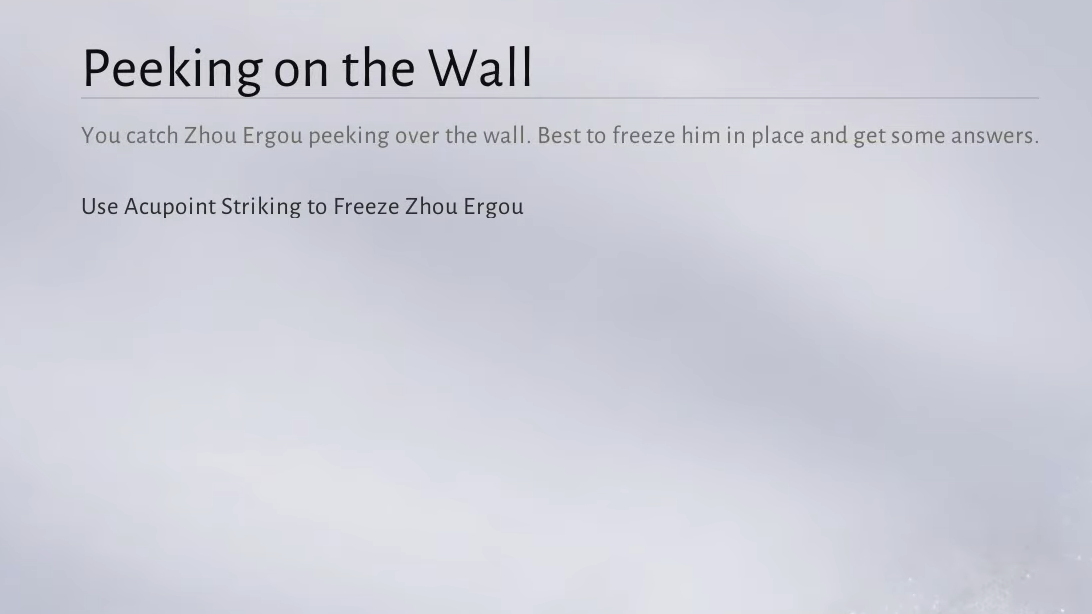
One of the clearest early demonstrations of acupoint striking appears in the “One Leaf, One Life” line, where you are asked to stop Zhou Ergou as he peeks over a wall. The game explicitly instructs you to use acupoint striking to “freeze” him instead of attacking outright.
The interaction breaks down into a simple sequence:
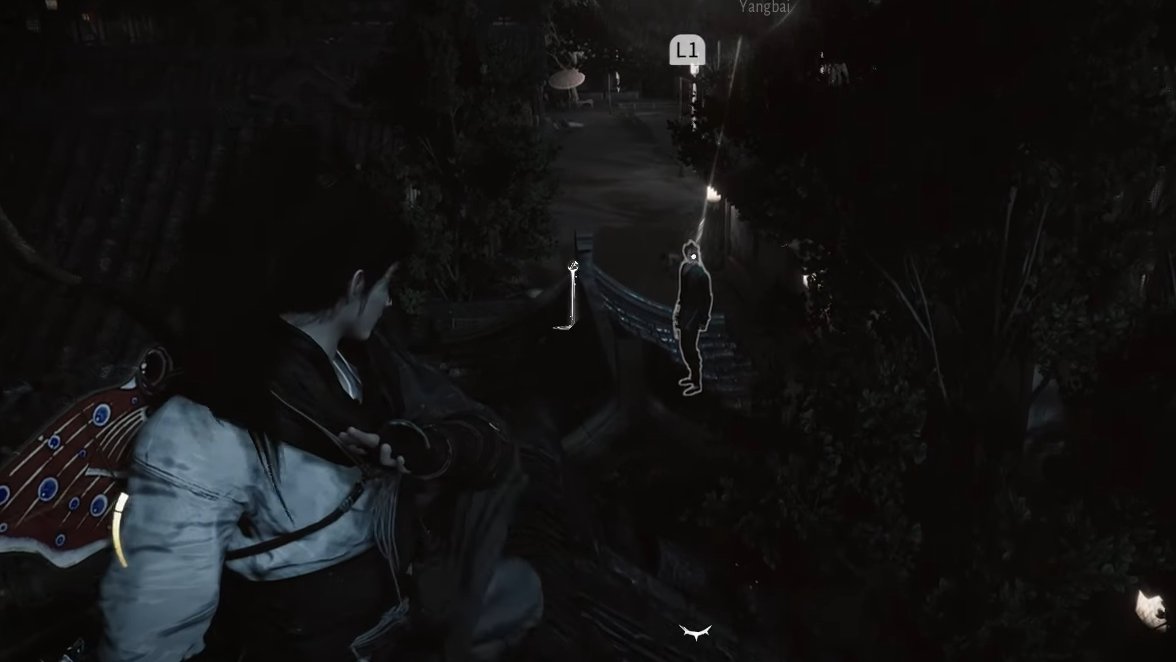
Step 1: Approach the wall quietly and wait until Zhou Ergou leans forward to peek. This posture shift is what the game treats as his vulnerable moment.
Step 2: When the acupoint prompt appears, trigger your assigned acupoint action rather than a normal attack. The window is short, so you need to anticipate it rather than react late.
Step 3: Once the strike connects, Zhou Ergou enters a frozen state instead of falling or raising an alarm. The quest then progresses with him immobilized, reflecting the fiction that you have locked his vital point rather than injured him.
This quest shows how the mechanic can enforce nonlethal or precise outcomes in a way that fits the setting. The game doesn’t require deep anatomical knowledge; it gives you a clear prompt and expects you to execute within that frame.
Quest example: unsealing Yan Qiren’s acupoint
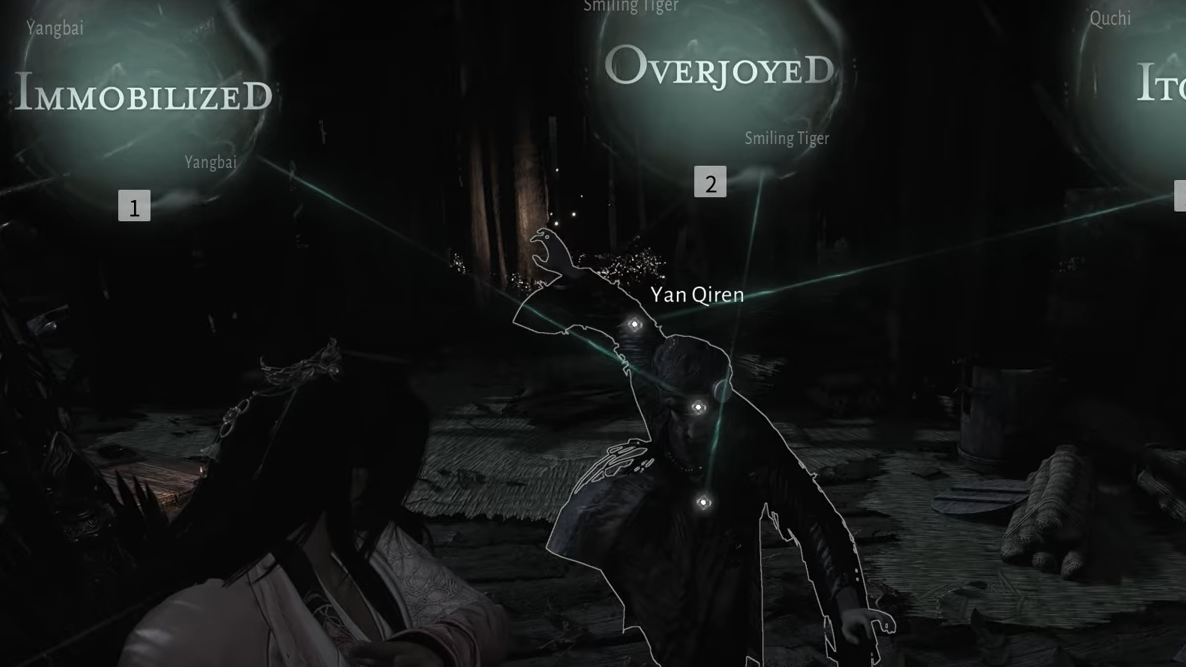
Another quest sequence revolves around using meridian touch to unseal Yan Qiren’s acupoint. Here, the focus shifts away from crowd control and toward restoration.
The structure is similar, but the context changes:
Step 1: Reach the stage in the quest where Yan Qiren’s condition is identified as an acupoint seal rather than a conventional injury. Dialogue usually makes this explicit.
Step 2: Engage with Yan Qiren when the interaction prompt signals that meridian touch is available. This replaces the standard talk or inspect options for that moment.
Step 3: Apply the meridian touch action as instructed. Once completed, Yan Qiren’s condition improves, and the questline continues, reflecting that you have undone the seal on their internal energy.
Where combat acupoint strikes impose a debuff, this kind of interaction effectively removes one. Mechanicall,y it is still a context-sensitive action, but narratively it reinforces your character’s status as a practitioner of nuanced martial arts rather than a simple fighter.
Interpreting acupoint striking through real-world vital point effects
Pressure point lore often promises effortless knockouts or the fabled “death touch.” Real nervous system targets do exist, but their effects are more grounded. A heavy shot to the common peroneal can cause intense leg pain and temporary motor dysfunction; a blow to the infraorbital region can stun and tear up the eyes; compressing the carotid sinus through a choke can eventually cause loss of consciousness. None of these are guaranteed instant switches on every attacker, especially under adrenaline or drugs.
Where Winds Meet adopts the drama of those ideas while smoothing away the biology. An acupoint strike in combat is guaranteed to work once the game recognizes the correct timing, because it functions as a designed control event. The result is a system that feels like a stylized “pressure point” style without asking players to navigate the inconsistencies that come with real human physiology.
Practical tips for using acupoint striking effectively
Within the game’s rules, acupoint striking becomes strong when used deliberately rather than on cooldown. A few habits help it stay reliable:
- Watch for posture shifts – enemies often briefly expose a vital point at the apex of a big swing, leap, or charge. That is usually when prompts appear.
- Avoid spamming the input – repeated attempts outside the intended window burn opportunities and can desync you from the required timing.
- Use it to control, not to kill – acupoint effects are short. Plan a specific follow-up, whether that is retreating to heal or committing to a heavy combo.
- Remember its narrative uses – when a quest mentions sealed meridians, blocked qi, or strange paralysis, expect meridian touch or acupoint-related prompts to appear.
Why the mechanic matters for Where Winds Meet’s identity
Acupoint striking and meridian touch act as a bridge between the game’s grounded open-world structure and the more mythic side of wuxia. They make fights feel less like pure weapon duels and more like clashes between practitioners who understand the body as a map of vulnerabilities. At the same time, the quest uses of acupoint interactions quietly turn medical and mystical knowledge into part of your toolkit for solving problems that are not strictly about damage numbers.
Used well, these mechanics turn a standard action-RPG encounter into a small tactical puzzle: study the opponent, wait for the moment the vital point is exposed, and choose whether to freeze, disrupt, or restore. That mix of precise timing and narrative flavor is what gives acupoint striking its distinctive role inside Where Winds Meet.