

Combat in Where Winds Meet hides more math under the hood than the game ever tells you. Affinity is the clearest example: it looks like “another crit stat” on your sheet, but it follows its own rules and scales off a different part of your damage range.
What Affinity is in Where Winds Meet
Affinity is a separate damage roll that can occur on top of a normal hit. When an Affinity hit triggers:
- The damage is always calculated from your Max Physical Attack, not your minimum.
- You get a flat bonus on top of that max value (20% by default, higher if you stack Affinity Damage Bonus).
- The chance for it to happen is your Affinity Rate stat.
In practice, that means Affinity turns some of your swings into “high roll” hits that ignore the low end of your damage range and punch directly at the top.

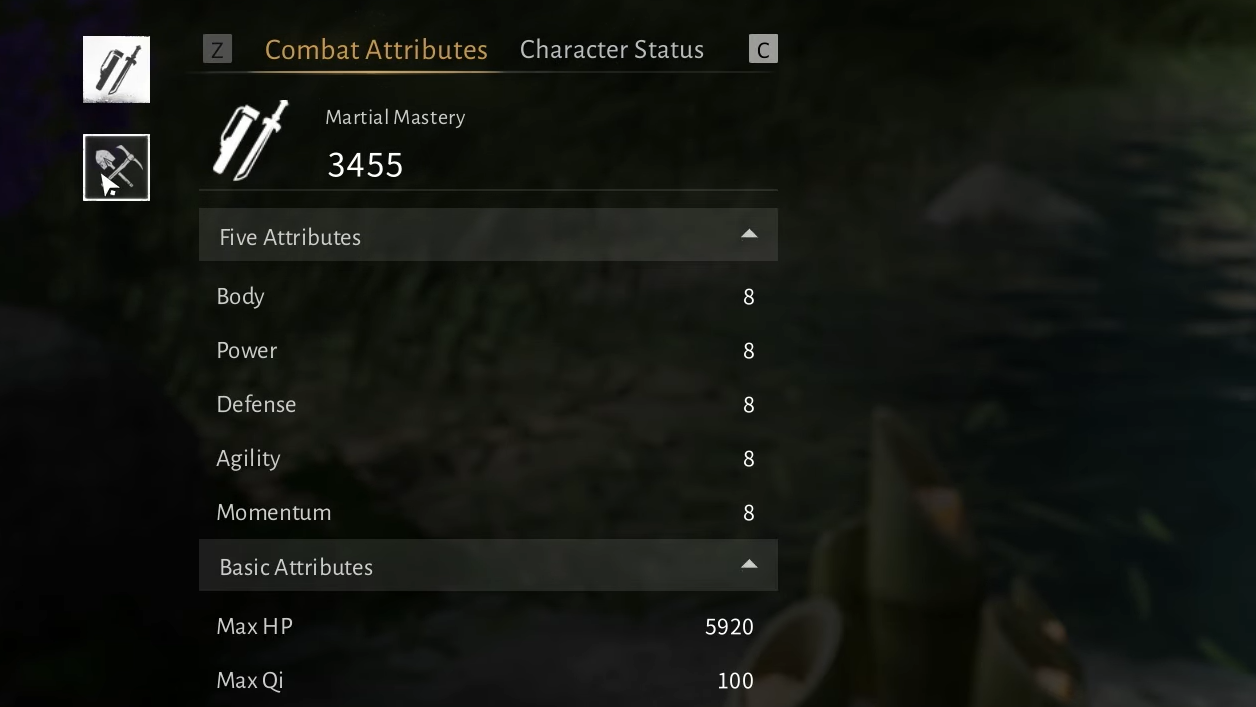
On your character sheet, Affinity is broken into three relevant combat stats:
- Momentum (primary attribute) – Raises both Max Physical Attack and Affinity Rate.
- Affinity Rate – “Chance to strike a target with Affinity.” Affinity hits “deal additional damage and are determined by your Max Attack” and “are unaffected by Precision.”
- Affinity Damage Bonus – “Determines damage caused by Affinity Hits,” effectively increasing the multiplier beyond the base bonus.
How Affinity interacts with normal hits, Precision, and Abrasion
Every time you land an attack in Where Winds Meet, several checks can happen:
- Precision Rate decides whether the hit is a Precision hit or a Non-Precision hit.
- Critical Rate can upgrade a Precision hit into a Critical hit (extra damage and extra healing).
- Affinity Rate can convert the hit into an Affinity hit (max-attack-based bonus damage).
- A failed Precision check can downgrade the hit into Abrasion, which uses your minimum attack and heavily reduces the number.
The important Affinity-specific rule from the stat sheet is that Affinity “is unaffected by Precision.” Precision changes whether a hit can crit or be abrasive, but Affinity can still trigger on both Precision and Non-Precision hits. Even on an otherwise bad Abrasion roll, Affinity can override that low damage with a max-attack-based spike.
Visually, the game uses different colors to show these outcomes:
- Gray numbers – Abrasion, your weakest hits.
- White numbers – Normal Precision-based damage roll.
- Yellow numbers – Critical hits.
- Gold/orange numbers – Affinity hits.
Players can also see Affinity interacting with damage-over-time effects: bleed ticks, for example, can occasionally appear as orange numbers, indicating that Affinity has modified the damage on that tick.
Affinity vs Critical hits
Affinity and Critical hits are separate systems that sit on top of your base physical damage.
| Mechanic | What it depends on | How damage is calculated | Key caps |
|---|---|---|---|
| Critical Hit | Requires a successful Precision hit, then a Critical Rate check. | Rolls anywhere between Min and Max Physical Attack, then adds a crit bonus to that roll (extra damage and healing). | Critical Rate is capped at 80%. |
| Affinity Hit | Uses Affinity Rate only; can trigger on Precision or Non-Precision hits. | Takes your Max Physical Attack, then adds a flat bonus (20% baseline, increased by Affinity Damage Bonus). | Affinity Rate is capped at 40%; Direct Affinity Rate can add up to another 10% on top. |
Because crits roll anywhere between your minimum and maximum, they’re sensitive to how wide that range is and how high your minimum attack is. Affinity ignores the variance entirely and always fires from the top end.
It is also possible for a single hit to benefit from both systems. In that case, the game first calculates the Affinity-modified damage from Max Physical Attack, then applies your Critical Damage Bonus on top. Those overlapping gold-and-yellow numbers are what let some builds delete boss phases when everything lines up.
Key Affinity-related stats on the character sheet
Several combat attributes feed directly into how often Affinity appears and how hard it hits.
| Stat | Type | Effect on Affinity | How to raise it |
|---|---|---|---|
| Momentum | Primary combat attribute | Increases Affinity Rate and Max Physical Attack at the same time. | Level up in Solo Mode; gear tuning that converts lines into Momentum. |
| Affinity Rate | Secondary stat | Base chance to trigger an Affinity hit on any attack. | Momentum Conversion, tuning, Inner Way breakthroughs, set bonuses. |
| Direct Affinity Rate | Secondary stat | Flat increase to Affinity Rate, up to an extra 10%. | Inner Way breakthroughs. |
| Affinity Damage Bonus | Secondary stat | Scales the extra damage portion of an Affinity hit. | Inner Way breakthroughs, certain passives. |
| Max Physical Attack | Secondary stat | Base value used to calculate every Affinity hit. | Power, Momentum, gear upgrades, conversions in Melodies of Peace. |
Other stats matter indirectly. Precision Rate still helps an Affinity-focused build by reducing how often you fall into Abrasion when Affinity does not trigger, and Physical Penetration or Physical Damage Bonus still scale the final number after Affinity has done its work.
Why Affinity feels different from crit-focused builds
Because Affinity uses Max Physical Attack and ignores Precision, it rewards very different stat patterns than a conventional crit build.
- Crit-focused builds lean on Agility (min attack and Critical Rate), Precision Rate, and Critical Damage Bonus. The goal is to narrow your damage range by raising the minimum, then trigger a lot of crits on those stable, “flat” hits.
- Affinity-focused builds lean on Momentum and Max Physical Attack. Normal hits can vary a lot, but when Affinity fires, you always land at the top of that range with a bonus on top.
The result is that high-Affinity setups produce more noticeable spikes – sequences where bosses suddenly melt – while crit-heavy setups feel smoother and more predictable from hit to hit.
In both cases, Precision is still useful: it keeps you away from Abrasion when Affinity doesn’t show up, and it enables crits on top of Affinity for the largest possible numbers.
How to increase Affinity damage
Affinity builds come together across three layers: attributes, gear, and Inner Ways.
Affinity through attributes
Momentum is the core attribute for Affinity. Each point raises both:
- Your Max Physical Attack (which every Affinity hit uses).
- Your Affinity Rate (how often Affinity triggers).
Complement Momentum with supporting damage stats:
- Power – Raises both min and max attack and helps every build.
- Precision Rate – Reduces how often you get stuck with Abrasion when Affinity doesn’t show.
- Physical Damage Bonus / Penetration – Multiplies or pierces defenses on whatever damage you end up dealing.
Affinity-specific secondary lines – Affinity Rate, Direct Affinity Rate, and Affinity Damage Bonus – are worth prioritizing when tuning mid-to-late-game gear once you’ve built a solid foundation of Power and Momentum.
Affinity through gear sets
Several armor sets in Where Winds Meet reward Affinity-heavy stat sheets.
- Hawkwing – A two-piece bonus adds a small Affinity Rate increase. At higher tiers, this grows into a meaningful percentage, and the four-piece bonus adds stacking Physical Attack buffs whenever you trigger Affinity, snowballing your damage across a fight.
- Jadewear – Focuses more on burst damage: extra Max Physical Attack and Affinity Damage bonuses tied to skill use let you front-load huge hits during windows where bosses are exposed.
Early Hawkwing tiers often show tiny-sounding Affinity Rate bonuses (for example, 0.1%). These are additive on top of all your other Affinity sources, and the value scales up as you acquire higher-rarity versions of the set; by level 50+, a two-piece Hawkwing bonus can sit over 1%, which is much more impactful once your base Affinity Rate is in double digits.
Affinity through Inner Ways
Inner Ways (the game’s passive internal arts) go beyond raw stat lines and add Affinity-specific effects.
- Insightful Strike – Tied to Strategic Sword / Heavenquaker Spear (Bellstrike – Umbra). “Dealing Affinity DMG increases your ability to see through enemy attacks, increases your Affinity DMG, and has a chance to reduce damage taken.” In other words, playing into Affinity not only raises damage but also grants defensive value during windows when you’re landing those hits.
- Divine Roulette – On a successful deflection, grants one of several powerful temporary buffs: guaranteed crit, guaranteed Affinity, or flat damage increase on your next skill. This is effectively a manual way to force an Affinity spike at key moments.
Many other Inner Ways feed the same ecosystem indirectly. Anything that raises Affinity Damage Bonus, Direct Affinity Rate, or Max Physical Attack will feed straight into your Affinity math, and effects that multiply “all damage dealt” naturally stack on top of Affinity’s base calculation.
How to actually see what Affinity is doing in-game
The game does contain text descriptions for all of these stats, but they’re buried.
Step 1: Open the Develop menu from the main in-game UI.
Step 2: Select the tab for your Abilities or Martial Mastery.
Step 3: On the right side of the screen, choose Details to bring up the full attribute breakdown.
Step 4: Hover over or highlight Affinity Rate, Affinity Damage Bonus, Momentum, and Precision Rate to read their exact descriptions.
From there, you can watch how your Affinity Rate and Max Physical Attack move as you tune gear, change Inner Ways, or equip different set bonuses, then compare that to how often gold/orange damage numbers appear during combat.
Affinity is one of the few stats in Where Winds Meet that changes not just how hard you hit, but how your damage feels from moment to moment. Building around Momentum, Max Physical Attack, and Affinity Rate shifts your character from flat consistency into explosive spikes, and once you start layering in set bonuses and Inner Ways that reward those spikes, the system finally starts to make sense.