

Hytale’s world is full of animals that look like obvious candidates for pets, mounts, and farm life. In early access, though, the game stops short of full taming. Instead, it gives you a couple of tools to lure and capture creatures so you can gather resources or start building out a base that’s ready for real taming when it arrives.
Taming in Hytale early access: the current state
Right now, traditional taming is not implemented. You cannot permanently claim a wild animal as a pet, ride a horse or camel, or use food alone to flip a creature’s allegiance.
Animals will still show familiar behaviors: they can be attracted by certain items, will move toward a lure, and may display heart particles during some interactions. That visual feedback does not currently translate into a persistent “tamed” state. Players who feed chickens, horses, or other livestock directly will not see them switch into a controllable or breedable form.
Instead, early access focuses on two mechanics that let you control where animals are and how you use them: the Feed Bag and the Capture Crate.
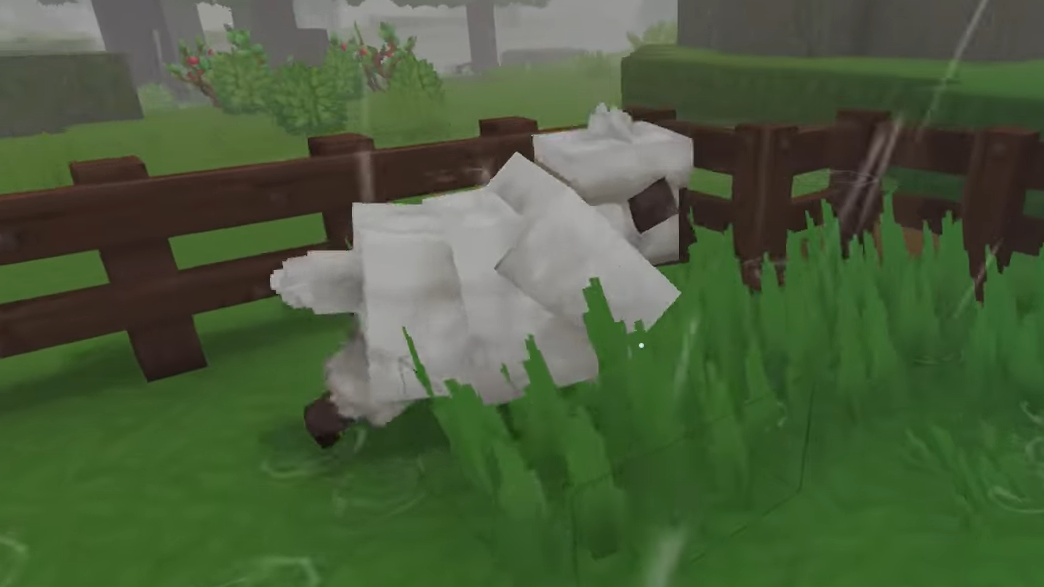
How animal luring works with the Feed Bag
The Feed Bag is the main way to pull animals toward your base or a specific point in the world. It acts as a passive lure, not a taming item, and it is built around farming resources you can obtain early in a playthrough.
What the Feed Bag does
When you place a Feed Bag in the world, it attracts nearby animals. Over time, creatures will wander into range and move toward the bag, clustering around it. This gives you a predictable way to gather livestock near your farm, or to set up efficient resource farming by bringing animals into a controlled area where you can pen them or harvest drops.
Using the Feed Bag does not create an ownership or pet relationship. Animals remain wild. They can be killed for meat or other drops, and they will not follow you around the world once they lose contact with the lure.
How to craft a Feed Bag
The Feed Bag is crafted through the farming progression, starting with a basic Workbench and then moving into the Farmer’s Workbench. That station unlocks the farming recipes that include the lure.
Step 1: Open the Pocket Crafting menu and create a basic Workbench using the required early-game materials (any Tree Trunk and Stone). Place the Workbench in the world and interact with it once it is deployed.
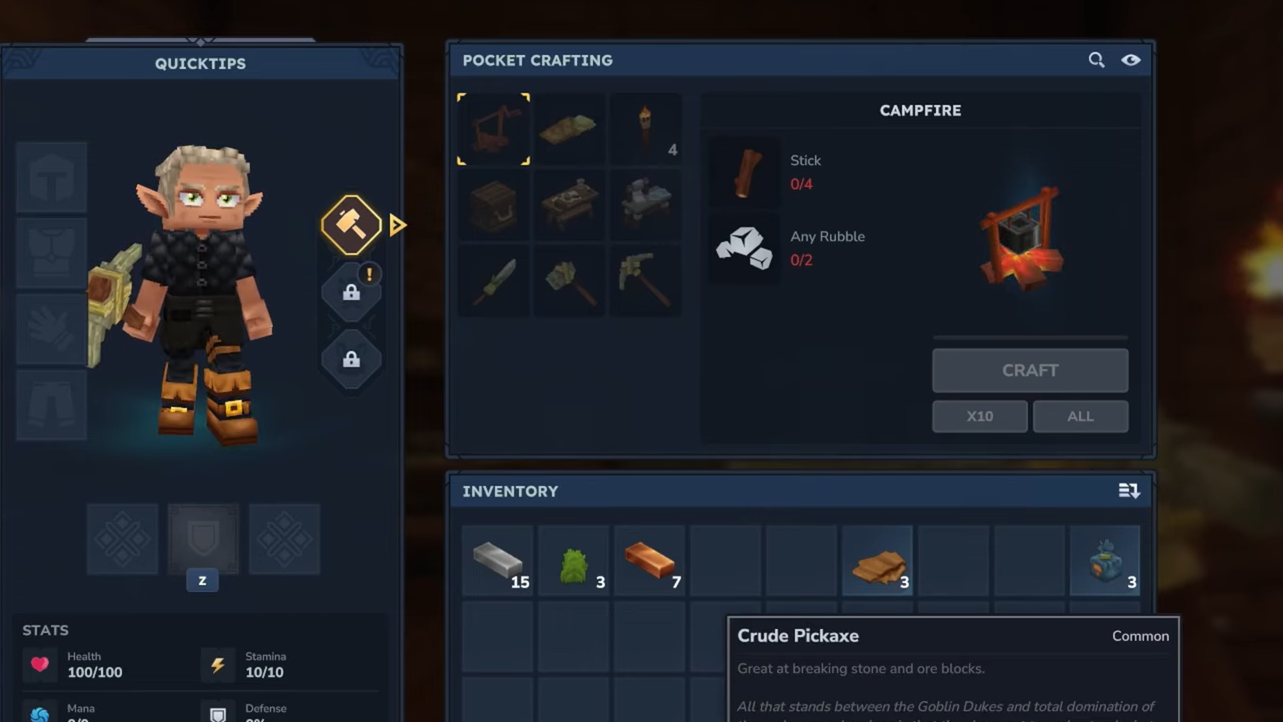
Step 2: From the Workbench interface, switch to the crafting section that covers advanced stations, then craft a Farmer’s Workbench using Tree Trunk and Plant Fiber. Place the Farmer’s Workbench at your base so you can return to it easily.
Step 3: Interact with the Farmer’s Workbench and open the Farming tab. Craft a Feed Bag using Wheat, any vegetable, any fruit, and Essence of Life. The exact recipe uses modest amounts of each, but you will need a steady supply of crops and Essence of Life before you can craft multiple bags.
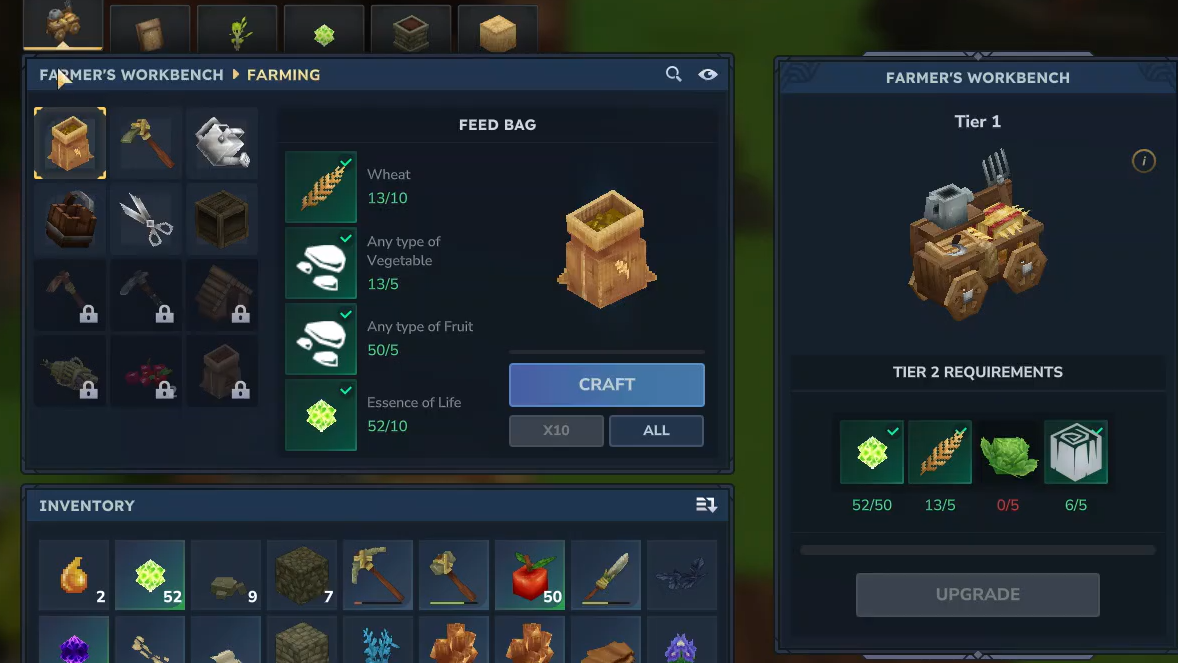
Step 4: Put the Feed Bag in a quick slot, then deploy it on the ground near your base or any area where you want animals to gather. Once placed, leave it active and let time pass; animals in the surrounding area will gradually be drawn toward the bag.
How the Capture Crate lets you move animals
Where the Feed Bag pulls animals in a general direction, the Capture Crate lets you directly move small creatures from one place to another. It is closer to a transport container than a taming tool.
What the Capture Crate does
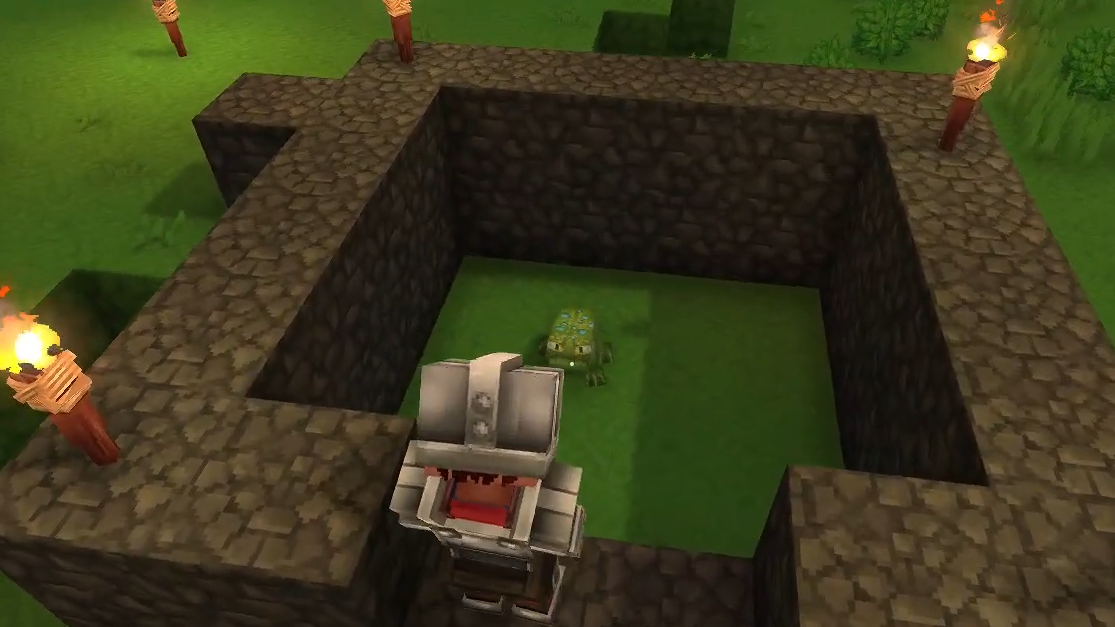
The Capture Crate is used on small animals to pick them up and store them as an item-like entity. Once captured, you can carry the crate back to your base and release the animal where you want it. This is useful if you find a useful species far from home and do not want to build a long, temporary pen or rely on leads.
Just like the Feed Bag, the crate does not confer ownership. Releasing an animal from a crate does not turn it into a pet, mount, or obedient follower. It simply appears in the world at the new location and behaves like any other wild creature of its type.
How to craft and use a Capture Crate
Step 1: Make sure you already have a Farmer’s Workbench placed, as the Capture Crate recipe lives in the same farming progression as the Feed Bag.
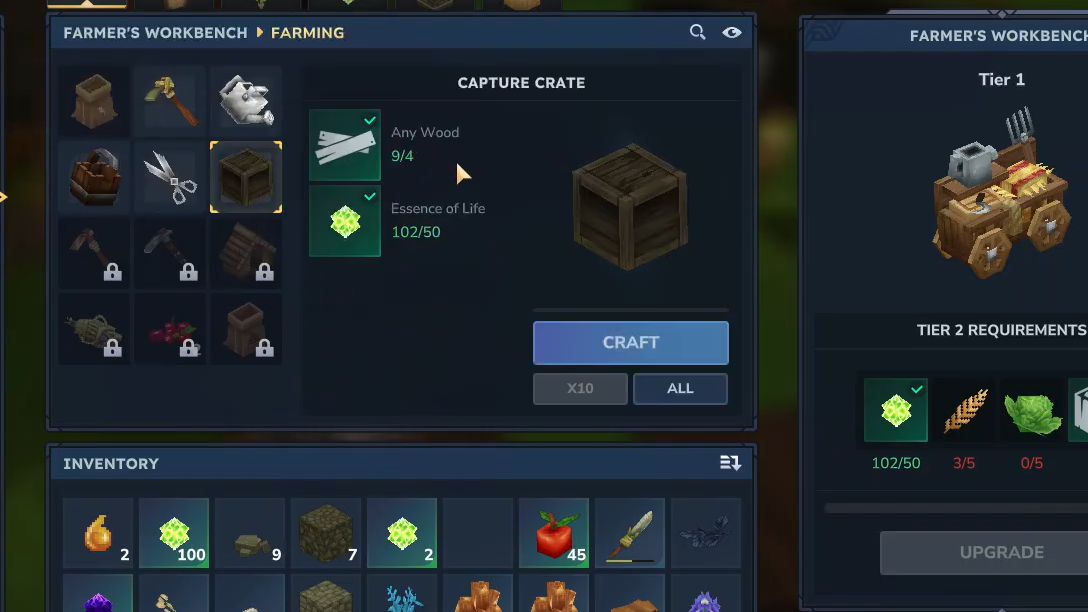
Step 2: Interact with the Farmer’s Workbench and switch to the Farming menu. Craft a Capture Crate using Wood and a relatively large amount of Essence of Life. The Essence cost is significant enough that you may want to reserve crates for animals you truly care about relocating.
Step 3: Equip the Capture Crate in a quick slot. Approach a small animal within interaction range and use the crate on it. If the animal is eligible, it will be captured and stored.
Step 4: Return to your base or any desired location and use the crate again to release the animal. Once released, it behaves like a normal wild mob, without any pet UI or mount controls.
Why feeding animals doesn’t tame or breed them yet
Players experimenting with food items like corn, carrots, and apples will see some feedback when interacting with animals. Horses, for example, can display heart particles when fed. Chickens can be fed seeds or crops in a way that feels similar to farm systems in other sandbox games.
Those reactions are currently cosmetic. They hint at the design direction for future taming and breeding, but they do not unlock new behaviors yet. Animals fed in this way will not enter a breedable state or become loyal to the player. Their core logic—wandering, fleeing, or idling—remains unchanged.
This gap between feedback and functionality is a major reason players report confusion about “why taming doesn’t work” when they are, in practice, interacting with systems that are not fully wired up yet.
Future pets and mounts in Hytale
Even though the feature is absent in early access, Hytale’s broader design clearly anticipates a full taming and mount system. The world of Orbis is built around distinct zones and ecosystems, each with animals that naturally fit roles as companions or transport.
Planned mounts
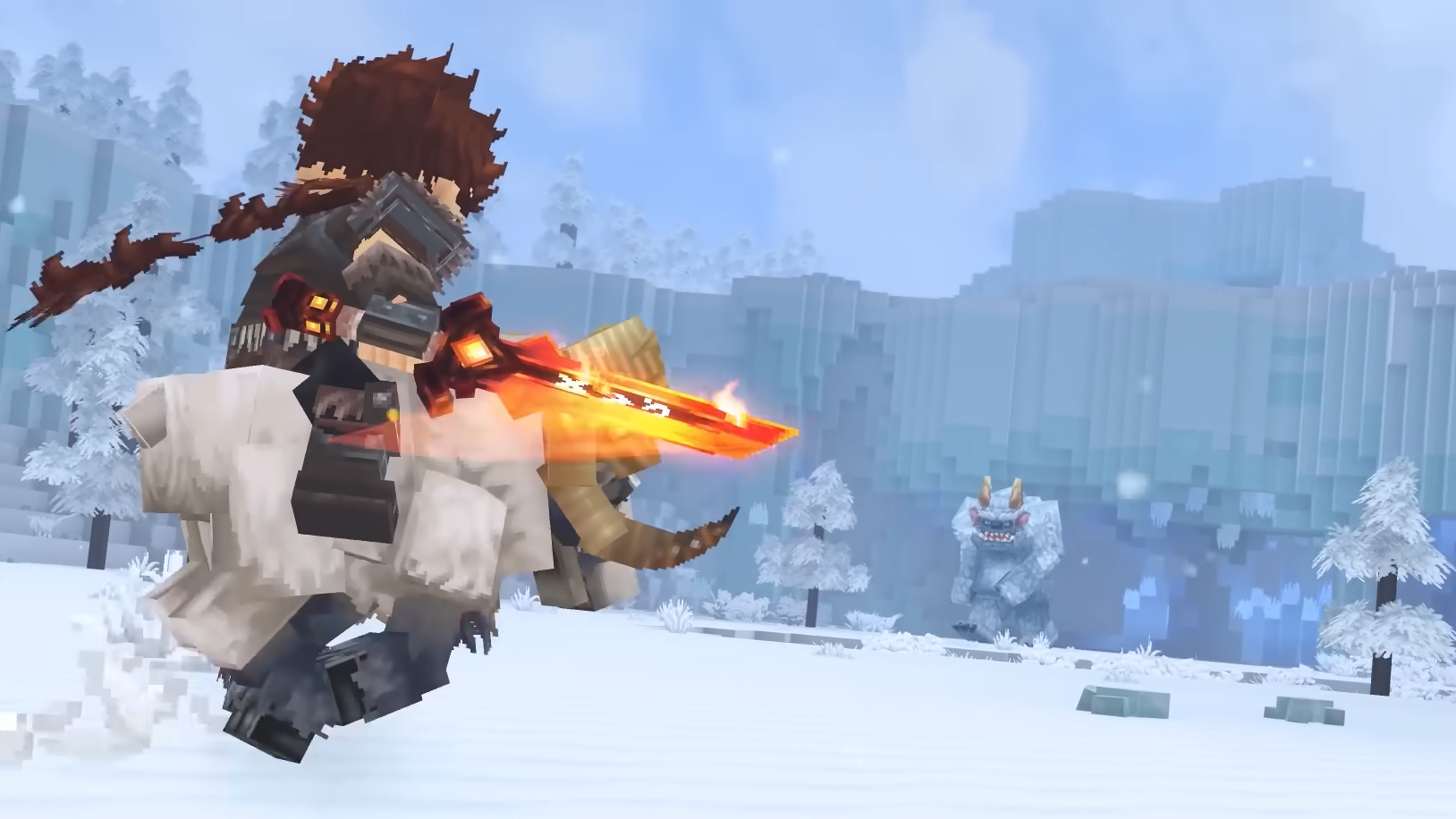
Horses, Camels, and the bird-like Tetrabird are explicitly planned as rideable animals. Mounts are expected to be a key part of traversing large distances, especially across wide deserts or rugged terrain. At this stage, these creatures exist in the game world but cannot be ridden or saddled by players.
Likely tameable animals
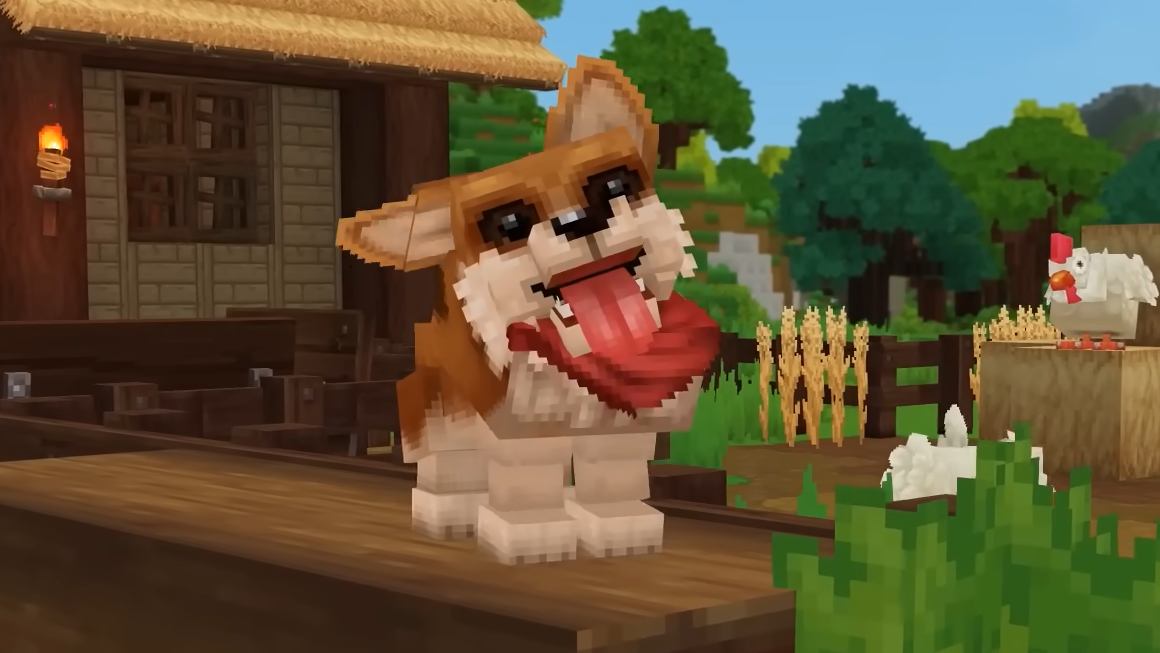
The game’s concept art, trailers, and in-universe documentation point to a broad set of animals that fit a tameable profile. Small, non-hostile animals such as Dogs, Cats, Foxes, Cows, Sheep, Deer, and Pigs are natural candidates for farm life or companionship. Some hostile animals, like Wolves and Hyenas, sit closer to the “befriendable” edge of the spectrum, especially as the game already depicts Trorks with wolf companions.
By contrast, sentient NPC tribes such as Kweebecs, Ferans, Slothians, and Trorks themselves are positioned as factions rather than pets, and the game’s more monstrous entities—undead, void creatures, Skaraks, and Dragons—are framed as threats rather than partners. Future systems are more likely to offer reputation or diplomacy with these groups than traditional taming.
Pets versus reputation
Design language around “befriending” hostile mobs suggests a distinction between two systems. On one side are classic pets and mounts: animals that live at your base, provide resources, or help you travel. On the other side are hostile factions whose members may stop attacking you once you build a reputation with them. That relationship is closer to a truce than a pet mechanic and should not be expected to use the same items or workflows as animal taming.
Where animals spawn and why location matters
Even without taming, understanding where animals live in Orbis helps you plan how to use Feed Bags and Capture Crates. Zones define both the landscape and the wildlife you will encounter.
| Animal | Primary zone | Notes |
|---|---|---|
| Boar | Emerald Grove (Zone 1) | Common early-game animal, useful for basic resources. |
| Wolf | Emerald Grove (Zone 1), Borea (Zone 3) | Sometimes appears alongside Trorks as a companion. |
| Bat | Emerald Grove (Zone 1), caves | Found in underground areas rather than open plains. |
| Bison | Borea (Zone 3) | Large herd animal, typically in colder regions. |
| Antelope | Howling Sands (Zone 2) | Seen in desert environments. |
Knowing these distributions makes the Feed Bag more effective. If you want Foxes or other specific species near your Emerald Grove base, for example, you may need to travel to the appropriate zone, capture them in crates, and relocate them. Alternatively, you can set up satellite farms in the zones where your target species naturally spawns.
How to prepare for full taming while playing early access
Even though taming is not active yet, progress in early access can put you in a strong position once the system arrives.
Build out your farming infrastructure
Both the Feed Bag and Capture Crate already lean heavily on crops and Essence of Life. Future taming items are likely to use similar ingredients. Establishing large fields of Wheat, vegetables, and fruit, along with efficient Essence of Life farming routes, means you will have the materials to experiment quickly when new recipes appear.
Design animal enclosures now
Use Feed Bags and Crates to prototype your farm layout. Even if the animals inside are technically “wild,” you can still practice building pens, stables, and pastures that are easy to access and expand. When taming flips on, you will be able to convert these holding areas into true barns and paddocks with minimal changes.
Scout zones for future mounts and pets
As you explore Orbis, note where you encounter horses, camels, Tetrabirds, wolves, and other animals you care about. Mark their locations and any biome features that seem to correlate with their spawns. Later, when taming and riding are available, you will know exactly where to go first rather than restarting your exploration from scratch.
Right now, Hytale’s animal systems are in a transitional state: visually expressive, mechanically limited, and clearly building toward something more complex. The Feed Bag and Capture Crate already offer meaningful control over where animals live relative to your base, even if they stop short of true companionship. Treat early access as a chance to learn the world’s rhythms, build your infrastructure, and experiment with how animals move and cluster. When full taming, mounts, and pets arrive, that groundwork will turn into a far more capable homestead almost immediately.