

Blueprints sit at the center of Arc Raiders’ long-term progression. They’re the items that permanently unlock new weapons, gadgets, mods, and crafting components at your Workshop as long as you successfully extract with them. Before the winter Cold Snap update, they were notoriously scarce; many players could go dozens of raids without seeing a single new one.
Cold Snap quietly flipped that script. Without any detailed explanation in the patch notes, blueprint drop rates spiked across the game, especially in tougher conditions like Snowfall and Night on late-game maps such as Stella Montis and The Blue Gate. Players immediately started posting screenshots of backpacks stuffed with schematics and recounting runs with four, six, or even eight blueprints in a single raid.
How blueprint drops worked before Cold Snap
Blueprints have always been technically global drops: almost any container in Arc Raiders can roll one, but the odds were low. Prior to Cold Snap, a typical player might go several raids with no blueprint at all. Reports of roughly one blueprint every five to ten successful night runs were common, even for people deliberately farming high-value areas.
Some container types and activities already had elevated odds:
- Raider containers such as Raider Caches, Weapon Boxes, Medical Bags, and Grenade Tubes had noticeably better chances of spawning blueprints than generic lockers or drawers.
- Security Lockers, which require the Security Breach skill at the end of the Survival tree, were effectively blueprint jackpots, especially on Dam Battlegrounds and Blue Gate.
- High-value loot zones like Dam’s Control Tower, Spaceport’s Arrival and Departure Buildings, Grandioso Apartments in Buried City, and Pilgrim’s Peak or Raider’s Refuge on Blue Gate were strong cluster spots because they simply contain lots of containers.
- Trials and quests could grant specific blueprints as rewards, including powerful weapons such as Hullcracker.
- Events and specific enemies—Harvester encounters for Equalizer and Jupiter, Hidden Bunker for Vulcano, Night Raid for Tempest, and Surveyors for extra drops—created targeted paths to particular recipes.

Even with these routes, overall blueprint acquisition was slow. Players with 100–150 hours often sat on 25–40 learned blueprints, many of them for grenades, glow sticks, or low-impact attachments. High-end weapons like Tempest, Venator, or Aphelion could easily be missing entirely, which fed frustration around expedition wipes: losing your collection when it took a whole season to assemble felt punitive.
What Cold Snap changed for blueprint drop rates
Cold Snap’s headline additions were the Snowfall map condition (with frostbite pressure), the Flickering Flames limited-time event, and a slate of balance tweaks. Buried in that update was a quiet change: blueprint spawn locations were expanded, and the drop rate was dramatically increased across the board, particularly in conditions with elevated loot values.
Players immediately started to notice several clear patterns:
- Blueprints now drop from “normal” containers at a much higher rate. Dresser drawers, generic breach boxes, and random lockers that used to cough up scrap are now producing grenades, attachments, and occasionally high-tier blueprints.
- Cold Snap / Snowfall conditions massively amplify the effect. On Snowfall runs, especially on Stella Montis and other late-game maps, players reported extracting with four or more blueprints in a single raid.
- Night and hard maps stack the odds even higher. A Stella Montis Night raid under Snowfall can feel like a blueprint piñata: multiple drops in a single room or even two blueprints inside the same container are now possible.
- Previously gated weapon blueprints have moved. Aphelion, previously tied to the Matriarch, now drops on Stella Montis, which suddenly makes one of the rarest weapons realistically attainable.
Alongside the anecdotal “blueprints everywhere” stories, some players surfaced internal modifiers suggesting the blueprint drop chance had been multiplied several times over—on the order of hundreds of percent—at least for a window right after Cold Snap landed. That early spike seems to have been dialed back slightly, but the post‑Cold Snap baseline is still far above the original 1–2 percent container rate.
How often you can expect blueprints now
Drop rates still hinge on RNG and personal luck, but the lived experience of most players has changed from “weeks without a single schematic” to “seeing them regularly, sometimes too regularly.”
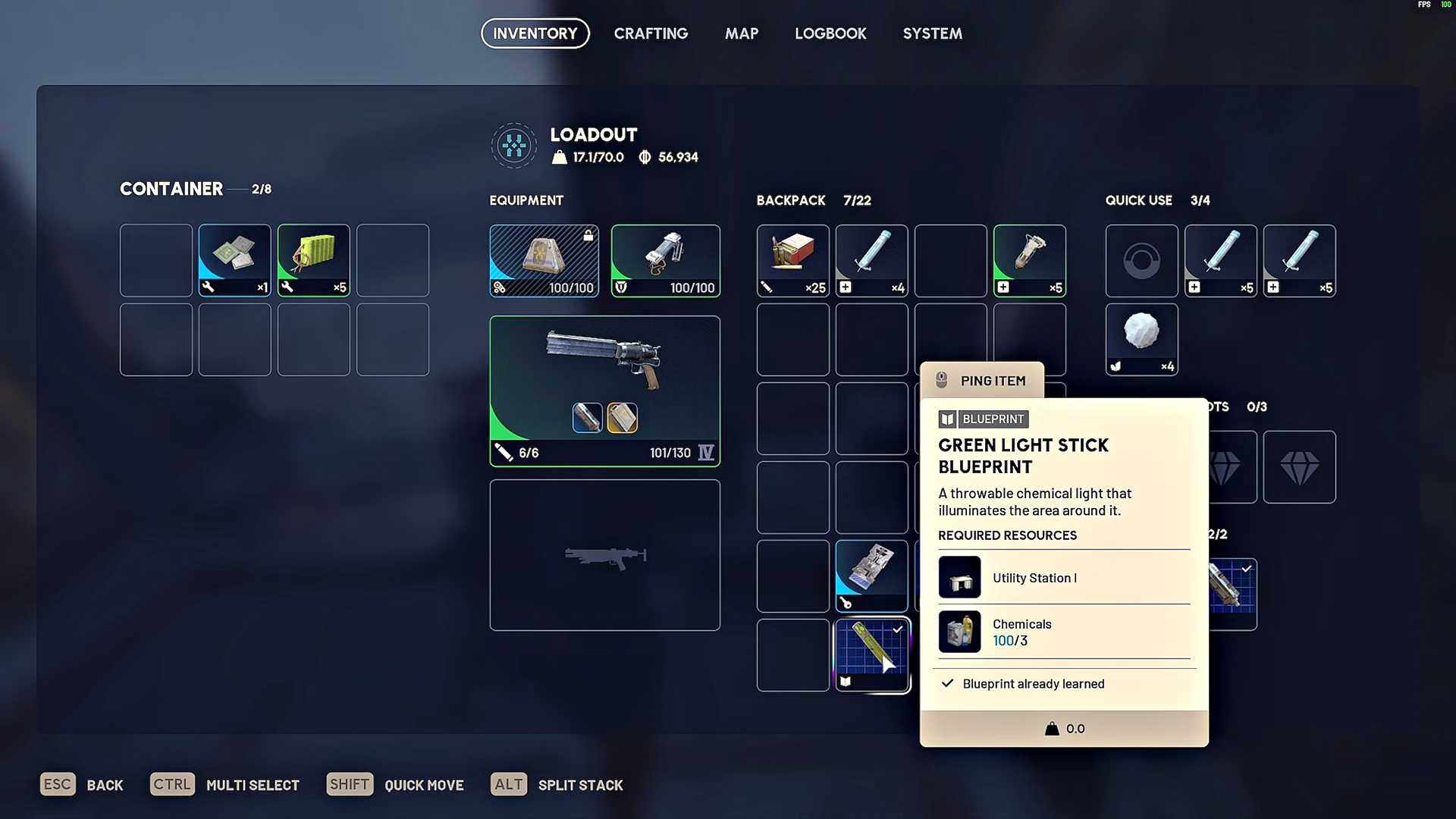
Across community reports, a few rough bands emerge:
- On standard daytime raids with average looting, hitting a mix of mid‑ and high‑tier areas, players now often see around one blueprint every one to three raids.
- On Night or Cold Snap conditions, especially when looting aggressively, it’s now common to come out with one blueprint per run and not unusual to see two or three.
- On stacked conditions on late‑game maps (for example, Stella Montis or Blue Gate on Snowfall Night), well‑routed players can spike to four or more blueprints in a single raid, with rare outliers reporting six to eight.
Duplicates are a big part of the picture. Many of those drops are glow sticks, bolt mines, or tier‑2 attachments that players already learned. That matters for progression pacing: even with the new generosity, it still takes a large number of raids to fill out all 70‑plus blueprints, because the chance of any individual drop being brand‑new keeps shrinking as your collection grows.
Why the higher blueprint rate matters for expeditions
Expeditions are Arc Raiders’ prestige system: you retire your current raider, reset most progression (including blueprints), and earn long‑term rewards such as extra skill points and stash upgrades. The first expedition project also adds up to five additional skill points that cannot be reached any other way, which makes resetting mandatory for anyone chasing a fully developed skill tree.
Before Cold Snap, that tradeoff felt brutal. Someone with a modest set of 25–30 useful blueprints could be staring at another full season of grind just to get back to where they started, and that made expeditions a non‑starter for many. With higher drop rates, the equation changes:
- Rebuilding your kit becomes a medium‑term project instead of a full‑season chase. If you can reliably unlock a handful of good weapon and gadget blueprints each week, the sting of losing them on reset is less severe.
- Risk‑taking after a wipe becomes easier. Knowing that you can reasonably re‑acquire key recipes within the three‑month expedition window encourages players to experiment instead of hoarding.
- Optional reset feels genuinely optional. Players who want to skip an expedition to maintain their current blueprint spread can do so without feeling like they’re permanently locked out of progression, because the next season will let them rebuild faster anyway.
The Cold Snap patch also let players respec their skill tree for Coins instead of treating expedition as the only way to correct early skill choices. That softens the “must reset to fix my build” pressure and pushes expeditions more toward a “prestige and chase new rewards” decision. Faster blueprint acquisition dovetails with that shift: the focus moves away from hoarding rare recipes and toward what you actually craft and bring into raids.
Impact on real‑money trading and blueprint hoarding
Before the increase, blueprint scarcity fueled a small but very real black market. Sought‑after schematics for weapons like Bobcat, Tempest, or high‑tier attachments were being listed on third‑party trading sites for eye‑watering amounts, with some sellers claiming three‑figure or even four‑figure sales. That kind of value inevitably attracts cheating, account compromises, and duping schemes.
By flooding the game with more drops, Cold Snap effectively collapsed that economy overnight. When a rare blueprint can be found multiple times in a week instead of being a once‑per‑season miracle, it no longer justifies a $100‑plus price tag. Players who had been hoarding duplicates as a form of off‑book currency saw their stockpiles lose value quickly.
The higher drop rate also undermines “mule” hoarding strategies tied to expeditions. One approach was to park extra blueprints on friends who’d chosen not to reset, then reclaim them after your expedition. When practically everyone can restock their blueprint library over a few weeks of normal play, the incentive for that kind of meta‑gaming fades.
Some players still argue for structural changes to finish the job, such as preventing learned blueprints from being brought back into raids at all or locking extracted schematics to your account so they can no longer function as tradable items. The new drop environment makes those proposals more palatable: once blueprints are relatively accessible, they no longer need to double as quasi‑currency.
Why opinions on the new blueprint rate are so split
Reactions to Cold Snap’s blueprint bonanza fall into three broad camps, and all three have reasonable arguments.
For many casual and time‑limited players, this is a relief. If you can only play a few hours a week, the old rate of “maybe one blueprint after several nights of farming” meant you might finish a three‑month season with fewer than ten useful recipes. That’s not much to show for an entire expedition cycle. Seeing at least one blueprint most sessions makes the game feel more rewarding and makes expeditions less intimidating.
For others, the new rate feels over‑tuned. Players averaging three to five blueprints per raid describe the thrill of finding one as “gone.” When multiple blueprints drop in the starting room or from random low‑tier containers, the psychological weight of the item shifts from “rare find” to “another 5,000 Coin trinket.” That risks flattening the sense of progression, especially for those who enjoy having long‑term chase items.
There’s also a middle‑ground view. Plenty of players like the overall direction but would prefer a moderated rate—something like one blueprint every two or three raids as a norm, with rare spikes in high‑risk conditions. Under that model, common grenades and basic attachments could remain frequent while high‑tier weapons, tier‑3 augments, and expedition‑defining items stay rare enough that a drop still matters.
One key nuance is that not all blueprints are created equal. The extra flood consists heavily of low‑impact items: glow sticks, bolt mines, common mods, and duplicates. That softens concerns that “everyone will have every top‑tier weapon in a week,” but it doesn’t fully solve the feeling that the category as a whole is less special.
How higher blueprint drops change gameplay and balance
Blueprints don’t win fights on their own; crafting and upgrading still require materials and Coins, and top‑tier guns are expensive to bring to level 4. That means the new availability doesn’t instantly erase lower‑tier loadouts.
A few practical shifts are already visible:
- More variety in guns and gadgets in the field. When more people can craft above‑blue weapons and rare grenades, raids feature fewer identical Stitcher/Kettle/Ferro combos and more oddball builds. That makes PvP encounters less predictable and PvE runs more interesting as different tools show up.
- Lower gear fear for mid‑tier equipment. Knowing that blueprints for grenades, barricades, and mid‑tier attachments are now common encourages players to actually use them rather than hoard them in case they “never drop again.”
- High‑end pink and yellow weapons remain constrained by resources. Guns like Tempest, Bobcat, or Vulcano are relatively cheap to craft once you have the blueprint, but fully upgrading them demands rare components such as advanced mechanical parts or complex gun parts. Those same materials are also needed to push blue or even green guns to level 4. As a result, plenty of players still default to meta blue weapons like Stitcher or Anvil because they’re cheaper to maintain at competitive power.
From a design standpoint, making more blueprints available supports a shift in balance: gray “found” weapons can be tuned weaker, while crafted items become the expected baseline for serious play. That’s only viable if most of the population can realistically unlock crafting recipes in a single expedition window—which the new drop rates finally enable.
Efficient ways to farm blueprints under the new rates
With the environment so much more generous, you no longer need razor‑perfect routes to see progress, but smart routing still helps if you want to stockpile schematics before an expedition or future nerf.
1. Lean into high‑risk conditions. Night, Snowfall, Electromagnetic Storms, and other high‑tier map modifiers still stack loot value. Running these conditions on late‑game maps like Stella Montis, Blue Gate, and Dam Battlegrounds gives the highest blueprint density per minute, especially if you know the dense container clusters.
2. Prioritize container density over named spots. With the expanded spawn locations, it matters less whether you’re in a “famous” blueprint room and more that you’re opening a large number of containers quickly. Residential blocks such as Pale Apartments and Ruby Residence, or complex interiors like hydro domes and industrial annexes, shine because you can chain dozens of lockers and drawers in a short time.
3. Don’t ignore standard breach lockers and cupboards. Reports of two or three blueprints from generic brown breach boxes or side‑room dressers are common now. High‑value zones are still good, but the outskirts and side paths are rarely “wasted” time anymore.
4. Keep using structured sources. Trials and specific questlines remain some of the best ways to force high‑value blueprints into your stash, especially if they’re configured to avoid duplicates. Harvester events are still the intended route to Equalizer and Jupiter, and specific map events like Hidden Bunker or Night Raid remain the only known way to see Vulcano and Tempest.
Tip: If you’re risk‑averse or still building net worth for expedition, the “free loadout at night, hit a cluster of Security Lockers or raider caches, then extract immediately” loop is still strong. The higher global percentage just makes every detour along the way more likely to pay off.
Cold Snap turned blueprints from a rare luxury into an everyday part of Arc Raiders’ loot stream. That shift smooths out some of the game’s harshest progression spikes, especially around expeditions, and effectively nukes an unhealthy real‑money market. At the same time, it raises real questions about long‑term chase, rarity, and how special a blueprint drop should feel.
Whether the current rate is a permanent new normal or an overcorrection that gets tuned down, one thing is settled: blueprints are no longer the bottleneck that keeps most players from actually using the systems Arc Raiders built around them.