

Movement perks in Arc Raiders are supposed to make crossing Kalla’s wastelands feel smoother, not slower. Calming Stroll is one of the most confusing of the bunch, because its description sounds powerful: regenerate stamina while walking as if you were standing still. In practice, detailed testing shows that for pure map traversal it is a trap.
What Calming Stroll actually does
Calming Stroll increases stamina regeneration while walking. In Arc Raiders that means the true walk state, not the default “jog” you see when you’re moving without sprinting.
Key movement states from testing:
| State | Speed | Stamina regen (from 0 to full) |
|---|---|---|
| Sprint | ≈ 6.32 m/s | Drains to 0 in ≈ 24.5 s |
| Jog (default) | ≈ 3.65 m/s | Full regen in ≈ 22.6 s |
| Walk (toggle) | ≈ 1.99 m/s | Full regen in ≈ 14.1 s (same as standing still) |
The perk’s benefit is obvious on paper: walking with Calming Stroll active refills stamina in roughly 14 seconds instead of more than 22 seconds while jogging. The catch is that walking is almost half as fast as jogging.
Why Calming Stroll is bad for long-distance travel
The cleanest way to see the trade-off is a simple race scenario. Two players start with full stamina and sprint until they are empty at exactly the same point on the map.
- Player A stops sprinting and lets stamina refill while jogging (no perk needed).
- Player B stops sprinting and toggles walk, taking advantage of Calming Stroll’s faster regen.
From the moment both hit zero stamina to the moment Player B reaches full stamina again, these are the distances covered:
| Regen mode | Distance covered during full regen |
|---|---|
| Jogging | ≈ 82.51 m |
| Walking (Calming Stroll) | ≈ 28.06 m |
By the time the walking player returns to full stamina, the jogging player is more than 50 meters ahead, and the gap between them is roughly 23 meters. The Calming Stroll user now sprints to catch up, moving about 2.67 m/s faster than the jogging player.
Closing a 23-meter gap at that speed advantage takes around 8.8 seconds of sprinting. The problem is timing. The jogging player finishes their slower regen only about 8.5 seconds after the walker hit full stamina. That means:
- When the walker finally catches up, both players are at almost the same position.
- The jogging player has just hit full stamina and can now sprint at 100 percent.
- The walking player has already burned roughly a third of their bar and sits at around 65 percent stamina.
For a straight-line race across the map with repeated “drain to zero then refill to full” cycles, jogging plus sprinting always beats walking plus Calming Stroll. Even when you only use partial stamina bars, the difference persists. A detailed table built from the same test data shows that for one full cycle of “regen from zero and sprint back to zero,” jogging covers about 6–7 percent more distance than walking at every stamina percentage from 25 to 100 percent.
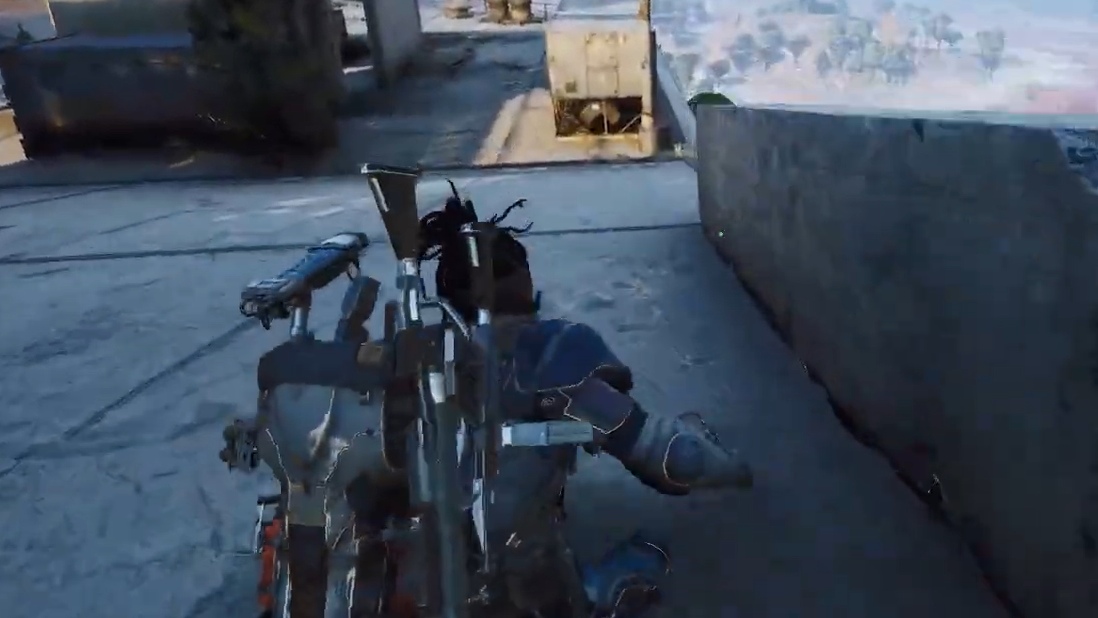
The conclusion for traversal is blunt: if the goal is to reach a location as quickly as possible over any significant distance, you lose distance and effective stamina by switching to walk to exploit Calming Stroll. Jogging wins every time.
Why the perk feels like a “noob trap”
Calming Stroll gives a strong psychological signal. The stamina bar refills faster, the character stops heavy breathing sooner, and you feel “ready” for another sprint almost immediately. That feedback makes it easy to believe you’ve found an efficient movement loop: sprint hard, walk briefly, repeat.
The math undercuts that feeling. The perk shortens the time to full stamina, but it does so while forcing you into a very slow movement state. Measured over distance and time together, the faster regen never makes up for the speed loss.
That mismatch between how the perk feels and how it performs is why many players treat it as a trap in the movement tree. It sounds like a powerful travel perk, but in any open-ground run it quietly reduces your average speed.
Where Calming Stroll still has legitimate uses
Calling Calming Stroll “useless” skips the reality that Arc Raiders is not a track race. Many fights happen in cramped interiors, around cover, or while you are forced into slower movement states. In those cases, the perk can still matter.
Calming Stroll during combat movement and ADS
Calming Stroll now also works while walking in ADS. When you are aiming down sights and repositioning slowly around corners or between bits of cover, you are effectively in a walk state. With the perk, stamina refills faster during these moments without forcing you to stand still.
That extra stamina can translate into:
- More frequent dodge rolls when trading shots at mid-range.
- A stronger sprint burst to break line of sight after peeking.
- Better stamina reserves when a hornet salvo or Leaper forces you to evade repeatedly.
It also stacks with other regeneration perks, such as the stamina boost while crouched. Players who lean into a “between covers” playstyle — sprinting only between solid objects and otherwise crouch-walking or ADS-walking — can keep their stamina bar higher than someone who is constantly jogging at medium speed.

Stealth, audio, and why walking matters at all
On maps like Stella Montis, survival often comes down to sound. Jogging is noisy and still not fast enough to make you hard to hit in the open. Walking, by contrast, is quiet and only slightly louder than crouch-walking, while being noticeably faster.
Some players deliberately alternate between sprinting for short bursts and then walking to stay quiet and listen. The logic is simple:
- Sprint only when moving between solid pieces of cover or crossing small gaps.
- Drop to walk whenever you are near potential threats, both to hear audio cues and to avoid broadcasting your own position.
- Use Calming Stroll so that these slow, quiet periods also refill your stamina more aggressively.
In this framework, distance-per-minute is less important than information and surprise. A higher stamina pool while you’re sound-checking a building or creeping toward a fight can mean an extra dodge, an escape sprint, or a flanking route that a permanently gassed opponent simply cannot take.
Encumbered movement and forced walking
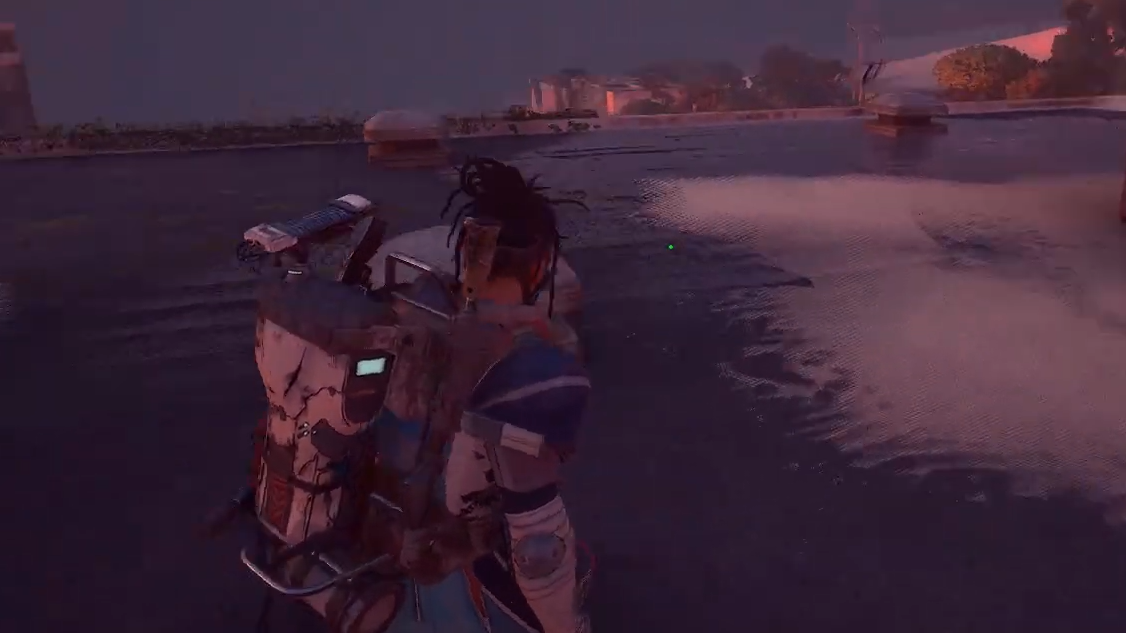
Calming Stroll also gains value in situations where the game itself restricts you to walking. Carrying field crates, battery packs, or other heavy objectives forces your character into a slow state regardless of perks. When that happens, you are walking anyway, so the perk’s faster regen has no opportunity cost.
In those moments, Calming Stroll lets your stamina bar refill more quickly while you shuffle along, so that when you drop the item, you can immediately sprint, vault, or roll with a deeper stamina pool. The effect is still modest, but here it does not compete with jogging, because jogging is not an option in the first place.
Understanding walk vs. jog and how to trigger the perk
A surprising number of players never realise that Arc Raiders has three distinct movement tiers: sprint, jog, and walk.
- Sprint is activated by holding the sprint key or equivalent controller input.
- Jog is the default when you move without sprinting and without any special modifier.
- Walk requires a dedicated walk toggle on keyboard, or a partial tilt of the analog stick on a controller.
Calming Stroll only applies in the walk tier (and in the equivalent slow movement while ADS). It does not speed up stamina regeneration while you are jogging. Many players who invest points into the perk then continue jogging during “downtime” and never actually trigger its benefit.
On PC, the safest approach is to bind a clear walk toggle in the settings and consciously switch into that mode whenever you want to be quiet and regenerate quickly. On console, where walk is tied to stick deflection, it takes a bit more discipline to consistently hold that slower speed, which further reduces the perk’s practical impact for some players.
How to decide whether Calming Stroll belongs in your build
Calming Stroll costs a skill point and often sits on the path to other mobility perks. Whether it belongs in your build depends on what you value more: raw traversal speed, or stamina uptime in tense, slow-paced situations.
Skip the perk if:
- You mostly play aggressive, open-field routes and rely on adrenaline shots, ziplines, or snap hooks to move quickly.
- You rarely use walk or crouch movement, and you’re comfortable arriving at fights with lower stamina in exchange for earlier map presence.
- You are chasing other, more impactful stamina or mobility talents deeper in the tree and don’t want filler nodes.
Consider taking it if:
- You often ADS-walk or crouch-walk around corners and through buildings, especially in trios where flanks and counter-flanks decide fights.
- You main heavier shields or armor sets that naturally slow you and keep you in low-speed states more often.
- You routinely carry objectives like field crates and want every bit of stamina back when you drop them.
The important thing is to be clear-eyed about what Calming Stroll does not do. It does not make you better at crossing the entire map, racing other players to hot spots, or chaining sprints in open terrain. It is a situational combat and stealth perk that rewards a slower, more deliberate movement style. If your playstyle matches that description and you are willing to actually walk, it has a niche. If not, treat it as a curiosity in an already underwhelming movement tree and invest your points elsewhere.