

Locked Gate is one of the strangest things Arc Raiders has done so far: a major, objective-driven map condition that appeared for about an hour, broke, and then disappeared from the rotation. For many players it never even showed up, which is why it already has a kind of urban-legend status.
Here’s how the event worked when it was live, what it changed on The Blue Gate map, and why it’s no longer showing up.
What the Locked Gate event is
Locked Gate is a special map modifier for The Blue Gate that transforms the match into a long, objective-focused run. The in-game briefing describes a clandestine group triggering the Gate’s emergency shutdown protocol and requiring four key cards to override it and “uncover whatever they’re hiding.”
Mechanically, it’s treated as a major map condition. Matches run up to 40 minutes, Trials progression is doubled (2X Trials multiplier), and the usual flow of the map changes: there are fewer active Return Points and no active Raider Hatches while the condition is in effect. That longer timer and the altered extraction options give players space to chase the objective, but they also give enemy squads more time to interfere.
How often Locked Gate has actually appeared
Locked Gate debuted on The Blue Gate for a single one-hour window on Thursday, Nov. 13. That first appearance is the only confirmed time the condition ran widely, which is why it’s described as the game’s rarest event.
After that window, players stopped seeing it in the public rotation. Community event trackers for The Blue Gate no longer list it, and players who did spot it around launch have since reported that it’s gone from the schedule entirely. Some discussion points to a “door glitch” and other problems as the trigger for its removal rather than any intentional attempt to keep it permanently scarce.
As of now, players queueing into The Blue Gate see other conditions like Lush Blooms, Harvester, Uncovered Caches, and Hidden Bunker, but not Locked Gate.
What changed on The Blue Gate during Locked Gate
Locked Gate doesn’t just add a quest marker; it rearranges how The Blue Gate works for that match.
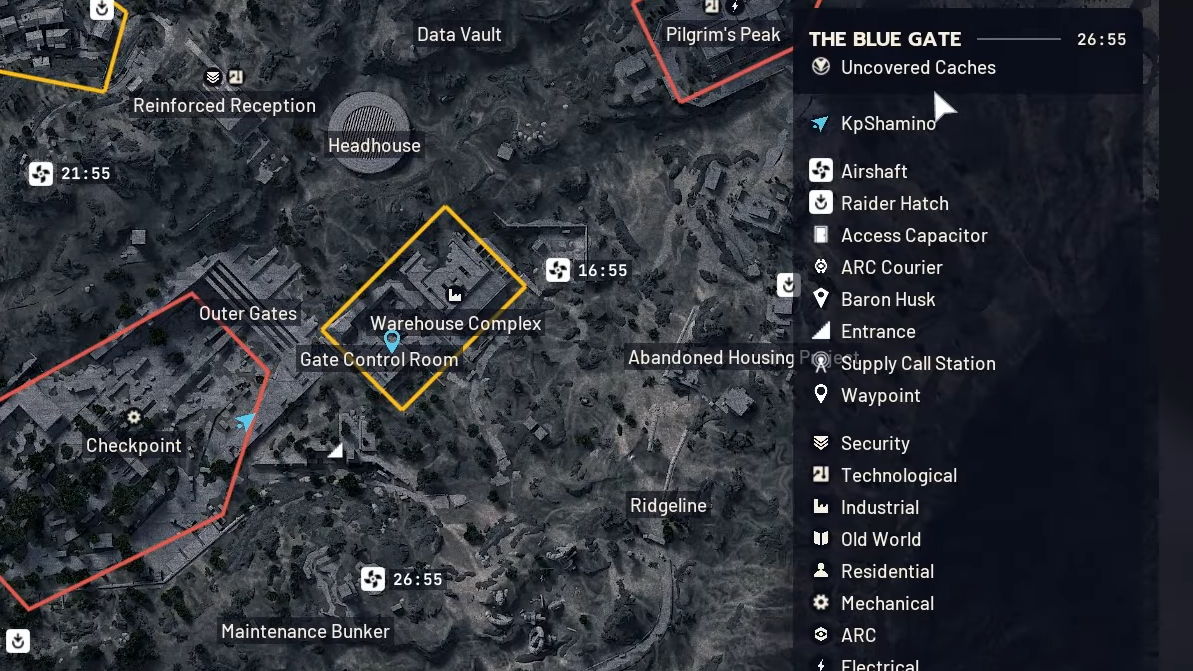
- Main objective at Checkpoint. The central gate at Checkpoint, next to the Warehouse Complex, becomes the focus of the match. It stays sealed until all four keys are collected and used.
- Underground and lower-map access locked. Access routes like tunnels and the bottom section of the map remain closed until the main gate opens. That pushes squads into the upper POIs early.
- Fewer Return Points, no Raider Hatches. With fewer ways to leave, players carry more risk when they pick up keys or high-value loot. There are also no active Raider Hatches, so some familiar spawns and shortcuts are disabled.
- 2X Trials progression, 40-minute timer. The doubled Trials multiplier makes the event attractive to progression-focused players, while the extended timer supports multiple long rotations out to the map edges and back.
The net effect is a match that feels more like a shared heist than a standard extraction run: the whole lobby is nudged toward the same four POIs and then funneled back into the same control room and gate.
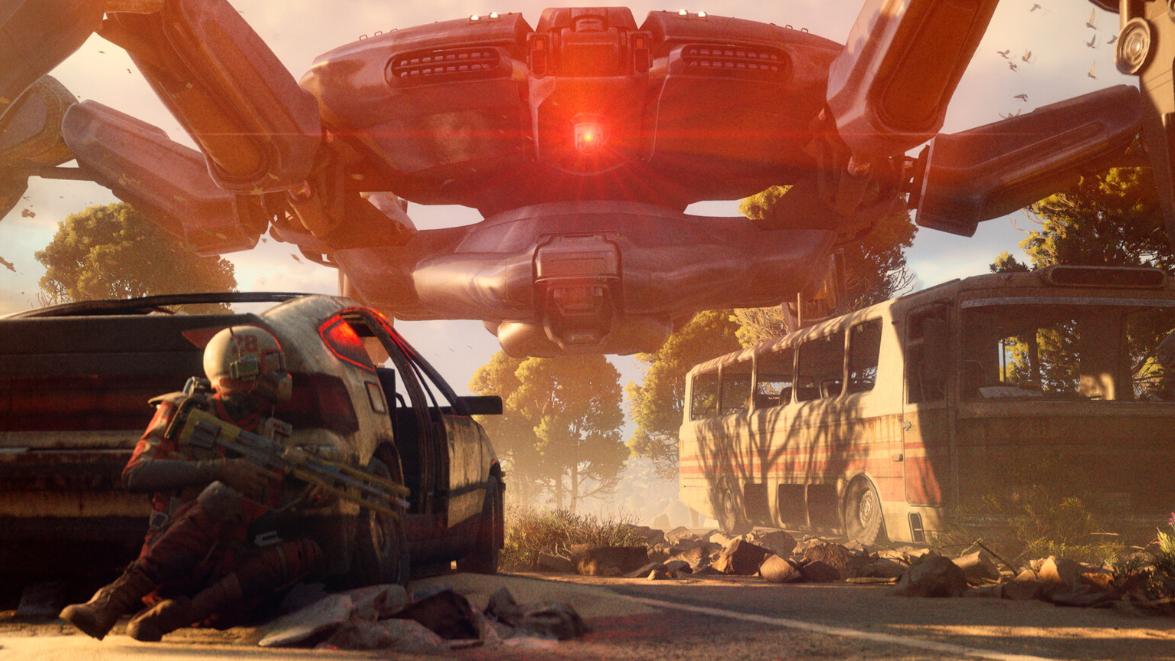
Locked Gate objective: how to open the gate
To “solve” Locked Gate, every squad in the instance is collectively working toward a simple goal: bring four keycards back to the Gate Control Room at the Warehouse Complex so the giant Checkpoint gate can open.
The key objectives break down into two layers of interaction:
- Finding the POIs that contain the keys.
- Searching containers inside those POIs until keycards drop.
Four POIs around the edges of The Blue Gate are involved:
| Key location | Notes |
|---|---|
| Raider’s Refuge | Refugee camp-style POI; keys sit in standard loot containers. |
| Reinforced Reception | Industrial complex; containers inside reception buildings can contain keycards. |
| Pilgrim’s Peak | Heavily defended; at least two Rocketeers patrol the area. |
| Ancient Fort | Ruined fortifications on the outskirts; keys drop from containers here as well. |
Each of these locations can spawn one or more copies of a unique key item in their regular loot containers. Keys don’t appear in fixed chests; you have to open multiple containers until one rolls the event item. Multiple keys can exist in the same POI, so several squads can participate without being hard-blocked by a first mover.
How a Locked Gate run played out
When Locked Gate was active, a typical run followed a clear sequence. If the event returns in the same form, the flow will be similar.
Step 1: Spawn into The Blue Gate and move to the Gate Control Room at the southern end of the Warehouse Complex, above the main Checkpoint gate. Inside, interact with the bank of four terminals. Each terminal shows where one of the required keys is currently located.
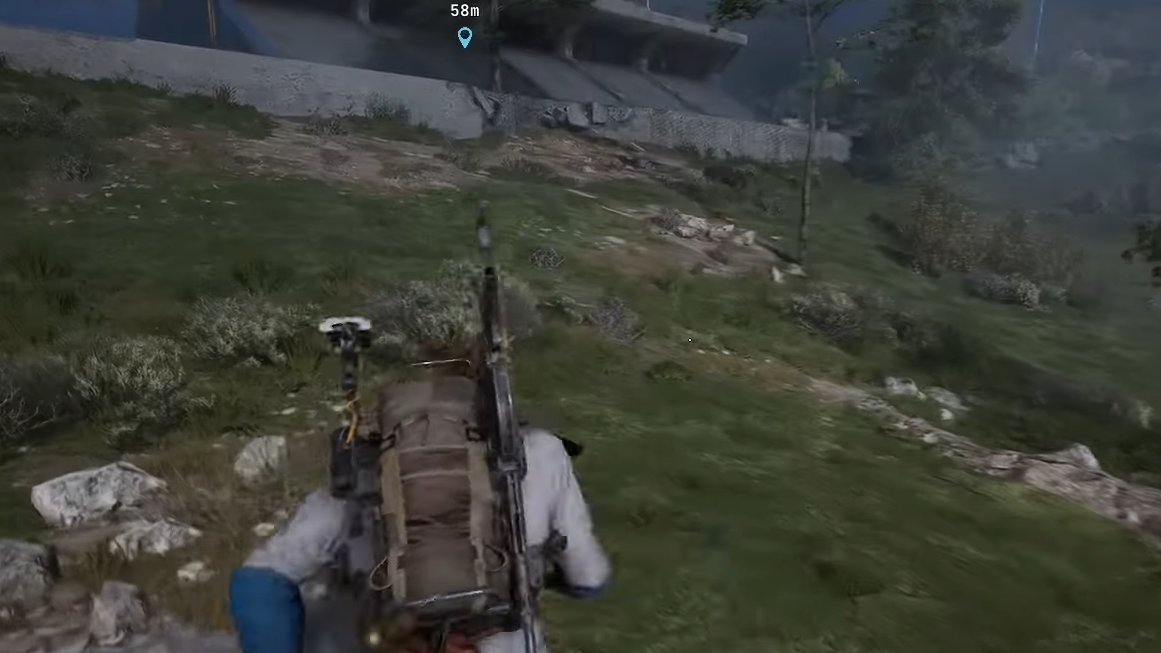
Step 2: Decide which key location to hit first. Because the four POIs sit on the map’s outskirts, you’re committing to a long rotation. Squads often split their route to avoid running into the same teams repeatedly, although everyone is chasing the same objectives.
Step 3: At your chosen POI (for example, Reinforced Reception), fan out and start looting containers. The key appears as a regular lootable item inside these containers. When you find one, pick it up and keep it in your inventory. Other containers in the area can still drop extra copies for other teams.
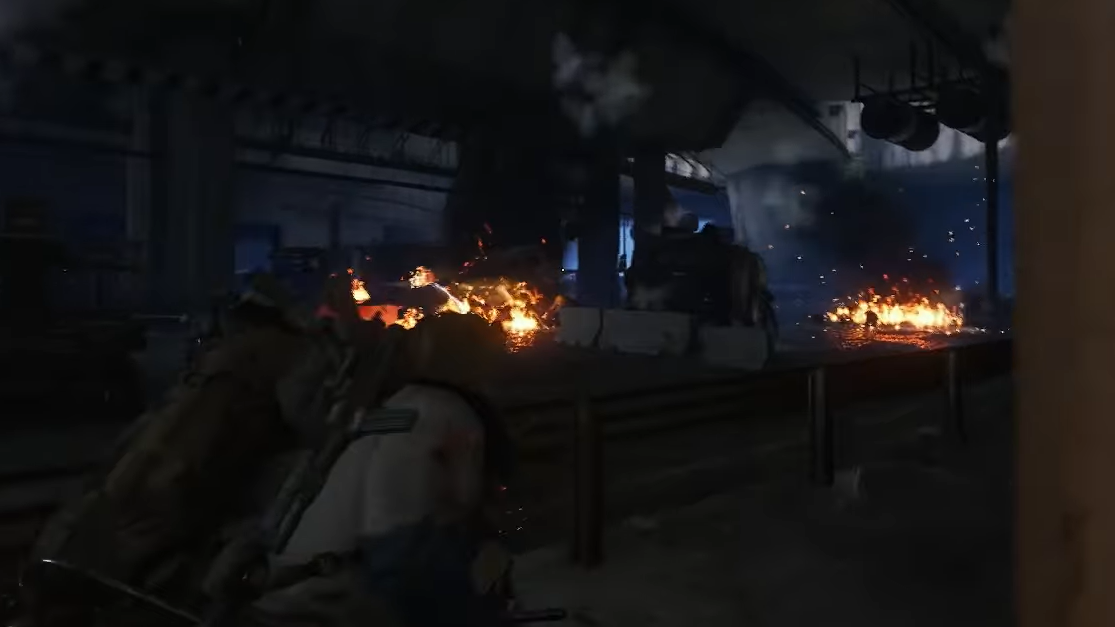
Step 4: Repeat that process at Raider’s Refuge, Pilgrim’s Peak, and Ancient Fort until your squad or other players in the match have collectively pulled all four keys. You don’t personally need to hold every key; what matters is that four unique keys exist in players’ inventories somewhere in the instance.
Step 5: Return to the Gate Control Room with whatever keys your squad is carrying. Each keycard must be inserted into its corresponding console, marked with the same white key icon you see on the map UI.
Step 6: When the fourth key goes in—by you or another squad—the giant Checkpoint gate below the control room opens, unlocking access to the underground routes and the lower section of the map. At this point, the objective is effectively complete, and the event transitions into a race to explore and extract loot from the newly opened area.
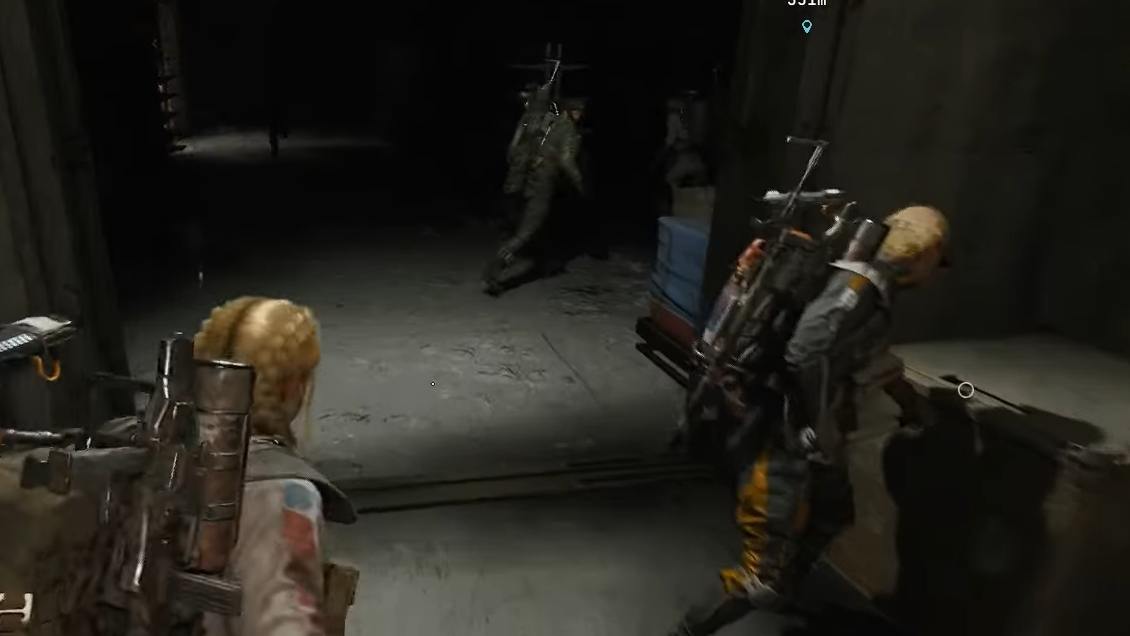
Anyone can enter the open gate once it’s unlocked; it isn’t reserved for the squad that inserted the last keycard.
Rewards and why the event was disabled
On paper, Locked Gate is an attractive event. It offers:
- Access to a previously sealed section of The Blue Gate with concentrated loot.
- 2X Trials progression for the entire 40-minute match.
- Reported access to rare drops such as the Bobcat blueprint outside of Trials.
In practice, the event shipped with a serious problem. The tunnel and lower area unlocked by the fourth keycard were often empty or almost empty, despite being framed as a vault stuffed with rewards. Squads that had spent most of a 40-minute match cooperating or fighting their way through other teams frequently arrived to find next to nothing for their trouble.
That mismatch between effort and reward appears to be the core reason Locked Gate was pulled from rotation. Community reports also mention a “door glitch” that let some players grief others at the gate, further souring the experience. Together, the missing loot and interaction bugs undermined what was supposed to be a high-stakes, high-payoff moment.
Once the condition was disabled, players stopped seeing it on event timers for The Blue Gate, and there has been no reintroduction so far. The underlying design—a time-limited shared puzzle where the whole lobby contributes to one big unlock—remains intact; the blocking issue is the reliability of the loot and gate behaviour.
Why Locked Gate matters for Arc Raiders
Locked Gate stands out because it pushes Arc Raiders toward a different style of match. Most conditions tweak resource density or add a single boss encounter. Here, the entire lobby is effectively working on the same puzzle: find four keys, open one door, then sprint into the unknown together.
When it worked socially, squads reported unspoken truces where multiple teams cooperated to collect and return keys, only for the tension to spike again once the gate opened. When it failed technically, the same structure magnified frustration; 30 or 40 minutes of risk for an empty tunnel feels worse than a normal bad loot roll because so many players are invested in the outcome.
If Locked Gate returns in a future update with the loot issues fixed and the gate bugs ironed out, it has the potential to be one of Arc Raiders’ defining conditions. For now, it’s a one-hour experiment that left a tiny group of players with a story—and not much else—to show for it.