

Weapons sit at the center of damage scaling in Arknights: Endfield. They set a large chunk of an Operator’s ATK, add passive stat buffs, and unlock unique conditional effects. The game also makes a deliberate choice: weapon pulls don’t use the premium gacha currency, and there are multiple ways to earn strong options over time.
Weapon basics and rarities
Each Operator can equip exactly one weapon and is locked to a single weapon type. You can move a weapon between Operators freely, but you can’t equip it on two characters at once.
Weapon rarities are:
- 6★ — highest base ATK and the strongest skills.
- 5★ — strong stats and effects, often easier to build around.
- 4★ — mid‑tier options you’ll use heavily in early and mid game.
- 3★ — basic weapons, usually starter picks and EXP fodder later.
Above 3★, every weapon carries three skills: a primary attribute buff, a secondary stat buff (HP, crit, damage type, and so on), and a unique conditional skill. 3★ weapons stop at two skills. Rarity mostly controls how hard those numbers push and how impactful the third skill is.
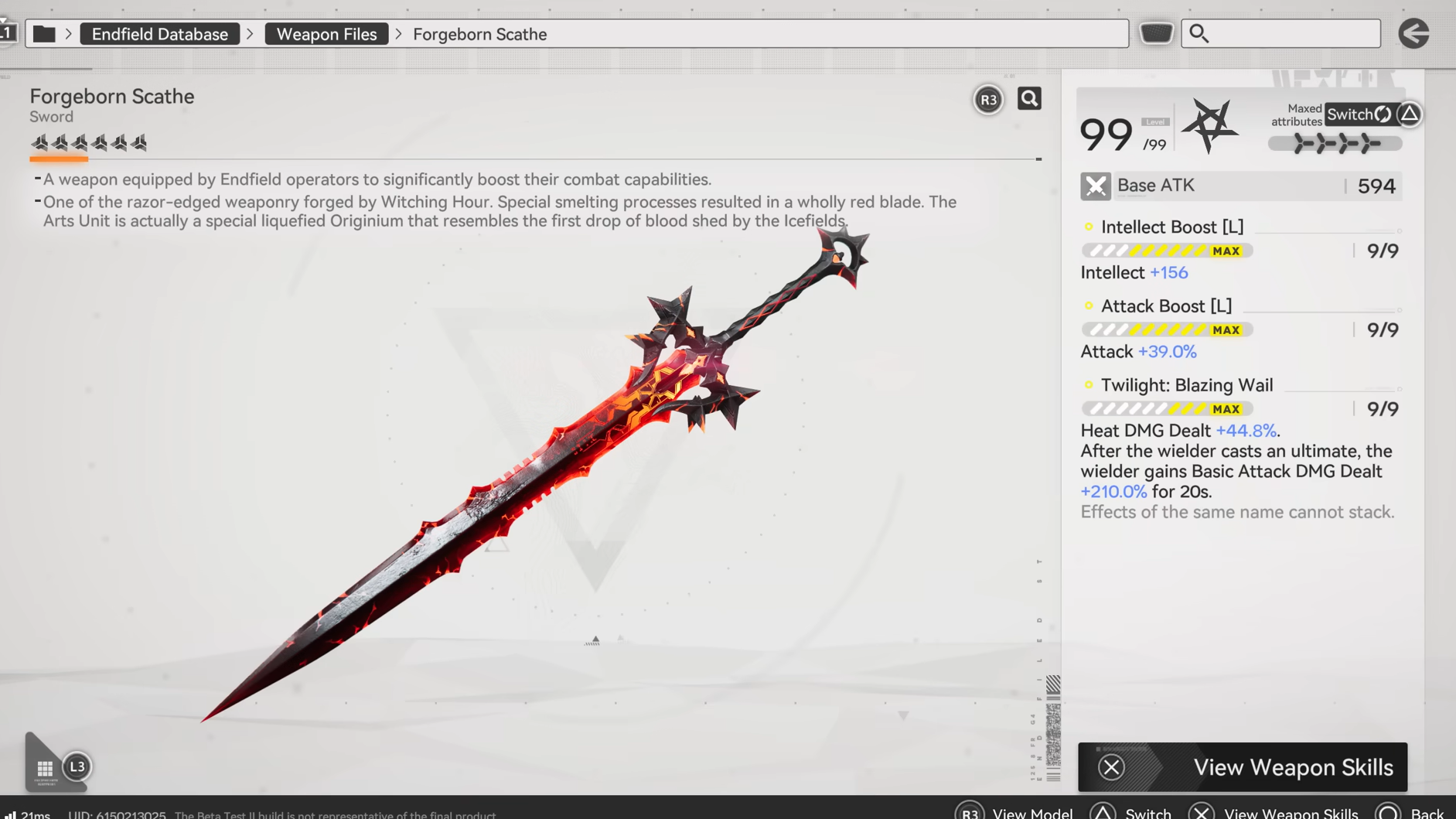
All weapon types in Arknights: Endfield
Operators are tied to one of five weapon categories:
- Sword — standard melee options, often used by Guards.
- Great Sword — slower swings, higher stagger output, common on Defenders.
- Polearm — lighter melee choices that lean into skill usage.
- Handcannon — ranged firearms that interact well with Arts reactions.
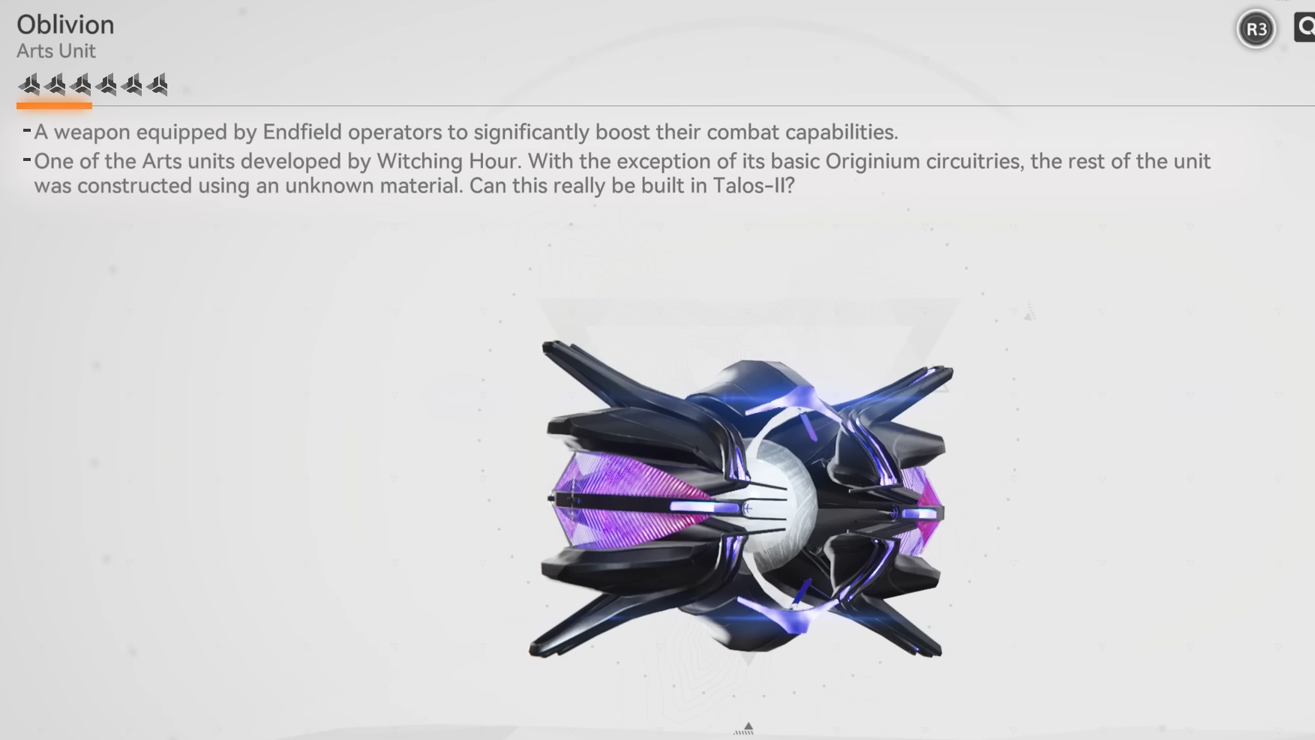
- Arts Unit — floating ranged devices typically used by Casters and Supports.
Because each Operator has a fixed weapon type, you’re not choosing between an Arts Unit and a Great Sword on the same character. The real decision is which specific weapon of that type best matches a character’s main attributes and damage profile.
Main ways to obtain weapons
Endfield spreads weapon acquisition across gacha, exploration, events, and long‑term progression systems. The key methods are:
- Arsenal Exchange weapon banners (Arsenal Issues).
- Direct purchases with Arsenal Tickets.
- Free early‑game and web‑event rewards.
- Targeted Weapon Supply items.
- Exploration chests in the open world.
- Endpoint Quota and similar long‑tail exchanges.
- Automatic 3★ drops when you recruit new Operators.
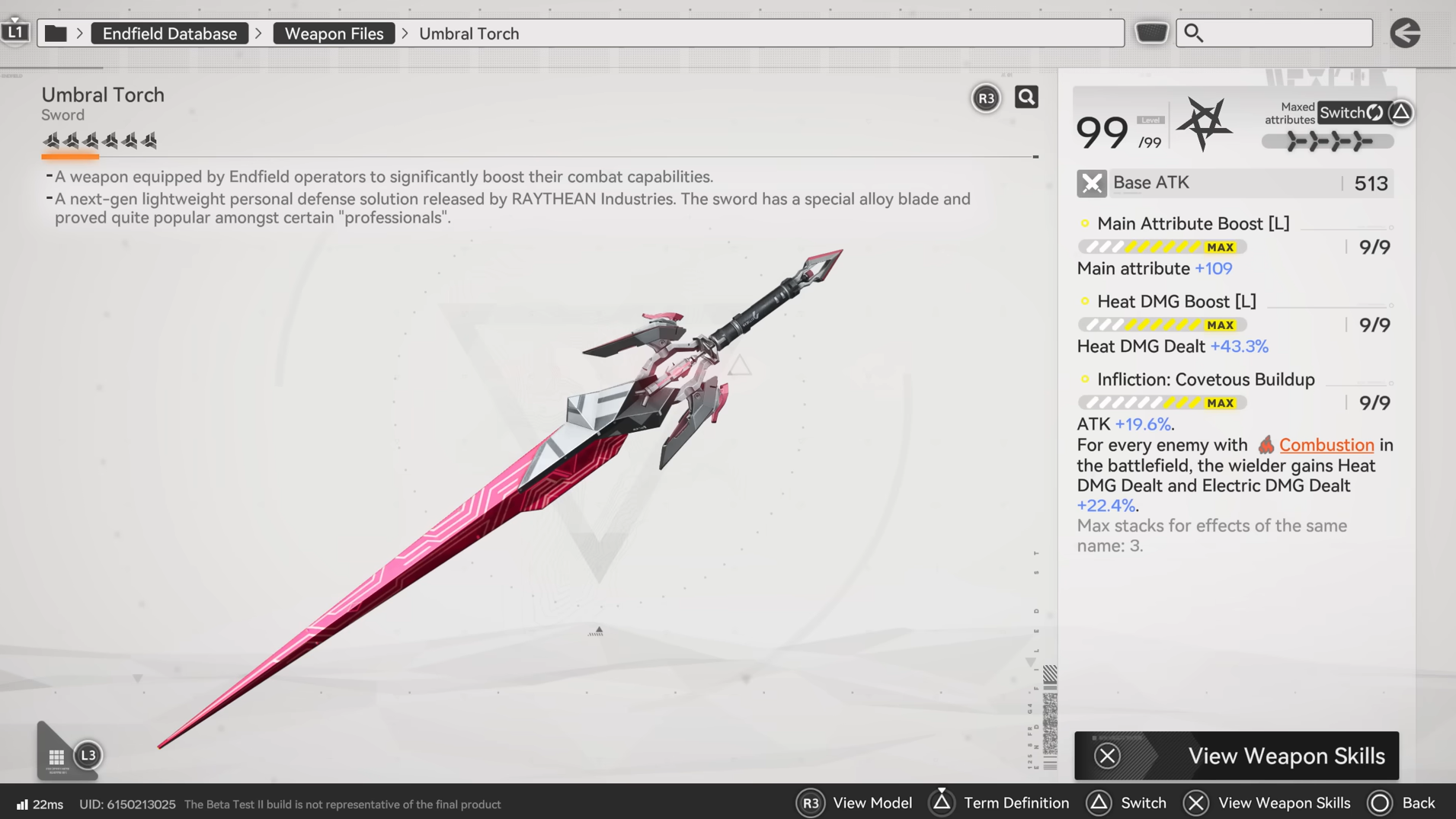
Arsenal Exchange weapon banners (Arsenal Issues)
Weapon gacha in Endfield lives inside the Arsenal Exchange. These banners — called Arsenal Issues — are your primary source of high‑rarity weapons.
Step 1: Open the Headhunting menu from the main interface. This is the same entry point used for character banners.
Step 2: Switch to the Arsenal Exchange section. Here you’ll see the current Limited and Permanent weapon banners, each labeled as an Arsenal Issue.
Pulls use Arsenal Tickets instead of the premium currency Oroberyl. A multi‑pull gives you ten random weapons at once; single pulls are not available on Arsenal Issues.
| Banner mechanic | Value |
|---|---|
| Cost per 10‑pull (Game8) | 2,480 Arsenal Tickets |
| 6★ weapon base rate | 4% |
| Soft pity for any 6★ | Within 40 pulls |
| Guaranteed rate‑up 6★ | Within 80 pulls |
| 40‑pull split | 75% rate‑up weapon, 25% standard pool 6★ |
That structure means a full guarantee of the featured 6★ weapon at 80 pulls, with a high chance to hit it earlier as the 40‑pull guarantee kicks in.
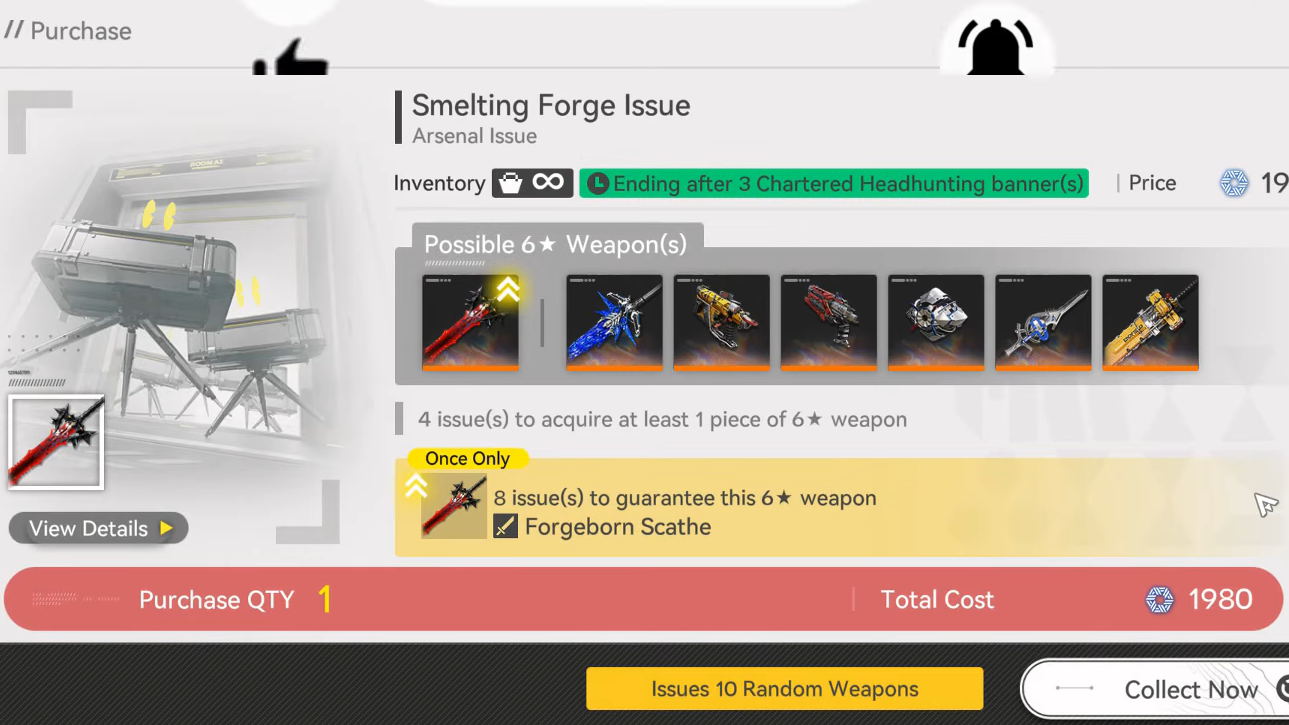
Buying weapons directly with Arsenal Tickets
Arsenal Exchange isn’t only a banner page. It also runs a rotating shop that lets you buy specific weapons outright.
Step 1: From the Arsenal Exchange screen, switch to the exchange/shop tab rather than the banner tab.
Step 2: Check the current rotation of weapons and the permanent stock. Each entry shows its Arsenal Ticket cost and remaining copies.
Some weapons stay in the shop permanently with one copy available, while others rotate in and out on a schedule. This is useful when you want to finish potential on a specific 4★ or 5★, or you need a weapon with a particular stat line without gambling on banners.
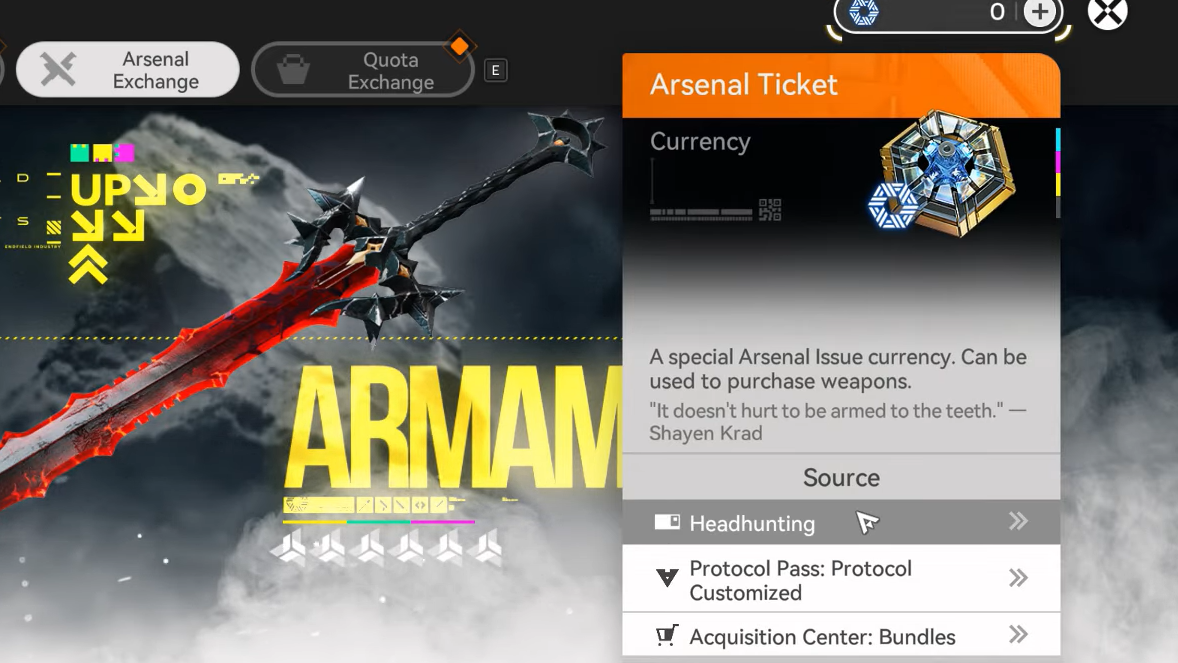
How Arsenal Tickets actually work
Arsenal Tickets are a dedicated weapon‑gacha currency. You don’t buy them with real money directly; they are largely generated by actions you’re doing anyway.
- Headhunting pulls — drawing on character banners awards Arsenal Tickets alongside the character gacha results.
- Weekly missions — milestone and routine objectives pay out additional tickets.
- Currency exchanges — in some menus, you can swap Oroberyl into Arsenal Tickets, effectively turning premium currency into weapon pulls if you choose.
On top banners that use the 80‑pull guarantee, you need 15,840 Tickets for the full path to the limited weapon (80 pulls × 1980 on the original structure). On Arsenal Issues where the 10‑pull cost is listed as 2,480 Tickets, the total ticket requirement scales accordingly, but the internal pity behavior is the same: a strong chance at 40 pulls and a guarantee by 80.
Free 5★ weapon from pre‑launch and web events
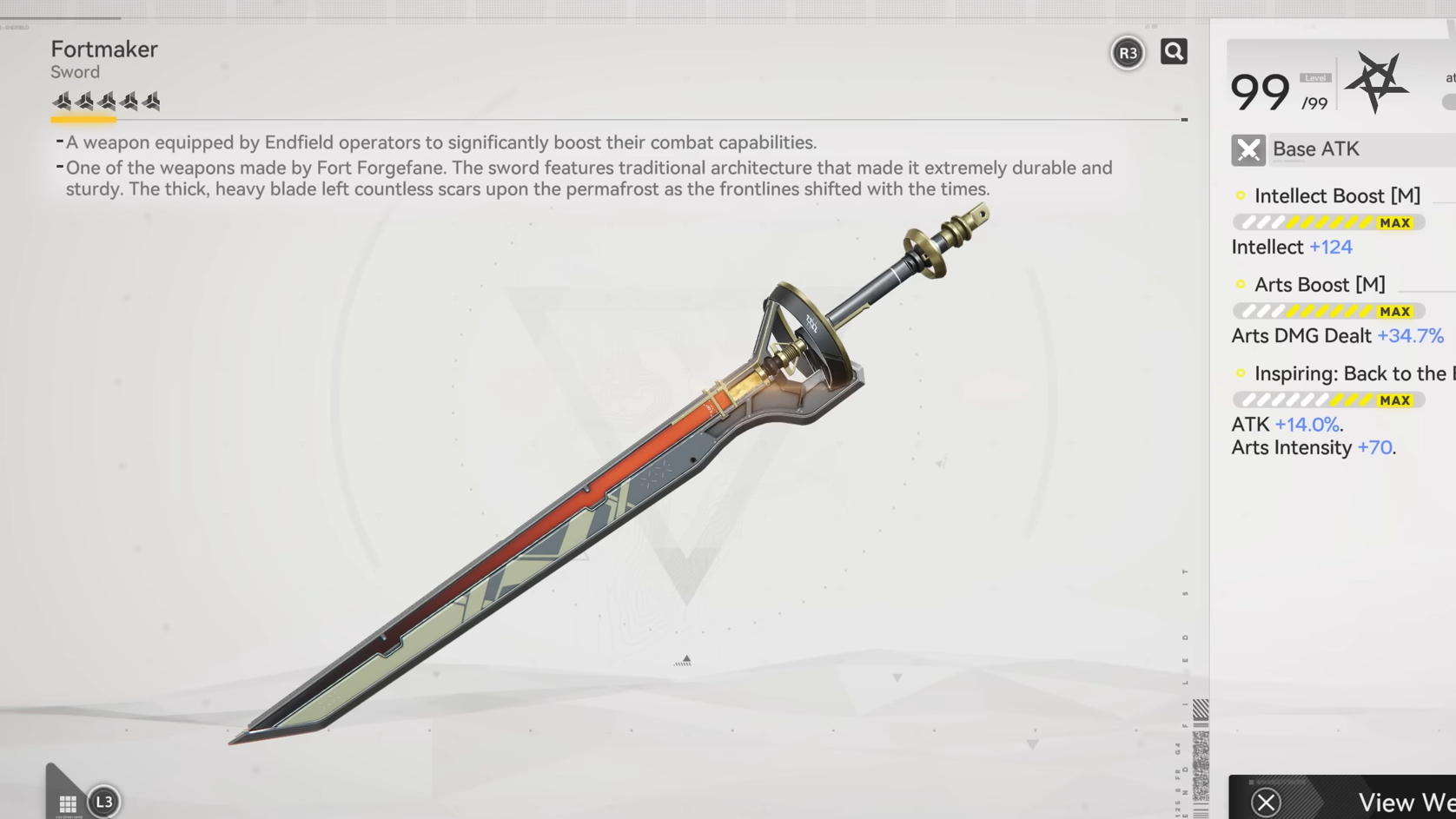
Early events attached to Endfield’s rollout include at least one that offers a free 5★ weapon selection. The UI for that event expects you to move chosen rewards into a “backpack” so they are tagged to your account for launch.
Step 1: On the event reward screen, tap the 5★ weapon and other items you want until they move into the backpack slot rather than sitting in the “choices” grid.
Step 2: Confirm the selection. Items in the backpack are delivered once the live servers are up; anything left outside is not granted.
Players often pair the free weapon with high‑value currency or upgrade bundles, but the exact mix depends on how much you plan to lean on weapon gacha later. If you expect to pull heavily for weapons, stacking early economy rewards can be more impactful than a single pre‑release sword that may become obsolete.
Targeted Weapon Supply crates
Targeted Weapon Supply items are consumable boxes that let you pick one weapon from a small, curated list.
Step 1: Earn Targeted Weapon Supply crates from high‑end modes such as Algorithmic Memories, where they appear as weekly rewards.
Step 2: Open the crate from your inventory and choose a weapon from its list. Once chosen, that weapon is delivered directly with no randomness.
Because you see exactly which weapons are available, these crates are ideal for securing synergy pieces for key characters or for filling gaps that banners haven’t covered.
Finding weapons in exploration chests
Not every weapon is locked behind tickets and banners. While traveling through regions like The Hub, Origin Lodespring, and later chapters, you’ll find containers that can drop 4★ weapons.
Step 1: Use the world map and any interactive map tools to track chests in each area. Many high‑value Caches are tucked behind minor puzzles or combat encounters.
Step 2: Prioritize exploration in new regions when they first unlock. Early exploration can front‑load a set of 4★ weapons before you spend heavily on Arsenal Tickets.
These exploration drops are especially important for filling out Arts Units and Handcannons, so your early Casters and ranged Operators aren’t stuck on basic 3★ options.
Endpoint Quota and long‑term exchanges
As you invest in characters, some eventually hit maximum potential. At that point, extra copies no longer advance their matrices and are converted into currency tokens.
Step 1: When you pull a duplicate of a fully maxed Operator, collect the token it generates from the relevant exchange menu (often labeled as an Endpoint Quota‑style currency).
Step 2: In the Endpoint Quota Exchange, trade those tokens for select weapons. These purchases are direct; there is no RNG involved once you have enough tokens.
This path grows more relevant later in your account’s life, once you have high‑dupe Operators appearing in your gacha history.
Weapons from recruiting new Operators
Every time you recruit a fresh Operator, you also pick up a baseline weapon of their type if you don’t already have it. These 3★ options come bundled with the character and ensure no Operator is left unarmed if you never touched weapon banners.
They have low ATK and limited skills, but they serve two roles:
- Provide an immediate, type‑correct weapon for brand‑new recruits.
- Act as efficient EXP fodder once you’ve replaced them with stronger weapons.
Stock Redistribution and region‑specific weapon shops
Later regions introduce economy systems that feed into weapon purchasing. In Wuling, for example, the Stock Redistribution system backs a shop where you can buy certain 5★ weapons with regional currency rather than tickets.
Step 1: Progress the story until the relevant city and its Stock Redistribution feature unlock.
Step 2: Upgrade that system so higher tiers of stock and blueprints appear, including select 5★ weapons.
These shops don’t replace Arsenal Exchange, but they do give you alternative paths to key weapons if your ticket stash is low or you’re targeting specific region‑tuned builds.
Arsenal Tickets vs Oroberyl: what you actually spend
Endfield draws a line between weapon gacha and character gacha:
- Oroberyl is the premium currency, primarily driving character Headhunting and other purchases.
- Arsenal Tickets are the lifeblood of weapon acquisition and are mostly earned through play.
You can indirectly turn Oroberyl into Arsenal Tickets by using shop exchanges. That makes it possible to push a weapon banner if you care about a specific 6★. However, the game’s default flow is that regular character pulling and weekly activity will generate a steady stream of weapon tickets without forcing you into extra spending.
Leveling, tuning, and potential for dropped weapons
Getting weapons is only half the story; you still need to bring them up to combat speed.
- Leveling uses weapon EXP items like Arms Inspector, Arms INSP Kit, and Arms INSP Set, or spare weapons as fodder. Levels push Base ATK upward.
- Tuning removes level caps at 20, 40, 60, and 80 using materials such as Cast Die, Heavy Cast Die, and ores like Kalkonyx, Auronyx, and Umbronyx. It also improves the first two skills’ rank ceilings.
- Potential increases by feeding duplicate copies of the same weapon or special Pattern items. Each potential level boosts the third skill’s base rank and cap, with a visual change on fully maxed 6★ weapons.
- Essences drop from enemies and can be socketed into weapons to raise matching skills further. They can be removed and re‑used without penalty.
Materials for tuning and potential — Cast Die, regional ores, and so on — come from exploration, Protocol Space, quests, and regional economies, so weapon growth naturally parallels your progress through chapters like Origin Lodespring, Jingyu Valley, and Wuling City.
Viewed as a whole, Endfield’s weapon system rewards a mix of playstyles. Dedicated explorers can dig 4★ options out of the world, banner fans can chase limited 6★ trophies, and long‑term players eventually turn duplicate Operators into guaranteed weapon picks. Building a healthy account means using all of those channels: lean on free and exploration weapons early, then layer in Arsenal Tickets, Targeted Supplies, and region shops as your roster matures.