

Assetto Corsa Rally’s first big Early Access update turns the game’s focus to winter. Release 0.2 adds a dedicated ice circuit in the Italian Alps, introduces snow physics and studded tyres, and drops a period-correct Alpine A110 Group 4 into the car list. Under the surface, there are wide-reaching changes to force feedback, tyre behaviour, audio, UI, and online features, plus a reset to all leaderboards to match the new handling.
New content in Assetto Corsa Rally 0.2
The headline additions are a new car, a new circuit, and a new surface type.
| Content | Details | Where it appears |
|---|---|---|
| Alpine A110 Group 4 (1973) | 1.8L four-cylinder, ~180 hp, 5-speed manual, ~210 km/h top speed, ~7s 0–100 km/h | Garage, appropriate events, free driving |
| Ghiacciodromo Livigno Circuit | Ice and snow “ghiacciodromo” in Livigno, Italy | Time Attack, Free Practice, new ACR Events |
| Snow physics & studded tyres | Low-grip snow surface model with dedicated studded tyre compound | Livigno circuit, AI and player car setups |
| New ACR Events | 2 event groups, 25 events total | Events/ACR mode |
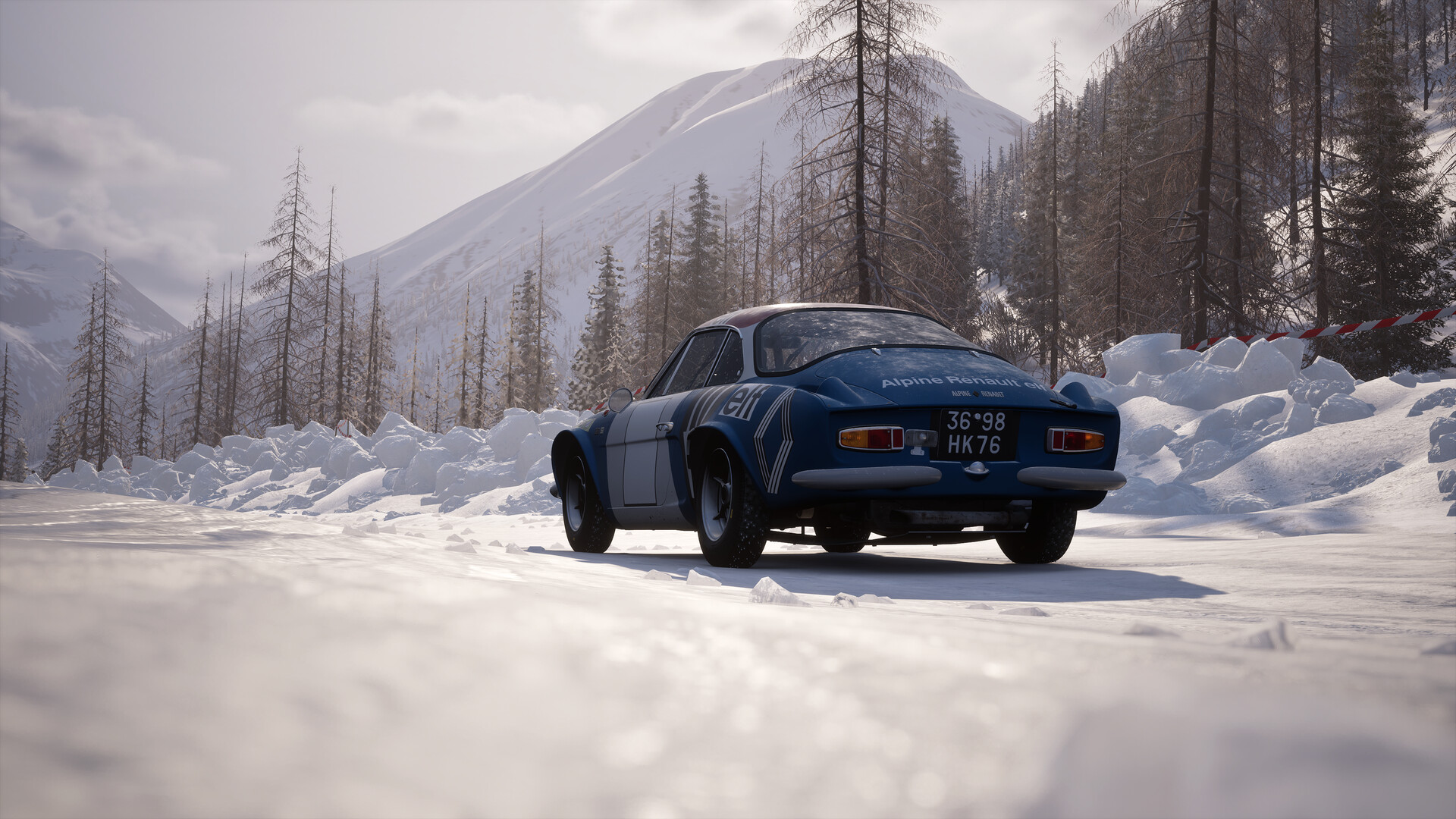
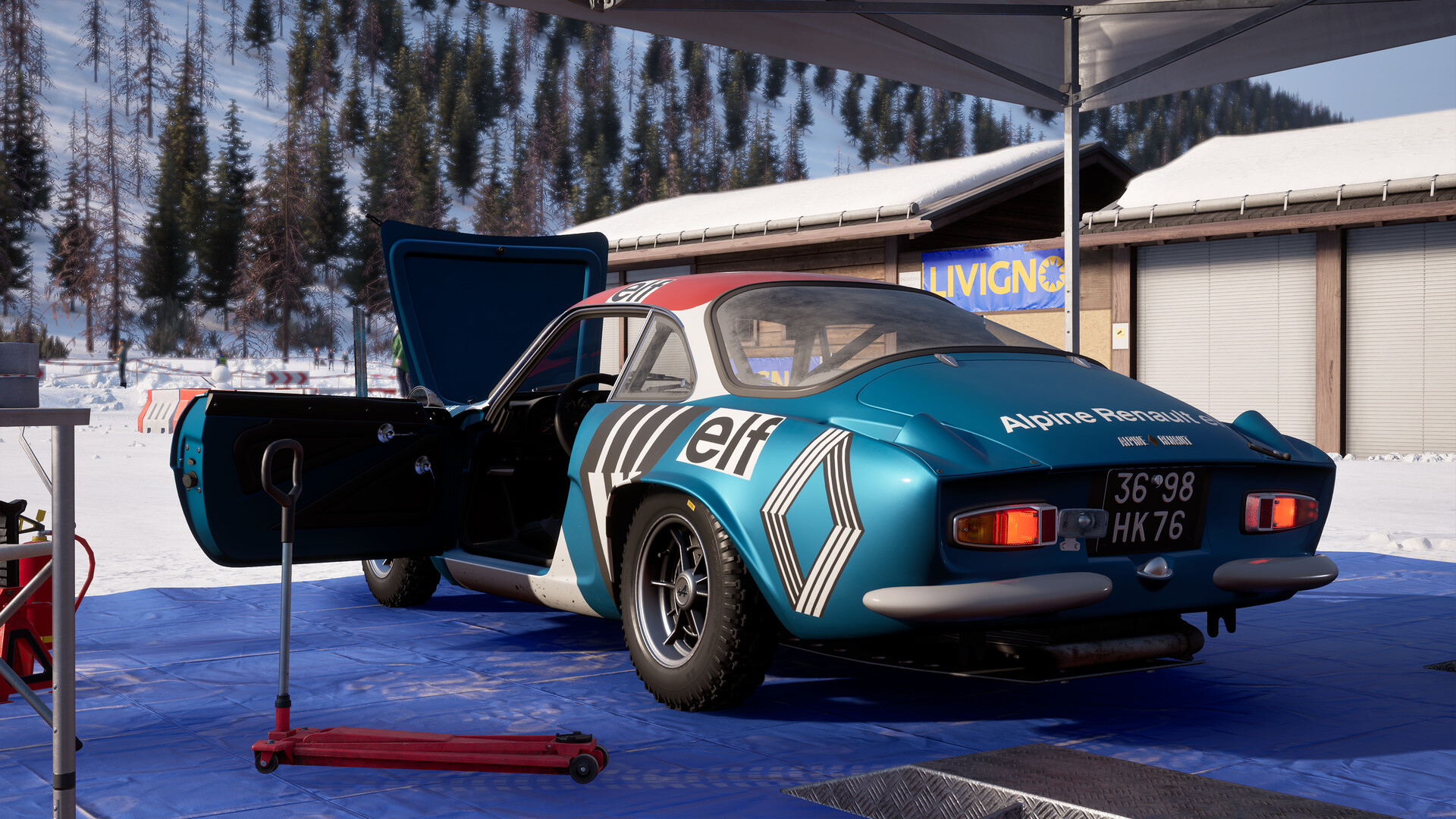
The Alpine A110 Group 4 is built as a lightweight, rear-engined rally classic. In-game it produces around 180 horsepower from a 1.8‑liter four-cylinder, runs through a five-speed manual gearbox, and reaches about 210 km/h (130 mph). Acceleration to 100 km/h is in the seven-second range, which, combined with the low weight and rear bias, makes it feel agile rather than overpowered, especially on loose and icy surfaces.
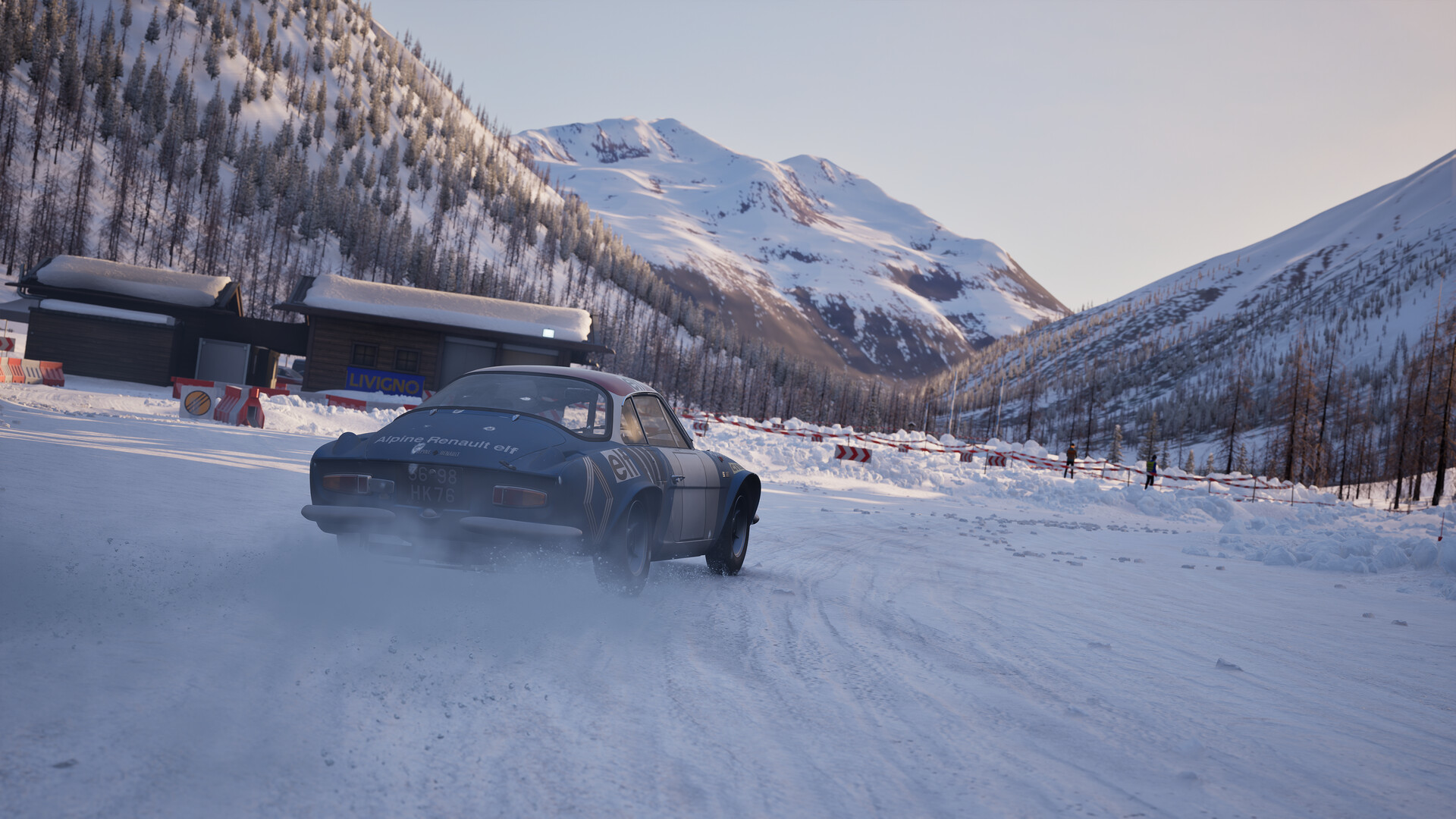
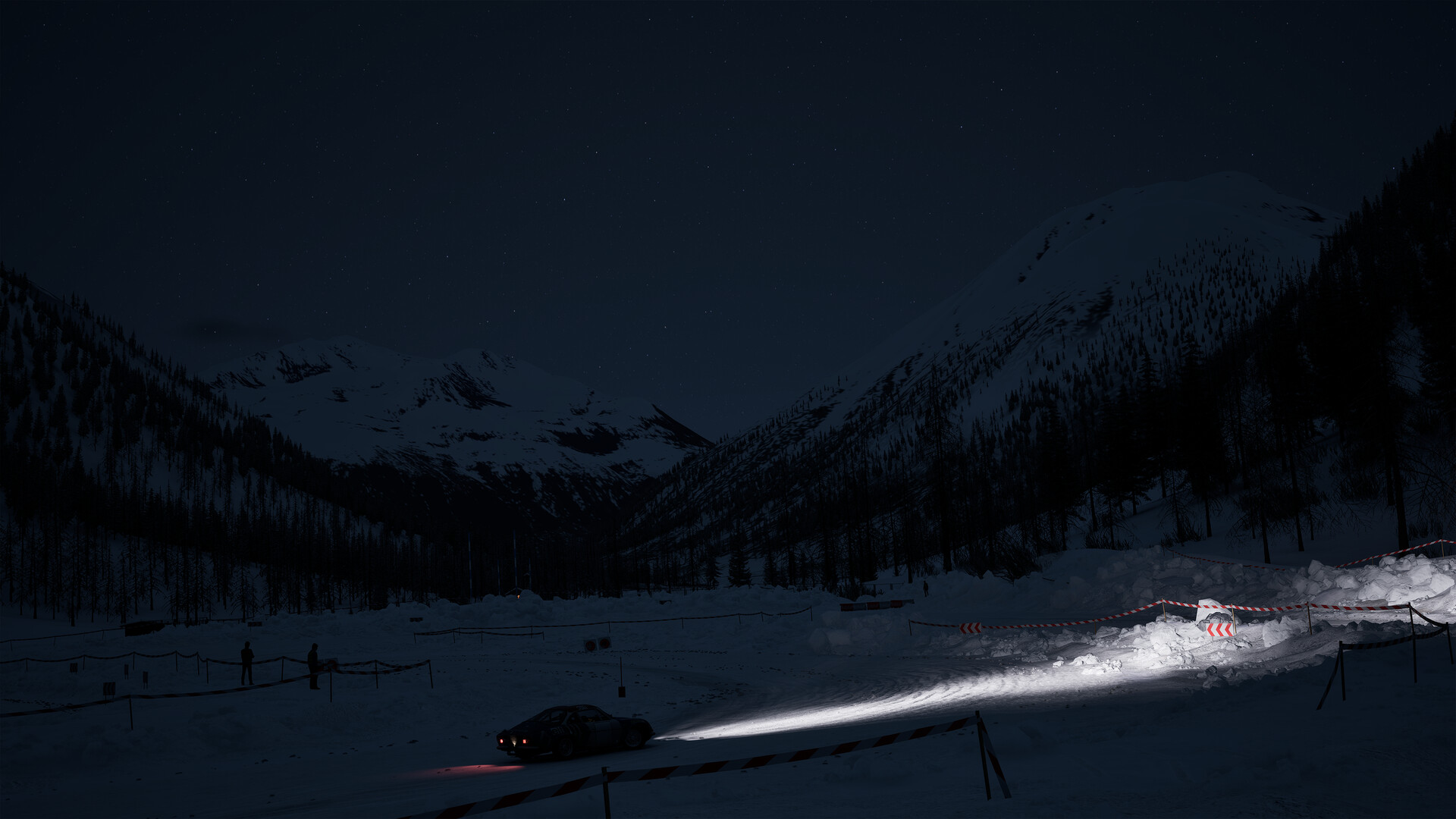
The Ghiacciodromo Livigno Circuit is the game’s first bespoke ice and snow track. It is presented as a prepared ghiacciodromo rather than a full road stage and is currently available in Time Attack and Free Practice modes. The layout gives enough space for experimenting with different driving styles, from tight hairpins to longer arcs where weight transfer and throttle control matter more than outright grip.
To support this, the game now simulates snow-specific surface physics as well as snow-studded tyres. The tyres are intended to offset some of the inherent lack of grip on ice, giving more predictable traction while still forcing drivers to be patient and precise on corner entry and exit.
Stage and circuit updates
The winter content sits alongside smaller fixes to existing locations:
- The Ghiacciodromo Livigno Ice Circuit is formally added to the stage and circuit list.
- Backdrop foliage is corrected with missing trees added around Saverne.
- Collision meshes on certain log piles in Saverne and Wales are tightened up to reduce odd car contacts.
- A specific traffic sign pole in the town section of Saverne is corrected.
These are quality-of-life changes rather than layout revisions, but they remove some immersion-breaking edge cases and unpredictable crashes.
Car and tyre changes
Beyond the Alpine itself, several car systems are cleaned up in 0.2.
- Studded tyres are added as a selectable compound where appropriate, matching the new snow physics.
- Wheel offsets are corrected on affected vehicles to improve visual alignment and potentially scrub behaviour.
- Rim textures that previously failed to load now appear correctly.
- Headlight glows are adjusted to reduce pixelated halos.
- Air intake flags now support all country flags, improving livery customization.
- Suspension issues are fixed on certain cars, targeting unrealistic travel or geometry behaviour.
- Tyre flex direction is corrected so that sidewall deformation better matches load direction.
On track, the main visible impact is in more coherent visuals and more natural suspension and tyre response over bumps and kerbs, especially in replays and cockpit view.
Input and steering wheel improvements
Assetto Corsa Rally’s input layer gets a noticeable upgrade, particularly for wheel users.
- Overall steering wheel support is expanded, with further work planned so that a wider range of sim racing hardware works reliably out of the box.
- Hat Switch support is added, allowing the directional hat on wheels to control functions such as camera or navigation.
- Double gear up/down inputs are now assignable, helping drivers using multiple shifters or paddles.
- Neutral gear binding can be mapped directly on the wheel, useful for H‑pattern and sequential setups.
- Wiper control gains a dedicated input.
These changes focus on flexibility rather than changing the feel of the cars, but they make it easier to bring complex wheel and button layouts across from other sims.
Physics and force feedback changes
The physics model and force feedback (FFB) receive some of the broadest edits in 0.2. The goals are more consistent wheel feel, more predictable braking, and a better relationship between pedal input and torque at the wheels.
- FFB inconsistencies across cars are addressed so that switching between vehicles produces fewer dramatic changes in weight or detail.
- FFB under braking is tuned, giving clearer weight transfer cues and less tendency for the wheel to react in the wrong direction.
- Specific FFB effects that pushed the wheel the wrong way are corrected.
- The throttle response curve is made more linear, so pedal travel maps more intuitively to engine torque.
- Brake power is increased on some disc and caliper combinations to reduce long, dull stopping distances.
- Gravel and Tarmac physics and tyre models are updated with new data and validation work from rally drivers.
- The new Snow physics and snow-studded tyres pair adds a distinct low-grip regime for the Livigno track.
- Tyre behaviour at extreme drift angles is refined, aiming for more believable recoveries and transitions when the car is heavily sideways.
- Several differentials and setup presets are retuned to match the revised tyre model.
On tarmac and gravel, the main effect is more grip available just beyond the slip limit and smoother recoveries from larger slides. On FFB hardware, braking should feel less prone to sudden, wrong-direction jolts, and throttle and brake pedals should feel more intuitive out of the box.
Audio updates
Audio has been one of Assetto Corsa Rally’s strong points, and 0.2 adds more detail for both the new content and existing cars.
- The Alpine A110 Group 4 gains bespoke engine and exhaust sound sets.
- The first pass of snow tyre surface audio is added, introducing distinctive noise for tyres working on snow and ice.
- The Livigno Ice Circuit receives its own environmental audio mix, with appropriate ambience for the alpine location.
- Asphalt skid audio is made more responsive to changes in slip.
- Vehicle scraping sounds respond more precisely to car-ground contact.
- Slowdown UI sounds in replay are removed to keep replays cleaner.
- A bug where wall reverb was louder in the cockpit than outside is fixed.
- Rear engine emitters are moved forward in the surround mix to balance interior and exterior perspectives.
- Numerous small mix tweaks are applied across the game.
Together these changes make surface transitions and contact events easier to hear, while avoiding some of the more distracting UI sound artefacts during replays.
Gameplay, UI, and camera tweaks
Update 0.2 folds in a long list of minor but noticeable layout, interface, and gameplay adjustments.
- ACR Events expand with 2 new groups and a total of 25 new events.
- A frequent crash after exiting the leaderboards page is resolved.
- Chinese language localisation receives fixes.
- Camera customization ranges are widened, allowing more extreme FOV and position tuning.
- Race memory usage is reduced, improving stability on lower-spec systems.
- AI tyre management is added, so AI pace adjusts more accurately to tyre and weather conditions.
- A discovered start sequence exploit is fixed.
- Helmet camera movement is refined for more believable head motion.
- A French co-driver issue where some left and right calls were inverted is corrected.
- Multiple text errors and typos across menus are fixed.
- Differentials and gear set descriptions are clarified in the setup UI.
- An issue where the UI failed to hide correctly during replays and in the main menu is resolved.
- The Lithuanian flag is corrected.
- Time of day for each location is adjusted to match the intended time of year.
- A new opening splash screen is introduced.
- Several road signs in Wales Hafren North and Saverne now respond properly to physics.
- Pace notes for Wales Hafren North and Saverne Reverse are revised.
- Additional trackside dressing is added to some junctions in Wales Hafren North.
- Race start marshals on Hafren North Reverse Cut 1 are fixed so they function correctly.
- An issue with intersecting barriers at Munster is corrected.
- Missing characters in the player profile name field are added.
- Service Park time now resets correctly after the first service in a rally weekend.
- A Hide/Show HUD option is added, giving players more control over on-screen elements.
None of these features changes the basic structure of events, but the combination produces a more robust and readable game, particularly for those driving from cockpit view or relying heavily on pace notes.
Online and leaderboard changes
Competitive drivers get a streamlined online experience and a major reset.
- In Time Attack, a new “Recommended Time” option lets players select reference times directly from the leaderboards to race against.
- Leaderboard download times are reduced.
- The download of the best player time is faster.
- Time uploads to the server are accelerated.
- The login recovery mechanism is improved to handle dropped sessions more gracefully.
- An authentication error that could stop the game reconnecting online is fixed.
- A problem in the Profiles API that blocked some requests in specific scenarios is addressed.
- An issue that could prevent leaderboard upload/download completing is fixed.
- Backend services are migrated to a different hosting provider with new clustering settings.
- The amount of technical telemetry recorded is reduced.
- The in-game display name now stays in sync with the Steam name.
Because the physics and tyre model have changed, all leaderboards are scheduled to be reset. The reset is planned for Friday 19 December 2025 at 08:00 GMT and may cause up to 30 minutes of downtime for online services. After the reset, players are advised to restart the game so new lap times are recorded correctly.
VFX, lighting, and snow rendering
The visual side of the new snow content goes beyond a single new environment. 0.2 reworks how particles, shaders, and lighting behave on loose materials and in winter conditions.
- Cars now emit dedicated particles on snow, with revised shapes and behaviours to better match thrown powder and ice dust.
- Dust emitters are made more persistent, so gravel and dirt hang in the air longer when appropriate.
- Collision particle systems are added for impacts with snow banks.
- Subsurface scattering support is added to environment and props shaders, improving the look of materials like snow and certain vegetation under strong light.
- The base track shaders are improved to handle snow layers, differing road conditions, and changing racing lines more cleanly.
- Overall shader optimisation reduces GPU and memory load slightly.
- A bug where dynamic tarmac parameters incorrectly applied to other materials is fixed.
- Headlight and taillight particle lighting is improved, so illuminated dust and snow look more convincing at night or in low light.
- Ground scatter meshes now better blend with underlying ground materials.
- A new sky setup using Livigno’s geographic coordinates is added.
- Snowy weather presets become available for the new environment.
- The sky system is updated to improve atmospheric rendering.
- Livigno uses a custom lighting setup tuned for ice and snow.
On the Livigno circuit, these changes are most visible in low sun or under headlights, where particles and snowbanks react to light in a more natural way and the sky dome better reflects the alpine setting.
Early Access context and how to play the new update
Assetto Corsa Rally remains an Early Access title, and 0.2 is framed as the first major content drop in that cycle rather than a full release milestone. The focus is on adding a new discipline—ice and snow driving—while tightening the driving model and systems that sit around it.
Step 1: Install or update the game on Steam. New players can purchase and download Assetto Corsa Rally from the game’s Steam page at store.steampowered.com/app/3917090/Assetto_Corsa_Rally; existing owners simply need to let Steam patch to the latest version.
Step 2: After updating, head into Time Attack or Free Practice and select the Ghiacciodromo Livigno Circuit, then choose a car with the new studded tyres to explore the snow physics. The Alpine A110 Group 4 is an obvious starting point, but four-wheel-drive modern cars will highlight the low-grip behaviour in a different way.
Step 3: If you primarily race online, plan around the leaderboard reset window on 19 December 2025. Once the reset has passed, restart the game before chasing new personal and global bests.
For players already comfortable on gravel and tarmac, the 0.2 update is less about raw content volume and more about diversifying the driving challenges and polishing core systems that will underpin future stages and cars. The snow track is intentionally a training ground, preparing drivers for longer alpine rally routes promised for later updates.