

Aurora is a 5★ Duelist Defender in Arknights, introduced during the Break the Ice event. Born in Kjerag under the real name Lara, she studied defense engineering in Columbia on a grant from the SilverAsh family before contracting Oripathy and joining Rhodes Island for treatment. As the second Duelist Defender after Eunectes, Aurora occupies one of the game's most polarizing niches — a single-block melee operator with sky-high stats, a punishing DP cost, and a kit that revolves almost entirely around the Cold and Frozen status effects.
Quick answer: Aurora's primary value comes from her second skill, Artificial Snowfall, which lets her inflict Cold, Freeze enemies, and deal up to 330% ATK damage against Frozen targets at Mastery 3. She performs best when paired with Gnosis or Kjera to supply additional Cold sources.

Aurora's Core Stats and Archetype Constraints
Duelist Defenders share a defining trait: they only restore SP while blocking enemies. Aurora blocks just one enemy at a time, which means she cannot serve as a traditional lane-holding defender. Her base attack interval sits at 1.6 seconds, and at Elite 2 max level, she reaches 4,027 HP, 901 ATK, and 640 DEF with zero Arts Resistance. The DP cost climbs to 32 at Elite 2, making her one of the most expensive operators to deploy in the game. Trust bonuses add +55 ATK and +55 DEF.
The single-block limitation and SP gating are the two biggest obstacles to using Aurora effectively. Without her module, she literally cannot gain SP from external batteries like Liskarm or Warfarin unless she is actively blocking something. Weaker enemies tend to die before her skill charges, and stronger enemies can overwhelm her during downtime. This tension defines every decision you make when fielding her.
Frigid Respite Talent — Self-Healing with a Catch
Aurora's talent, Frigid Respite, activates when her skill is not active and her current SP is at or below half the maximum. While active, she stops attacking entirely and regenerates HP every second. At Elite 2 without potentials, the regeneration rate is 3% of max HP per second. With Potential 5, it rises to 3.5%.
The no-attack condition is actually a hidden benefit in certain situations. Because Aurora stops dealing damage, the enemy she's blocking stays alive longer, giving her more time to accumulate SP through the blocking trait. This creates a natural rhythm where Aurora tanks passively, charges her skill, then unleashes burst damage once ready. The HP regeneration also keeps her healthy during this charging phase without requiring healer attention. It is unaffected by healing modifiers and works even if Aurora is under a healing-prevention debuff.
Skill 1 — Homeland Protector
Homeland Protector increases Aurora's block count by 2 (bringing it to 3), boosts DEF by up to 210% at Mastery 3, and grants Status Resistance for 30 seconds. The SP cost drops to 20 at max rank with 10 initial SP. After the skill expires, Aurora is Stunned for 5 seconds.
On paper, the DEF multiplier is enormous — among the highest in the game. In practice, this skill has limited appeal. The 5-second self-stun after expiration means any surviving enemies walk right past her. Placing another melee operator behind Aurora can catch leaks, but at that point, you're committing two deployment slots to a problem most standard Protector Defenders solve alone. Homeland Protector is generally considered Aurora's weaker option.
Skill 2 — Artificial Snowfall
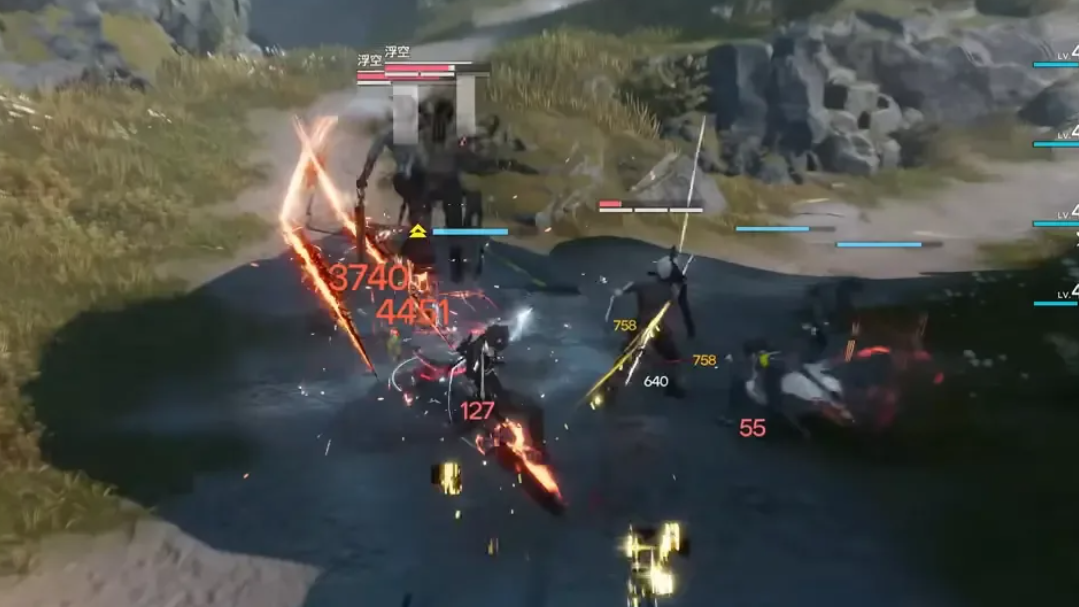
Artificial Snowfall is where Aurora's design comes together. At Mastery 3, it grants 9 ammo charges, increases ATK by 75%, and slightly extends her attack interval to 2 seconds. Each attack inflicts Cold for 2.5 seconds. If the target is already Frozen, the attack instead deals 330% of ATK as physical damage. The skill can be manually deactivated to conserve ammo, and it costs just 20 SP with 13 initial SP.
The Cold-to-Frozen-to-bonus-damage cycle works in a three-hit pattern. The first hit applies Cold. The second hit, landing on a Cold target, triggers Freeze. The third hit lands on a Frozen target and delivers the massive bonus damage. With 9 ammo, Aurora can complete this cycle three times per activation if she's the sole Cold source. That means only three of her nine hits deal the amplified damage.
This is where external Cold sources become critical. If another operator — Gnosis being the premier choice, or Kjera to a lesser extent — is already applying Cold or Freeze to Aurora's target, she can skip straight to the bonus damage hits. This effectively triples her burst output during a single skill activation. Gnosis is especially potent here because his kit also applies a Fragile debuff to Frozen enemies, further multiplying Aurora's damage.
HES-X Module — Shield Photography Module
Aurora's Operator Module, the Shield Photography Module (HES-X type), addresses the Duelist archetype's most crippling weakness. At Stage 1, the trait changes from "only restores SP when blocking enemies" to "SP recovery is slowed except when blocking enemies." This means Aurora gains a small passive SP trickle (roughly 0.2 SP per second) even when not blocking. More importantly, it allows external SP batteries like Ptilopsis and Warfarin to actually affect her.
Combined with Artificial Snowfall's already low 20 SP cost and its toggleable ammo system, the module gives Aurora noticeably better skill cycling. Stage 2 and Stage 3 upgrades improve Frigid Respite's regeneration to 3.5% and 4% max HP per second, respectively, along with modest stat boosts to HP and ATK. The Stage 1 unlock is the most impactful investment; upgrading beyond that yields diminishing returns relative to material costs.
To unlock the module, you need Aurora at Elite 2 Level 50 with 100% Trust. The module missions require dealing 40,000 total damage with Aurora and clearing Main Theme stage 3-8 with a 3-star rating while having Aurora defeat Skullshatterer.
Aurora vs. Eunectes — Duelist Defender Comparison
Eunectes is the 6★ Duelist Defender and Aurora's most direct competitor. Eunectes has higher raw stats, a self-sufficient kit that doesn't depend on team composition, and her S3 transforms her into an extraordinarily tanky damage dealer with an 18-second stun. She functions well as a solo duelist against bosses and elite enemies.
Aurora trades self-sufficiency for team synergy potential. Her S2 has better skill uptime (20 SP cost vs. Eunectes' 28 for S2, plus the ability to end early), and Frozen is a stronger crowd-control effect than Stun in certain contexts — fewer enemies resist it, and Stun immunity in Contingency Contract risks does not prevent Freeze. When paired with Gnosis, Aurora's damage output can exceed Eunectes' by a significant margin. Without that support, however, she falls behind.

Base Skills and Training Room Value
Aurora's base skill, Defender Expert α, speeds up Defender Operator Mastery training by 30% when she's assigned as the trainer in the Training Room. At Elite 2, this upgrades to Polar Survival, which maintains the 30% bonus and adds a further 45% speed increase specifically for Specialization Level 1 training. This makes her one of the better Training Room operators for Defender skill Masteries, and it's a practical reason to promote her to Elite 2 even if you don't plan to use her in combat frequently.
Who Should Build Aurora
Aurora is not a priority build for new players or anyone looking for a reliable general-purpose defender. Her single block count, high DP cost, and reliance on freeze synergy make her a poor fit for most standard team compositions. If you already own Gnosis or plan to invest in a Cold-themed squad, Aurora becomes a much more compelling pick. The combination of Gnosis, Kjera, and Aurora can produce impressive burst damage and crowd control against enemies vulnerable to Freeze.
For players who enjoy niche strategies and big damage numbers, Aurora delivers. Her S2 can hit for several thousand damage per strike against Frozen targets, which is satisfying even if the setup cost is high. She also has genuine utility in Integrated Strategies runs where you might encounter her alongside freeze-capable teammates through temporary recruitment. As of December 2025, Aurora has been moved from the Standard headhunting pool to the Kernel headhunting pool on the Global server.
Aurora's design is a case study in Arknights' archetype limitations. The Duelist Defender branch asks players to accept steep trade-offs for raw power, and Aurora layers an additional condition — freeze dependency — on top of those existing constraints. When everything aligns, she hits like few other 5★ operators can. The rest of the time, she's waiting for the blizzard to arrive.