

The loudest meme coming out of Call of Duty: Black Ops 7’s campaign isn’t a new weapon or a shocking twist. It’s a giant, half‑submerged version of long‑time ally Mike Harper that players immediately labeled the “Skibidi Toilet” boss.
The sequence is short, but it has become the visual shorthand for how many players feel about Black Ops 7’s story: noisy, surreal, and completely detached from the grounded military fantasy the series used to sell.
What the “Skibidi Toilet” boss actually is in Black Ops 7
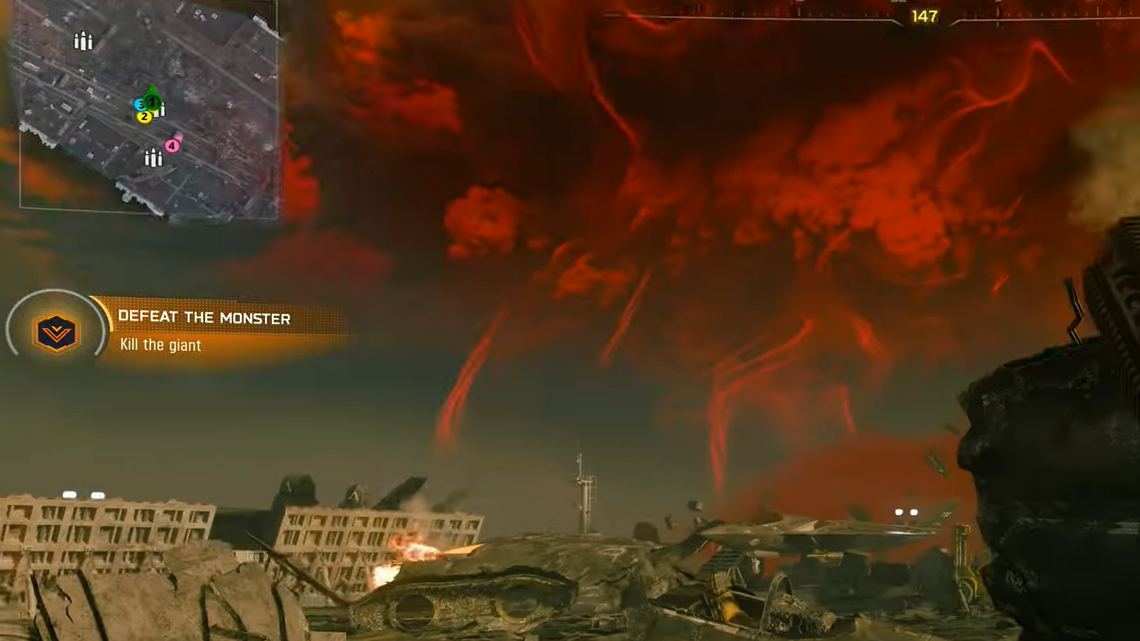
The meme points at a specific moment in the co-op campaign. Harper, a familiar face from earlier Black Ops entries, learns a major truth about past events and mentally snaps. Under the influence of a psychotropic weapon, he drags the squad into a shared hallucination that plays out as a boss fight.
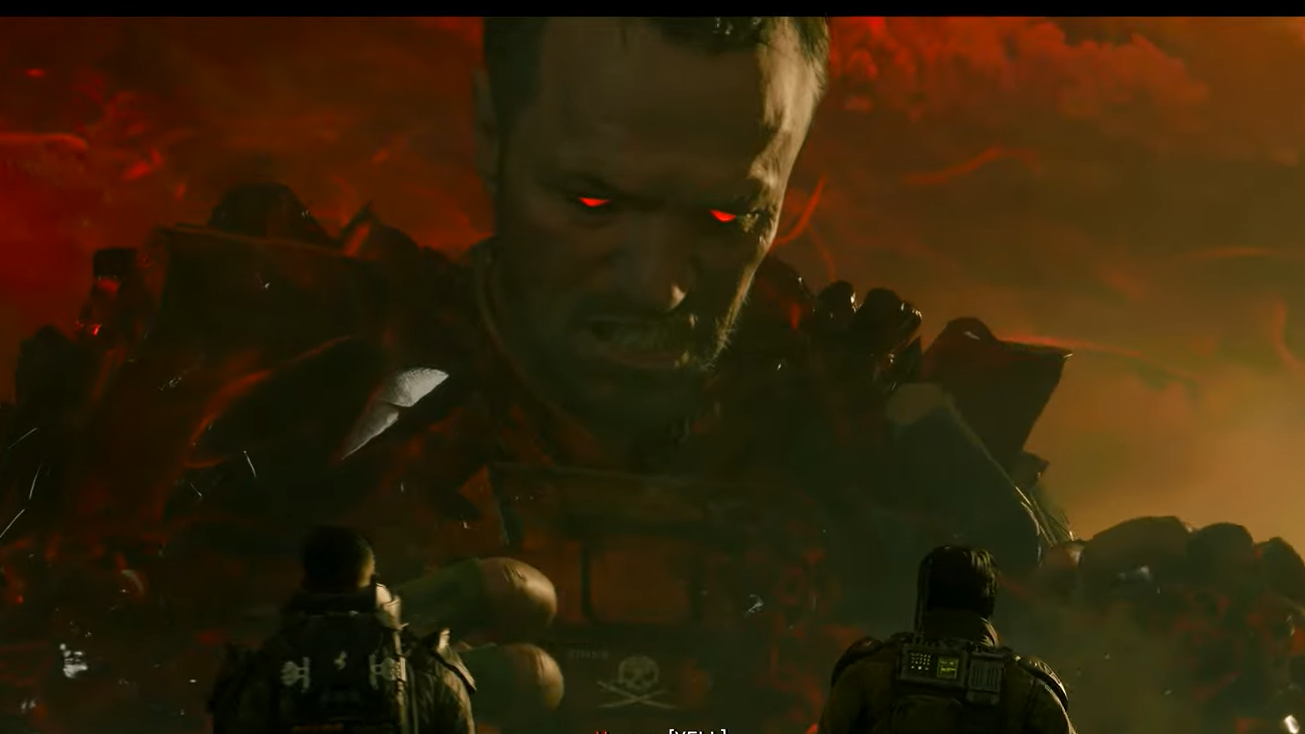
Inside this vision, Harper morphs into a towering giant. Only the upper half of his body is visible, rising out of an unseen surface, while players dodge shockwaves and incoming attacks in a circular arena. The framing makes it look like his torso is sticking out of some invisible cylinder, which is where the Skibidi comparison comes from.
| Element | What happens |
|---|---|
| Narrative trigger | Harper confronts a painful revelation about past betrayal and loses control. |
| Mechanic trigger | The squad is hit by fear‑gas style psychotropic tech that induces a shared hallucination. |
| Visual design | Harper appears as a massive humanoid whose upper body rises from below the arena, towering over players. |
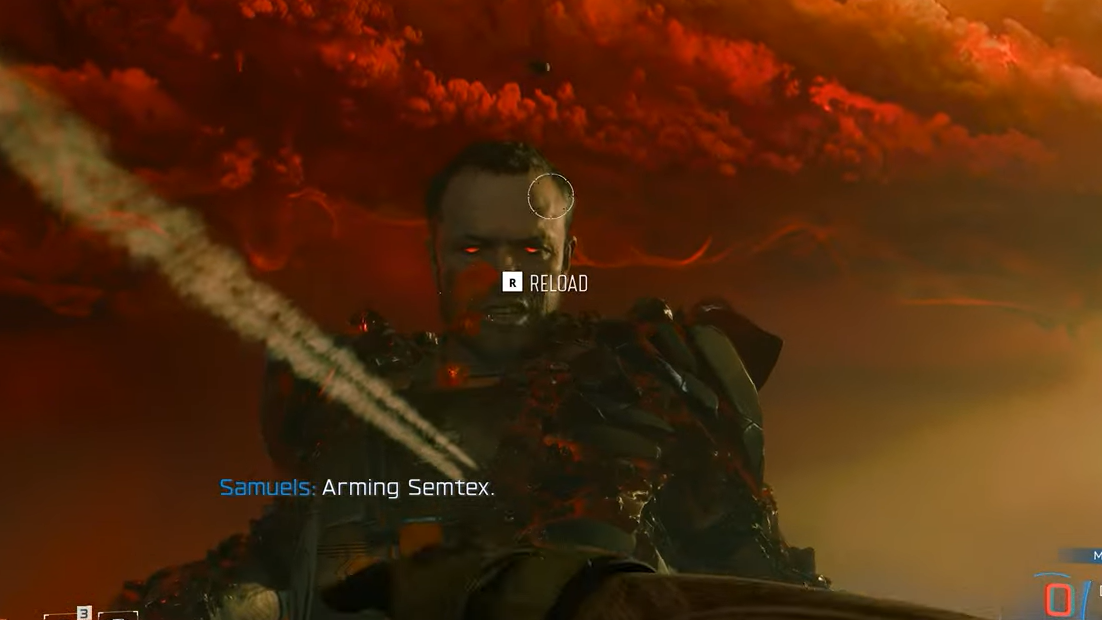
| Player objective | Survive circular shockwave attacks, return fire when openings appear, and “snap” Harper out of the vision. |
| Campaign context | The fight happens in the main story, not in Zombies mode, and is treated as a core boss encounter. |
Once the fight ends, the hallucination dissolves, the team quickly reaffirms unity, and the plot moves on. That abruptness is part of why the encounter feels like padding rather than a payoff, and why the giant Harper image is what sticks.
Why players call it a “Skibidi Toilet” boss
Skibidi Toilet is a YouTube series made in Source Filmmaker by creator DaFuq!?Boom!. Its signature image is absurd: men’s heads sticking out of toilets, screaming along to a mashup of Timbaland’s “Give It To Me” and Biser King’s “Dom Dom Yes Yes,” while an escalating war unfolds between these toilet creatures and humanoids with cameras, TVs, or speakers for heads.
The Black Ops 7 boss doesn’t literally feature a toilet. The comparison comes from:
- The composition: a human head and upper torso emerging from an unseen barrel‑like shape, framed from below.
- The exaggerated scale: a comically huge character looming over a small arena, sending out cartoonish shockwaves.
- The slightly off facial model: players likened Harper’s giant face to a generic Source engine NPC, amplifying the GMod energy.
The result is that, even without porcelain in sight, the fight triggers the same visual language as Skibidi Toilet clips: oversized human head, inorganic implied “body,” loud VFX, and a sense of meme‑brain chaos.
How the hallucination fits into Black Ops 7’s story
Black Ops 7 leans heavily into mind‑warfare. A defense contractor CEO deploys a gas that weaponizes fear and trauma in a world already destabilized by earlier Black Ops events. The gas interacts with brain implants on key characters, pulling them into shared, playable nightmares that remix memories and worst‑case fears.
Across the campaign, this shows up as:
- Reimagined confrontations with past villains like Raúl Menendez.
- Body horror set pieces, such as Frank Woods fused into a multi‑headed jungle creature.
- Boss fights against traitors and rivals exaggerated into kaiju‑scale threats.
The Harper fight is structurally similar. He suspects betrayal in the squad, the gas hits, and his paranoia literalizes as a towering version of himself, the player must “fight” to restore trust. As a concept, it’s in line with earlier Black Ops campaigns that used MKUltra, brainwashing, and unreliable perception as narrative devices. The difference is how literally Black Ops 7 turns these ideas into theme‑park bosses.
Why this one encounter blew up the way it did
Plenty of shooters use dream or drug sequences to justify surreal boss fights. What makes this one so volatile is the context around Black Ops 7 and the broader state of Call of Duty.
| Context | Impact on the Skibidi meme |
|---|---|
| Franchise expectations | Many players still want Call of Duty campaigns to feel like war thrillers, not meme‑driven sci‑fi fantasies. |
| Campaign tone | Black Ops 7 layers digital fear toxin, giant bosses, and easter‑egg fanservice into a story some already see as incoherent. |
| AI and art controversy | The same game ships with AI‑generated calling cards, priming players to see anything “off” as cheap or lazy. |
| Review bombing | User scores on Metacritic plunge to the bottom of the franchise, with “brain rot” and “Zombies as campaign” showing up as common complaints. |
| Social clip economy | A 10‑second video of a giant Michael Rooker head smashing a city is incredibly shareable, even to people who don’t follow Call of Duty. |
The boss fight arrives at the intersection of all these tensions. It’s an easy image to circulate with a caption about “cod is cooked” or “Skibidi zombie,” and it requires no prior lore knowledge to understand why it looks ridiculous. That makes it the perfect lightning rod for frustrations about tone, monetization, and creative direction.
How the boss actually plays
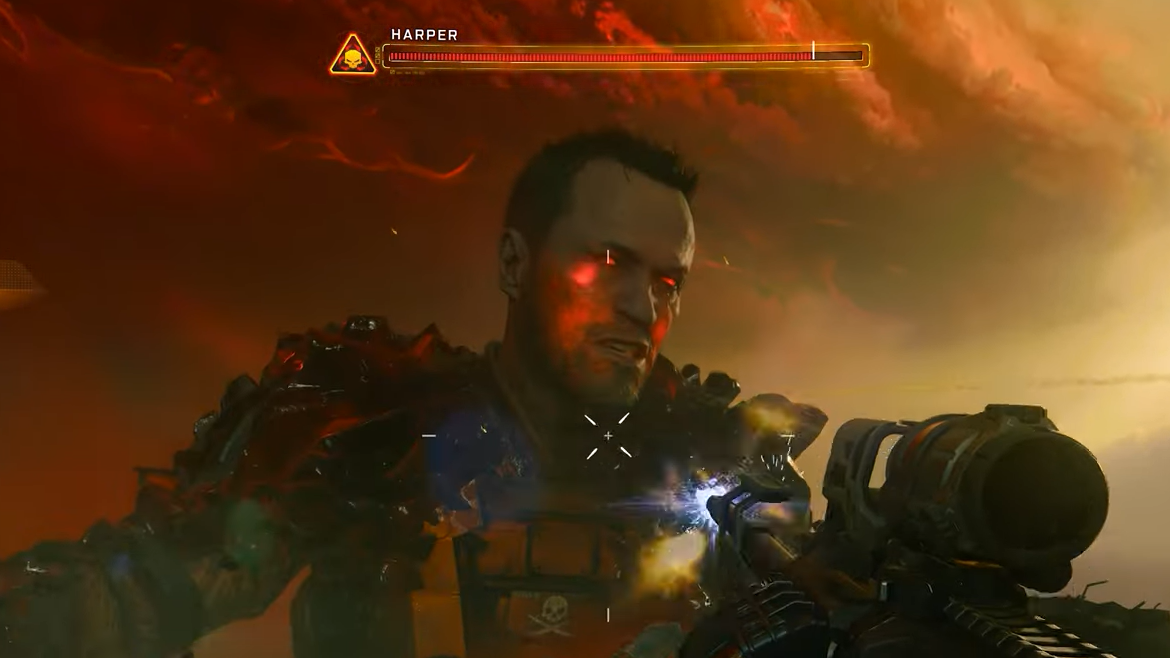
Mechanically, the giant Harper encounter is straightforward. You fight in an open space while the boss:
- Slams the ground to send out wide, radial shockwaves, you must jump or sidestep.
- Summons adds and environmental hazards to push you out of safe zones.
- Opens weak points in limited windows, encouraging coordinated focus fire in co‑op.
Players have compared the structure to set pieces from other series, more comfortable with spectacle — early God of War, late‑game Far Cry hallucinatory sequences, even Destiny nightmares. It’s not especially complex, but it stands out in a franchise that usually leans on scripted sequences and brief QTEs instead of traditional raid‑style boss design.
In isolation, the fight is a competent if familiar arena encounter. The problem for a lot of players is not how it plays, but what it says about where Black Ops is willing to go in its mainline story.
The AI art backlash surrounding Black Ops 7
The Skibidi meme landed in the middle of a separate controversy: Black Ops 7 uses generative AI for cosmetic art, particularly calling cards. Some of these cards exhibit tell‑tale hallmarks of Ghibli‑style filters and mash‑up prompts, including warped line work and uncanny character details.
For a $70 annual tentpole, that choice has gone down badly. Long‑time Call of Duty players are used to bespoke 2D art and themed cosmetics that help define each game’s personality. Swapping hand‑crafted work for algorithmically generated images is being read as a cost‑cutting move, especially when combined with recurring complaints about reused Warzone content and always‑online requirements.
Even outside the player base, the use of AI has drawn political attention. US Representative Ro Khanna publicly called out Activision’s reliance on the technology and argued for guardrails that prevent studios from offloading creative jobs to machine‑generated filler in the name of margins. Activision’s line is that AI “supports” internal teams rather than replacing them, while human creatives remain in charge of key decisions.
The optics, though, are clear: a game already accused of “brain rot” visual design also ships with AI‑looking cosmetics, and then a giant, meme‑coded boss shows up in the campaign. Players connect those dots, whether or not that specific fight had any AI involvement.
Fan reaction: from “brain rot” to reluctant curiosity
Reception to Black Ops 7’s campaign has been sharply polarized. User scores on aggregate sites have sunk to franchise‑low territory, with many zero‑score reviews calling the story childish, overly cartoony, or indistinguishable from a bad Zombies spin‑off. The phrase “brain rot” comes up often — shorthand for the hyper‑edited, meme‑driven style common on TikTok and YouTube Shorts.
That said, not every reaction to the giant Harper is negative. A noticeable slice of players, especially those who have grown tired of interchangeable military campaigns, see the sheer absurdity of fighting a building‑sized Michael Rooker as the first time Call of Duty has felt surprising in years. The fight’s presence in the main story, not fenced off in Zombies, is exactly what makes it scandalous to some and intriguing to others.
The split runs right through the fanbase: one group wants the series to return to grounded Black Ops 1 and 2‑style narratives about CIA ops and Cold War fallout; another would rather see Treyarch lean into unhinged psy‑ops and strange, uncomfortable imagery, even if the execution is rough.
The “Skibidi Toilet” boss is a Rorschach test for what players believe Call of Duty should be in 2025. On a design level, it’s just another hallucination encounter in a campaign full of them. On a cultural level, it has become the meme that defines Black Ops 7: a once‑grounded shooter gazing into the algorithm and seeing a giant, goofy face staring back.