

Late-game Icarus bases stop being huts with campfires and start looking more like industrial outposts. That shift only works if water and power are stable. The good news is that once the right machines are unlocked, you can automate almost everything and run a single network across huge distances.
Core systems: how power and water networks work in Icarus
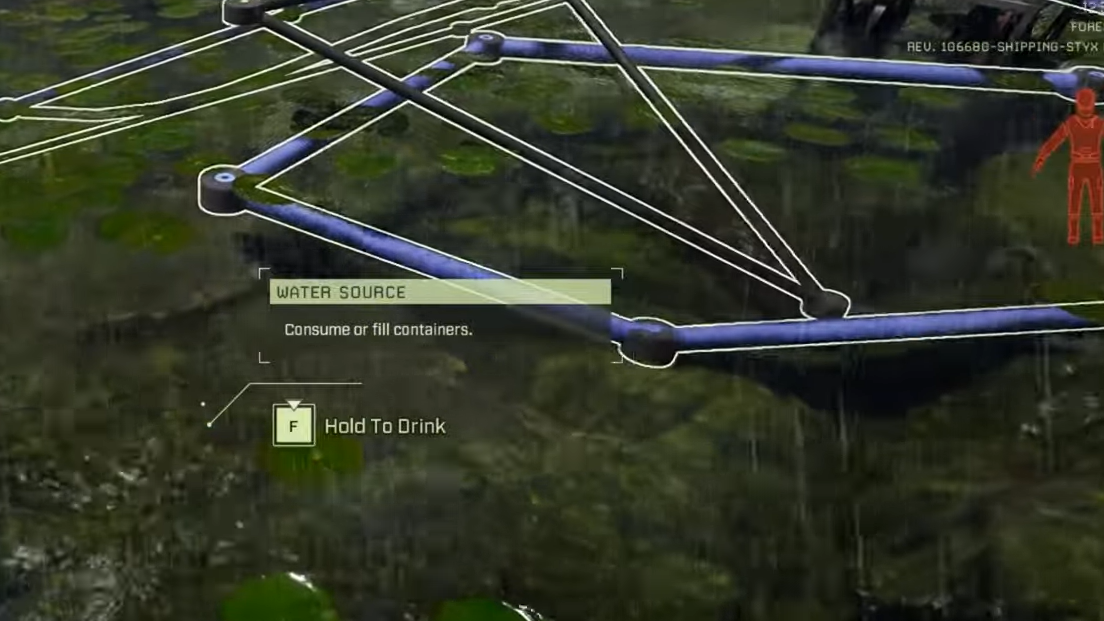
Electricity and water in Icarus both use invisible networks that can stretch across the entire map. There is no distance limit and no loss over distance. If a drill in a cave is connected to the same network as your base generator, it will run as if it were next door.
Two tools make this possible:
- Electricity Tool – lays power lines between generators, batteries, and any deployable that consumes power.
- Water Pipe Tool – lays pipes between water producers (pumps, Water Borer) and anything that can accept piped water (crop plots, benches, barrels, reservoirs).
Both tools create small connection nodes (“dimples”) wherever you click on a surface. Any cables or pipes connected to the same node share the same network. That lets you branch a single line to many devices.
Most powered benches only draw electricity while actively crafting. Some utilities – like deep ore drills, refrigerators, and dehumidifiers – run continuously and define your baseline power requirement.
Power sources in Icarus: options, pros, and cons
Icarus offers several ways to generate electricity. Each fits a different stage of progression and style of play.
| Power source | Output (approx.) | Key pros | Key cons | Typical use |
|---|---|---|---|---|
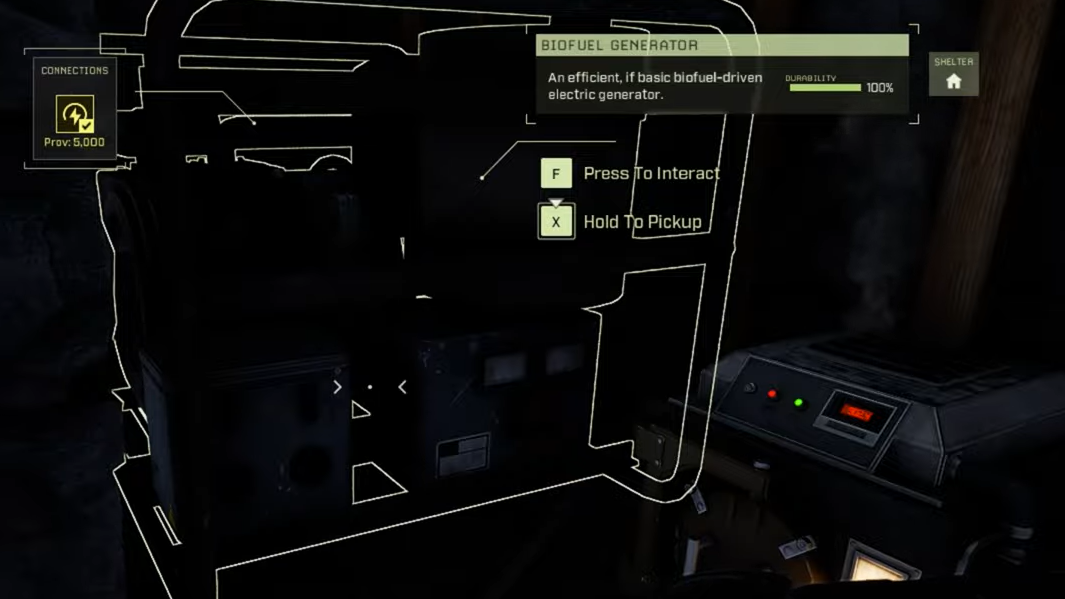
| Biofuel Generator | 5,000 power (large), 2,000 (portable) | Strong, constant power; simple to site; good early Tier 4 base anchor | Needs biofuel cans every ~4h10m; depends on wood/meat/plant income | Main base power, drills when you visit often |
| Water Wheel | 2,000 power | Runs 24/7; cheap; no storm damage; generates spoiled plants and fish | Must be in flowing water; clogs when inventory fills and needs manual emptying | Long-term base near rivers, passive fertilizer and gunpowder supplies |
| Wind Turbine | 1,750 power | Continuous generation; no fuel; decent cost | Takes storm damage, requires occasional repair; performance falls with durability | Remote deep ore drills, distributed networks, “set and visit” mining |
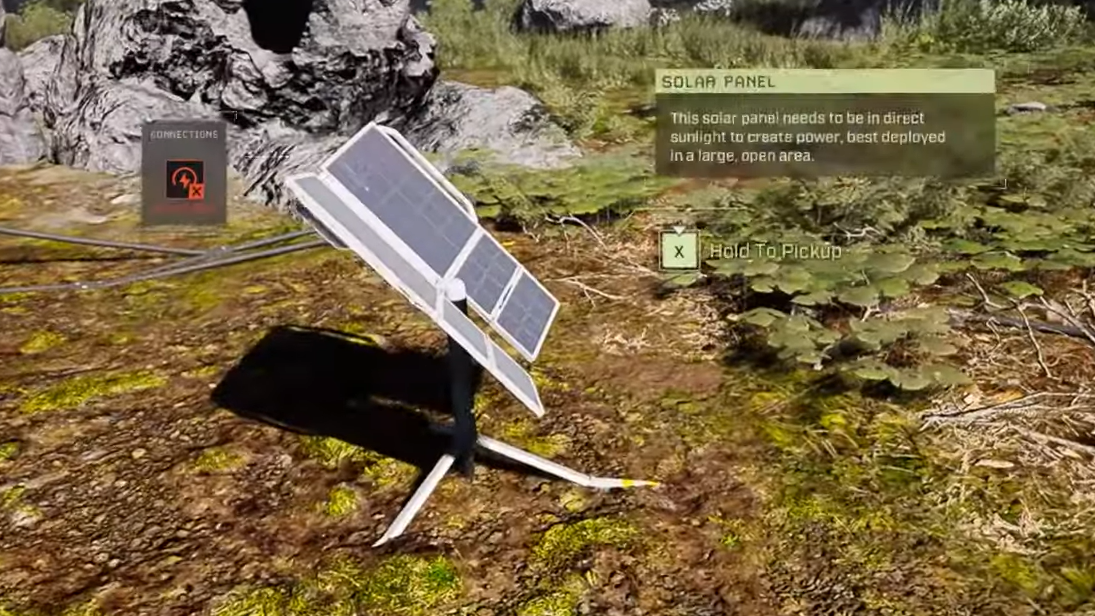
| Solar Panel | 6,000 power | High daytime output; no fuel or maintenance | Only works in direct sun; disabled by shade and night; expensive (Composites, electronics) | Open-world bases in clear terrain, big battery banks |
| Advanced Battery | 10,000 power output cap | High discharge capacity; bridges gaps when generation drops | Needs charging; more costly than basic battery but far more useful | Night-time supply, buffering solar or wind for Tier 4 bases |
Basic batteries exist but have low output. For most late-game setups, Advanced Batteries in an Advanced Battery Rack are the practical choice for storage and peak output.
Water sources in Icarus: pumps, geysers, and storage
Several machines can put water onto the network. They differ in how they’re powered and how much they produce.
| Water source | Water / power | Key pros | Key cons | Typical use |
|---|---|---|---|---|
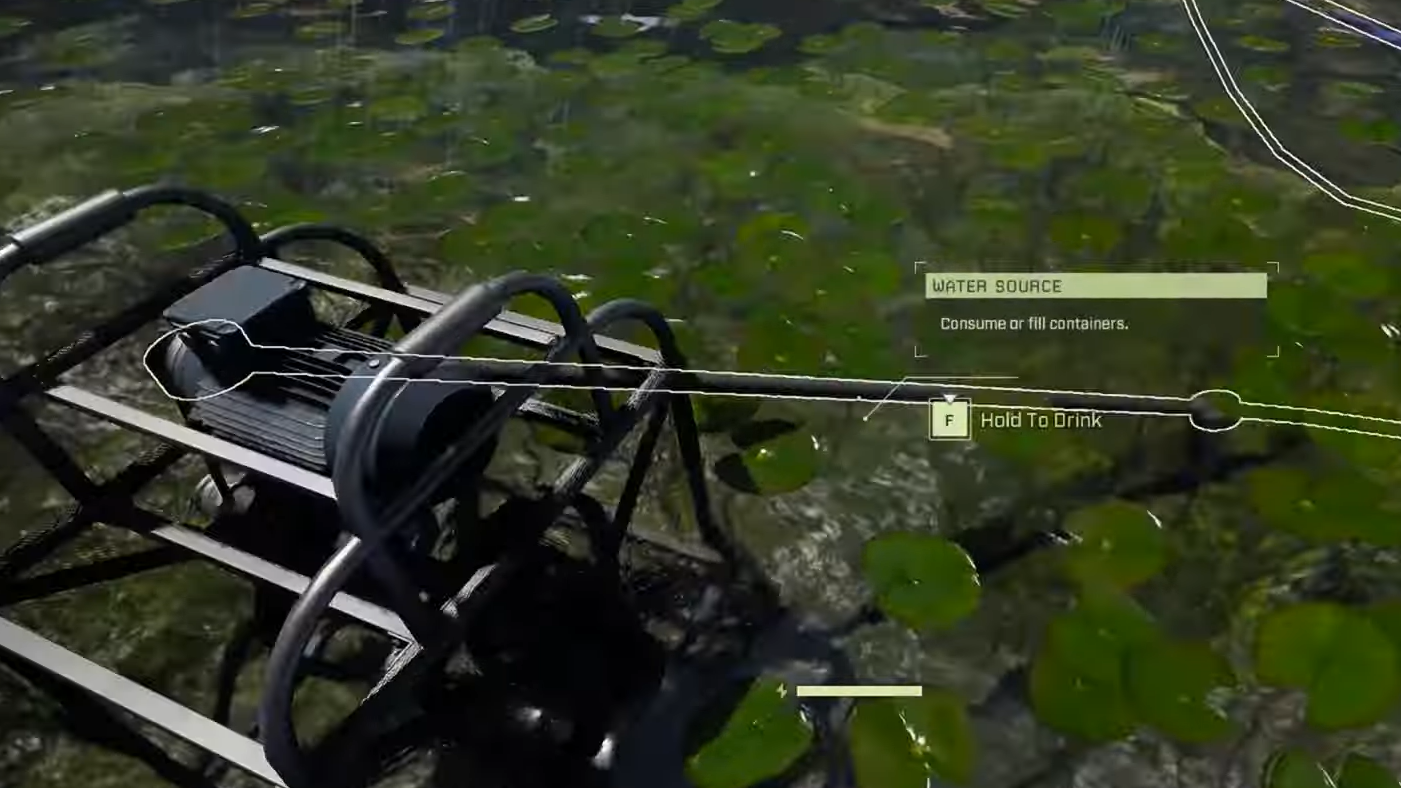
| Biofuel Water Pump | ~1,000 water for 1 biofuel-driven pump | Available earlier; only needs a water body and biofuel | Constant refueling; manual upkeep | First plumbed bases before full electricity network |
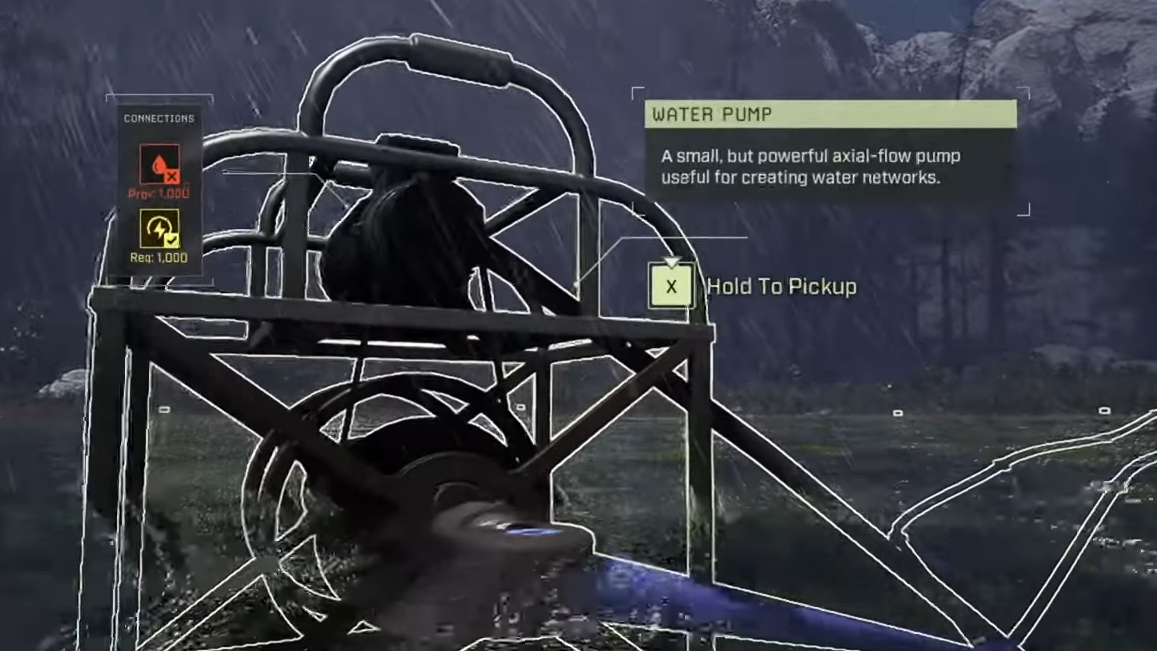
| Electric Water Pump | 1,000 water for 1,000 power | Set-and-forget once powered; uses basic materials | Consumes continuous power; needs nearby power line | Standard late-game base water, especially near lakes/rivers |
| Water Borer | 2,000 water for 1,000 power (geysers) | Best water per power; enormous output supports many plots and containers | Requires geyser placement and Composites; location-limited | Permanent hubs feeding multiple bases, large farming complexes |
Water can be stored and buffered using:
- Water Barrel – crafted on the Machining Bench; holds a large volume of piped water and must sit under a roof.
- Rain Reservoir (Tier 2 and Tier 3 variants) – stores rainwater and also accepts piped input.
With a Water Borer feeding a barrel and a reservoir, the surplus output is stored and reused automatically when demand spikes, as long as the network stays connected.
Crafting checklist: machines and materials you need
To fully electrify and plumb a Tier 3–4 base, plan for at least the following:
- Wind Turbine – 8x Electronics, 20x Steel Screw, 25x Aluminum Ingot, 35x Copper Wire, 25x Gold Wire, 5x Carbon Fiber.
- Biofuel Water Pump – 16x Steel Ingot, 4x Electronics, 12x Epoxy, 16x Copper Wire.
- Water Barrel – 4x Iron Ingot, 40x Refined Wood, 4x Epoxy.
- Tier 2 Rain Reservoir – 8x Stick, 24x Wood, 60x Stone, 8x Leather.
- Water Pipe Tool – 50x Copper Wire, 50x Gold Wire, 4x Platinum Sheath.
- Electricity Tool – 50x Copper Wire, 50x Gold Wire, 4x Carbon Fiber.
- Basic Battery Rack – 4x Electronics, 10x Refined Wood, 16x Copper Wire, 6x Platinum Sheath, 2x Titanium Plate.
- Advanced Battery Rack – 8x Electronics, 18x Copper Wire, 8x Titanium Plate, 18x Gold Wire, 4x Composites.
- Advanced Battery – 1x Advanced Battery, 1x Titanium Plate (battery item for the rack).
- Water Borer – 12x Steel Ingot, 4x Composites, 6x Electronics, 8x Steel Screw, 40x Copper Wire.
- Iron Crop Plot – 10x Iron Ingot, 20x Copper Wire, 12x Sulfur, 8x Steel Screw, 20x Dirt.
All of these sit across the Tier 2–4 Tech Trees. The Machining Bench is the main crafting station for pumps, barrels, and reservoirs; Tier 4 battery items are near the Electricity Tool in the Tech Tree.
Setting up a basic powered water network with a Biofuel Water Pump
This is the first step into plumbing and works even before a full electric network is in place.
Step 1: Place a Biofuel Water Pump so that its intake is inside a water body close to your base. The hologram will turn valid when enough of the pump sits in the water.
Step 2: Insert a full biofuel can into the pump’s inventory and activate it. The UI will show it producing 1,000 units of water on the network but not initially sending it anywhere.
Step 3: Put the Water Pipe Tool on your hotbar, select it, and left-click on the pump to start a pipe. Drag the pipe towards your base, clicking frequently to create intermediate connection nodes so you do not hit the pipe length limit.
Step 4: Inside your base, mouse over a bench or deployable that accepts water (for example, a cement mixer or a glassworking bench). When the connection preview turns yellow on the device’s water port, click to link it. The machine will now report that water is connected and start using it for relevant recipes.
Step 5: From a nearby pipe node, branch additional lines to any other water-using devices. Right-click on pipes if you need to detach or clean up connections without picking up the machines themselves.
Building a self-sustaining geyser hub with Water Borer and Wind Turbine
Once Tier 4 tech is unlocked and a geyser is available, a Water Borer and Wind Turbine form a compact, continuous water and power station. This combination is also the backbone of the Sportskeeda-style setup that pairs 1,750 power with 2,000 water.
Step 1: Find an enzyme geyser and place the Water Borer directly on top of it. The Borer only works when deployed on a geyser.
Step 2: Place a Wind Turbine nearby in clear space. Its output is 1,750 power, enough to run the Water Borer (1,000 power) and still send 750 power to batteries and other devices.
Step 3: Place an Advanced Battery Rack close to the turbine. Insert one or more Advanced Batteries into the rack so it can store excess power.
Step 4: Use the Electricity Tool to connect the Wind Turbine to a nearby connection node, then from that node to both the Water Borer and the Advanced Battery Rack. All three will now be on the same power network: turbine feeding Borer and charging the batteries.
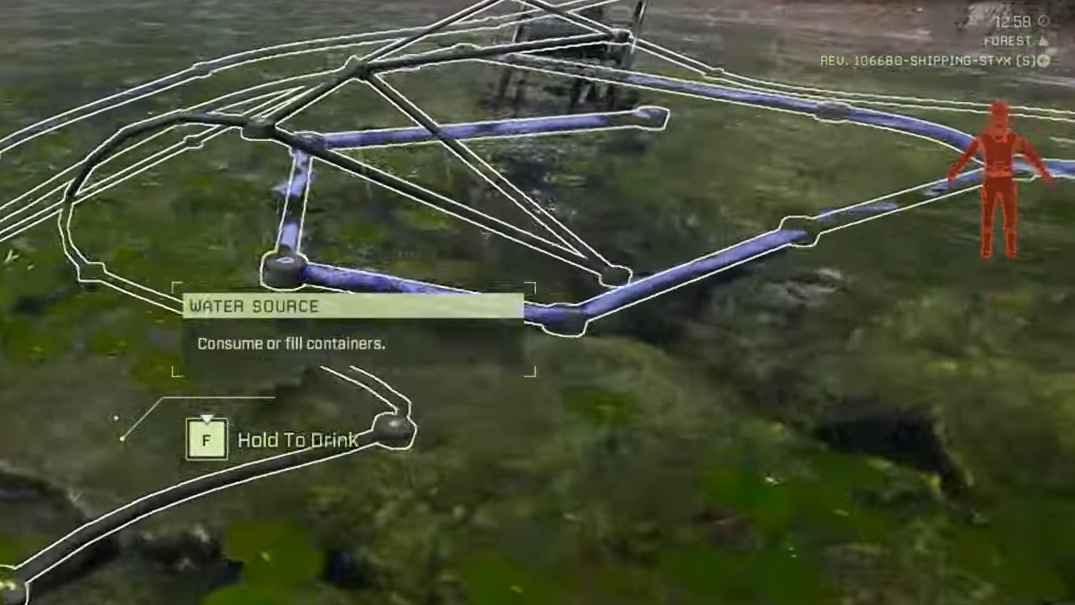
Step 5: Place a Water Barrel under a simple roof and a Tier 3 Rain Reservoir nearby. With the Water Pipe Tool, run a pipe from the Water Borer to an intermediate node, then from that node to the barrel, the rain reservoir, and any crop plots or base water consumers.
In this configuration, the Water Borer outputs enough water that crop plots barely dent production. Most of the 2,000 units of water simply keep the barrel and reservoir topped off, while the extra 750 power from the Wind Turbine charges the battery rack as long as nothing else is pulling from the network.
Designing power for deep ore drills
Electric deep ore drills are among the most demanding consumers in the game. They draw around 2,000 power continuously and are often placed far from any base.
Two broad patterns work well:
- Local generation at each drill – typically a pair of Wind Turbines feeding one or more drills, sometimes with a battery in the cave to smooth outages.
- Centralized grid – a single large solar/wind/biofuel farm and battery bank near your main base, with power cables run out to all drills.
For local setups, a common ratio is 2 Wind Turbines per electric drill. Turbines do not get destroyed; they simply lose durability and output under storm damage and can be repaired when you revisit to empty the drill. In forest biomes, leaving them for several in-game days usually still keeps them above 80 percent durability.
For centralized setups, the infinite range of power lines is key. A single power station with multiple solar panels, Wind Turbines, and a bank of Advanced Batteries can feed every drill and your base. This avoids oversizing individual generators at each drill and consolidates maintenance into one site.
Powering a Tier 4 base: practical patterns
There is no single number for “enough” power; usage depends entirely on what you run at once. The main continuous draws are:
- Electric deep ore drills.
- Deep freezers and refrigerators.
- Dehumidifiers, heaters, and creature deterrents.
- Water Borers and electric pumps.
Most crafting benches, furnaces, and processors only draw power while crafting. These can share capacity, as they are rarely all at maximum load at the same time.
Some examples of effective base patterns:
- Biofuel-first base – one large Biofuel Generator (5,000 power) for early Tier 4, covering an Electric Furnace, a Material Processor, and a few utility benches. Supplement with a Water Wheel if a river is nearby to reduce fuel dependency.
- Hybrid solar + battery base – several Solar Panels placed high in clear air, feeding 3–4 Advanced Batteries. Panels charge the bank during the day; batteries run the base at night. Sleep through nights to shorten discharge periods.
- Wind farm + battery grid – dozens of Wind Turbines grouped on a flat plateau, with a large Advanced Battery Rack array. This scales to tens of thousands of power for extreme open-world builds with multiple aquaria, many furnaces, and stacks of freezers.
One open-world example runs over 30,000 power on a single network with roughly 40 Wind Turbines and 30 Solar Panels feeding around 60 Advanced Batteries. That is overkill for most players, but it illustrates that scaling is limited more by your patience than by game systems.
Water for bases, farms, and caves
For most bases, water demand is modest. A single Electric Water Pump producing 1,000 water already covers:
- Several cement mixers (for faster concrete).
- A plumbed sink and shower.
- Multiple hydroponic or iron crop plots.
- Any benches that accept network water.
Two Electric Water Pumps are more than enough even for intensive farming bases. Placing the base near a river or lake keeps pipe runs short, but distance is not technically a limitation.
In caves, small puddles can host a pump to water underground bases and farms. Alternatively, a Water Borer on a distant geyser can push water into a long pipe that snakes into the cave. The game does not penalize distance, so 300 meters of hose is entirely viable if you tolerate the visual clutter.
Water wheels only work in flowing water, not still pools, so they are rarely an option for fully underground cave outposts.
Using batteries and priorities to stabilize your network
Battery racks transform intermittent or fragile generation into a stable network. A few principles help keep everything online:
- Prefer Advanced Batteries – they output up to 10,000 power, enough to run several heavy appliances at once. Basic batteries top out far lower and struggle to power late-game machines.
- Charge during “idle” – design the network so your baseline generation (solar, wind, water wheel, or generator) exceeds idle consumption. Batteries fill up whenever heavy benches are not crafting.
- Disconnect when not needed – use the Electricity Tool to right-click benches off the grid if you are low on power. This prevents them from reserving capacity they do not truly need.
Some devices can be toggled without unplugging – omnidirectional work lamps, for instance, can be turned off with an interaction so they stop consuming their 150 power share. It is still safest to fully disconnect rarely used, high-draw machines when your generation is limited.
Within a single network, internal priority can be set so certain appliances continue drawing power when supply falls. Deep freezers and creature deterrents are good candidates, since losing either can have more impact than temporarily stopping a furnace cycle.
Once the tools and machines are in place, Icarus stops being about buckets of lake water and torches on cave walls. A single, well-laid network can power drills halfway across the map, feed farms from a geyser a valley away, and keep a Tier 4 base humming through storms and night cycles with little more effort than the occasional repair and battery check.