

Slay the Spire 2 entered early access on March 5, 2026, and its new Spire is packed with formidable bosses that demand careful deck planning. Each run ends with a boss fight at the conclusion of every act, and the boss you're facing is visible as an icon at the top of the map from the moment you enter the zone. That preview is critical — it lets you shape your card picks, relic choices, and overall strategy around the specific mechanics you'll need to overcome.
Quick answer: There are 12 bosses in early access, spread across two Act 1 zones (Overgrowth and Underdock), one Act 2 zone (Hive), and one Act 3 zone (Glory). You'll face one random boss per act in each run.
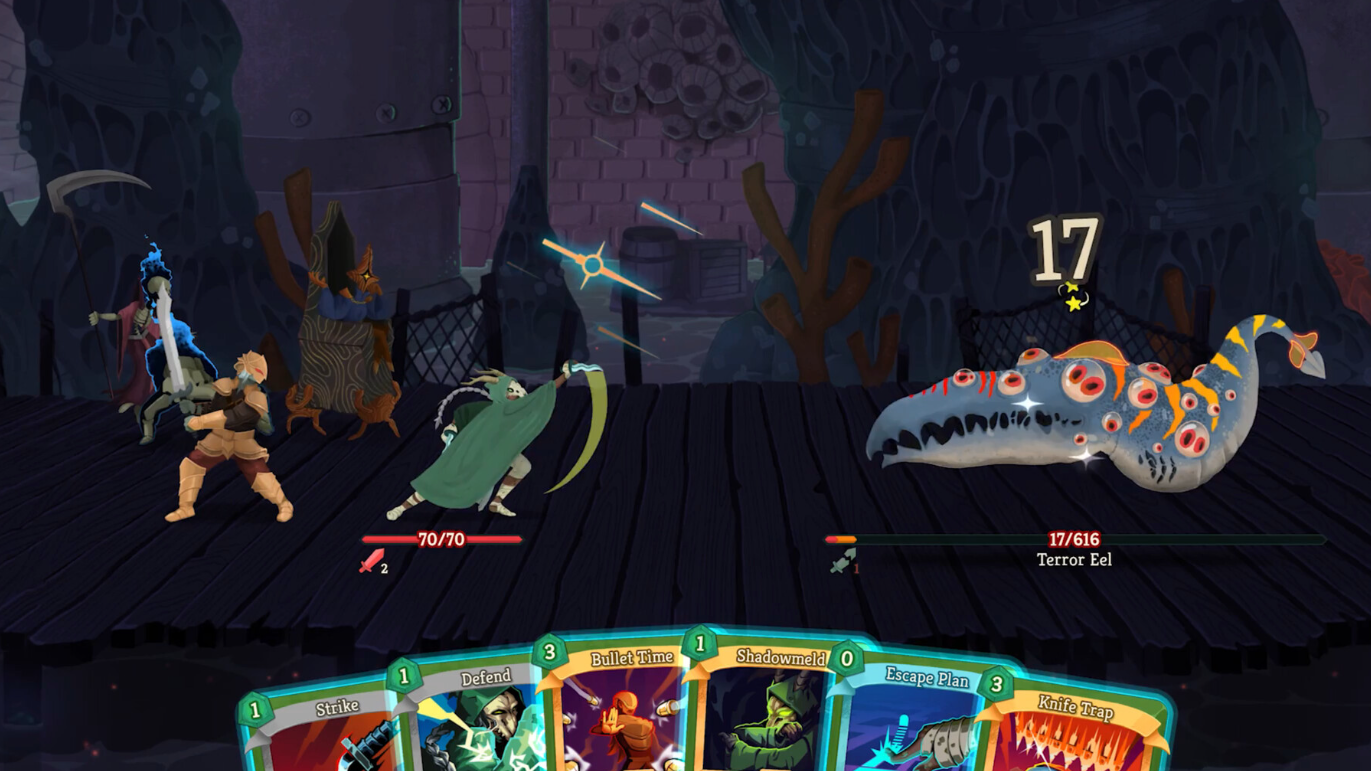
Act 1 Overgrowth Bosses
The Overgrowth is the default first act. It contains three possible bosses, each with distinct gimmicks that test different aspects of your early deck.
Vantom (173 HP)
Vantom starts the fight with nine charges of Slippery, which reduces each hit you land to just one point of damage until those charges are depleted. Its tail rises progressively higher each turn, telegraphing increasingly dangerous attacks. The four-turn cycle goes: a single attack, a double attack, a massive hit that also shuffles three unplayable Wound cards into your deck, and then a Strength buff before repeating. Speed matters here — you need to burn through Slippery fast and kill Vantom before Wounds clog your draws. Any way to exhaust those Wounds makes the fight significantly more manageable.
Ceremonial Beast (252 HP)
This boss has two distinct phases. It opens with Plow, a buff that causes it to become stunned once its health drops below 150. During phase one, it simply attacks and buffs its own Strength each turn. Once you trigger the stun threshold, all accumulated Strength is cleared, and phase two begins. From that point, the Ceremonial Beast alternates between attacking and applying the Ringing debuff, which restricts you to playing only one card per turn. Maximize your damage output right before and during the stun turn, because phase two punishes slow decks hard.
Kin Shaman (190 HP) with Kin Followers (~58 HP each)
The Kin Shaman appears alongside two Kin Follower minions. The followers alternate between buffing their Strength and attacking, while the Shaman mixes attacks with Frail and Weak debuffs before eventually buffing its own Strength. You have two viable approaches: focus the Shaman directly to end the encounter instantly (the followers flee when it dies), or use AoE damage to clear the minions first and reduce incoming pressure. The right call depends entirely on whether your deck favors single-target burst or wide damage.
Act 1 Underdock Bosses
The Underdock is an alternative Act 1 zone that unlocks after you accumulate enough score to reach the Chapter 4 Epoch in Tales from the Spire. Its bosses lean toward more mechanically complex encounters compared to the Overgrowth.
Lagavulin Matriarch (222 HP)
A callback to the original game's feared Lagavulin, the Matriarch starts the fight asleep with 12 Plating (armor). You get three free turns before she wakes — use them to play Powers and cycle your deck into position. Once awake, she follows a four-turn loop: attack, multi-hit attack, attack plus block, then a devastating Strategic/Empower move that simultaneously reduces your Strength and Dexterity while buffing her own Strength. This compounding debuff makes the fight progressively worse the longer it goes. Builds that don't rely on Strength for damage output — poison, Doom, Defect Orbs, Necrobinder's Osty attacks — hold up much better here.
Soul Fysh (211 HP)
Soul Fysh immediately adds copies of Beckon to both your draw and discard piles. These status cards cost one of any resource to play, but if they're still in your hand at end of turn, you lose six HP. That's health loss, not damage, so block doesn't help. As the fight progresses, Soul Fysh grants itself Intangible (reducing all damage taken to 1 for a turn), attacks, applies Vulnerable, and keeps adding more Beckons. Exhausting or transforming the Beckon cards is ideal; otherwise, play them as they appear and try to end the fight quickly before your deck drowns in junk.
Waterfall Giant (250 HP)
The Waterfall Giant's danger comes after it dies, not before. Each turn, it applies Steam Eruption to itself, stacking up an explosion that triggers when its HP hits zero. Its regular attacks don't scale with Strength, but the Steam Eruption damage grows every single turn. When you reduce it to 0 HP, it becomes stunned and invulnerable for one turn, then detonates for the full accumulated Steam Eruption value. You can mitigate this with Weak (applied to the Giant), block cards, or Block potions. Kill it fast to keep the explosion manageable, and save your best defensive tools for that final turn.
Act 2 Hive Bosses
Act 2 takes place in the Hive, and its three bosses represent a significant step up in complexity and health pools.
The Insatiable (321 HP)
On turn one, The Insatiable casts Sandpit, starting a four-turn countdown to instant death. It adds Frantic Escape cards to your deck that extend the timer when played, but each copy costs one more energy than the last time you used one. The boss still attacks every turn on top of the countdown mechanic. This is fundamentally a DPS race — you need enough raw damage output to chew through 321 HP while juggling the timer and taking hits. Decks without strong scaling or burst damage will struggle.
Knowledge Demon (379 HP)
Every time the Knowledge Demon applies a debuff — including on its very first turn — you choose between two negative effects from a rotating pool. The options include Disintegration (end-of-turn damage that escalates each time it appears), Mind Rot (draw one fewer card per turn), Sloth (can't play more than three cards per turn), and Waste Away (gain one less primary resource per turn). On top of this, it buffs its attacks, hits hard, and can heal. Highly focused decks that do one thing extremely well are the key. Sinner poison builds, and Necrobinder Doom decks tend to perform well because they can function under heavy restrictions.
Kaiser Crab — Crusher (199 HP) and Rocket (189 HP)
Kaiser Crab is a two-target fight against its left claw (Crusher) and right claw (Rocket). Both claws can deal back attacks for extra damage. If one claw dies, the surviving one gains five Strength and 99 block — but only for that turn, so it's not as catastrophic as it sounds. Rocket is the more dangerous attacker and should generally be prioritized, especially since it skips a turn after using its launching attack. Crusher is tankier and tends to buff its defense. Once both claws fall, the Kaiser Crab in the background flees, and you win.
Act 3 Glory Bosses
The Glory zone is the final act in early access, and its bosses feature multi-phase encounters with punishing mechanics.
Doormaker — Door (155+ HP) and Doormaker (489 HP)
You start this fight against the Door alone. It hits hard and buffs its own Strength each turn. When the Door dies, the Doormaker emerges stunned for one turn, then delivers a powerful melee attack before fleeing back inside a new Door. Each time the Doormaker retreats, the replacement Door's max HP increases by 20 points. The fight becomes a war of attrition — you're repeatedly breaking through tougher Doors to get brief windows of damage on the Doormaker itself. Front-load your damage during the stun turn and the turn immediately after.
The Queen (400 HP) with Torch Head Amalgam (199 HP)
The Queen inflicts Chains of Binding as an Affliction on your cards, causing the first three cards you draw each turn to gain Bound — meaning you can only play one of those three. She also applies stacks of 99 Frail, 99 Vulnerable, and 99 Weak, and buffs her own Strength and defense. The Torch Head Amalgam is her minion and the primary damage dealer, capable of hitting up to three times per turn. It flees when the Queen dies, but ignoring it usually isn't viable because it will tear through your HP. Take down the Amalgam first to stabilize, then focus the Queen.
Test Subject #C10 (100 HP → 200 HP → 300 HP)
Don't be fooled by the low initial health. Test Subject #C10 has the Adaptable ability, reviving itself with more HP and new mechanics each time you kill it. In phase one (100 HP), it has Enrage, gaining two Strength every time you play a Skill card, while also attacking and applying Vulnerable. Phase two (200 HP) swaps Enrage for Painful Stabs, which adds Wound cards to your deck whenever you take unblocked damage. It hits harder and more frequently. Phase three (300 HP) introduces Nemesis, granting Intangible every other turn — reducing all damage to 1 while active. It also starts adding Burn cards to your discard pile, which deal two damage each if left in your hand at end of turn. This is a long, grueling fight that demands both offensive power and deck management.
Full Boss List by Location
| Act | Zone | Boss | HP |
|---|---|---|---|
| Act 1 | Overgrowth | Vantom | 173 |
| Act 1 | Overgrowth | Ceremonial Beast | 252 |
| Act 1 | Overgrowth | Kin Shaman + 2 Followers | 190 / ~58 each |
| Act 1 | Underdock | Lagavulin Matriarch | 222 |
| Act 1 | Underdock | Soul Fysh | 211 |
| Act 1 | Underdock | Waterfall Giant | 250 |
| Act 2 | Hive | The Insatiable | 321 |
| Act 2 | Hive | Knowledge Demon | 379 |
| Act 2 | Hive | Kaiser Crab (Crusher + Rocket) | 199 / 189 |
| Act 3 | Glory | Doormaker + Door | 489 / 155+ |
| Act 3 | Glory | The Queen + Torch Head Amalgam | 400 / 199 |
| Act 3 | Glory | Test Subject #C10 | 100 → 200 → 300 |
Knowing what each boss does before you enter the act is the single biggest advantage you can give yourself in Slay the Spire 2. Check the map icon, plan your card picks accordingly, and don't be afraid to take a rest site heal before the final floor — every boss in the game is preceded by one for a reason.