Horizon Japan stretches from the neon blocks of central Tokyo up through mountain passes and into the snowy Japanese Alps, giving Forza Horizon 6 its most vertical playground yet. Playground Games has confirmed a handful of marquee roads, while the full map reveal and early gameplay footage have let players pin down many more real-world locations hiding inside the sandbox.

Horizon Japan at a structural level
The map is built around five non-urban biomes plus Tokyo itself: the Japanese Alps, the highlands, the low mountains, the coast, and the plains. Elevation is the defining feature. Tokyo sits at the lowest point, the Alps rise to the top, and the low-mountain biome acts as connective tissue between the city sprawl and the touge country further north.
Playground has described it as the studio’s densest and most vertical map to date, with strong seasonal contrast and biome variety packed into a compressed cross-section of the country. In practical terms, that means urban canyons, coastal sand, terraced farmland, snow-walled alpine passes, and dense forested ridgelines all sit within driving distance of each other. Official details are on the Forza Horizon 6 full map reveal.
Tokyo and its four districts
Tokyo anchors the bottom of the map and is split into four distinct districts, each with its own visual identity and road behavior.
| District | What it covers |
|---|---|
| Downtown | Shibuya and Shinjuku-style grids, neon commercial blocks, and the inner C1 expressway loop. |
| Dockyards | Tokyo Bay and Yokohama-port-inspired harbor, container stacks, and waterfront roads. |
| Industrial district | An offshore island clearly modeled on Daikoku Futo, with stacked interchanges and the Bayshore/Wangan route. |
| Suburbs | Quieter outer residential zones feeding into the countryside. |
The C1 Inner Loop runs through the heart of downtown, and a Rainbow Bridge analogue connects the core city to the industrial island. Daikoku Parking Area, the real-world JDM meet spot, is present as part of that industrial island and ties into the Bayshore/Wangan expressway section.
Mountain passes and touge country
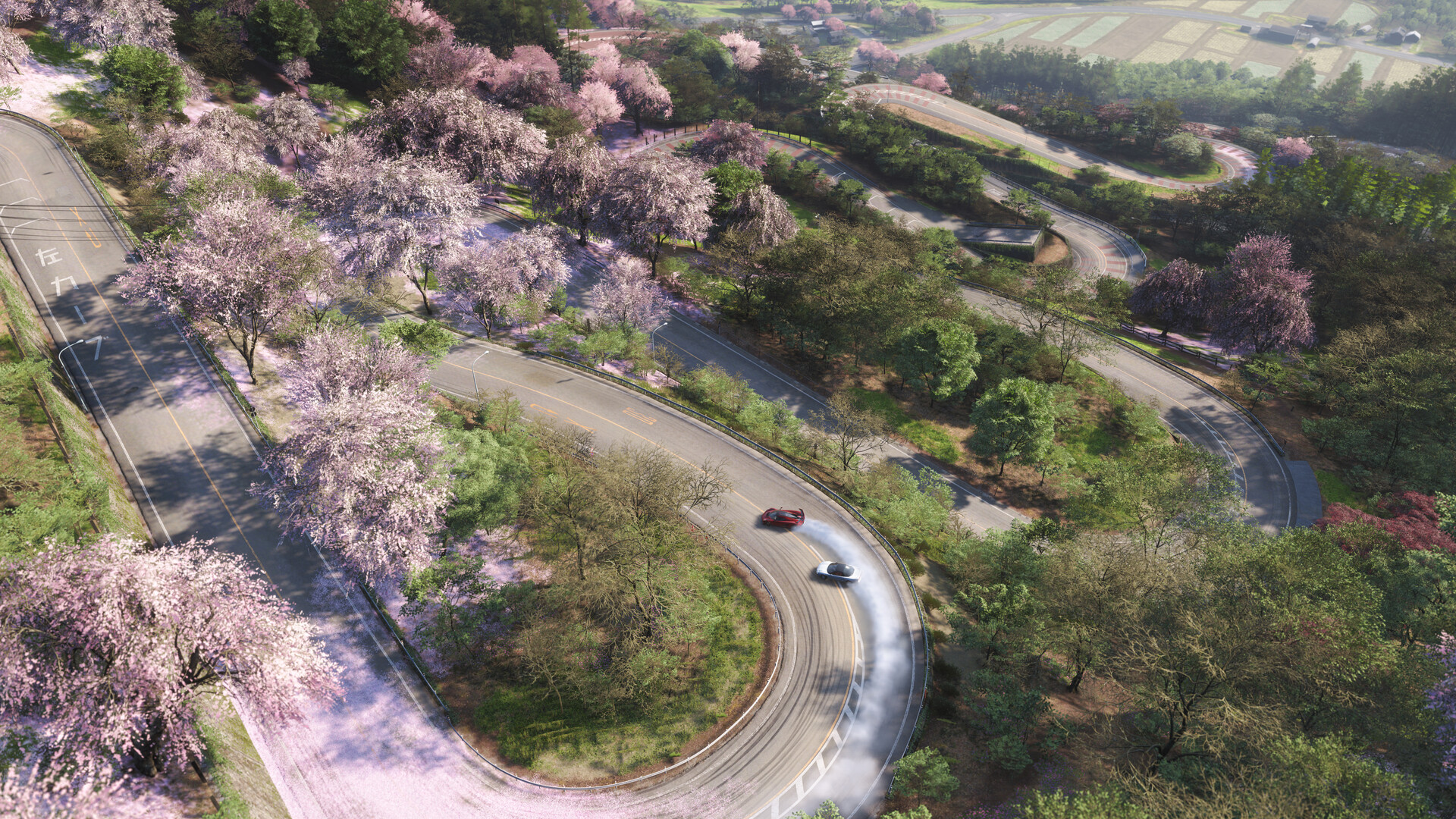
North of Tokyo, the map leans heavily into Japan’s touge culture. Two passes are officially confirmed by Playground Games: Mt. Haruna (the real-world basis for Initial D’s Mt. Akina) and the Bandai-Azuma Skyline. Both sit on opposite flanks of the Honshu landmass as represented on the map, with Haruna to the east and the Bandai-Azuma Skyline at the top-right near Fukushima.
Expect the Gunma and Fukushima regions to be where most downhill and uphill touge content lives, with tight switchbacks, tree-lined corners, and the kind of elevation change that suits rear-drive drift builds.
Coastal routes and the Izu peninsula
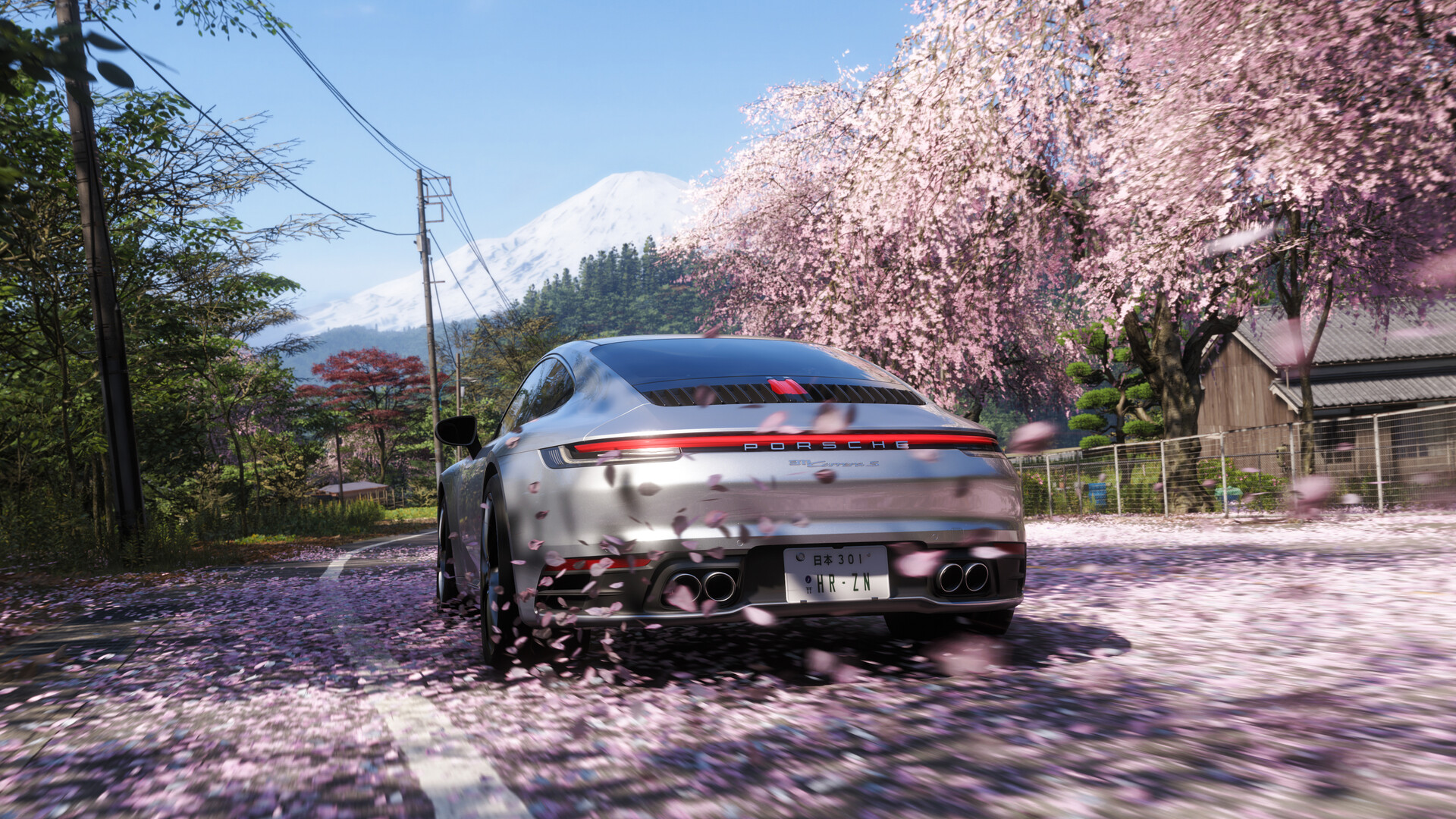
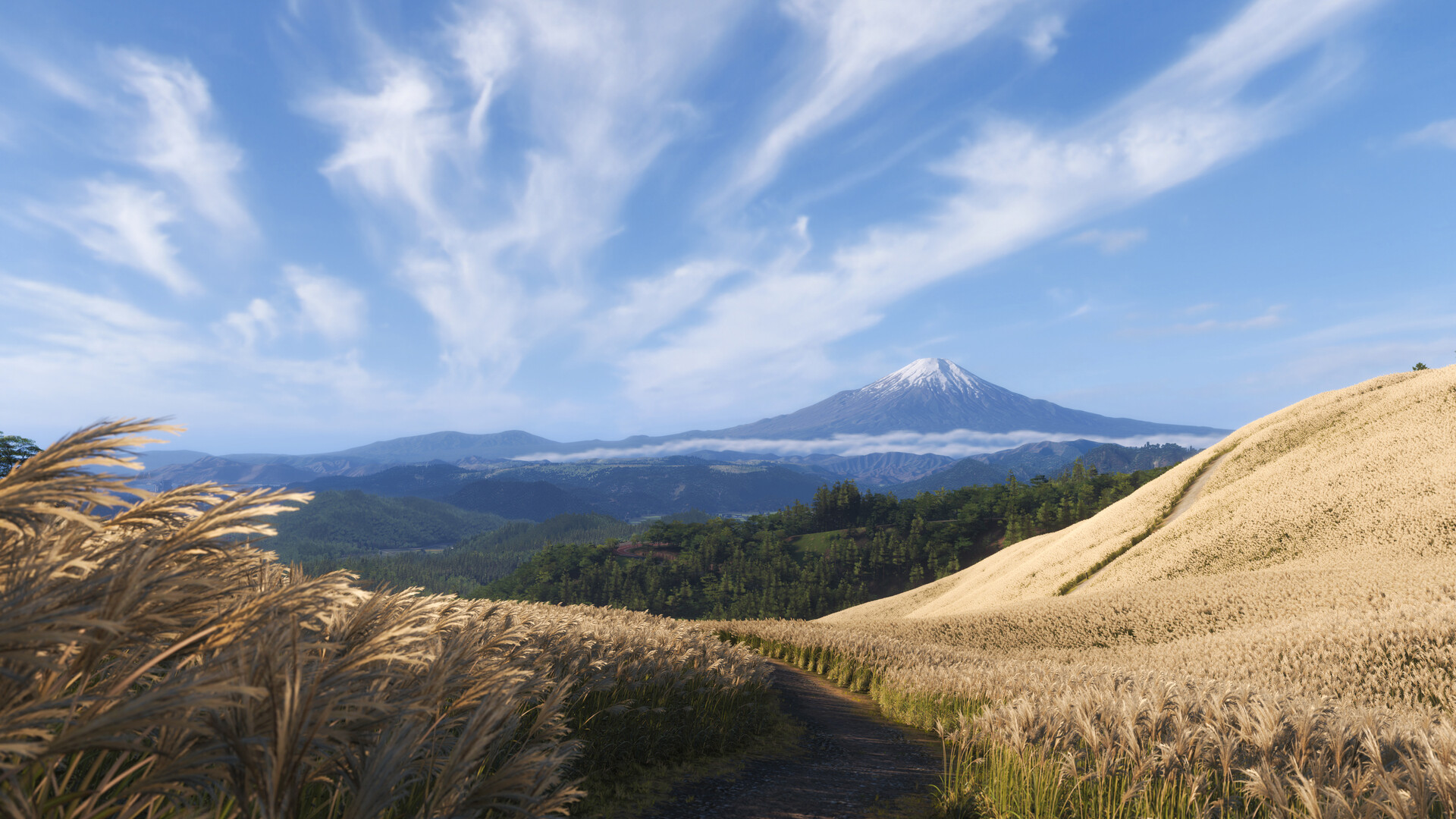
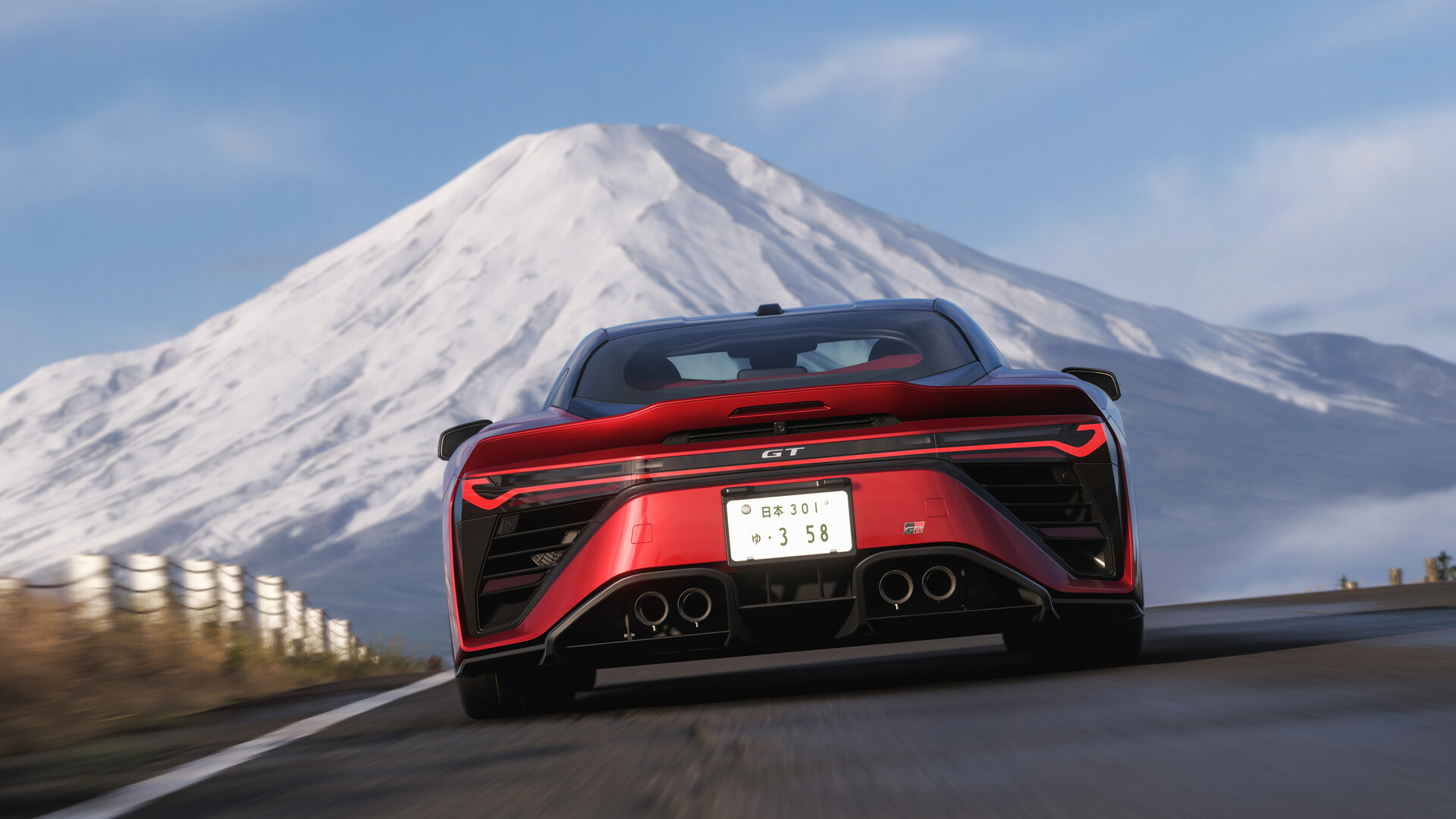
The bottom of the map, south of Tokyo, carries a strong Izu and Hakone flavor. The Kawazu-Nanadaru Loop Bridge, the famous double-spiral viaduct, appears near the southern tip, and the area surrounding it maps to real-world Pacific coastal highways. Further inland sits a Mt. Fuji analogue.
The Izu Skyline and Hakone Turnpike are both represented as grip-focused ribbons of tarmac with ocean views, giving a clear alternative to the tighter, more technical touge roads further north.
Japanese Alps and the northern plateau
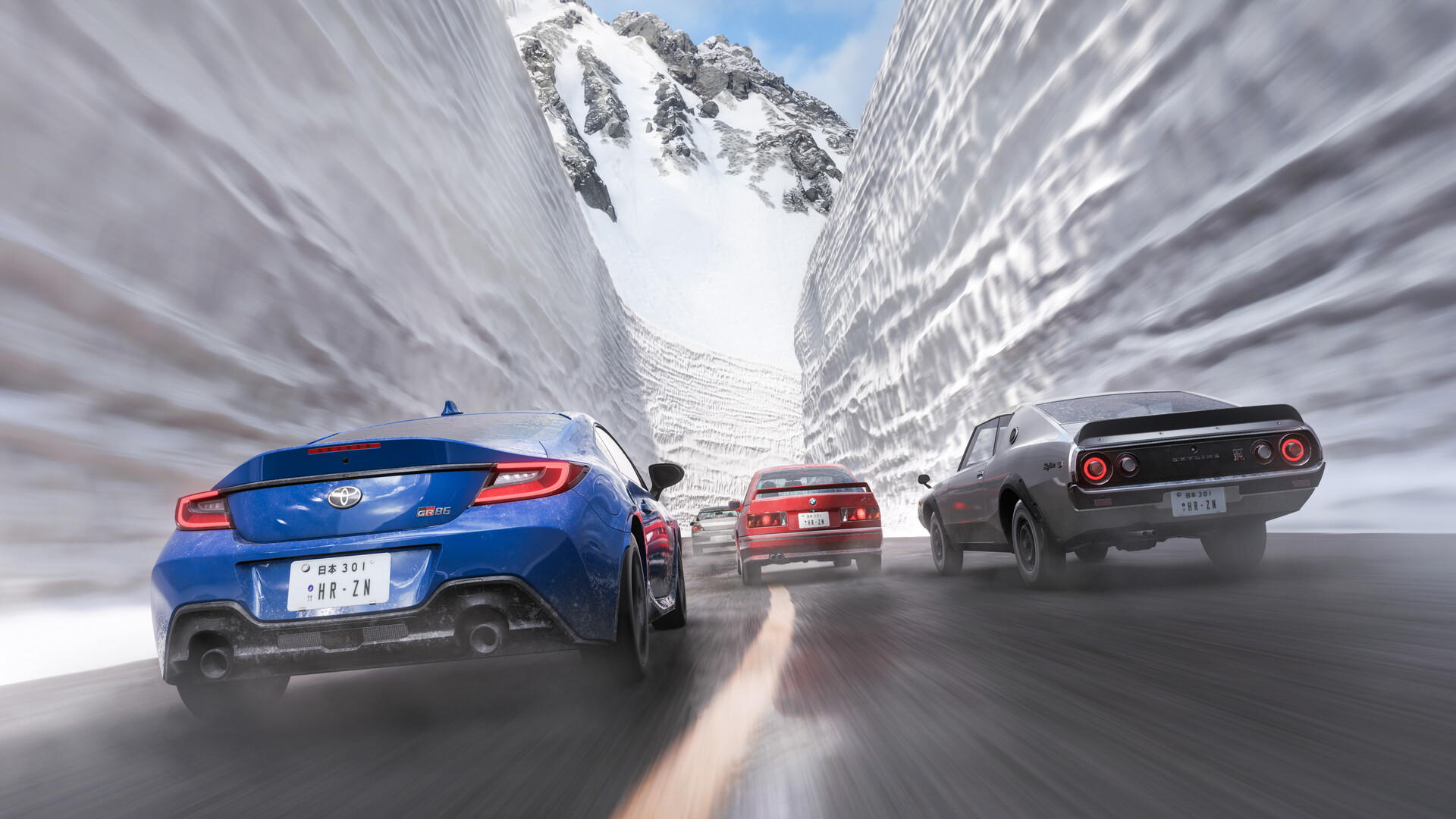
The top portion of the map is dominated by the Japanese Alps, which contain the highest elevations in the game and host the snow-walled roads teased in early footage. The Okuibuki area, near the Kyoto side of the map, was confirmed as a location where a car is hidden, and it sits alongside the broader Alps region.
Niigata and Kanazawa anchor the northern coast, and the Hokubu region and its circuit appear in this zone as well. The Bohashi Bridge and Sada Pass, both real Japanese locations, also show up as part of the route network heading toward the Alps.
Confirmed roads and locations
| Location | Area on map | Status |
|---|---|---|
| C1 Inner Loop | Downtown Tokyo | Officially confirmed |
| Gingko Avenue | Tokyo | Officially confirmed |
| Mt. Haruna | Gunma (east of Honshu) | Officially confirmed |
| Bandai-Azuma Skyline | Fukushima (top-right) | Officially confirmed |
| Daikoku Parking Area | Yokohama / industrial island | Spotted in map reveal |
| Bayshore / Wangan route | Tokyo Bay expressway | Spotted in map reveal |
| Rainbow Bridge | Tokyo waterfront | Spotted in gameplay |
| Kawazu-Nanadaru Loop Bridge | Southern Izu area | Spotted in map reveal |
| Mt. Fuji | South of the Alps, above Izu | Spotted in map reveal |
| Izu Skyline | Izu peninsula | Spotted in map reveal |
| Hakone Turnpike | South of Tokyo | Spotted in map reveal |
| Okuibuki | Near Kyoto, west side | Confirmed car location |
| Japanese Alps (snow-wall roads) | Northern highlands | Confirmed region |
| Hokubu circuit | Northern region | Spotted in gameplay |
| Bohashi Bridge, Sada Pass | Northern route network | Spotted in gameplay |
| Legends Island | Offshore, accessible via two bridges | Unconfirmed but strongly implied |
Regions visible on the in-game map
Early gameplay footage from IGN’s preview drive surfaced named regions as the player crossed internal borders. Three have been spotted so far: Minamino, Itto, and Hokubu. They sit roughly south-to-north, with Minamino closer to the Tokyo plains, Itto covering the middle band of passes and countryside, and Hokubu wrapping the northern circuit area and the approaches to the Alps.
A perimeter expressway loops around the entire landmass, and a bullet train line follows much of the same corridor, which sets up train-versus-car moments similar to earlier entries in the series. Inside Tokyo, the C1 loop provides a second, tighter urban ring.
Release window
Forza Horizon 6 launches on Xbox Series X|S and PC on May 19, 2026, with four days of Early Access on May 15 for Premium Edition and Premium Upgrade owners. Pre-orders across any edition include a pre-tuned Ferrari J50 at release.
Further location confirmations will come as Playground Games continues to tease individual roads, POIs, and regional content ahead of launch. The broad shape of Horizon Japan is set: a vertically stacked country running from Tokyo’s expressways to the Alps, with the coast, the touge passes, and the islands of Daikoku and Legends filling in the space between.