

Fresco is an upcoming action-adventure and puzzle game from indie studio Kelonia Games that turns Ancient Egyptian wall paintings into fully playable game environments. Built in Unreal Engine 5, the game asks you to control two characters simultaneously — a 3D archaeologist exploring an Egyptian temple and a 2D figure living inside the frescoes painted on the temple walls. Both characters must progress for you to advance.
Quick answer: Fresco is an indie UE5 game where you switch between playing as a 3D archaeologist and a 2D character depicted in Ancient Egyptian wall art, solving puzzles across both perspectives to progress. No release date has been announced, but you can wishlist it on Steam.

How the 2D/3D switching mechanic works
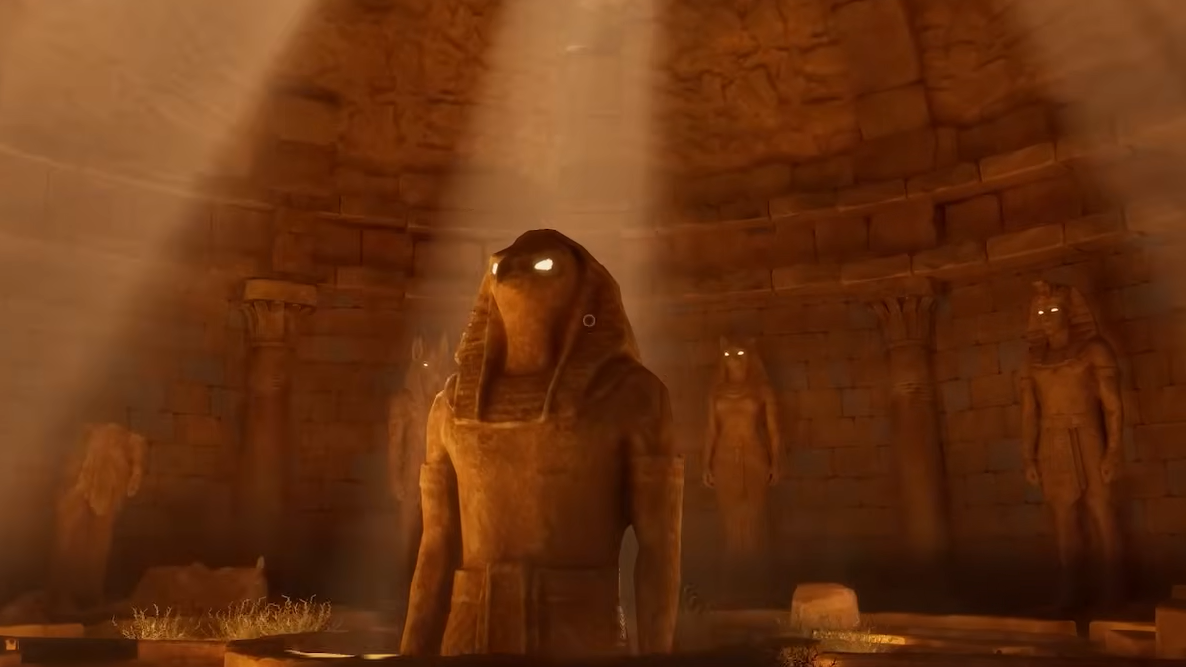
The core hook of Fresco is its dimension-shifting gameplay. In 3D, you explore the interior of an Ancient Egyptian temple as an archaeologist, navigating corridors and interacting with the environment from a standard third-person perspective. At certain points, the game shifts you into the frescoes on the temple walls, where you control a character drawn in the flat, profile-heavy style of traditional Egyptian art. That character moves across the wall surface in 2D, and the actions you take in one dimension affect the other.
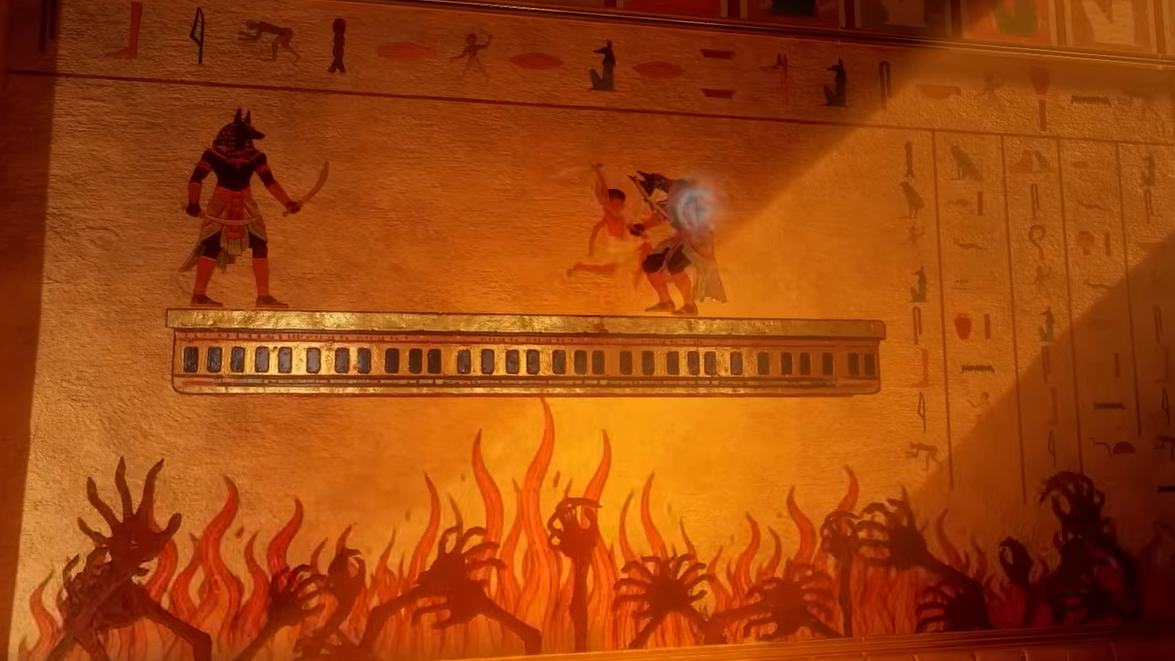
Progression depends on advancing both characters. Puzzles span both perspectives — you might need to manipulate something in the 3D space to open a path for the 2D fresco character, or vice versa. The game includes combat as well, with the developers sharing early footage of fighting within the fresco layer.
Decal projections in Unreal Engine 5
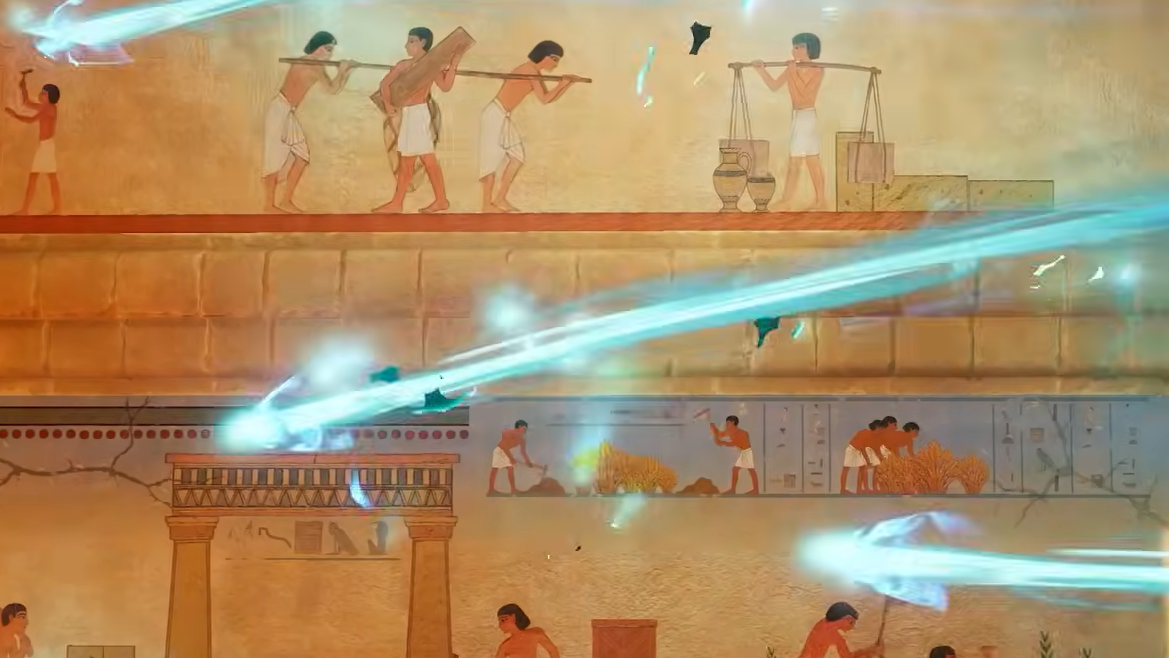
The visual effect of characters moving inside wall paintings is achieved through decal projections in Unreal Engine 5. Rather than rendering the 2D gameplay onto a flat texture, Kelonia Games projects the fresco characters and their animations directly onto the wall geometry using UE5's decal system. This approach lets the 2D art blend naturally with the wall's normal maps and underlying surface textures, preserving the look of painted stone rather than a screen pasted onto a flat surface.
The frescoes themselves were created using Adobe Substance Painter, which allowed the team to craft golden, textured artwork that feels authentic to the period. Some developers in the indie community have debated whether rendering into a single texture would be simpler, but the decal method offers more flexibility for blending and visual fidelity across varied wall surfaces.
Co-op mode splits the two roles
Fresco supports cooperative play. In co-op, one player takes on the role of the archaeologist in 3D while the second player controls the character inside the frescoes in 2D. This turns the game's core mechanic into a communication challenge — both players need to coordinate their actions across dimensions to solve puzzles and progress through the temple.
In single-player, you handle both characters yourself, switching between them as needed.
Setting and tone
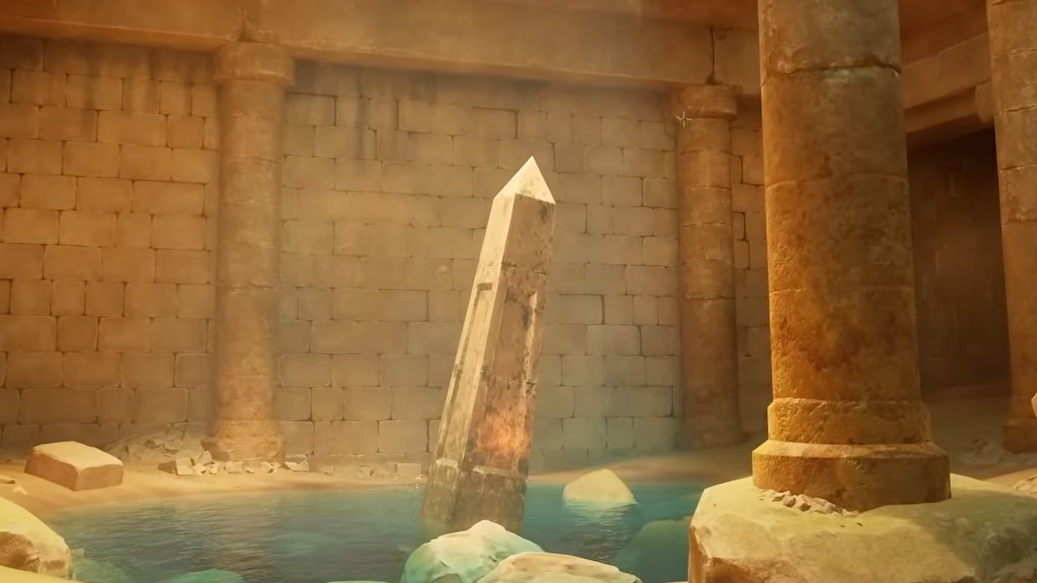
The game is set inside an atmospheric Ancient Egyptian temple filled with what the developers describe as perilous mysteries and ancient magic concealed within the walls. The environments are designed to evoke the grandeur and danger of archaeological discovery, with the fresco mechanic adding a layer of supernatural strangeness. Playing as a figure trapped inside wall art gives the game a distinctive visual identity — your 2D character moves in the stylized, side-facing pose familiar from Egyptian tomb paintings.
The dimension-shifting concept has drawn comparisons to Super Mario Odyssey's 2D mural sections and The Legend of Zelda: A Link Between Worlds, where Link merges into walls to traverse them as a flat painting. Fresco builds an entire game around that idea rather than using it as an occasional gimmick.
Developer and release status
| Detail | Info |
|---|---|
| Developer | Kelonia Games |
| Engine | Unreal Engine 5 |
| Art tools | Adobe Substance Painter (frescoes) |
| Platforms | PC (Steam wishlist available) |
| Release date | Not yet announced |
| Multiplayer | Co-op supported (2 players) |
Fresco is still in active development. The team shared a work-in-progress trailer and multiple gameplay clips in early March 2026, showing off combat, puzzle-solving, and the Substance Painter workflow behind the golden fresco art. No release window has been confirmed.
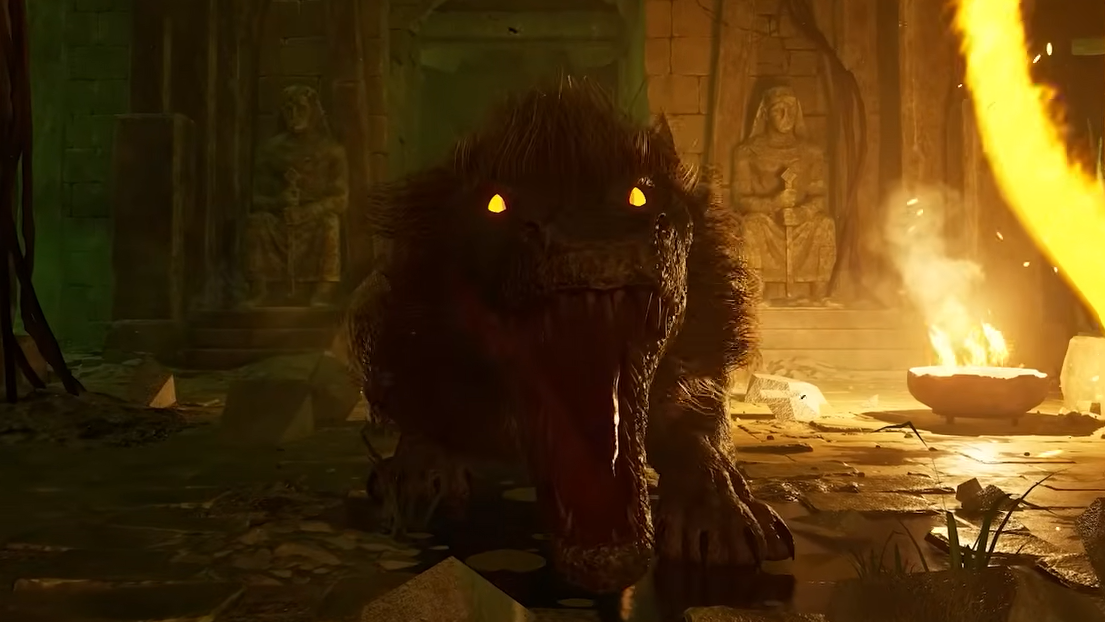
Fresco is one of those indie projects where a single strong visual idea carries the entire design. The decal projection technique gives the wall art a convincing, tactile quality that a simpler rendering approach would likely miss, and building a full co-op puzzle game around the concept pushes it well beyond novelty. Whether the puzzles and combat hold up across a full game remains to be seen, but the foundation is striking enough to keep an eye on.