

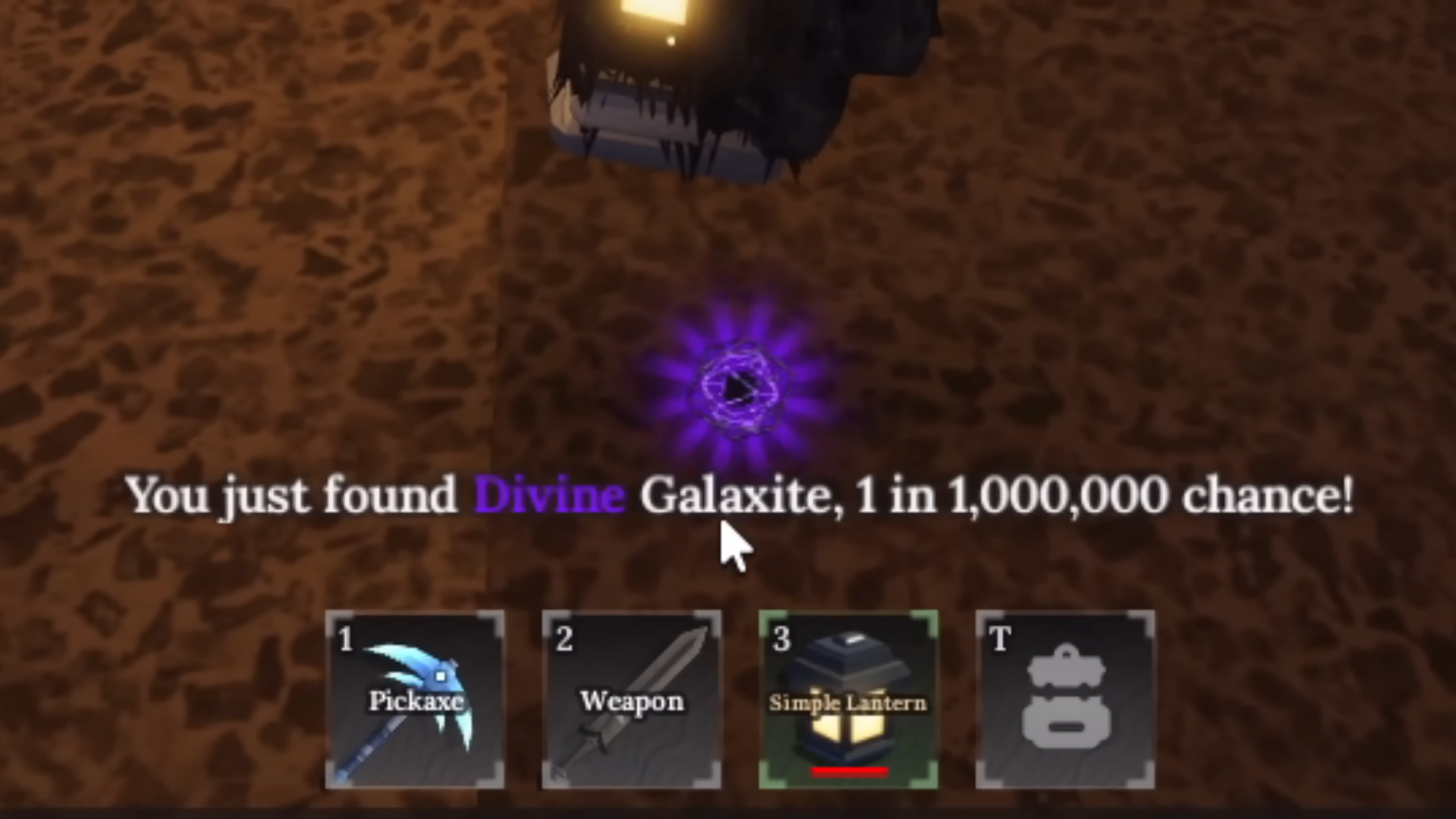
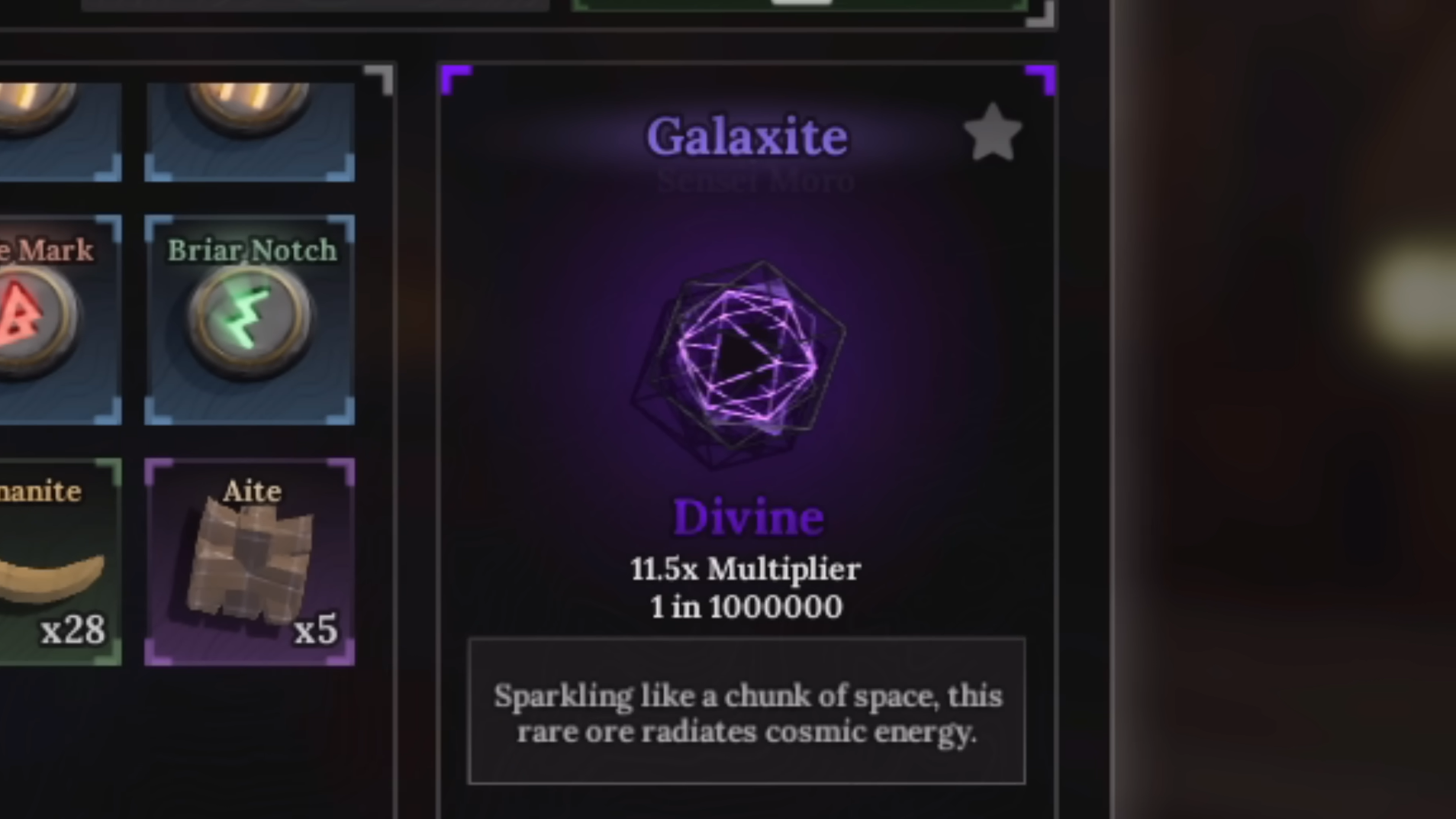
Galaxite is the outlier in The Forge’s already punishing loot table: a Divine-rarity ore with a one-in-a-million drop chance and the single highest forging multiplier in the game. For most players, it exists more as a campfire story than a crafting material. For a few testers and admins, it has already produced 100-damage daggers and armor that trivialize early content.
Galaxite basics: stats and why it matters
| Stat | Galaxite value |
|---|---|
| Rarity | Divine |
| Drop chance | 1 / 1,000,000 per eligible rock |
| Area | Goblin Cave (World 2) |
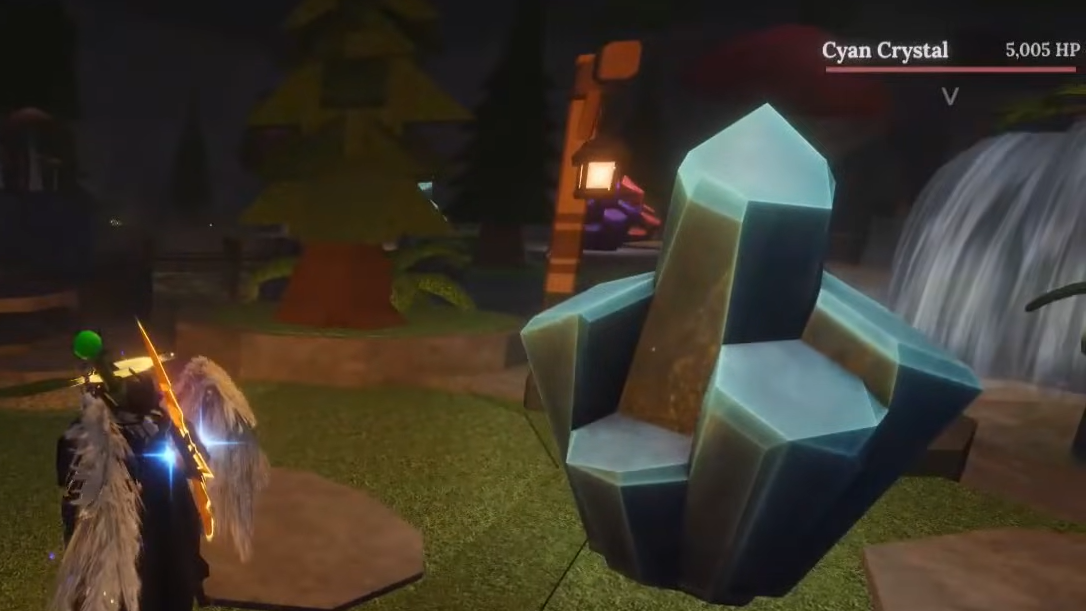
| Rock types | Crimson Crystal, Cyan Crystal, Earth Crystal, Light Crystal |
| Forging multiplier | 11.5x |
| Traits | None |
| Sell price | Effectively unknown / not worth selling |
Every ore in The Forge contributes a multiplier when you use it in a recipe. The final item multiplier is the average of all multipliers you feed into the anvil. At 11.5x, Galaxite sits above everything else: higher than Darkryte’s 6.3x, higher than Arcane Crystal’s 7.5x, and far above common metals.
In practice, that means even a straightforward weapon made with a high Galaxite percentage can reach triple-digit damage. Test daggers forged with 100% Galaxite reach around 100 base damage before upgrades, and light armor pieces made with top-end ore can hit 55 defense with large movement speed buffs layered on from other materials. When you then enhance those items, the numbers climb even further.
How to get Galaxite (and why you probably won’t)
Galaxite is tied to the Goblin Cave in World 2: Forgotten Kingdom. It is not dropped by enemies, and it does not appear in basic World 1 rocks or World 2 basalt nodes. The only known way to obtain it legitimately is as an ultra-rare roll from late-game crystal rocks.
Eligible rock types in Goblin Cave:
- Crimson Crystal
- Cyan Crystal
- Earth Crystal
- Light Crystal
Each time you break one of these crystals, you have a 1 in 1,000,000 chance to see Galaxite in the drop window. That probability is per ore roll, not per hour or per run. On average, you would need to mine one million ores from the correct rocks to “expect” a single Galaxite, and probability does not care about your playtime; you can be luckier or much unluckier than that.
During earlier testing phases, Galaxite was handed out directly by staff to demonstrate what Divine gear would look like, and it is still sometimes showcased in admin-only setups. For regular players, the only path is mining once the drop is fully active on live servers.
Reaching Goblin Cave so Galaxite can drop
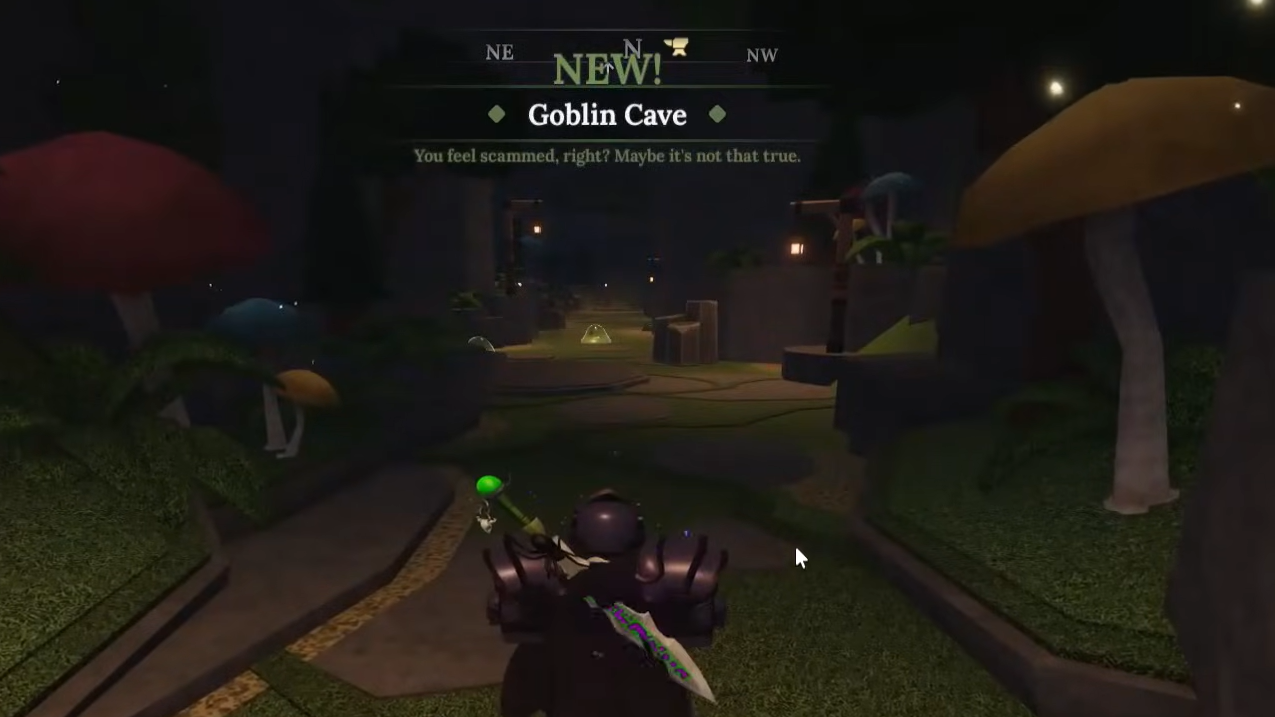
Before you can even roll the dice on Galaxite, you need to unlock the Goblin Cave in the Forgotten Kingdom.
Step 1: Progress through World 1 (Stonewake’s Cross) and into World 2 until you reach the Goblin King area in the Forgotten Kingdom caves.
Step 2: Complete the Goblin King’s multi-part questline by paying him a total of 85,000 gold. This is split across several requests rather than a single payment.
Step 3: After the final payment, collect the Goblin Cave key from the Goblin King.
Step 4: Use the key at the Goblin Cave entrance, located to the right of the Goblin King, to unlock the crystal-filled late-game zone.
Once inside, you will find clusters of colored crystal rocks. These require top-tier pickaxes such as Demonite, Arcane, Magma, Lightite, or Mythril to mine efficiently. From those crystals come the high-end ores like Blue, Crimson, and Arcane Crystal—and, at the extreme edge of the probability curve, Galaxite.
Galaxite vs. other late-game ores
Understanding where Galaxite sits in the wider ore ecosystem helps explain both its rarity and its impact.
| Ore | Rarity | Drop chance | Area / node | Multiplier | Trait |
|---|---|---|---|---|---|
| Blue Crystal | Epic | 1 / 255 | Goblin Cave crystals | 3.4x | None |
| Rainbow Crystal | Legendary | 1 / 5,000 | Goblin Cave crystals | 5.25x | None |
| Arcane Crystal | Mythical | 1 / 100,000 | Goblin Cave crystals | 7.5x | None |
| Darkryte | Mythical | 1 / 5,555 (approx.) | Volcanic Rock, Forgotten Kingdom | 6.3x | Shadow’s Phantom Step (armor) |
| Magmaite | Legendary | 1 / 3,003 | Volcanic Rock, Forgotten Kingdom | 5x | 50% AoE explosion on-hit (weapons) |
| Galaxite | Divine | 1 / 1,000,000 | Goblin Cave crystals | 11.5x | None |
Arcane Crystal is already an outlier at 1 in 100,000. Galaxite multiplies that rarity by a factor of ten, while also offering a multiplier more than double that of Darkryte. The tradeoff is that Arcane Crystal and Darkryte are actually obtainable with focused farming; Galaxite is not something you can rationally plan around.
It is also notable that many high-end ores carry powerful Traits—Darkryte’s shadow-dodge frame, Demonite’s layered burn, Magmaite’s explosions—while Galaxite has no Trait at all. Its entire reason to exist is raw stat inflation.
What Galaxite gear looks like in practice
Test builds using admin-granted Galaxite show how hard the ore bends the rules once you start forging with it.
- Pure Galaxite dagger: A 100% Galaxite dagger lands at about 100 base damage before enhancements. In combat, it cleanly two-taps Goblin Brutes and one-shots lesser mobs, even without stacking Traits like poison or burn.
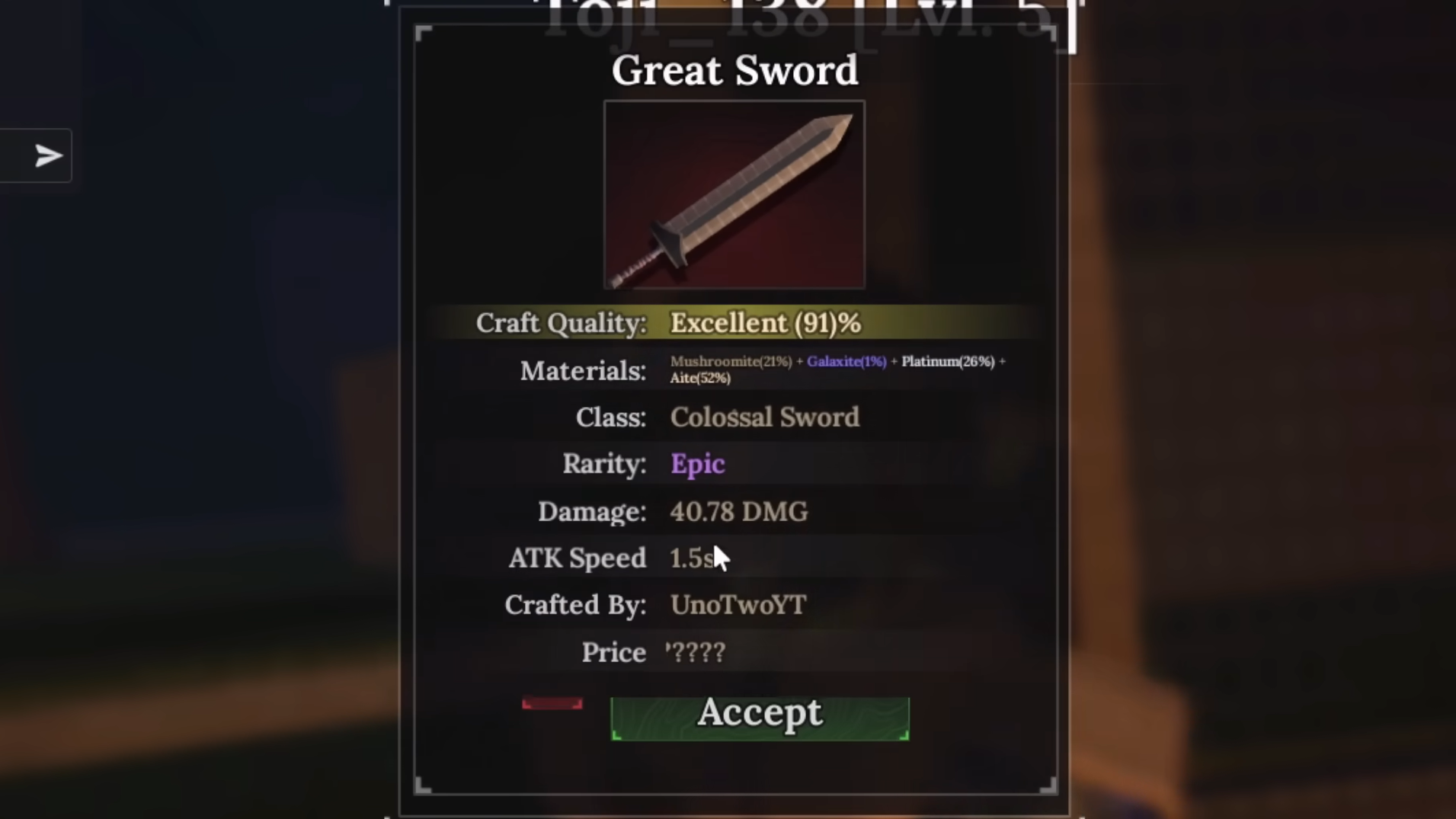
- Mixed Galaxite swords: When Galaxite is mixed with other ores without making it the majority, you can still see radically inflated numbers compared to standard late-game builds—though the effect drops sharply as its percentage in the recipe falls.
- Divine-tier armor: While Galaxite itself does not add a Trait, pairing it with ores like Lightite during testing has produced light armor with 55 defense and a 50% movement speed buff. The defense comes from the multiplier and armor type; the speed is driven by Lightite’s Trait.
Because the multiplier is so high, Galaxite works best when it dominates the recipe. A weapon that is 10% Galaxite and 90% mid-tier ores will only see a modest bump over a normal high-legendary build. A weapon that is mostly Galaxite behaves like a cheat code.
Should you ever sell Galaxite?
Everything about Galaxite’s numbers pushes toward one conclusion: do not sell it.
- The sell price is not fixed in the same way as regular ores and, in any case, gold is relatively easy to earn through farming routes and questing.
- The opportunity cost of burning your only Divine ore for a one-time gold injection is extreme. One forged weapon or armor piece can carry your account for a very long time.
- The shop NPC Greedy Cey is tuned to undervalue rare resources; cashing out a unique material there is almost always a losing trade.
If Galaxite ever drops for you, the correct move is to bank it until you have a clear, high-impact recipe in mind—typically a main-hand weapon or a core armor slot rather than a sidegrade or a novelty craft.
How Galaxite fits into Trait-focused builds
On paper, Galaxite looks like a mismatch with the rest of The Forge’s endgame economy. Most theorycrafting revolves around Traits: stacking burn uptime from Demonite and Fireite, abusing Darkryte’s shadow-dodge, or building glass-cannon sets with Eye Ore’s damage-for-health trade.
Key Trait-bearing ores include:
- Darkryte (Mythical): Shadow’s Phantom Step – 15% chance to dodge incoming attacks by turning into a shadow (armor only).
- Demonite (Mythical): Demon’s Backfire – burns enemies when you hit them and has a chance to ignite attackers when you take damage (armor only).
- Magmaite (Legendary): 50% AoE explosion with a 35% chance on weapon hits.
- Fireite (Legendary): 20% burn damage over two seconds with a 30% chance on weapon hits.
- Lightite (Legendary): 15% extra movement speed on armor.
- Uranium (Legendary): 5% of your max health as ambient AoE damage while in combat (armor).
- Eye Ore (Legendary): –10% max health and +15% damage on weapons and armor.
- Mythril (Legendary): 15% extra defense on armor.
- Obsidian (Epic/Legendary tiering): 30% extra defense on armor.
- Poopite (Epic/Legendary tiering): 15% poison AoE for five seconds plus Fear when under 35% HP, 15-second cooldown.
Trait transfer follows a percentage rule: an ore generally needs to make up a minimum share of the recipe to grant its Trait at all, and the effect scales up as its share rises until it hits a cap. Galaxite doesn’t interact with this system; it only contributes multiplier.
The ideal endgame weapon or armor will usually combine both worlds:
- Galaxite as the backbone multiplier, if you have it.
- One or two Trait-bearing ores at or above their activation threshold for passive effects.
- Filler ores chosen to keep the average multiplier high and avoid unwanted negative Traits.
Because your Trait ores need a minimum percentage to turn on, you cannot simply dump 95% Galaxite and 5% Darkryte and expect both to shine. Planning a Divine-tier recipe becomes a balancing act: how much raw stat do you sacrifice to keep your most important passive alive?
Galaxite’s existence reshapes expectations around what “best-in-slot” means in The Forge, but it does not replace the rest of the system. For almost everyone, late-game builds will continue to revolve around Demonite burns, Darkryte dodges, and Arcane or Rainbow Crystal multipliers. If a Galaxite shard ever drops into your inventory, treat it as a once-per-account decision point—not another ingredient in the pile.