

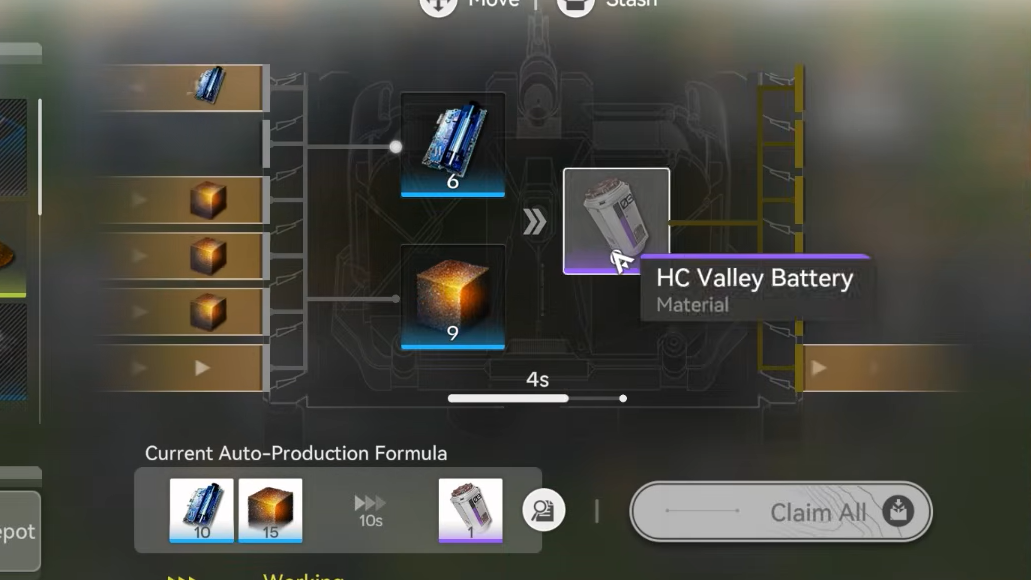
HC Valley Battery is a 4★ Battery-type AIC product in Arknights: Endfield. It is packed in factory facilities and used to supply power, charge facilities, or trade at outposts. When slotted into Thermal Banks, each HC Valley Battery provides 1100 Power, making sustained battery production one of the core late-game factory goals.
Quick answer: The current standard for a fully efficient HC Valley Battery farm is a closed-loop layout that crafts 6 HC Valley Batteries per minute. Common implementations occupy roughly a 30×30 tile footprint, run all facilities at 100% efficiency, and either output only batteries or batteries plus 30 Sandleaf Powder per minute.
HC Valley Battery state and effects
HC Valley Battery has the following fixed properties.
| Property | Value |
|---|---|
| Item name | HC Valley Battery |
| Category | AIC Product → Battery |
| Rarity | 4★ |
| Primary effect | Provides 1100 Power when used in Thermal Banks |
| Usage | Supplies power, charges facilities, or trades at outposts |
HC Valley Battery is designed as the top-tier Valley IV battery. It sits alongside other AIC products such as SC Valley Battery, LC Valley Battery, Dense Originium Powder, Ferrium Part, and various powders and components, but it is the primary high-output power item for Thermal Bank layouts.
HC Valley Battery and Thermal Banks
HC Valley Battery interacts directly with Thermal Bank power storage. Each unit contributes 1100 Power. Thermal Banks are configured to accept batteries as an input, increasing the total power capacity of an AIC network.
To convert a farm from “stash” output to direct power, the battery output is redirected into Thermal Banks instead of a Portable Stash. One documented configuration replaces a Portable Stash at the end of a 6/min farm with four Thermal Banks, resulting in 4,400 Power when those banks are filled with HC Valley Batteries.
Verification that the interaction works is straightforward. When HC Valley Batteries are delivered into a Thermal Bank, the Thermal Bank’s power capacity value increases. When batteries are consumed or removed, that value drops accordingly.
Fully efficient 6/min HC Valley Battery chains
Several fully efficient production chains exist that converge on the same throughput target.
- Throughput: 6 HC Valley Batteries per minute.
- Facility efficiency: All processing steps are ratioed so that shredders, grinders, assemblers, and related facilities run at 100% utilization when supplied.
- Footprint: Common layouts occupy around 30×30 tiles in Valley IV, with tighter server-specific variants down to roughly 25×22 tiles.
- Input model: Originium and Sandleaf (or their intermediate forms) are supplied via depot buses and depots, then fully consumed inside the blueprint.
- Closed loop: Sandleaf planting is structured as a loop; once primed, the farm re-seeds itself without additional manual input.
These chains differ mainly in how compact they are and whether they deliberately preserve a side stream of Sandleaf Powder.
Blueprint variants: compact vs plus Sandleaf Powder
Two types of 6/min layouts are widely used.
Layouts with HC Valley Battery plus 30 Sandleaf Powder per minute
One class of layouts crafts 6 HC Valley Batteries per minute while also outputting 30 Sandleaf Powder per minute as a secondary product. These are fully efficient designs; all involved facilities maintain continuous operation under normal supply.
A representative configuration has these characteristics.
- Throughput of 6 HC Valley Batteries per minute.
- Additional stable throughput of 30 Sandleaf Powder per minute.
- Closed-loop Sandleaf planting; only an initial seed injection is required.
- Blueprint sharing code for Asia servers:
EFO013o7243352aO0579. - Replicated layout for EU/NA servers with code
EFO014o5O866723UE71A, matching the same logical structure but with region-appropriate orientation.
Facility placement in this category prioritizes throughput integrity and a clean closed loop. Footprint is larger than the most extreme compact builds, typically around 34×30 tiles before local refinements. Some regional adaptations trim a tile row or column by slightly rearranging belts at the outer edge while keeping the internal ratios identical.
Ultra-compact layouts focused on HC Valley Battery only
The other main category targets minimum area while holding the same 6/min HC Valley Battery output, intentionally discarding the 30/min Sandleaf Powder side product to reduce footprint.
Key properties of these compact farms are as follows.
- Throughput of 6 HC Valley Batteries per minute.
- No stable surplus Sandleaf Powder output; Sandleaf processing is tuned purely to feed HC Battery recipes.
- Footprint near or exactly 30×30 tiles, significantly smaller than the full-output layouts.
- Closed Sandleaf loop that must be primed once at startup.
One compact Asia-server blueprint near this standard uses the sharing code EFO01A7uU8eO08EU91eO. It delivers 6 HC Valley Batteries per minute in an “almost” 30×30 footprint and accepts multiple Thermal Generators at the output.
A later refinement compresses the same 6/min chain into an exact 30×30 tile square, retaining full efficiency but still omitting the 30/min Sandleaf Powder side output to remain as dense as possible.
Closed-loop Sandleaf seeding requirements
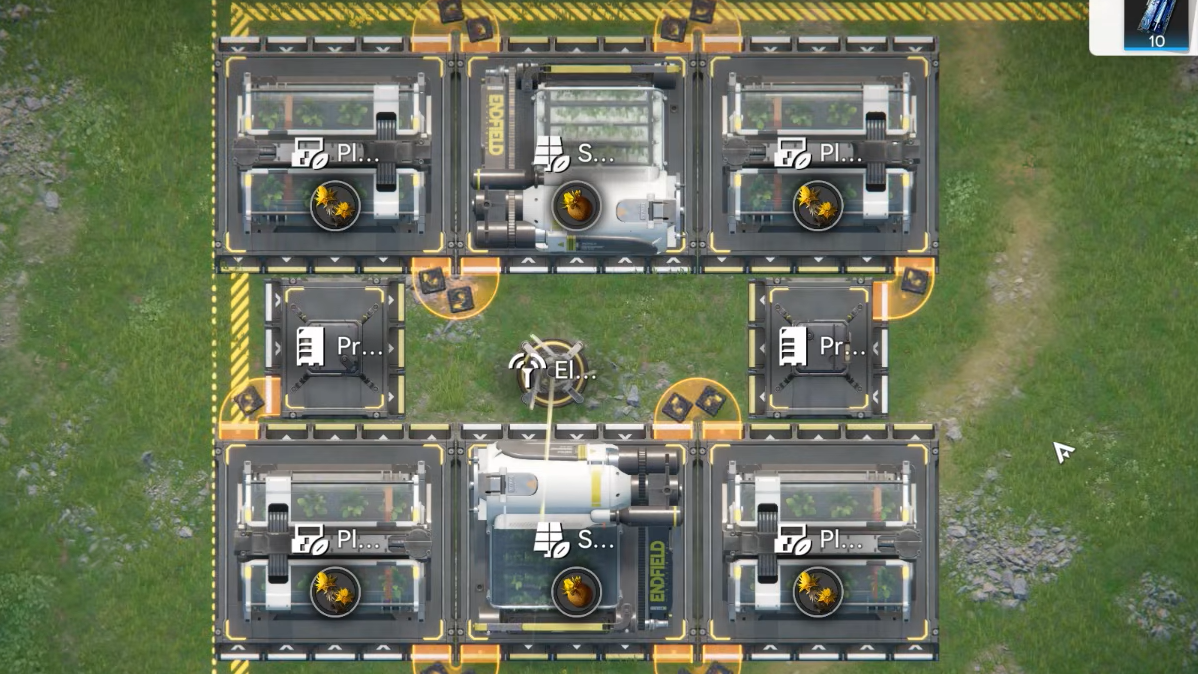
All the efficient HC Valley Battery farms rely on a Sandleaf planting loop. The loop uses planted Sandleaf as the source of Sandleaf Powder after passing through shredders and grinders. Once the loop is filled, the farm consumes and replants Sandleaf indefinitely.
Step 1: Place the blueprint in a Valley IV factory plot that has enough depot bus length for the required unloaders. Some layouts specify that the bus must support ten unloaders to maintain full input flow.
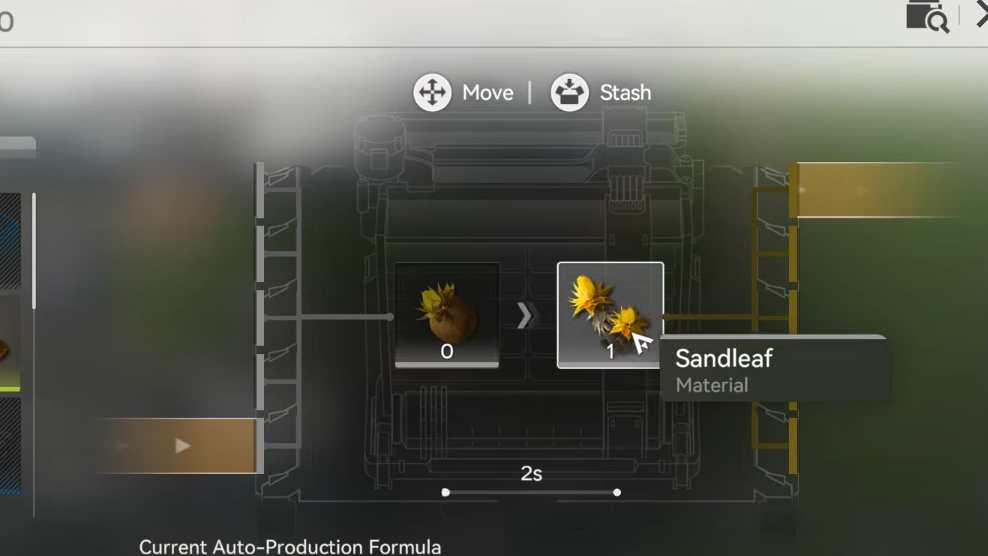
Step 2: Before starting the chain, insert Sandleaf seeds into each Seed-picker in the loop. One common requirement is 50 Sandleafs per Seed-picker at startup. This initial stock circulates in the planting subsystem.
Step 3: Enable the relevant buildings and power lines. Once powered, the Seed-pickers begin planting, the harvesters and belts move crops into shredders and grinders, and downstream facilities begin filling their internal storage.
Step 4: Wait for the loop to stabilize. Verification is visual and quantitative: the Sandleaf fields cycle continuously, no long-term accumulation happens in Sandleaf-related belts, and battery output ramps up to 6 units per minute.
Depot, bus, and unloader constraints
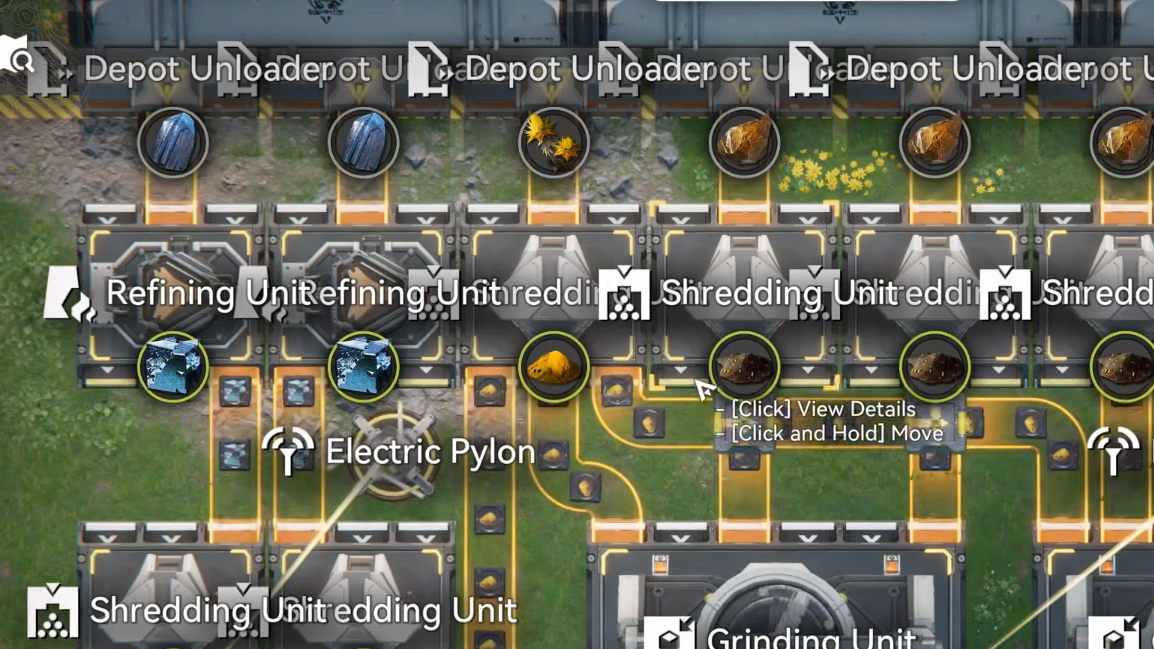
The HC Valley Battery chains depend on stable inputs of Originium-related material and, in some designs, Ferrium-derived components. These enter the layout through a depot bus line and depot unloaders.
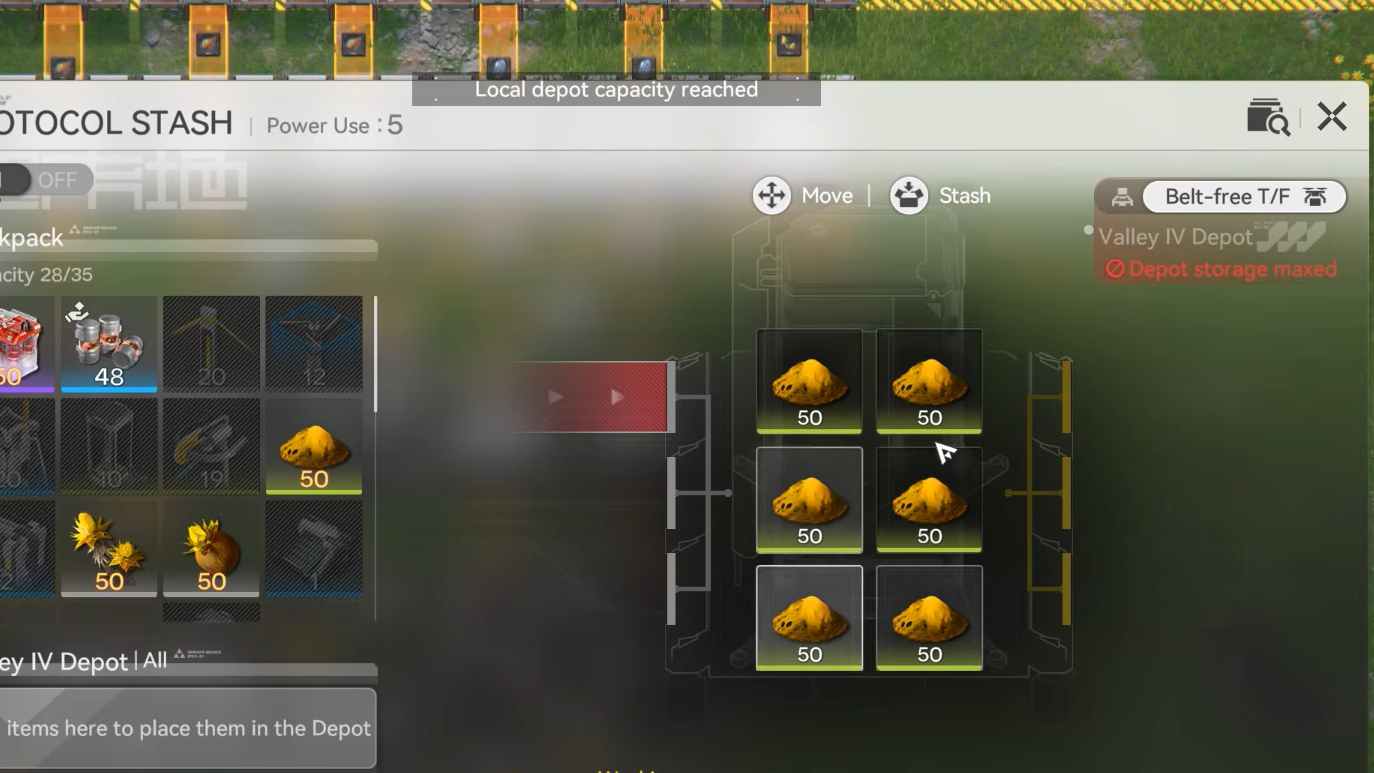
For the 6/min plus 30/min Sandleaf Powder layout, the bus must physically accommodate ten unloaders. If the local depot bus in Valley IV is shorter than that, the bus segment must be upgraded or a different plot chosen where ten unloaders fit.
Verification that the bus is sufficient is straightforward. During operation, all unloaders should be active and feeding resources at a steady rate. If some unloaders remain idle despite upstream stock, the bus length, orientation, or facility connection is incorrect for the blueprint.
Region-specific blueprint codes and compatibility
HC Valley Battery blueprints are region-scoped. A sharing code created on Asia servers cannot be imported directly on EU/NA servers and vice versa, even when the underlying layout is identical. Instead, equivalent codes exist per region with the same facility structure mirrored or rotated as needed by local coordinate rules.
Examples include:
| Function | Region | Blueprint sharing code |
|---|---|---|
| 6/min HC Battery + 30/min Sandleaf Powder layout | Asia | EFO013o7243352aO0579 |
| Same logical layout, slightly more compact footprint | EU/NA | EFO014o5O866723UE71A |
| Compact ~30×27 HC Battery-only layout | Asia | EFO01A7uU8eO08EU91eO |
| HC Valley Battery farm with release-version sharing | Asia | EFO01194o0a754Uo34O7 |
| Functional EU/NA counterpart to the above farm | EU/NA | EFO01eE7U2Ue504ioui8 |
Importing a region-mismatched code fails with an error, which is expected behavior. To recreate layouts across regions when a compatible code does not exist, in-game screenshots or blueprint images are copied by hand onto the local grid.
Mechanical ratios behind efficient HC Valley Battery farms
Efficient HC Valley Battery chains obey a small set of mechanical constraints inside the AIC system.
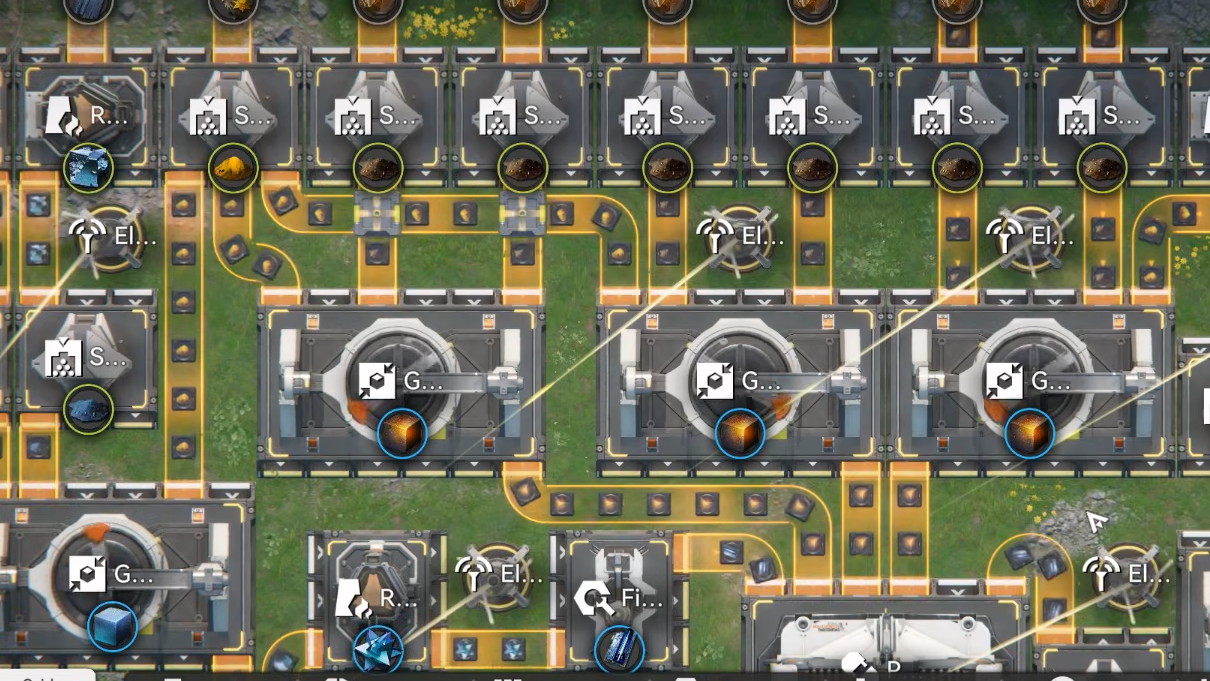
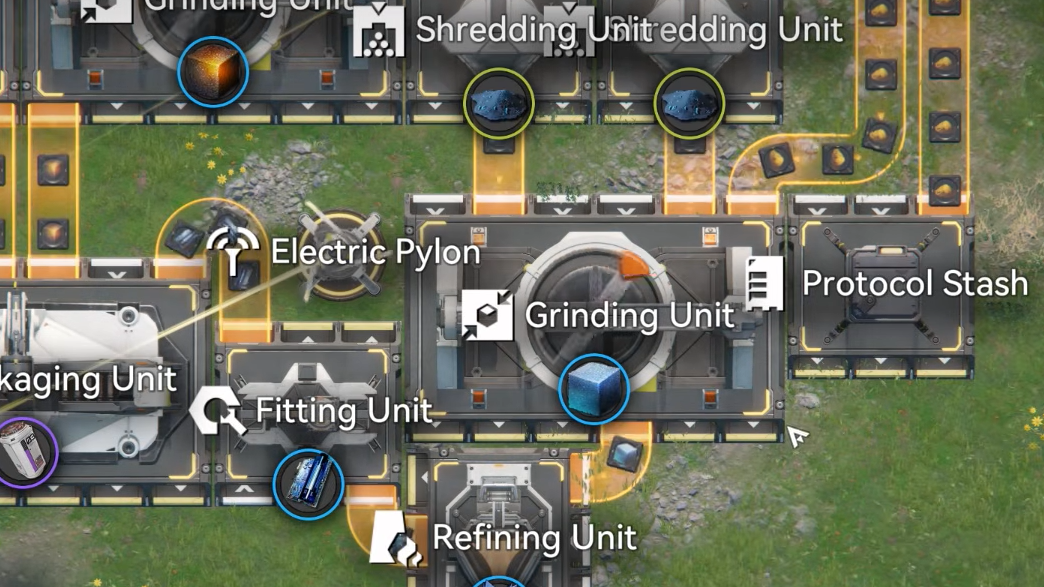
- Shredder throughput: Originium shredders convert Originium to powder at a 1:1 ratio with an output cadence matched to conveyor speed. For a belt that carries one item every two seconds, four depots are generally required to cleanly feed four shredders at full tilt.
- Battery recipe composition: HC Valley Battery crafting consumes Originium-derived parts and powder at a fixed proportion, for example 10 parts to 15 powder for each battery. Chains that under-supply either parts or powder cause assemblers to idle and become inefficient.
- Sandleaf shredding: Sandleaf converts to Sandleaf Powder at a 1:3 ratio. To saturate the output, all three lines coming out of each Sandleaf shredder must be active; otherwise, Sandleaf growth outpaces powder consumption and the belts clog.
- Conveyor speed alignment: All facilities in an efficient chain are synchronized to the baseline conveyor cadence of one item every two seconds. Splitting flows into the correct number of belts prevents half-speed lines and ensures that no facility waits on an under-provisioned belt.
Layouts that ignore these ratios often appear compact but, under load, show telltale issues: partial originium utilization due to too few depots, powder surpluses that go nowhere, or Sandleaf outputs backing up while downstream grinders sit empty. Fully efficient 6/min chains avoid these patterns by matching every shredder, grinder, and assembler to the belt capacity.
For practical use, any of the documented 6/min layouts can serve as a reference point. Choosing between the larger HC Battery plus Sandleaf Powder farms and the ultra-compact HC Battery-only squares depends on whether side-product powders matter more than plot space in a particular Valley IV factory plan.