

Music in Heartopia runs through two systems: the Music Store in town, where you buy instruments and CDs, and the Music Production dream, which turns those instruments into recorded tracks and rewards. If you only care about playing or you accidentally sold your starter gear, everything you need flows through a single NPC: Annie.
Where to get instruments in Heartopia
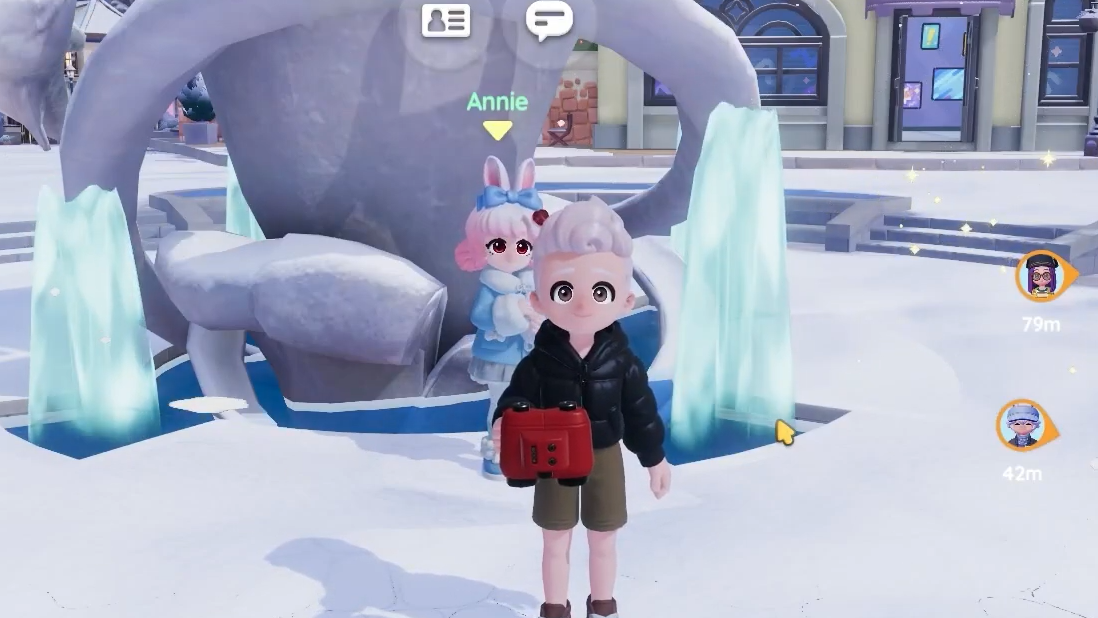
All playable instruments are purchased from Annie, the music vendor in the central town area. Talking to her opens the Music Store, which has two main tabs: instruments you can buy with gold and Music CDs created by other players.
If you ever sell or lose an instrument needed for a quest or a Music Production goal, you can simply return to Annie and buy another. There is no separate quest line or hidden unlock path required for this stock of instruments.
All instruments sold at Annie’s Music Store
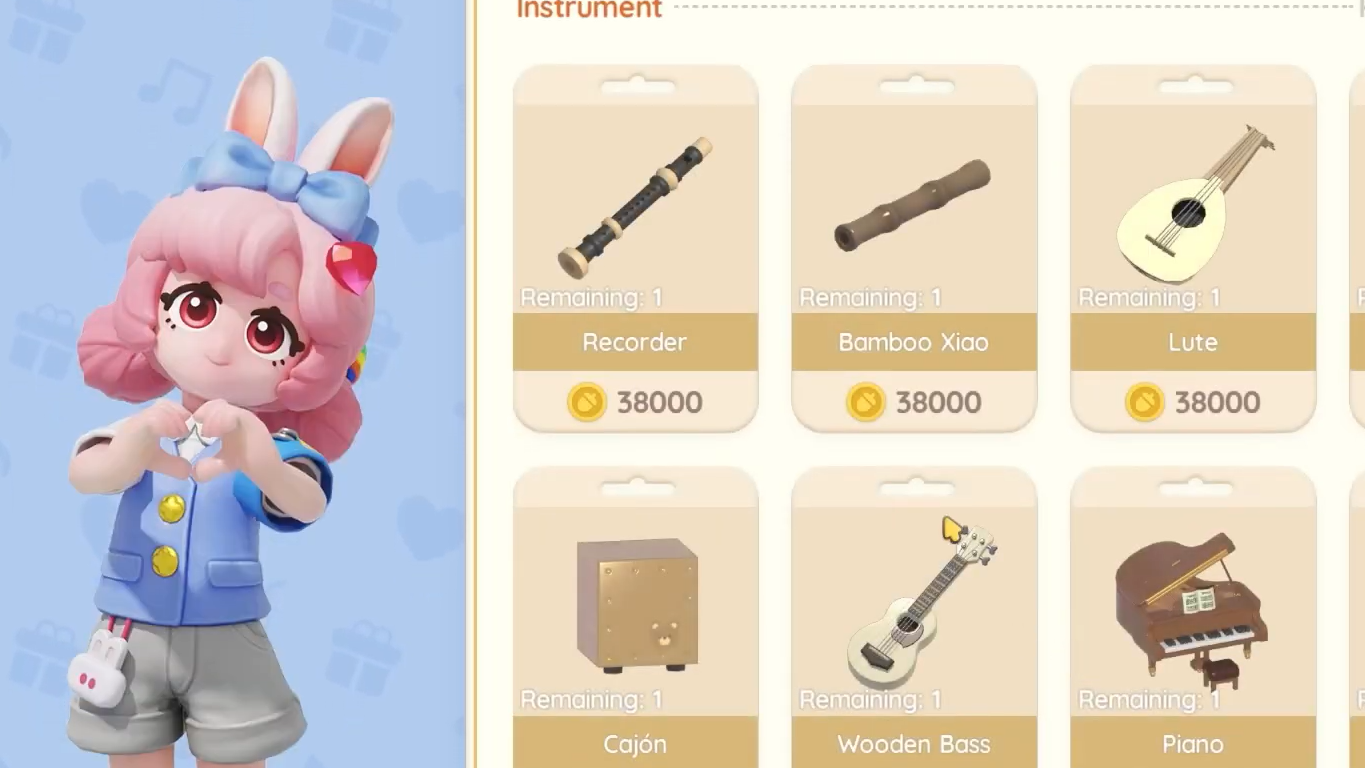
Annie sells a fixed set of instruments at set prices. Each one is bought with gold, with simple woodwinds and strings at the low end and full-size keyboards and orchestral strings at the high end.
| Instrument | Price (g) | Notes |
|---|---|---|
| Recorder | 38,000 | Low-cost woodwind often needed for Music Production Dream goals. |
| Bamboo Xiao | 38,000 | Simple bamboo flute option at the same price tier as Recorder. |
| Lute | 38,000 | Entry-level string instrument, good for early experimentation. |
| Wooden Bass | 38,000 | Budget bass choice that still counts toward “own instrument” goals. |
| Bagpipe | 38,000 | Unique timbre for group performances at the same base price tier. |
| Concertina | 57,000 | Mid-range free-reed instrument for more variety in tone. |
| Mbira | 57,000 | Mid-price plucked idiophone with a distinct, percussive sound. |
| Lyre | 57,000 | Compact string instrument, also referenced in dream rewards. |
| Violin | 57,000 | Classic bowed string instrument for melody lines. |
| Conga | 72,000 | Percussion option suited to rhythmic support. |
| Cajon | 72,000 | Box drum that fills a similar role to the Conga in rhythm sections. |
| 8-Note Xylophone with Stand | 72,000 | Pitched percussion covering basic scales, used in several music setups. |
| Cello | 94,500 | Higher-end bowed string instrument with a deeper register than violin. |
| Piano (Red) | 195,000 | Most expensive instrument in Annie’s shop; central to Music Production tasks that call for piano use. |
How instruments connect to Music Production
Instruments become more important once you start pursuing the Music Production dream. Dream progression ties together owning instruments, using them in performances, and sharing finished recordings with other players.
Music Production unlocks after character level 17. At that point, you can start recording tracks at home and working through dream goals that reference specific instruments and actions.
How to start recording music at home
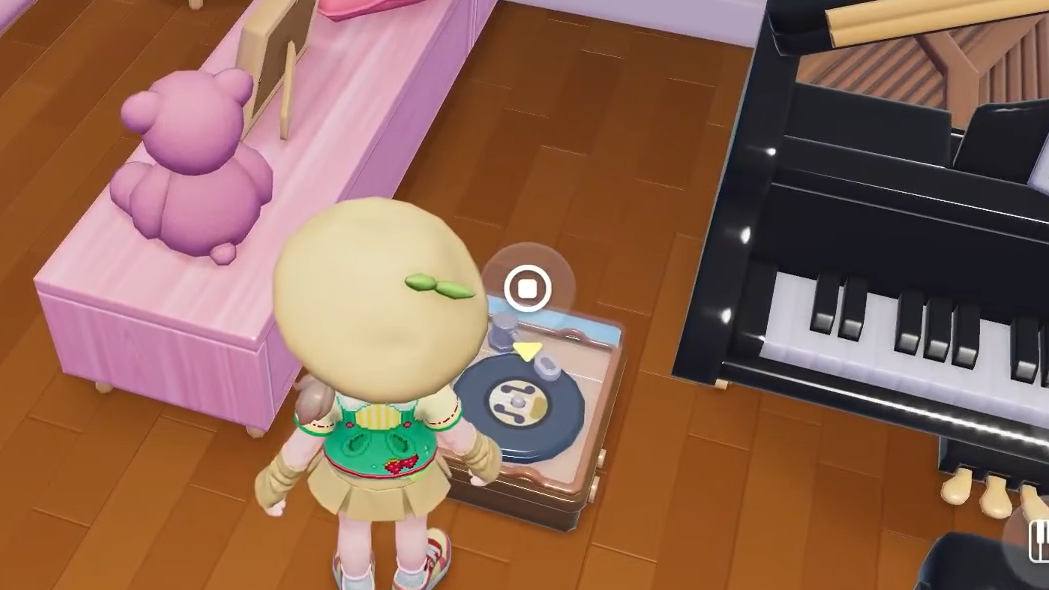
Recording doesn’t happen at Annie’s shop. It happens in your own house, using a phonograph and CDs.
Step 1: Reach level 17 to make the Music Production dream available. Dreams themselves first appear at level 16, but Music Production is gated one level higher.
Step 2: Buy a phonograph from Ka Ching’s General Store in town and place it inside your home. The phonograph is the device that lets you start a recording session.
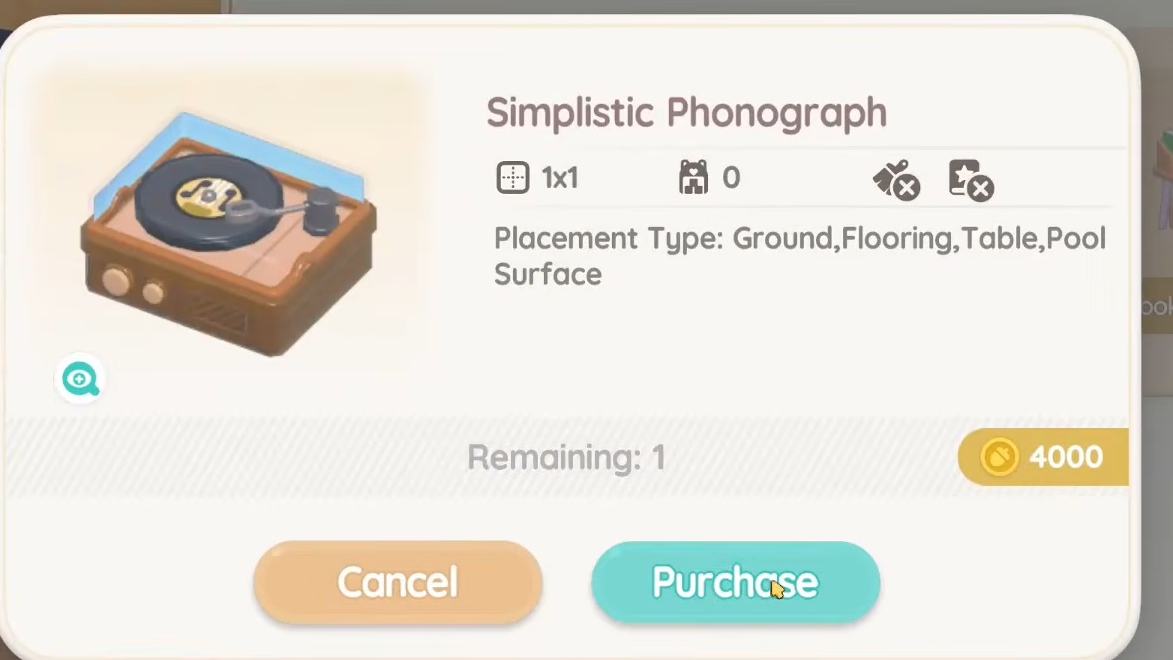
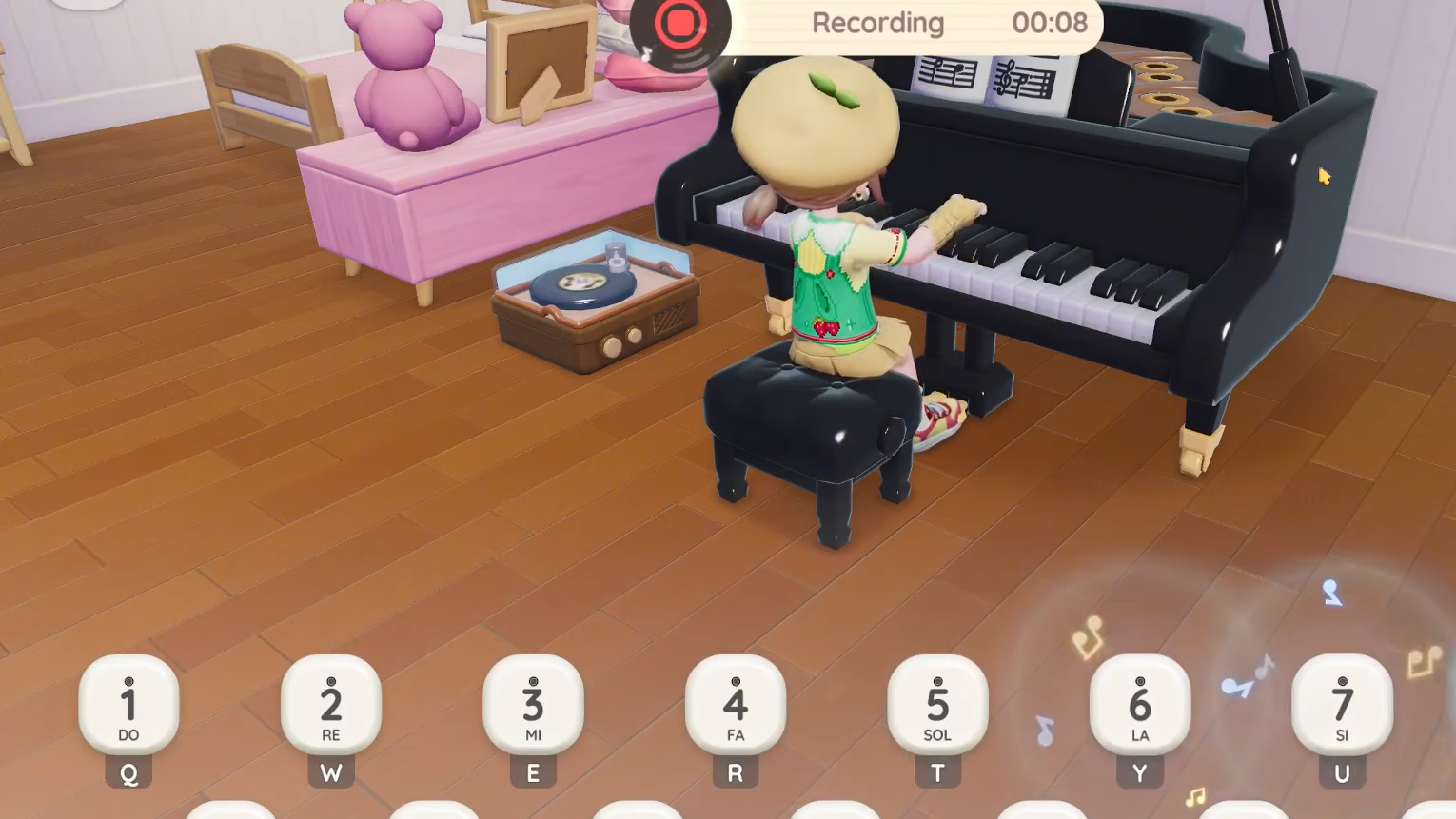
Step 3: Interact with the phonograph to open the recording menu and start a session. A countdown timer will run before the system begins capturing your performance.
Step 4: Play your chosen instrument (or instruments, if multiple players are involved) for the entire take. The system records in a single pass, so practice the part you plan to perform before you trigger the recording.
Step 5: After the take, use a Music CD Publishing Permit to burn the recording onto a CD. That disc can then be shared or sold, and other players can purchase and like it, which feeds into dream progression.
Music Production Dream goals involving instruments
The Music Production Dream tracks a long list of small goals that gradually build your status as a musician. Several of these explicitly require you to own or play instruments, so having access to Annie’s stock is essential.
Key instrument-related goals include owning at least one instrument, playing any instrument once, and playing specific instruments such as the piano, drum set, and recorder. Progress from these tasks is counted as “Dream Progression,” which accumulates toward larger milestones and cosmetic unlocks.
Beyond direct instrument use, many goals revolve around what you do with recordings created using those instruments: recording a piece of music, burning and duplicating CDs, and encouraging other D.G. Members to play, like, and purchase your releases.
Music Production Dream rewards and levels
Dream Progression unlocks a series of themed rewards tied to music performance and presentation. These include decorative items and utilities like:
- Mechanical Metronome at an early progression threshold.
- Lyre Record Cover, Piano Keys Record Cover, Saxophone Record Cover, and Wooden Bass Record Cover at mid-range milestones.
- Phonograph Cylinder and multiple Music CD Publishing Permits at higher progression levels, supporting more frequent recording and publishing.
- Piano (Blue) as a major reward, giving you another piano variant beyond the purchasable Red model.
As total Dream Progression climbs, the dream itself advances through named tiers: starting from Single Album, then Mini Album at around 500 progression, Full Album at 1,500, Ace Producer at 3,500, and eventually Golden Music CD at 6,500 progression. Each tier reflects sustained use of instruments, recordings, and community engagement.
Whenever you need another instrument for a quest, a dream goal, or a new recording, the path is straightforward: return to the town center, speak to Annie, and buy what you are missing. Combine that with a phonograph from Ka Ching’s General Store and a steady supply of Music CD Publishing Permits, and you have everything required to build a full musical career in Heartopia.