

Condor in Highguard is a Recon‑class Warden built entirely around information. Her value comes from revealing enemy movement, warning your team about flanks, and controlling sightlines with vision‑granting smoke.
Quick answer: Play Condor just behind the front line, use Eyes in the Sky before any push or rotation, react immediately when Hunter’s Instinct alerts you, and save Soaring Guardian for major objective fights to both block vision and track enemies inside the smoke.

Condor ability overview
| Ability | Type | Deterministic effect |
|---|---|---|
| Hunter’s Instinct | Passive | Condor’s bird alerts her when enemies are nearby. |
| Eyes in the Sky | Tactical | Sends out her bird to scan an area and detect enemies that move. |
| Soaring Guardian | Ultimate | Launches three forward‑moving smoke clouds that reveal enemies within their wake. |
Hunter’s Instinct (passive) mechanics
Hunter’s Instinct is always active. When any enemy comes close enough, Condor’s bird provides a warning. The warning does not give exact positioning; it confirms that at least one enemy is in a proximity band around Condor.
This passive, therefore, behaves as an early‑threat detector, not a wallhack. The deterministic rule is simple: if an enemy is within the defined range, the bird reacts; if no enemies are in that range, it stays quiet.
How to use Hunter’s Instinct reliably
Hunter’s Instinct is most reliable when you are covering potential flanks or blind approaches.
- Hold side routes or back corridors.
- Pause and check angles when the warning triggers.
- Assume at least one enemy is close until you visually clear the area.
You know you have used the passive correctly when the alert consistently precedes enemy contact on those angles, giving you time to pre‑aim or reposition.

Eyes in the Sky (tactical) mechanics
Eyes in the Sky sends Condor’s bird forward to scan the surrounding area. The scan only detects enemies that are moving; stationary enemies inside the scan area are not revealed by the ability alone.
Mechanically, the behavior is:
- The bird travels and performs a scan over its path or radius.
- Any enemy within that scanned region who is in motion is detected.
- Enemies that are not moving when the scan passes do not get revealed.
Reliable use cases for Eyes in the Sky
Because the scan is movement‑dependent, its best value comes when enemies are likely to be rotating or advancing.
Use it consistently in these situations:
- Just before your team pushes into an unexplored interior or lane.
- When you expect attackers to start a push toward an objective choke.
- Right after a fight, to catch enemies disengaging or rotating to another lane.
To force reveals against players who are trying to hold still, have teammates apply light pressure. Any damage or threat that makes them strafe or reposition during the scan window will cause them to be detected.
How to verify Eyes in the Sky is working
You can confirm proper use of Eyes in the Sky when:
- Enemies that are moving in the scanned area become visible to your team.
- Rotations you predicted show up during or immediately after the scan.
If you frequently scan and see nothing, then immediately run into enemies who were holding still, the ability is functioning as designed; the failure is timing, not mechanics. Trigger it earlier or combine it with teammate pressure so targets are moving while the bird passes.

Soaring Guardian (ultimate) mechanics
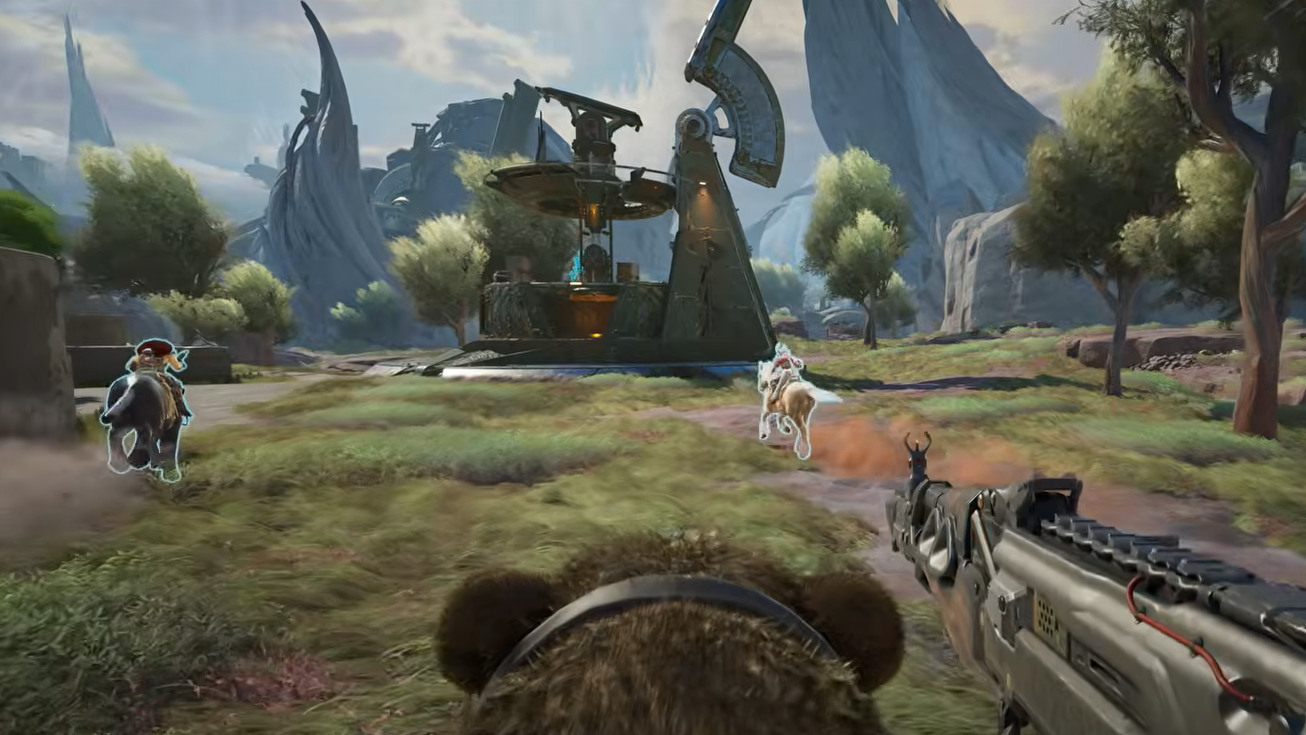
Soaring Guardian deploys three smoke clouds that move forward from where you cast them. Each cloud:
- Blocks normal vision along its volume.
- Reveals enemies that are within its wake as it travels.
The ability, therefore, combines two deterministic effects: line‑of‑sight denial and temporary enemy revelation inside the smoke paths.
Placement and spacing rules
All three clouds are separate objects. Stacking them in the same line only increases the density of cover in that narrow strip but does not add extra information.
For maximum effect:
- Spread the three smokes across different likely entry or movement paths.
- Angle them to cross standard chokepoints and common defender positions around objectives.
Correct placement is obvious when the smokes simultaneously block multiple sightlines while revealing several enemies attempting to move through or hide within them.
Objective fights and Soaring Guardian
Soaring Guardian is strongest in objective‑focused engagements, where both teams must fight over a constrained space.
Use it in these deterministic scenarios:
- On attack, fire the clouds across defender angles, watching the objective, so they lose vision while remaining trackable inside the smoke.
- On defense, fire through main chokes or strong attacking positions, forcing enemies to either move through revealing smoke or abandon cover.
You know the ultimate has done its job when enemy sightlines are cut and your team can still trace their movement inside or behind the smokes.
Optimal positioning for Condor
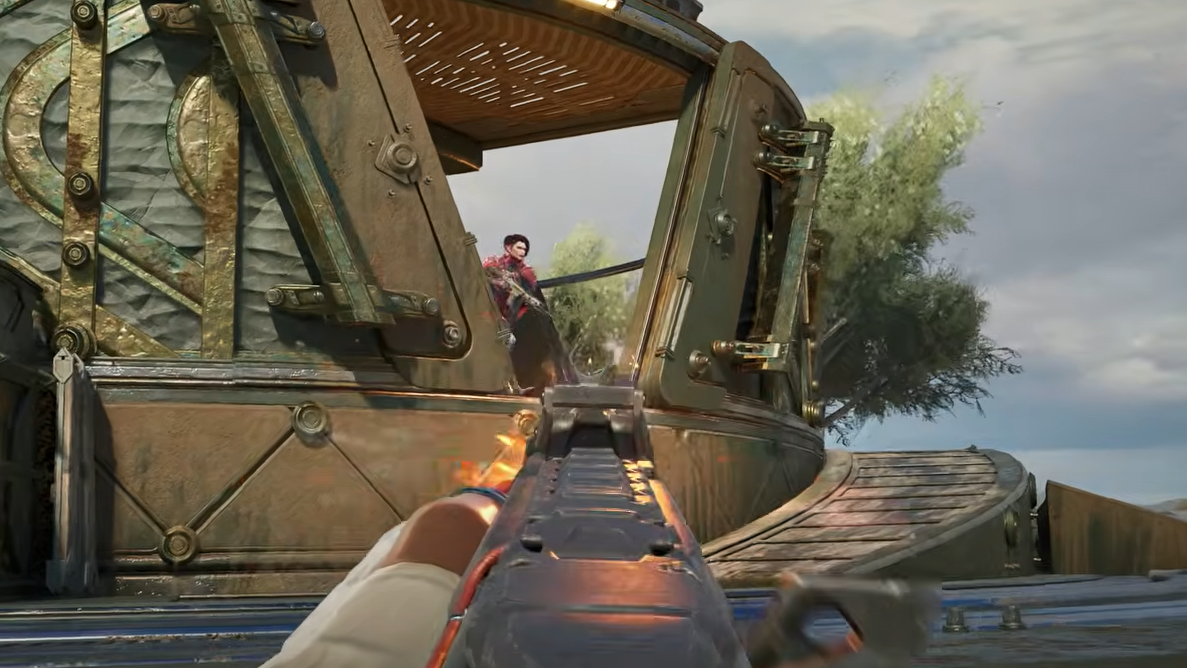
Condor’s kit only functions while she is alive and has angles to deploy her bird and smoke. She is not designed to front‑line duels.
For consistent behavior:
- Position slightly behind your team’s leading fighters, not in front.
- Maintain clear lines of sight into contested areas so Eyes in the Sky and Soaring Guardian can travel usefully.
- Avoid chasing solo kills that drag you out of position; your abilities lose value if you are isolated or eliminated early.
When you are consistently surviving long enough to cast multiple tacticals and at least one ultimate per major engagement, you are using Condor’s positioning correctly.
Communication and information flow
All of Condor’s mechanics are about converting detection into team advantage. That only happens if you communicate promptly.
Follow a simple rule set whenever an ability triggers:
- When Eyes in the Sky detects movement, immediately state the side or lane where movement was revealed.
- When Hunter’s Instinct warns you, announce that enemies are close and slow your advance until angles are cleared.
- When Soaring Guardian is active, call which paths the smokes are covering so teammates know where enemies are being tracked.
You can verify that information flow is working when teammates pre‑aim the correct angles, avoid flanks that your passive warned about, and follow up on enemies exposed by your smoke and scans.