

Universal Tower Defense looks like a straight‑up tower defense game, but its economy runs more like a gacha RPG. Multiple currencies feed into summoning, upgrading, rerolling, and late‑game progression, and understanding how they interact makes a bigger difference than another random legendary pull.
All Universal Tower Defense currencies explained
Universal Tower Defense uses several distinct currencies, each with a specific role.
- Gems are the primary out‑of‑battle currency and the only way to summon units on the banner.
- Gold (often just “money” in‑battle) is generated during a match and is spent on placing and upgrading units in that run.
- Trait reroll tokens and stat reroll tokens are consumables for optimising units’ traits and stat spreads.
- Virtual shop currency comes from the Virtual Realm mode and is used in the VR shop for exclusive items and units.
- Evolution materials and enhancement stones are treated as currencies for evolving units and upgrading relics.
Robux sits on top of this as a premium layer. You can spend it directly on certain bundles or items, but the in‑game loop is built around gems, gold, and the different tokens and materials.

Gems: main summoning currency and long‑term bottleneck
Gems power almost every out‑of‑battle progression system. You use them to summon units on banners, and banners are where mythics, secrets, and core farm units live. A single bad session can burn through thousands of gems, so where they come from matters.
How to earn gems in Universal Tower Defense
Gems drip in from many parts of the game, some active and some passive:
- Story Mode clears grant gems on completion, and increased difficulty multiplies those rewards.
- Daily and weekly quests reward gems for routine tasks like clearing maps or summoning units.
- Limited‑time events often bundle gems with units or rerolls as part of login tracks or mission chains.
- Achievement milestones and the level milestone system give sizeable gem chunks as you hit specific thresholds, adding up to several thousand total.
- Battlepass progression grants gems along the track alongside characters.
- Codes periodically deliver large gem drops when redeemed in‑game.
On top of that, there is a dedicated AFK farming setup that leans on Story Mode.
AFK gem farming route (Ninja Forest)
Ninja Forest is the standard loop for passive gem income.
Best map and mission
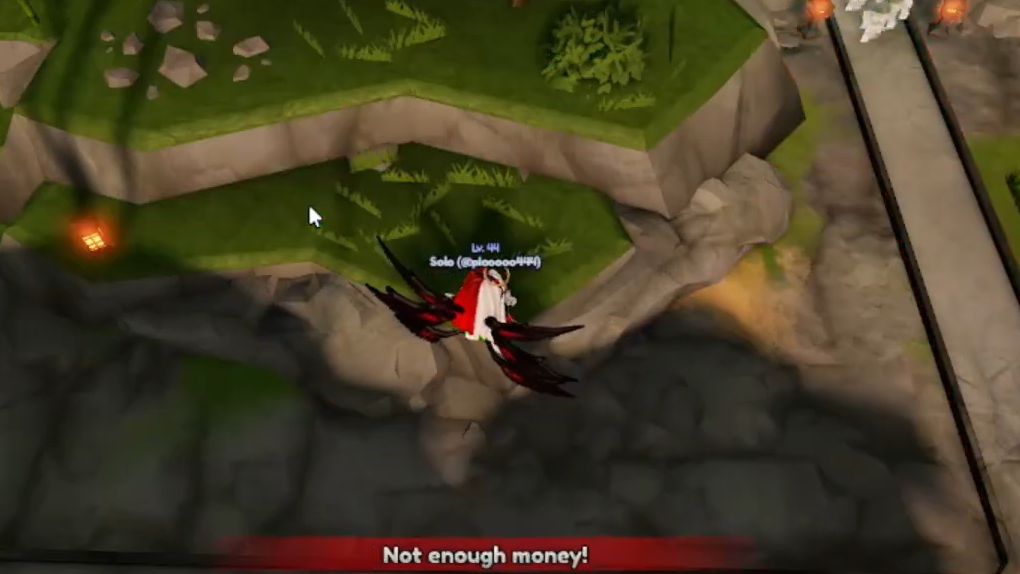
For unattended farming, the most efficient target is Story Mode’s “Ninja Forest - Act 1: Greedy Treasurer” on Easy difficulty. The layout and enemy pacing make it straightforward to clear repeatedly with an automated setup while still scaling well with the difficulty system.
Using the Difficulty Meter
The Difficulty Meter boosts both challenge and rewards. On Greedy Treasurer (Easy), gem gains scale roughly like this:
| Difficulty setting | Approx. gem reward per clear |
|---|---|
| 300% | 144 gems |
| 1000% | 228 gems |
Higher difficulty means more gem income per hour, but also more chances for runs to fail if your macro or team isn’t tuned well.
Modulation and automation
Modulation controls how aggressively the difficulty scales your match. A modulation setting around 75% is a practical balance: rewards stay high while keeping runs stable enough for unattended farming. Players typically pair this with macro tools that repeat simple actions, such as placing a standard opening build and starting waves.
How to spend gems without wasting them
Gems are easy to burn and slow to replace, so the way you spend them matters more than any single pull.
- Prioritise banners with S‑tier and Mythic units. Units like Kenpachi, Kuriato, Ace, and Sasuke have outsized impact on clears and scaling. Saving for rotations that feature them is more efficient than constantly pulling on mediocre line‑ups.
- Avoid dumping gems into common or low‑impact banners. Low‑rarity units drop anyway as you chase higher tiers; spending specifically for them is usually a trap.
- Lean on pity for your first Mythic, then get pickier. Early on, almost any damage Mythic is a big upgrade. Once you have a baseline team, treat gems as a way to chase specific roles or standout carries.
- Delay trait rerolls until core units are secured. Gems are better spent on more powerful units first; raw stats and better kits usually outperform marginal trait upgrades on weaker characters.
Gold and in‑battle economy
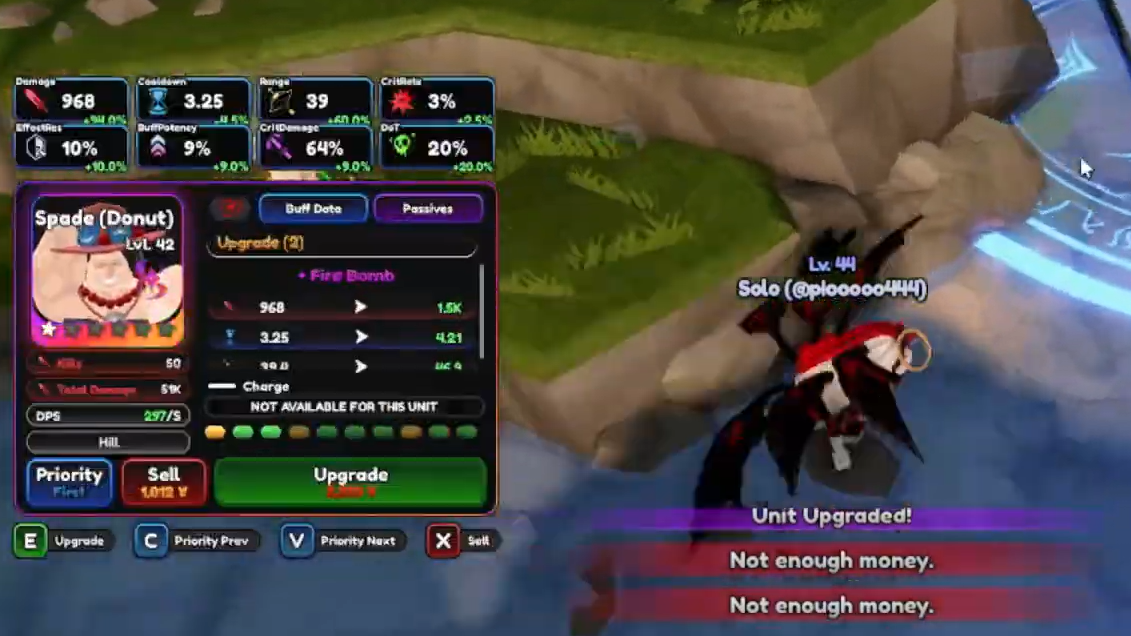
Gold (the money you see during a stage) never leaves the match. It resets every time you queue into Story, Challenges, or Virtual Realm, and only exists to place and upgrade your towers.
Gold comes from time‑based generation, enemy kills, wave clears, and certain economy units. The point is not just to earn more, but to earn it at the right time and spend it cleanly.
Money management tips in matches
Lean on farm units early. Units designed to generate extra money snowball your economy if you deploy them in the opening waves. The extra income accelerates your ability to field carries and max upgrades later.
Balance new placements and upgrades. Spamming unupgraded units can fail when enemy HP scales, but over‑investing in a tiny number of towers can leave gaps in coverage. Watch where enemies are surviving and adjust: sometimes upgrading a strong choke‑point tower is better than laying down another low‑level unit.
Kill faster to earn faster. Because kills feed gold, high‑damage carries placed at optimized positions (corners, long sight lines, intersections) can indirectly increase your economy by clearing waves earlier.
Don’t overspend in the first few waves. Hoarding just enough for your more expensive carries instead of overbuilding cheap early options often leads to smoother mid‑game. It also keeps room in your budget when sudden threats appear.
Learn stage‑specific deployment orders. Every map has a rhythm: where air units spawn, where armoured enemies gather, and which turns let abilities hit multiple paths. Over time, you can refine a default build order for each map that squeezes the most out of the gold you generate.

Trait reroll tokens and stat rerolls
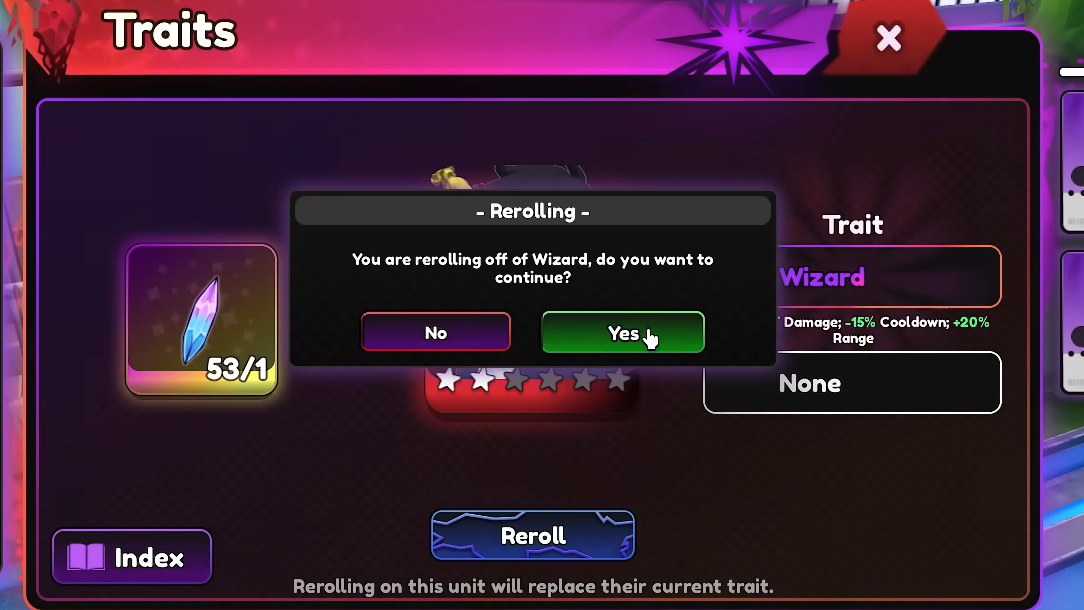
Traits and stats are how you tune units beyond simple levels. Each reroll token represents a shot at a powerful buff, but the odds for top‑end traits can be low, so burning them on weak units is a long‑term loss.
How trait reroll tokens work
Trait reroll tokens let you randomize a unit’s trait. Traits can impact damage, cooldown, range, economy, or more specialized behavior. Some of the most valuable traits have sub‑1% chances to appear.
Example priorities that are worth targeting on high‑end units:
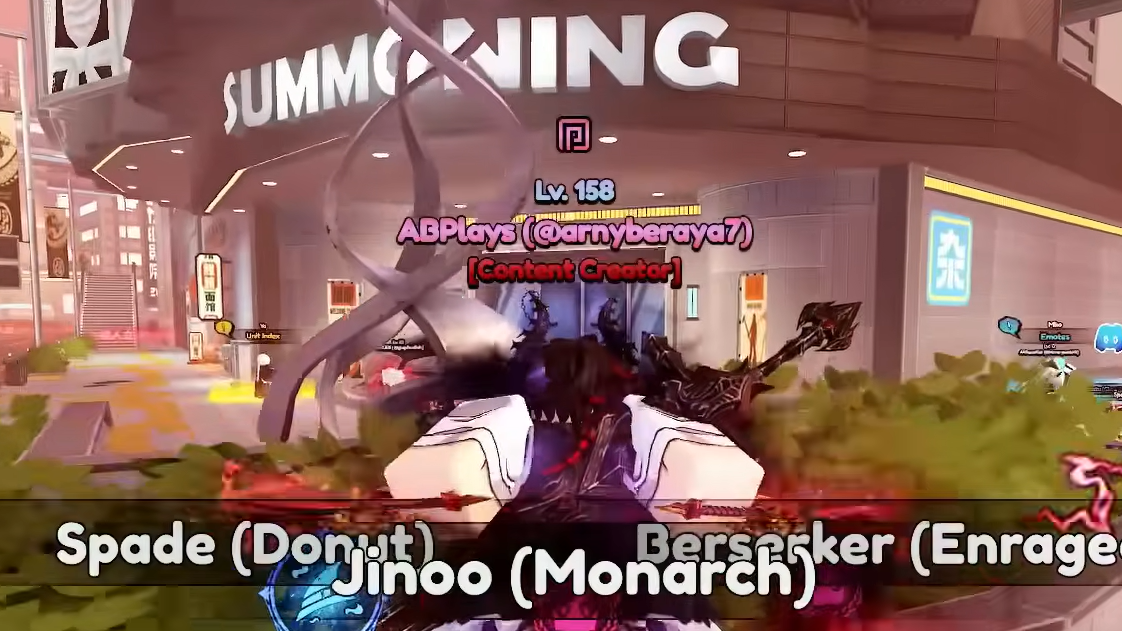
- Ruler for units like Jinoo or Berserker, with roughly a 0.1% pull chance.
- Duelist for Kriatu‑style single‑target carries, with around a 0.8% chance.
- Fortunate for Fastcart and similar economy pieces, with a 1% chance.
These traits can dramatically change a unit’s ceiling, so saving rerolls until you have those characters built makes much more sense than gambling on early rares.
Trait reroll tokens drop from structured endgame content:
- Featured Challenges hand out rerolls and have daily caps on how many you can earn this way.
- Half‑Hourly Challenges rotate every 30 minutes and can also award reroll items among other drops.
Stat reroll tokens, locks, and point allocation
Stat rerolls and locks interact with the visible stat grades on each unit (for example, damage, cooldown, range). A reroll reshuffles these grades; a lock protects a stat so it does not change during a reroll. This lets you keep a great A or S in one category while gambling on improving weaker ones.
Alongside this, units gain upgrade points as they level, and you manually invest those into specific stats. Unlike traditional tower defense games, where level‑ups apply a fixed package of upgrades, here you choose whether to lean into raw damage, attack speed, or range. That flexibility is powerful, but it also means you should have a plan for what each unit is supposed to do before spending points.
Evolution materials and when evolving matters
Evolving a unit unlocks stronger forms and often new passives or hit patterns. It is core to late‑game progression but is significantly more resource‑intensive than basic leveling.
Evolution materials come from two main places:
- Story Mode stages, especially at higher difficulties or in specific missions that drop fragments or themed items.
- Special events and Challenges, which deliver unique fragments or boxed materials that assemble into evolution items.
Certain secret units have bespoke recipes. Jinoo, for example, expects craftable materials like Demon King’s Daggers and Shadow Token Mythic pieces before you can push into its evolved form.
Because the cost is high, evolving tends to sit behind “finish the main story, then grind Challenges and Virtual Realm” in your progression order. The usual pattern is: clear the story to unlock everything, build a stable roster, then start routing specific Challenge stages for the fragments your chosen units require.
Enhancement stones and relic investment
Relics and accessories act as equipment for your units. Enhancement stones are the upgrade fuel that takes them from baseline to something that materially changes how a unit performs.
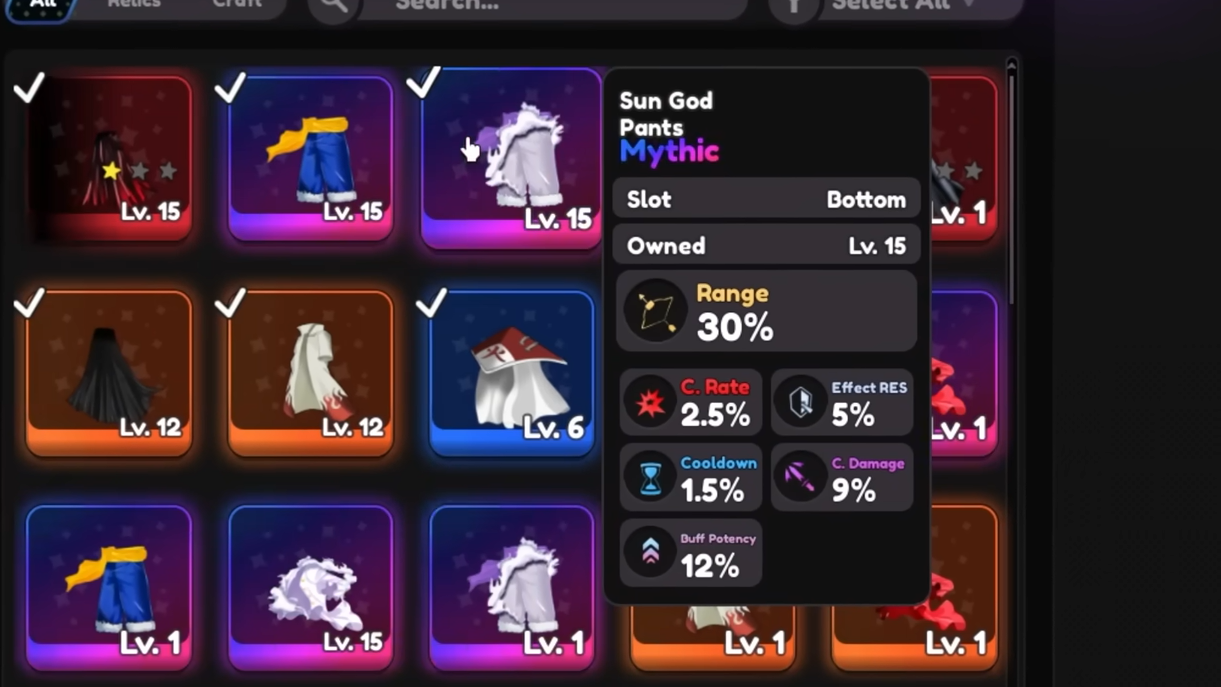
Each relic has a main perk and several side perks, all rolled randomly, along with a two‑piece set bonus if you equip matching tops and bottoms. Rarities range from rare through mythic, and fully upgrading a relic to level 15 consumes a significant number of enhancement stones.
Because of that cost, it makes sense to apply a few filters before investing:
- Check the main stat. Attack and cooldown main stats are broadly useful for damage units, while niche stats make sense only on specific roles.
- Look at the set bonus. A set that gives raw percentage damage and armour damage, for example, synergizes well with carry units that hit tanky enemies.
- Reserve heavy upgrades for permanent staples. Enhancement stones are best spent on the units you always bring into endgame content, not experiments you might drop later.
Accessories, which drop from Virtual Realm, sit alongside relics and add another layer of stats or effects. They share the same logic: don’t over‑invest until you know they fit into your endgame teams.
Virtual Realm currency and the VR shop
Virtual Realm is the game’s long‑form, late‑game mode: a 30‑wave gauntlet where random buff and debuff cards shape each run. Clearing Virtual Realm earns a dedicated currency used in its own shop.
In the VR shop, you can spend this currency on:
- Gems to refill your summoning budget.
- Evolution fragments and materials to speed up unit evolution.
- Trait and stat reroll items and locks.
- Exclusive units like Scarlet Maid, which are tuned as high‑impact characters for players who can handle the mode.
Because Virtual Realm currency is only used in that shop, it functions as a targeted grind: the more comfortable you are surviving to later waves, the more efficiently you can convert time into high‑end materials and unique units.
Practical early‑ and mid‑game currency priorities
Currency systems in Universal Tower Defense are layered, but the priorities shift in a relatively clean pattern as you play more.
Early game
- Redeem all available codes to front‑load gems and rerolls.
- Use your first pity and initial gems to secure at least one solid damage Mythic and a decent farm unit.
- Spend gold in matches conservatively, focusing on a small number of efficient units rather than spreading upgrades too thin.
- Check achievements, level milestones, unit index, and daily rewards regularly, since they hide large one‑time gem injections.
Mid game
- Push through Story Mode to unlock all Challenges and Virtual Realm.
- Start routing specific Challenges for trait rerolls, stat locks, and evolution fragments.
- Begin AFK farming Ninja Forest’s Greedy Treasurer with a safe difficulty and modulation to keep gems flowing while you’re doing other things.
- Reserve trait reroll tokens for S‑tier or Mythic units you intend to keep long term.
Late game
- Use Virtual Realm currency to patch bottlenecks: evolution materials, rerolls, or a key exclusive like Scarlet Maid.
- Invest enhancement stones into a small pool of relics and accessories that perfectly match your core units.
- Fine‑tune stat distributions and traits only once units are evolved, equipped, and clearly part of your main roster.
Once the currencies click into place, Universal Tower Defense becomes less about scrambling for random drops and more about picking a target—an evolution, a trait, a relic set—and building a loop that feeds you exactly what you need.