

Divisions sit at the center of Devil Hunter’s progression system. Once you get through the tutorial and pick a side, your division quietly dictates almost everything that follows: how you get paid, what you wear, who gives you missions, and how structured or freeform your gameplay feels.
Instead of a loose “faction” label, Devil Hunter treats divisions like actual jobs. You either plug into a government-run organization with salaries and rules, or you work more like a freelance bounty hunter. Both paths can lead to strong builds and late-game content, but they reward very different mindsets.
Division system overview
Every player eventually aligns with one of two broad division types:
- Public Safety Devil Hunters – government employees with formal structure, fixed benefits, and captain-assigned missions.
- Private Sector Devil Hunters – independent hunters or small crews who rely on bounties instead of a regular paycheck.
Inside these umbrellas, Public Safety is broken down further into numbered divisions (Division 1, 2, and so on), each led by a Division Captain. Private Sector groups are looser by design, but they still center around missions and bounties handed out by NPCs in similar leadership roles.
That split between “salary job” and “bounty work” is the key decision you make when choosing where to work. You are not just picking a color or cosmetic banner; you are picking how your day-to-day loop runs.
Public Safety Devil Hunters
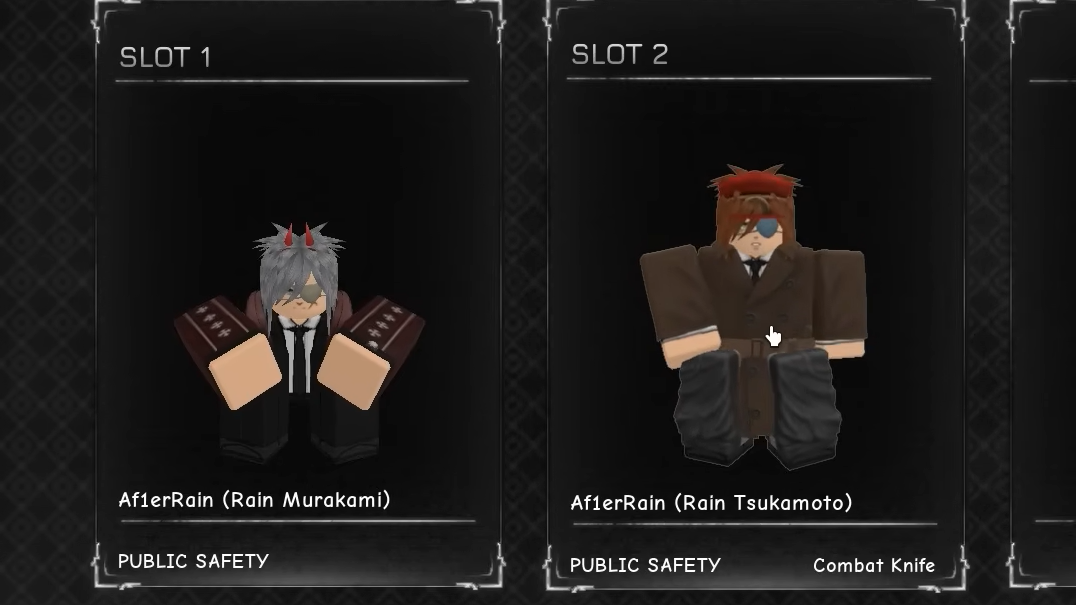
Public Safety devil hunters are framed as state employees. The game leans into that idea with rules, perks, and a more rigid structure than the freelance alternative.
Salary and income sit at the core of Public Safety. Instead of living paycheck to paycheck off random bounties, you receive regular pay in the same way a typical government worker would. On top of that base income, you still earn money, EXP, and item rewards from missions assigned by your Division Captain.
There is also a dress code. Public Safety hunters are expected to wear formal clothing: suits, ties, and other office-adjacent fits. It reinforces the “bureaucratic agency” feel and gives this path a distinct visual identity in lobbies and raids.
The tradeoff for the extra formality is a strong benefits package. Public Safety has more paid days off and the best benefits set in the game, reflecting the stability that comes with a government contract. Those benefits are part flavor, part incentive to pick a structured lifestyle over pure freelancing.
Internally, Public Safety is split into numbered divisions. Each one has its own captain and identity, and the quality varies across that roster. You talk to the captains early in progression and eventually align with one of them. Once you do, your missions and rewards are funneled through that captain, which shapes the kind of combat scenarios and payouts you see most often.
Working under Public Safety makes the game feel more linear: you take assignments, complete them, get paid, and move toward higher ranks and more difficult content under the same institutional umbrella.
Private Sector Devil Hunters
The Private Sector is built for players who prefer looser structure and direct bounty payouts over consistent salaries and HR rules.
Instead of a paycheck, you rely on bounty payments. You track down specific devils, capture or kill them, and turn in proof for the listed price. There is no permanent regular salary smoothing out your income; if you are not hunting, you are not earning.
That comes with two immediate upsides. First, no dress code means you can wear what you want without worrying about formal clothing rules. Second, you operate with greater freedom. Private Sector hunters are framed more like bounty hunters or freelancers: they pick their targets, choose how and when to engage, and are not bound to the same institutional mission ladder.
The flip side is resourcing. With fewer organizational tools and less backing than Public Safety, Private Sector hunters usually face smaller threats. The game leans into the idea that large, high-risk devils are typically a Public Safety problem, while smaller jobs and side contracts are more common in the private freelance space.
All of this plugs into the bounty system, which is the Private Sector’s answer to “missions.” Instead of a captain telling you what comes next, you engage with bounties on posted devils. Once the target is dealt with, you collect the bounty price and move on to the next job.
Division Captains and mission flow
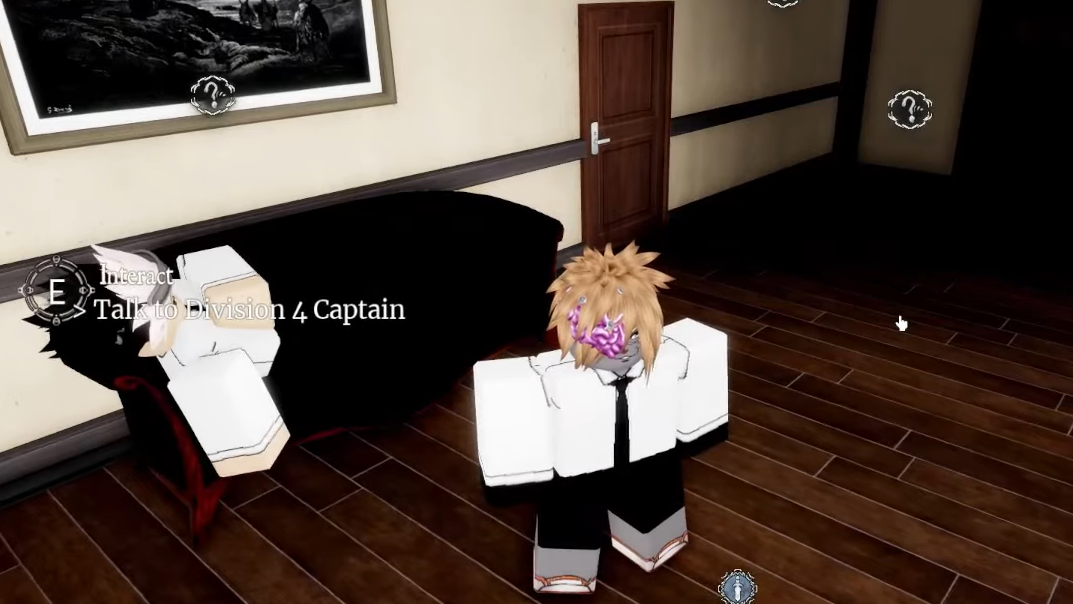
Whether you are in Public Safety or the Private Sector, the concept of a Division Captain anchors progression.
Captains act as your primary mission givers. You speak with them to receive assignments, then take those missions out into the city, raids, or side areas. Completing assignments earns three main reward types: EXP for progression, money for purchases and crafting, and special rewards that can include gear or materials.
While the exact mission objectives can vary, your division choice influences the structure and rewards tied to that flow. Public Safety missions lean into the feeling of systematic deployment under oversight, often tied back to your numbered division. Private Sector assignments tilt toward ad hoc bounties and more self-directed work, with payouts driven by the value of each target.
Because missions sit at the center of EXP and money gain, your relationship with your captain—and the division you answer to—shapes the entire loop from early ranks into higher-end raids and contracts.
Public Safety vs Private Sector: key differences
| Aspect | Public Safety Devil Hunters | Private Sector Devil Hunters |
|---|---|---|
| Employment model | Government employee | Freelance / bounty hunter |
| Core income | Regular salary plus mission rewards | No salary, bounty payouts only |
| Dress code | Formal suits and similar outfits | No clothing requirements |
| Benefits | More paid days off, strongest benefits package | No structured benefits |
| Internal structure | Numbered divisions (1, 2, etc.) with captains | Independent hunters or small groups |
| Typical targets | Bigger threats, higher-resource operations | Smaller threats, fewer resources |
| Mission source | Division Captain assignments | Bounty system and similar contracts |

How division choice affects gameplay
The divide between Public Safety and the Private Sector looks cosmetic at first, but it quietly changes how you experience nearly every system in Devil Hunter.
With Public Safety, you play inside a framework. Your outfit is defined, your money has a base salary underneath it, and you climb through numbered divisions that act like departments. That suits players who like predictable progression, a clear chain of command, and access to the strongest institutional perks and time-off benefits.
With the Private Sector, your experience is more open. You pick up bounties on your own terms, ignore dress codes, and accept that money flows only when you are actively hunting. This works best for players who enjoy improvising, chasing specific targets, and leaning into the fantasy of being a free agent in a city full of devils.
Both paths keep Division Captains in the loop as mission anchors, both hand out EXP and money, and both can plug into the wider systems of contracts, raids, and hybrids. The question is less about raw power and more about preferred rhythm: salary and structure, or freedom and bounties.
Who should pick Public Safety
Public Safety is usually the better fit if you want:
- Stable income from a regular salary on top of mission rewards, which smooths out dry stretches between big fights.
- Structured gameplay with a consistent ladder of missions coming from your Division Captain.
- Institutional backing and the in-world feeling of working for a powerful organization rather than as a solo operator.
- Best-in-class benefits, including more paid days off than other options.
Players who like clear goals, formal squads, and a uniformed appearance tend to feel more at home under the Public Safety banner.
Who should pick Private Sector
The Private Sector path makes more sense if you care about:
- Bounty-based rewards, where income spikes around specific hunts instead of trickling in on a schedule.
- Operational freedom, including fewer rules about where you go, what you wear, and how you approach targets.
- No dress code, which lets fashion and avatar customization drive your identity instead of a required uniform.
- Independent playstyle, especially if you prefer small groups or solo work over large, structured teams.
That independence comes with more responsibility. Without a salary safety net or guaranteed mission track, Private Sector hunters need to stay active and deliberate about which bounties they chase and how they manage risk.
Devil Hunter’s division system does not just decorate your character sheet. It frames your role in the city, the people you answer to, and the style of missions you run thousands of times over. Pick the path that matches how you want to work: suited up on a salary with Public Safety, or loose, lightly regulated, and living off devils’ heads as a Private Sector hunter.