

Where Winds Meet hides one of its stranger systems behind a very ordinary-sounding item: Rattan Paper. It sits quietly in your inventory, but it is the key to copying almost anyone you meet.
What Rattan Paper does in Where Winds Meet
Disguises in Where Winds Meet are closer to full character swaps than simple outfits. Equipping one changes your model into another person entirely and also changes how the world reacts. NPCs you normally couldn’t approach might open up, patrolling guards can suddenly ignore you, and some requests for items become much easier when you look like the “right” person.
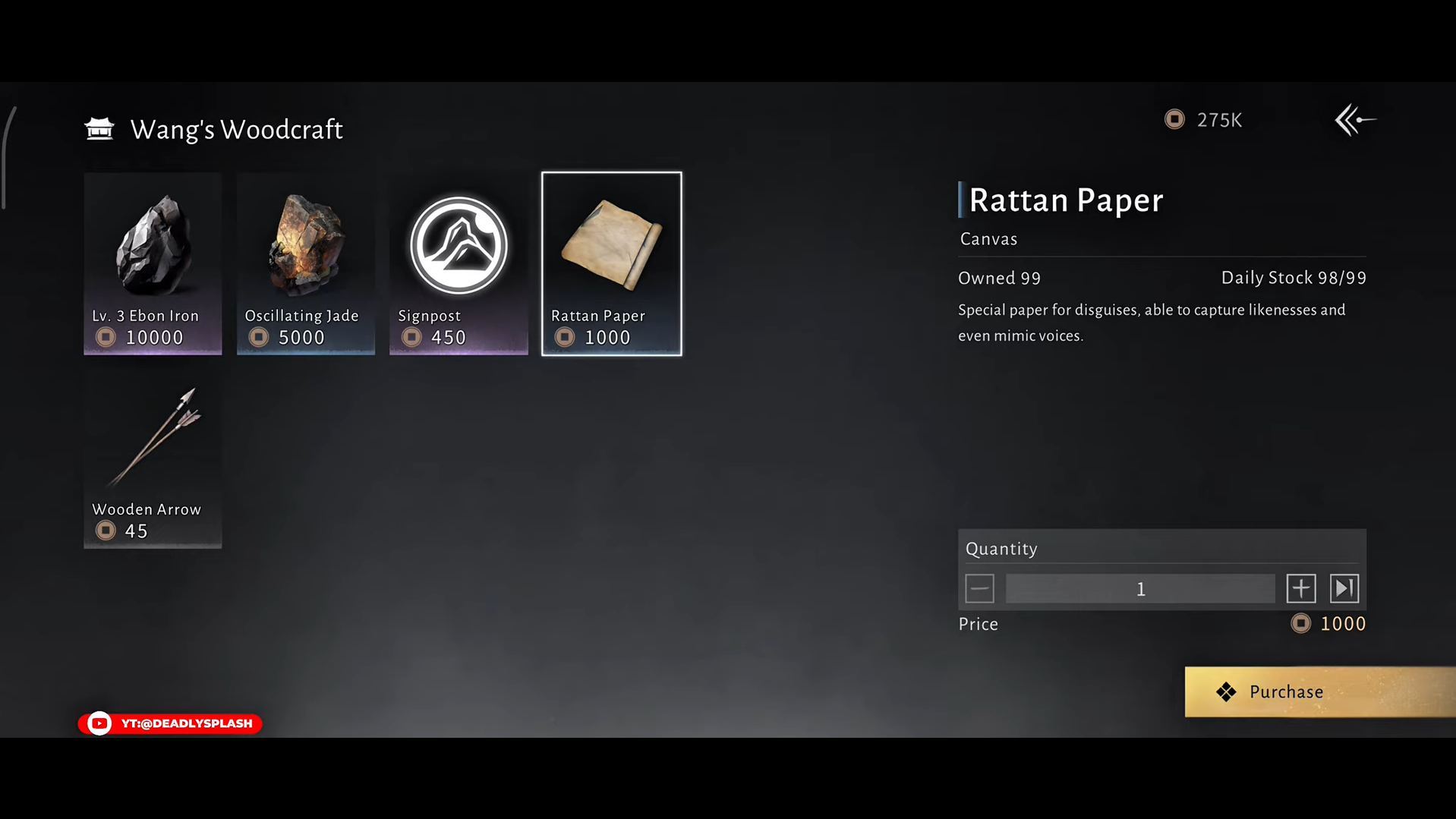
Rattan Paper is the consumable that makes these disguises possible. You use it to sketch portraits of characters in the world. Those sketches then become the raw material disguise shops use to manufacture a usable disguise. No sketch, no disguise.
Two important limits shape how you use the system:
- Disguises are temporary. They run on a timer rather than being permanent unlocks you can wear indefinitely.
- They cost Commerce Coins to equip. Commerce Coins are deliberately scarce compared with normal currency, so each disguise use is a real tradeoff.
On top of that, actions are restricted while a disguise is active. High-mobility tools like Lightness skills are off the table, and you cannot just bounce across rooftops in someone else’s face. The game leans into the fiction of “pretending to be someone else,” so the movement and combat language is toned down while the disguise is on.
There is one more hard constraint: if the person you are impersonating sees you wearing their face, they call the guards and you end up arrested. Rattan Paper opens up many options, but it also bakes risk directly into every portrait you decide to turn into a disguise.
How to use Rattan Paper to create disguises
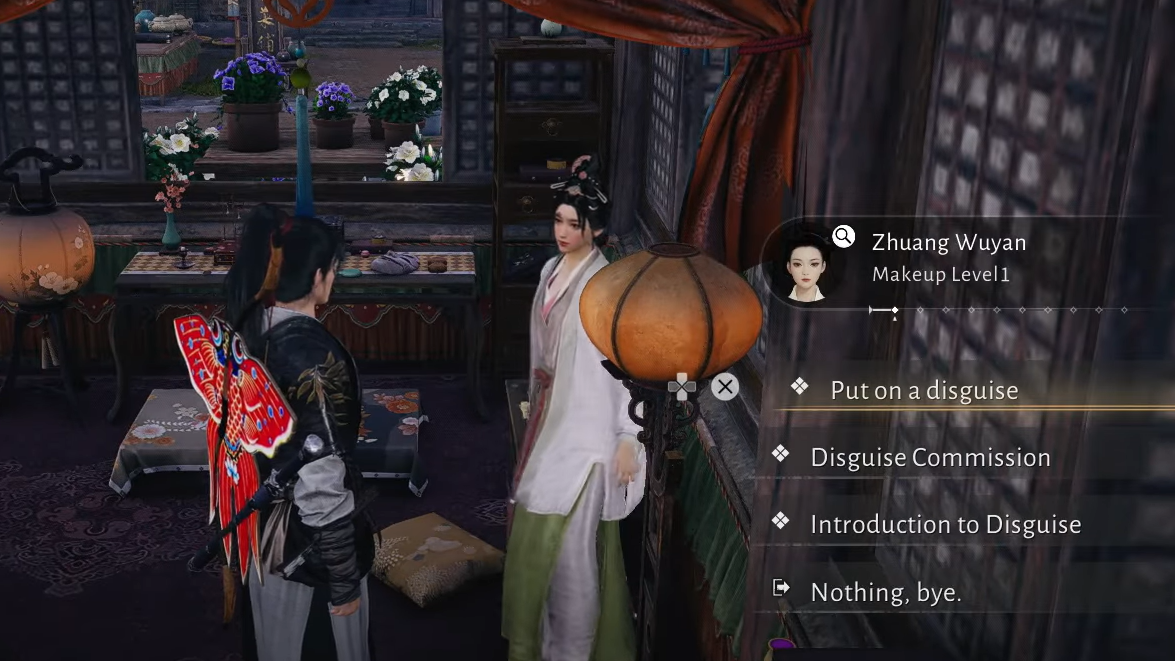
Rattan Paper only matters once you unlock the disguise system. That happens after the Veil of Love quest, which introduces the idea of submitting portraits and commissioning disguises. From then on, mask icons scattered across the world map highlight opportunities to observe a person closely enough to sketch them.
Mechanically, the portrait workflow is very simple:
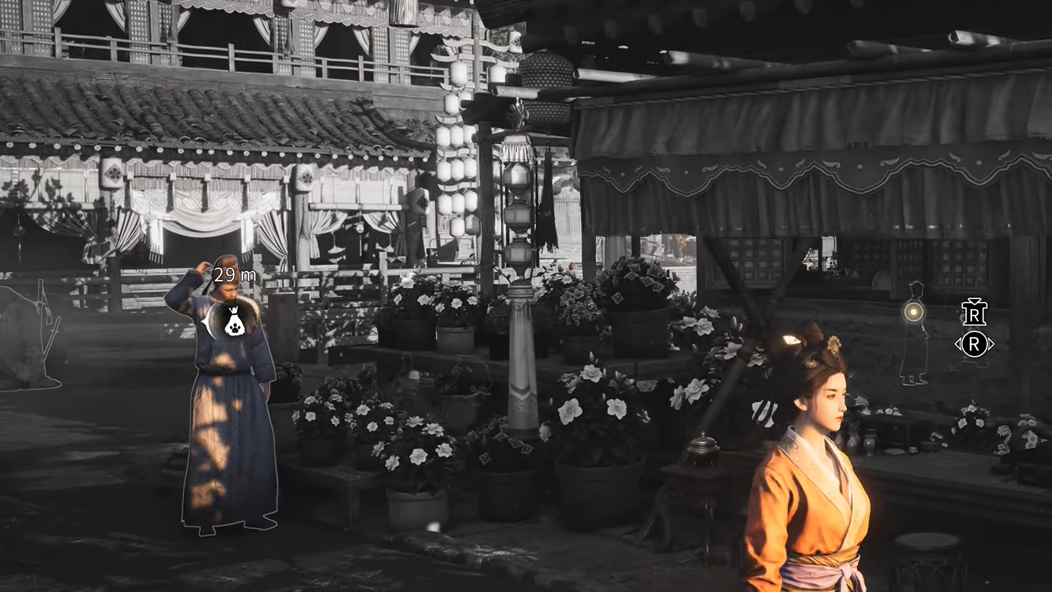
Step 1: Approach a character you want to imitate and get close enough for the targeting cursor to lock onto them. Unique disguise candidates usually advertise themselves with an on-screen prompt to create a sketch.
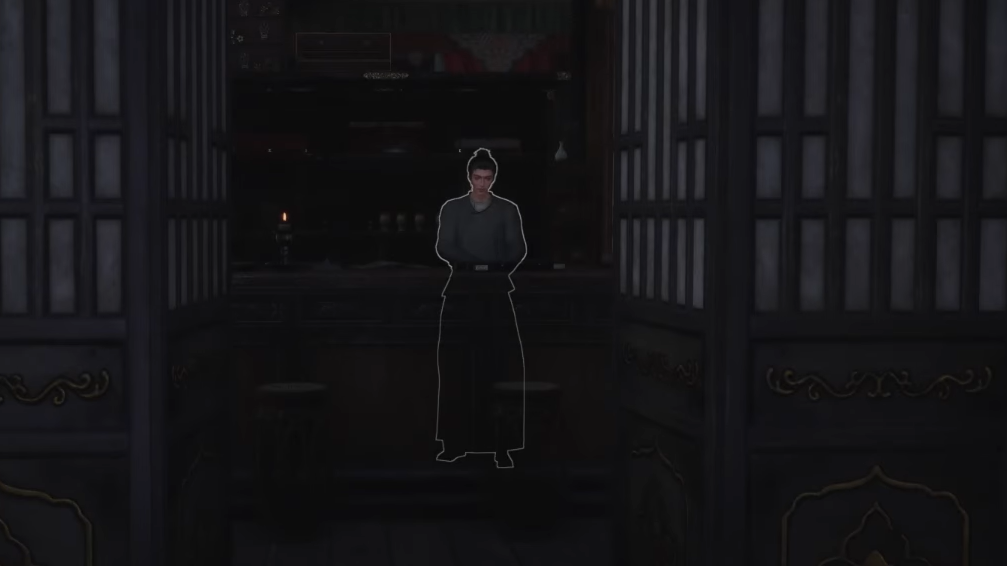
Step 2: Hover the cursor over the character long enough to reveal their name and a difficulty rating tied to the eventual disguise. That difficulty links directly to your Makeup Level, which controls what you can equip later.
Step 3: Confirm the sketch. At that moment, Rattan Paper in your inventory is consumed to create a portrait. The portrait becomes an item you can hand over to a disguise shop.
Step 4: Visit one of Kaifeng’s disguise shops and commission a disguise from that portrait, paying Commerce Coins and gaining Makeup experience when the piece is complete.
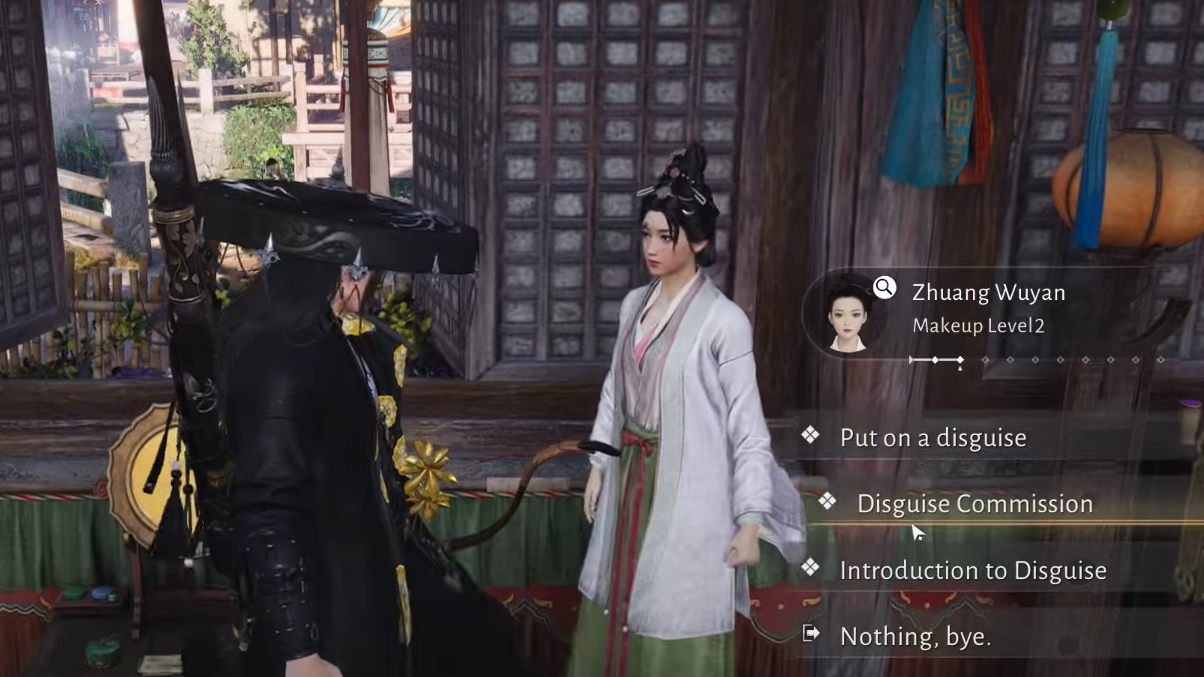
Rattan Paper is therefore not just another crafting material. It gates access to the disguise system at the “observation” stage. You cannot just decide to dress as someone by walking into a shop; you have to spend Rattan Paper in the field first.
Where to get Rattan Paper in Kaifeng
Once the need for Rattan Paper becomes clear, the next problem is supply. The game solves that by tying the item to a particular type of vendor.
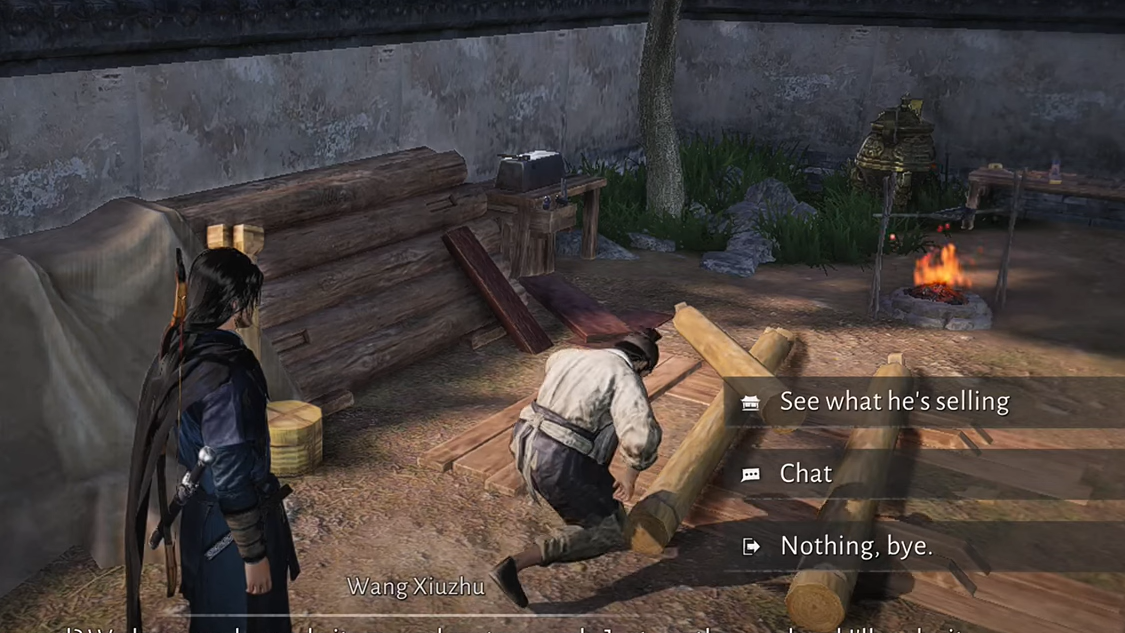
Rattan Paper is sold by Wood Craftsmen. Any Wood Craftsman can stock it, but one is especially convenient: a craftsman working south of the Kaifeng City disguise shop. If you already know where that shop is, stocking up on paper turns into a short detour rather than a scavenger hunt.
Kaifeng City itself hosts the two disguise shops currently available. One sits in the southeast of the city, to the right of the Fair Grounds, while the other hides beneath the city in the Ghostlight market. Makeup Level progress is shared between both, so you can buy Rattan Paper near the city shop, sketch targets elsewhere, and then cash those sketches in at whichever shop fits your current route.
How Makeup Levels and disguise difficulty connect to Rattan Paper
Every character you can sketch carries a difficulty rating. That number is not about creating the sketch itself; the sketch action is always the same. Instead, difficulty tells you how demanding the final disguise will be for your Makeup Level.
Makeup Level is a progression track that advances each time you commission a new disguise. When the level goes up, your usable range of disguises expands to include all portraits at that difficulty or below. A Makeup Level three, for example, lets you wear any disguise tagged up to difficulty three.
Rattan Paper feeds this loop at the very first stage. You use it to create portraits; those portraits are turned into disguises; disguises grant Makeup experience; and higher Makeup Levels allow you to justify sketching more complex or important targets. Running out of Rattan Paper cuts the loop, which is exactly why planning purchases at Wood Craftsmen and choosing which characters to sketch matters.
Disguise commissions from the shops act as structured missions within the same framework. You accept a job, obtain the specified disguise, perform tasks while wearing it, and walk away with both story beats and experience toward the next Makeup Level. None of that can start without a stack of Rattan Paper to keep the portrait pipeline flowing.
Why it is called “Rattan” Paper at all
Outside the game, “rattan” points to a very specific family of climbing palms used in furniture, basketry, and building. Rattan is not a tree but a group of vine-like palms in the Calamoideae subfamily, native to old-growth tropical forests across Southeast Asia, parts of Asia more broadly, and Africa. Instead of thick trunks, these plants send out long, narrow canes that scramble over other vegetation.
Those canes are unusual in a few ways. They do not thicken over time; juvenile stems are roughly the same diameter as mature ones, usually around a couple of centimeters across. Once the outer thorny covering is stripped, the shiny skin — cane — can be used directly for weaving. The inner pith can be split down into round or flat reed. Historically, the material has been worked into everything from Victorian “stick wicker” furniture frames to small accessories and bindings.
The link to paper arrives in two forms. One is direct substitution. In the early 20th century, when it was difficult to import rattan reed from Asia, workshops adopted paper fibre rush — sometimes called “paper wicker” — to mimic the look of rattan-based reed. Twisted paper strands with a diagonal, rope-like texture were woven over frames, later sometimes reinforced with wire cores in weight-bearing sections.
The other is modern “rattan paper,” used today in decor and craft. This material is made from twisted and woven paper fibers shaped so they visually echo the split strips of natural rattan. It is lighter and softer than plastic imitations, and because it is based on paper it can be biodegradable and easier to recycle, while still delivering the familiar woven pattern people associate with rattan furniture.
In practical terms, that gives three overlapping ideas:
- Natural rattan – real climbing palms used for poles, cane, and reed.
- Paper wicker and paper fibre rush – man-made paper substitutes that replicate the look of reed and rush in chairs and wicker furniture.
- Contemporary rattan paper – woven paper products designed to resemble rattan for lightweight, often indoor decor.
The game’s Rattan Paper item borrows that real-world vocabulary rather than simulating the botany. It is a sheet of special paper used for portrait sketches, not a roll of woven furniture material. The name still carries the connotation of something crafted, flexible, and bound up with everyday objects, which fits a system where disguises rely on artisan work in the city’s hidden shops.
Treat Rattan Paper in Where Winds Meet less like generic loot and more like a limited license to change faces. Each page becomes a decision about who is worth studying, whose life is worth inhabiting for a little while, and when to risk being seen in borrowed skin for the sake of slipping past a guard or opening a door that would otherwise stay closed.