

The HC Valley Battery is the highest-tier battery available in Valley IV of Arknights: Endfield, and it's the backbone of late-game power generation and Stock Bill income. Building an efficient, compact production line for it is one of the most important factory challenges you'll face after completing the Valley 4 main story. The production chain is complex — it requires Ferrium Ore, Originium Ore, and Sandleaf, processed through multiple facility types — but well-designed blueprints can automate the entire thing in a surprisingly small space.
Quick answer: Import a community blueprint code (server-specific) to place a fully efficient HC Valley Battery factory that produces 6 batteries per minute. For NA/EU, try EFO01o08a028aO6EIieO (30x26) or EFO01893u664A61uUI73 (30x28, symmetrical). For Asia, try EFO01A7uU8eO08EU91eO or EFO018IeE23i3u13UI73. Kick-start the Seed-Picking Units with about 50 Sandleaf each.
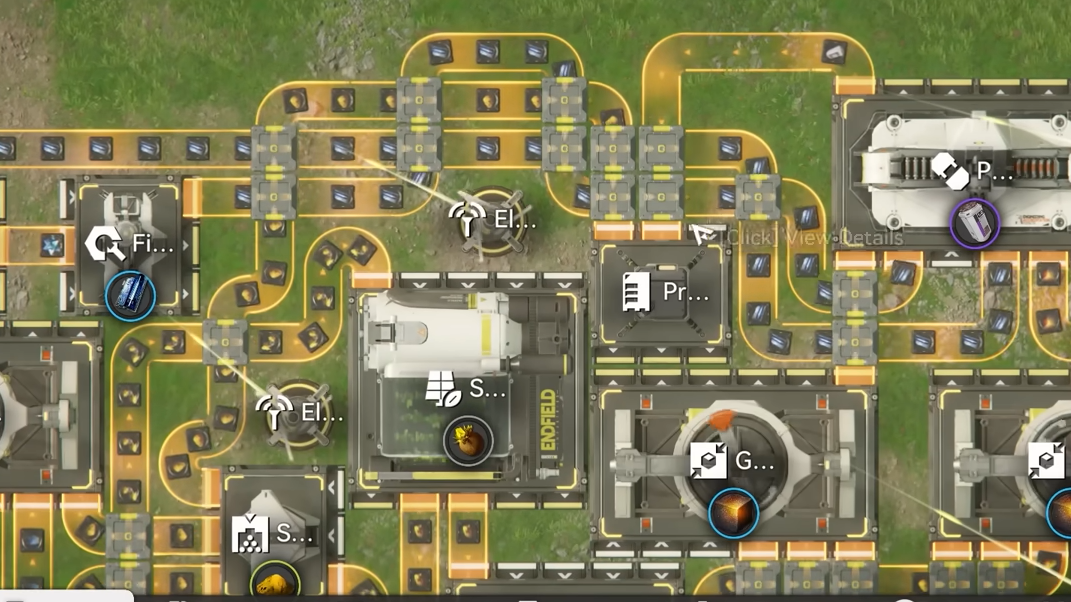
What the HC Valley Battery Production Chain Requires
The HC Valley Battery recipe pulls from three raw inputs: Ferrium Ore, Originium Ore, and Sandleaf. Ferrium and Originium come from your Depot via Bus Unloaders, while Sandleaf is grown on-site through a self-sustaining Planting Unit and Seed-Picking Unit loop. Once you seed the loop with an initial batch of Sandleaf, it runs indefinitely without further input.
The facilities involved in a full-efficiency layout include Shredding Units, Refining Units, Grinding Units, Fitting Units, Packaging Units, a Protocol Stash (or Thermal Banks for direct power use), Planting Units, Seed-Picking Units, and Electric Pylons. A fully efficient line needs enough Originium throughput to avoid bottlenecks — conveyors transport items at a rate of one every two seconds, and Originium shreds at a 1:1 ratio at the same speed. That means each Shredding Unit processing Originium needs its own dedicated unloader line. Sandleaf shreds at a 1:3 ratio, so all three output ports on those Shredding Units should be utilized to avoid waste.
At peak efficiency, a single production line outputs 6 HC Valley Batteries per minute and consumes roughly 120 Ferrium Ore per minute. Some larger designs also produce 30 Sandleaf Powder per minute as a byproduct, which can be stored or routed into Cryston Powder production for later use.
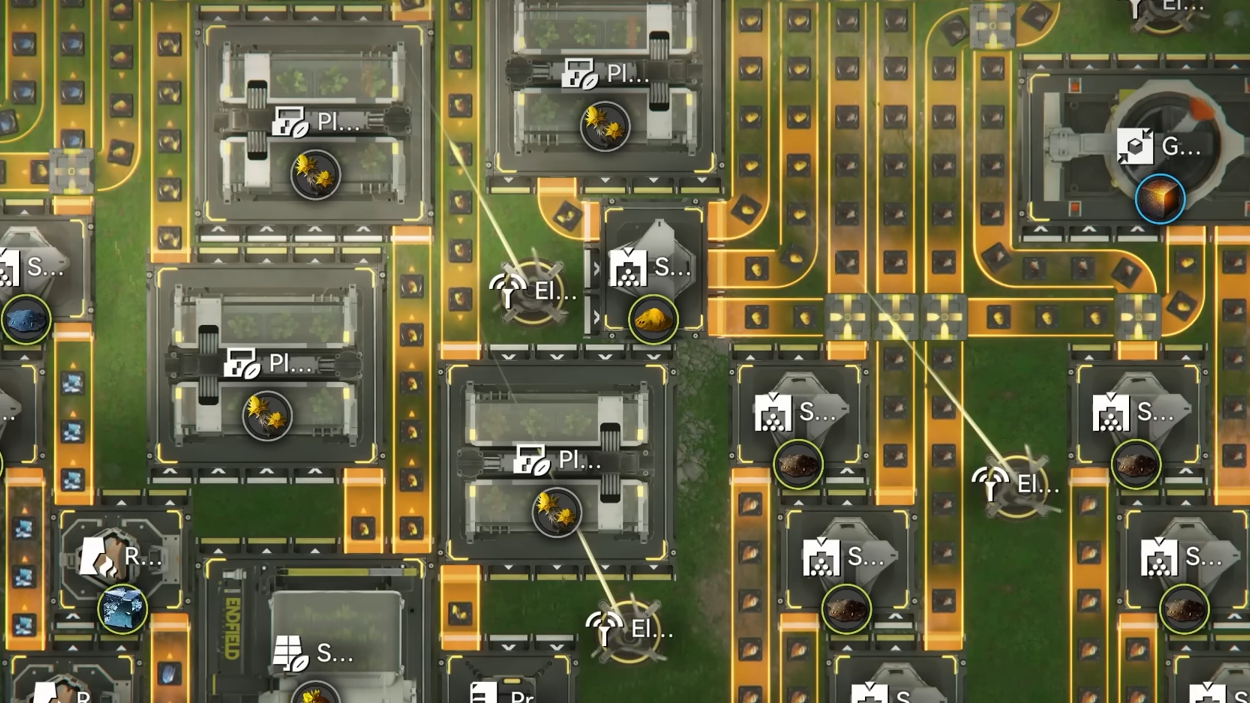
Compact Blueprint Designs and Sharing Codes
The Endfield community has iterated rapidly on HC Valley Battery layouts, pushing footprints down from roughly 34x31 to as small as 30x25 (though the smallest designs sacrifice the Protocol Stash). The sweet spot for most players is a 30x26 to 30x28 footprint that maintains full efficiency and includes storage or Thermal Bank output.
Blueprint sharing codes are server-specific — a code generated on Asia servers won't work on NA/EU, and vice versa. Here are the most widely tested options:
| Size | Server | Blueprint Code | Notes |
|---|---|---|---|
| 30x26 | NA/EU | EFO01o08a028aO6EIieO | Very compact, no excess powder output |
| 30x26 | Asia | EFO01E50U3O8a3oa3uIa | Same layout, Asia version |
| 30x28 | NA/EU | EFO01893u664A61uUI73 | Symmetrical, clean layout |
| 30x28 | Asia | EFO018IeE23i3u13UI73 | Symmetrical, 6/min output |
| ~34x31 | Asia | EFO013o7243352aO0579 | Includes 30/min Sandleaf Powder byproduct |
| ~34x30 | NA/EU | EFO014o5O866723UE71A | Same layout, slightly more compact |
| 30x28 | Asia | EFO01a658I325oAe2oe5e | Near-square ratio with integrated planters |
Setting Up the Blueprint
Step 1: Import the blueprint code by opening the factory blueprint menu and entering the sharing code for your server region. Place the blueprint in your AIC base area, aligning the input side with your Depot Bus Unloaders.
Step 2: Load approximately 50 Sandleaf into each Seed-Picking Unit to start the closed-loop farming cycle. The Planting Units will grow Sandleaf, which feeds back into the Seed-Picking Units to sustain production indefinitely.
Step 3: Ensure your Depot Bus has enough unloader slots. Most efficient designs require around 10 Bus Unloader outputs — typically 4 for Ferrium Ore (as Steel Parts), several for Originium Ore, and a few for Sandleaf-related inputs, depending on the layout.
Step 4: If you want batteries stored in the Depot, confirm the Protocol Stash is set to the correct stash mode. Alternatively, you can replace the Protocol Stash with Thermal Banks. Four Thermal Banks fed by HC Valley Batteries provide roughly +4,400 power to your grid, which is substantial for running Mining Rigs and additional factory lines.
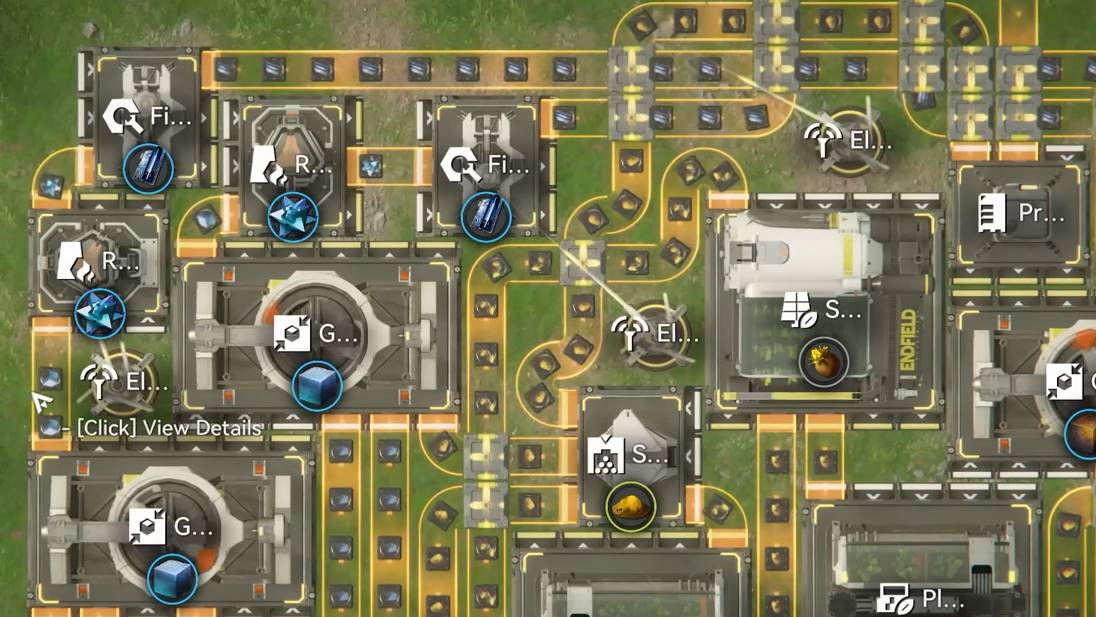
Dealing with Sandleaf Powder Clogging
One common issue with compact designs is that a Shredding Unit processing Sandleaf will eventually clog with excess Sandleaf Powder. This happens because the production ratio generates more powder than the downstream Grinding and Packaging Units consume. In the tightest layouts (30x26 and below), there simply isn't room for an additional Protocol Stash to absorb the overflow.
The practical solution is to ignore the clog. It doesn't break the production line — the Shredding Unit just pauses when its internal buffer fills, and the rest of the chain continues operating at full efficiency. If you expand to a 30x27 or 30x28 footprint, you can fit a Protocol Stash to store the excess powder, or route it into a Grinding Unit with Amethyst Powder to produce Cryston Powder for later crafting needs.
Power vs. Storage: Choosing Your Output
You have two main options for what to do with the batteries rolling off the line. Feeding them into Thermal Banks converts them directly into grid power, which is useful if you're expanding Mining Rig coverage across the overworld. Each Thermal Bank consumes one battery every 40 seconds, so a single 6/min production line can comfortably feed several banks with surplus left over.
The alternative is routing batteries into a Protocol Stash or directly to the Depot. HC Valley Batteries are one of the most valuable trade items for Stock Bills through the Refugee Camp and Regional Development system. At endgame, a popular CN-originated build produces 18 HC Valley Batteries and 18 Buck Capsule (A) per minute across the full Core AIC and three Outposts, maximizing Stock Bill income.
For most players progressing through Valley 4, a single 6/min line with a mix of Thermal Banks and storage is the right balance. You can always duplicate the setup in an Outpost once you unlock additional base slots.
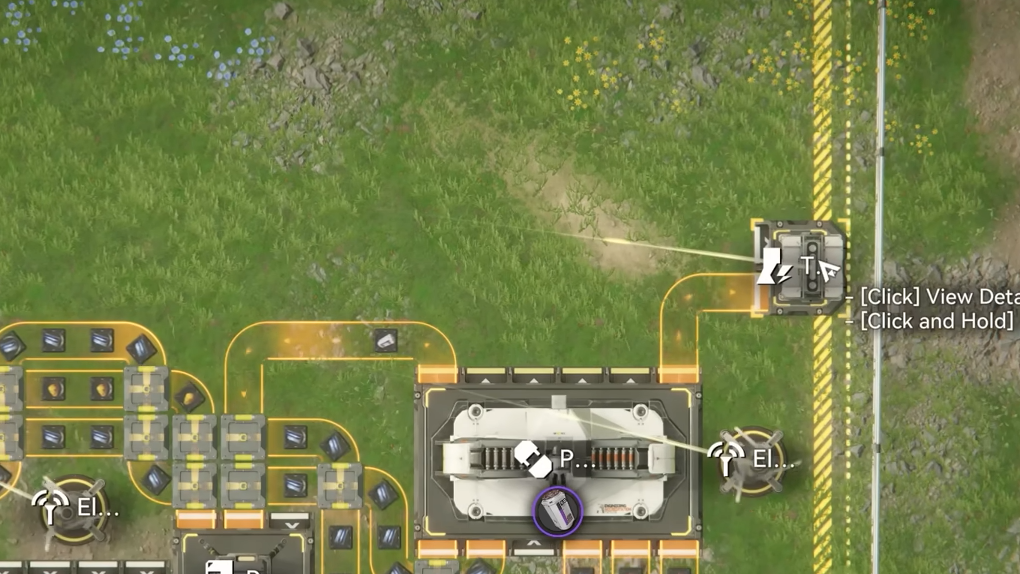
Scaling to Endgame Production
Once you've maxed your Core AIC area expansions and Depot Bus upgrades, you can fit multiple HC Valley Battery lines alongside Buck Capsule (A) production. The 18/min endgame setup requires all Mineral Beds connected, full AIC upgrades, four Depot Busses per Outpost, and Region Level 11. It spans six blueprint segments in the Core AIC plus dedicated Outpost layouts for Thermal Bank power distribution.
If you're not yet at that stage, a single compact blueprint in the 30x26 to 30x28 range will carry you through the rest of Valley 4 content and generate enough batteries to keep your power grid healthy and your Stock Bill income flowing. The Sandleaf loop is self-sustaining, the ore inputs are straightforward, and the whole thing runs unattended once placed — which is exactly what a good factory line should do.