

Batteries sit at the center of late‑game factory building in Arknights: Endfield. Originium Ore alone can get a small PAC online, but once you start stacking production chains, Thermal Banks powered by Batteries become the real backbone of your grid.
A “battery farm” is simply a dedicated cluster of production lines that turns mineral inputs into LC, SC, or HC Valley Batteries at a consistent rate. The most useful layouts balance material throughput, power consumption, and footprint, so they keep running without starving other parts of your factory.
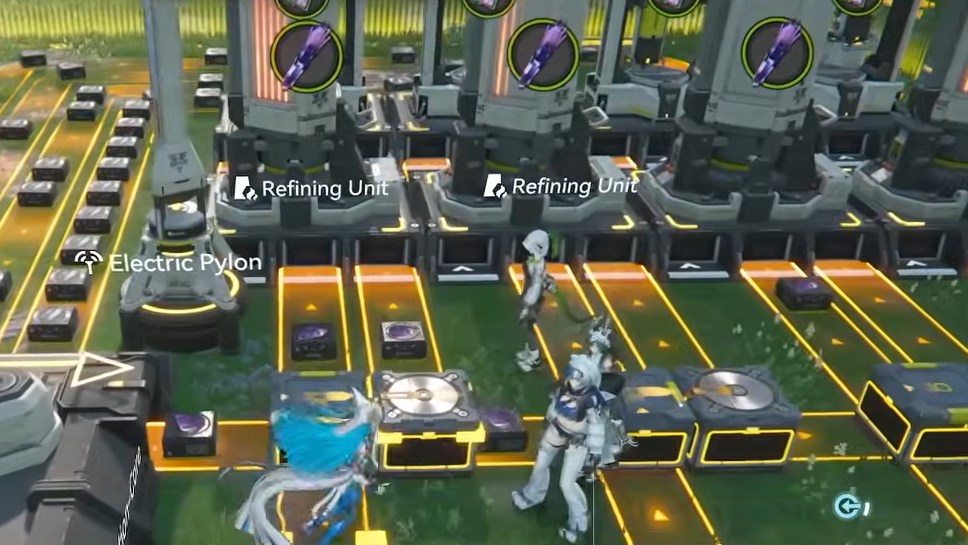
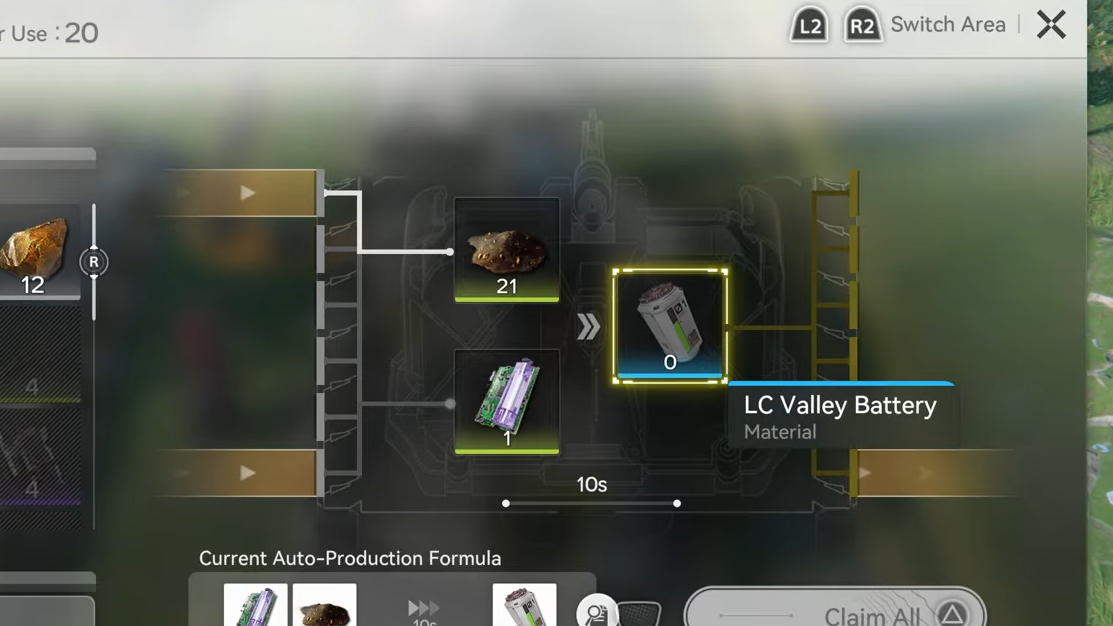
Battery basics: what you’re actually producing
Batteries in Endfield are packaged items that Thermal Banks burn to generate electricity and raise your maximum power capacity. They are not mined directly. Every Battery is the result of at least three separate chains working together:
- Originium Powder made from Originium Ore in Shredding Units.
- A processed metal or crystal part (for example, Amethyst Parts made by refining Amethyst Ore into Amethyst Fiber).
- A Packaging Unit that consumes those intermediates and outputs the Battery variant.
LC Valley Batteries use Amethyst. SC Valley Batteries follow the same structure but replace Amethyst with Ferrium. HC Valley Batteries use a higher‑tier setup and sit later on the progression curve.
To even craft Batteries, the Power I node in the AIC Index must be unlocked. That same unlock also enables Thermal Banks, which are the consumers for your battery farm output.
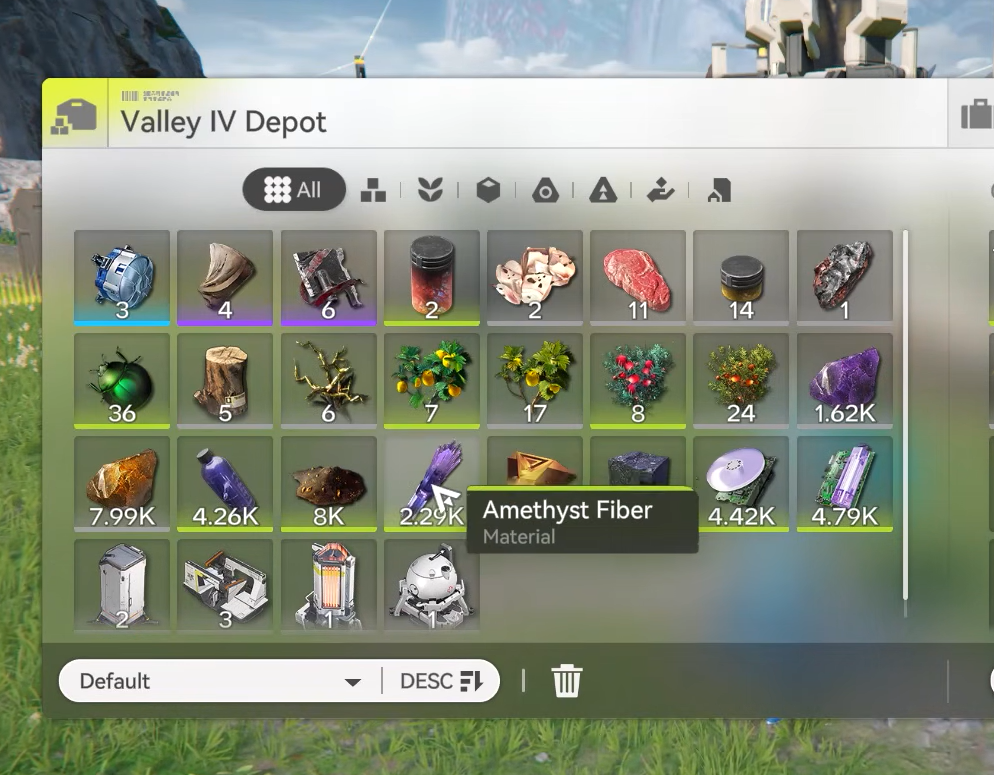
LC Valley battery line: simple self‑contained setup
A compact LC Valley layout is usually the first “real” battery farm you build. One widely used pattern is a self‑contained line that produces 6 LC Valley Batteries per minute, tuned so neither Amethyst Fibers nor Originium Powder back up or stall.
At a high level, that setup looks like this:
- One chain converting Amethyst Ore into Amethyst Fiber, then into Amethyst Parts.
- One chain converting Originium Ore into Originium Powder via Shredding Units.
- One Packaging Unit configured for LC Valley Batteries, fed by both chains.
- A cluster of Thermal Banks is directly connected to the Packaging Unit’s output.
Run the Packaging Unit into two Thermal Banks, and you gain roughly 440 units of usable power. The same 6‑battery line can support more banks without losing throughput, raising max power capacity to 640 and then up to 1080 once two extra Thermal Banks are added around the output belt. The line’s own power draw comes out of that budget, which is why the machine count is kept deliberately low.
There are two integration patterns for this LC line:
- Centralized materials, separate packaging. Amethyst Parts and Originium Powder are produced in hub lines that feed multiple consumers, one of which is the LC Packaging Unit cluster. This is flexible, but it makes it easier to over‑ or under‑supply the battery line as the factory grows.
- Fully self‑contained module. Amethyst, Originium, their intermediates, and the Packaging Unit all sit inside one blueprint footprint. This simplifies planning, because as long as raw ore input is stable, Batteries stay stable as well.
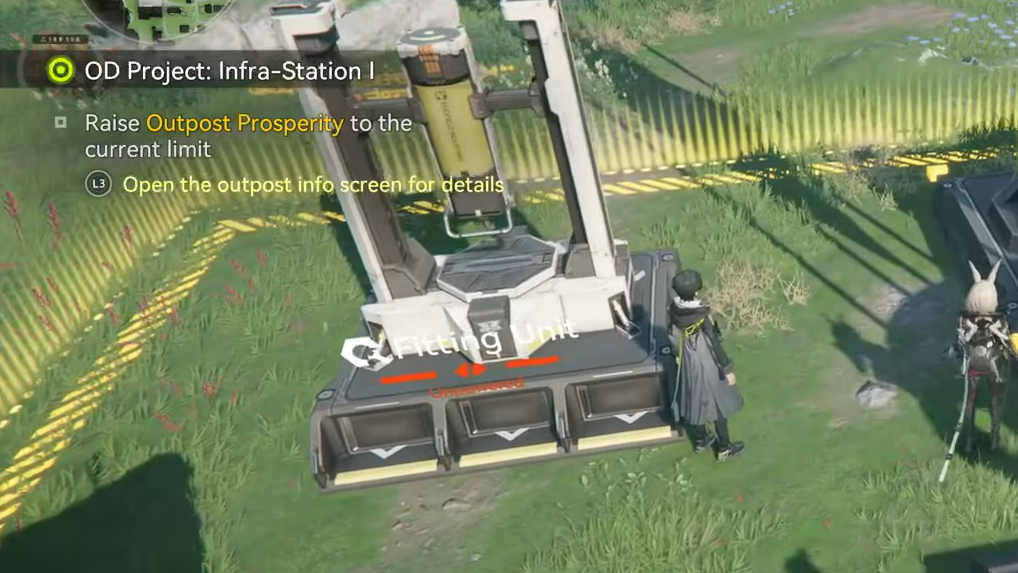
Scaling up: LC hub plants and high output layouts
Once your base has more space and Core AIC upgrades, you can step up from a 6‑battery module to large LC Valley “hub” plants that feed both power and other sinks like outpost upgrades or the stock exchange.
One of the popular hub builds outputs around 1.96K power worth of LC Batteries and is designed for wide areas such as expanded Valley IV zones. The layout uses multiple Packaging Units and a dense stack of generators or Thermal Banks, with the PAC’s inputs and outputs routed along the edges to free up the interior for belts and machines.
The trade‑offs at this scale are different from the starter module:
- Space efficiency starts to matter. Community variants deliberately compress Shredding Units, refiners, and belts to reclaim dead zones at the edges of the footprint.
- Generator overkill is common. A single four‑stack of generators is usually enough for a normal base. Larger clusters exist mainly for players who want a large battery surplus for non‑power uses or simply enjoy seeing high numbers.
- Grid planning bleeds into quest progress. Big LC plants are often used to push Outpost development projects that require massive, sustained power or large volumes of Batteries.
Because these hub plants feed so much of your base, they work best in regions where you can widen the Core AIC area and reroute PAC I/O without blocking other infrastructure.
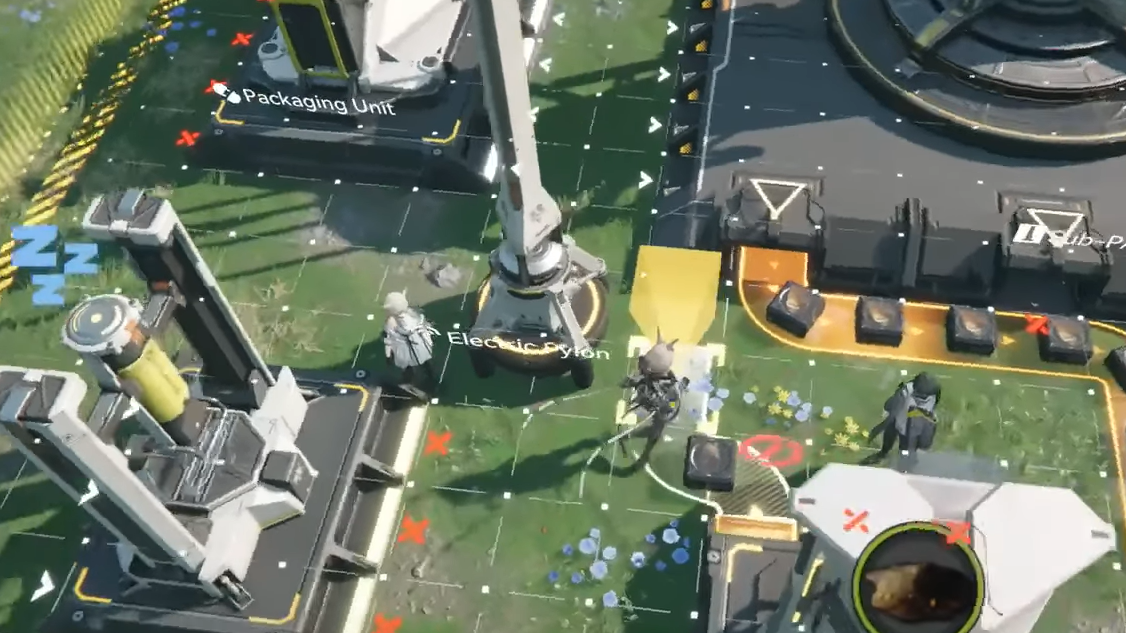
SC Valley batteries: mirroring LC lines with Ferrium
SC Valley Batteries follow the same production logic as LC, but swap the crystal input. Your chains still need Originium Powder and processed parts, but the parts now come from Ferrium Ore rather than Amethyst.
In practice, players usually do one of two things:
- Build a dedicated SC version of an existing LC module, copying the ratios and replacing Amethyst buildings with Ferrium refiners.
- Extend an LC hub so that it splits into two packaging clusters at the end, one tuned for LC and another tuned for SC, while sharing common Originium Powder lines.
The key is to keep Originium Powder throughput ahead of the combined LC and SC demand. If the Ferrium side is bolted on without adjusting Shredding Units or ore input, both battery types will start starving, and the Thermal Banks will flicker between full burn and idle.
Some blueprint authors share SC‑converted versions of known LC hubs with import codes such as EFO01o08a7Eoo46UIieO, tuned for players who want both battery types online in the same area.
HC Valley battery farms: using higher‑tier layouts
HC Valley Batteries appear later in progression and lean on more complex production. Dedicated HC farms use more machines, more belts, and tend to reserve full Valley IV tiles because of how much room they occupy.
One widely shared HC Valley farm comes in a blueprint sized roughly 24×27 tiles in Valley IV and is designed as a complete package. It consumes streams of Originium, Amethyst, and Ferrium and outputs all three battery variants with a single import. The description for that layout calls for about 180 Originium Ore per minute and 60 per minute each of Amethyst and Ferrium Ore to stay saturated.
For players who only need HC Batteries for power or late‑game upgrades, there are also single‑purpose HC farms focused just on that tier. One such PAC‑oriented blueprint uses the sharing code EFO01194o0a754Uo34O7 in Asia, with a region‑adjusted code EFO01eE7U2Ue504ioui8 for North America and Europe. Another HC PAC‑aligned design is shared as EFO011ea02i017Ui34O7, tuned specifically for PAC placement rather than the Infra‑Station.
Blueprints rarely surface exact per‑minute HC output, but their ore requirements and footprint give a good sense of scale. If a layout is drawing three different ores at high rates, expect it to demand a dedicated mining and logistics setup behind it.
Importing and placing community battery blueprints
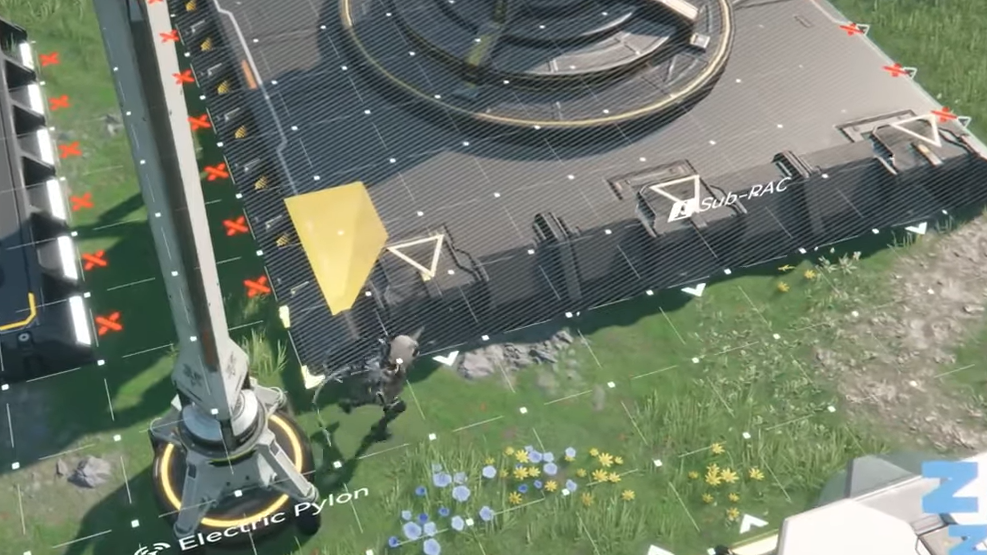
Endfield’s blueprint system lets you skip manual layout work and drop in full farms as long as your facilities are upgraded and your buildable area is large enough.
Several battery‑focused codes are frequently shared:
| Blueprint focus | Code | Notes |
|---|---|---|
| LC/SC/HC mixed Battery Farm (Valley IV) | [site‑hosted code on arknightsendfield.gg] |
24×27, requires 180 Originium, 60 Amethyst, 60 Ferrium per min. |
| HC Valley Battery Farm (Asia PAC) | EFO01194o0a754Uo34O7 |
Valley IV, HC‑focused; EU/NA mirror uses a different code. |
| HC Valley Battery Farm (EU/NA PAC) | EFO01eE7U2Ue504ioui8 |
Region‑adjusted version of the HC Valley PAC layout above. |
| HC Valley Battery Farm for PAC | EFO011ea02i017Ui34O7 |
Alternative HC layout intended for direct PAC use. |
| Efficient LC Battery Plant (Hub) | EFO014o5O1480I30E71A |
Large LC hub that can approach ~1.96K power output. |
| High‑rate LC Steel Parts sub‑module | EFO01U4Aii91a8O27Oa8 |
Produces ~90 steel parts; often used twice to feed 12 batteries/min layouts. |
| LC Battery module using steel parts | EFO01o08335E2A6iIieO |
Place in fully upgraded Infra‑Station; supports up to 8 generators. |
| Alternate LC/SC Battery farm | EFO01eAo0U213E4ioAi8 |
Player‑shared compact battery layout. |
Import behavior differs slightly between PAC blueprints and Infra‑Station layouts. Some large plants are meant for the Infra‑Station only and assume all upgrades have been purchased there, while others are designed as PAC‑side hubs that connect to the walls of your main factory space.
When a blueprint author notes that certain depots or unloaders do not fit inside the saved footprint, you must add them manually. For example, one LC steel‑parts‑plus‑battery combo expects you to place two missing depots at the edges and two side unloaders that feed Sandleaf and Originium Ore into the PAC, because those edge tiles fall outside the blueprint’s save boundary.
Balancing inputs: keeping farms from starving
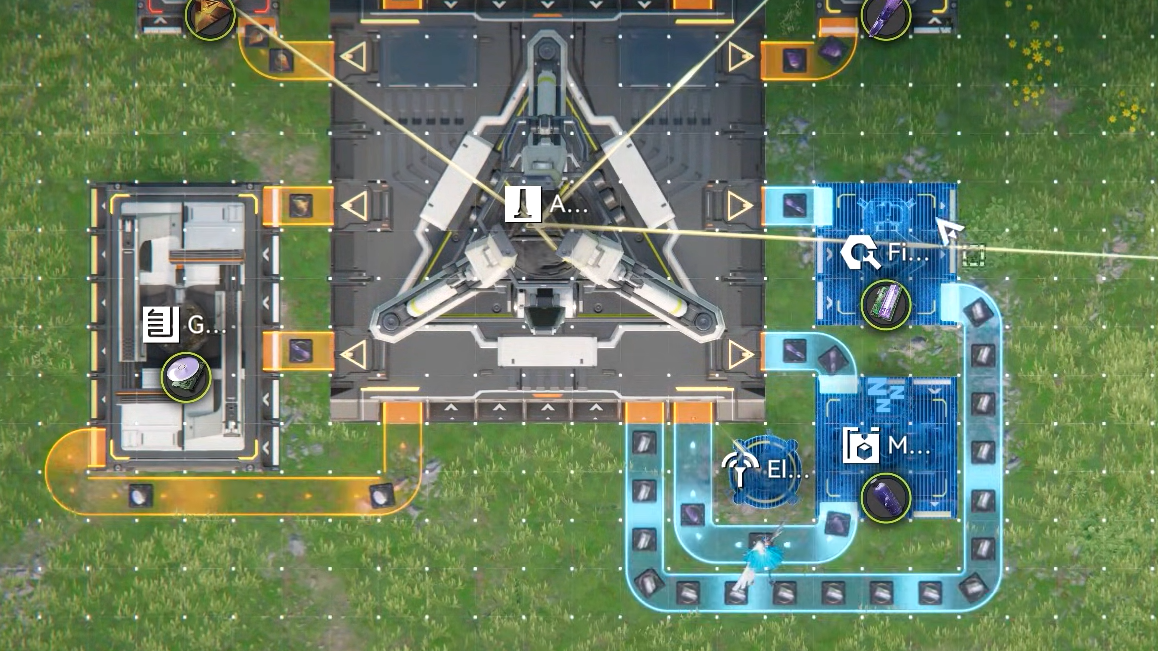
Most “inefficient” battery farms are not failing because of machine count but because a single node in the chain cannot keep up. The game does not automatically tell you which part is the bottleneck; you have to read the belts.
Two weak spots appear repeatedly:
- Originium Powder production. It is common to connect too many consumers to a single Shredding Unit output. In one HC layout, even two Shredding Units fall behind, forcing a redesign or an extra Originium output connection to the PAC.
- Seed and plant loops for farming inputs. Some farm‑driven lines starve their seed units because the feedback loop is set up 1:1. Since one plant can generate two seeds but one seed only becomes one plant, an efficient loop uses a single seed unit feeding two planters, then routes the output of one planter back into the seed unit while sending the other planter’s output into storage or downstream machines.
For purely mineral‑based lines, a quick visual test helps: every belt segment feeding the Packaging Unit should be consistently full. If one side is trickling while the other is jammed, you either need an extra refiner, another Shredding Unit, or a second ore loader into the chain.
Power payoff: when a battery farm is “worth it”
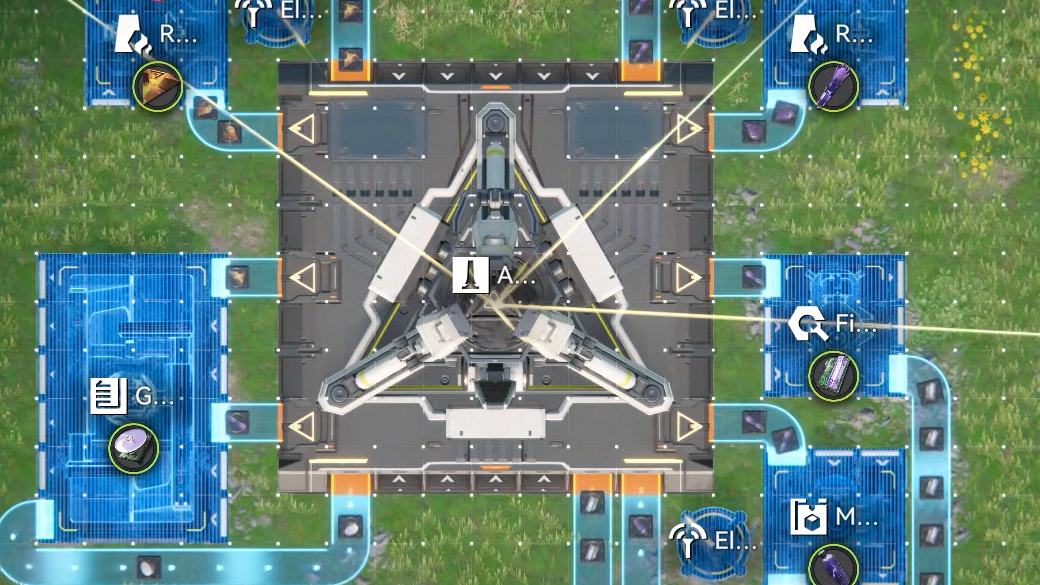
A small LC module that produces around 6 Batteries per minute and powers two to four Thermal Banks is enough to break through the early power ceiling and unlock more Core AIC expansions. The real payoff from building larger farms comes once you need:
- Stable power for a multi‑floor Infra‑Station and a fully populated PAC.
- Extra Batteries for Outpost upgrades and stock exchange mechanics.
- Regional projects that demand both high peak power and high sustained generation.
At that point, importing a tuned hub blueprint and wiring in the required ore inputs is far faster than hand‑placing every Shredding Unit and belt. As long as the underlying ore supply is solid and the PAC area is wide enough, LC, SC, and HC farms will quietly run in the background and keep the rest of your Terran megafactory humming.