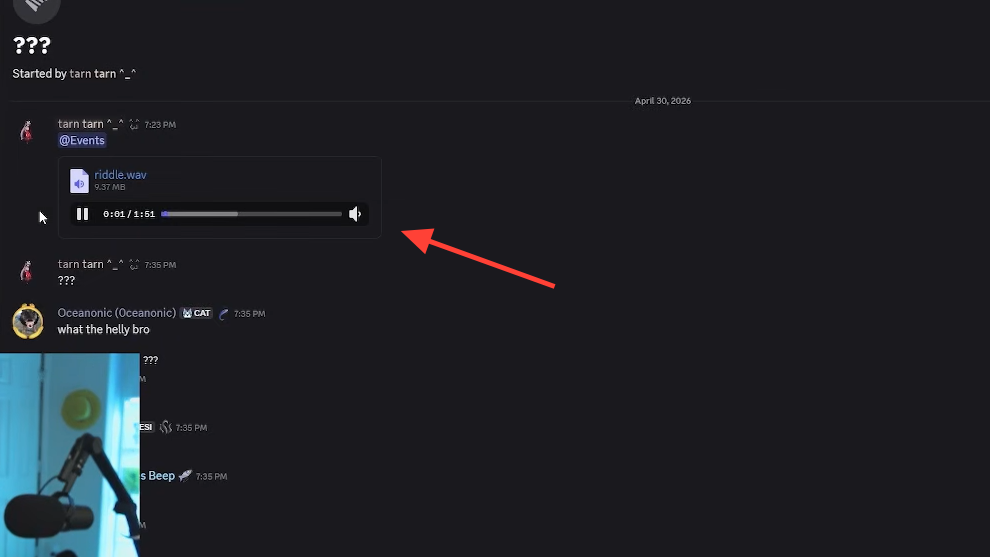
A new secret riddle in Fisch is circulating as an audio clip that resembles Morse code. If you want to understand what it says, the only reliable approach is to convert the short and long pulses into . and -, split them into letters by timing gaps, then translate those symbols into text.
Quick answer: Identify each short pulse as . and each long pulse as -, use longer pauses to separate letters/words, then decode with International Morse Code.
Morse code rules that matter for the Fisch riddle
Morse code is a timing-based alphabet. The sound can be beeps, clicks, taps, or any on/off signal, but decoding depends on how long the signal stays “on” and how long the silence between signals lasts.
The standard timing relationships are:
- A dot is the basic unit.
- A dash is 3 dots long.
- The gap inside a letter (between dots/dashes) is 1 dot long.
- The gap between letters is 3 dots long.
- The gap between words is 7 dots long.
Decode the riddle audio into dots and dashes
. and a long pulse becomes -. Don’t guess in the moment; replay the same segment until you’re confident..... . .-.. .-.. --- / .-- --- .-. .-.. -...
Translate dots and dashes (International Morse Code reference)
Once you have a sequence, translate each letter’s pattern using the International Morse Code mapping below.
A  .-
B  -...
C  -.-.
D  -..
E  .
F  ..-.
G  --.
H  ....
I  ..
J  .---
K  -.-
L  .-..
M  --
N  -.
O  ---
P  .--.
Q  --.-
R  .-.
S  ...
T  -
U  ..-
V  ...-
W  .--
X  -..-
Y  -.--
Z  --..

0  -----
1  .----
2  ..---
3  ...--
4  ....-
5  .....
6  -....
7  --...
8  ---..
9  ----.

.  .-.-.-
,  --..--
?  ..--..
/  -..-.
-  -....-
(  -.--.
)  -.--.-
@  .--.-.
How to tell you decoded it correctly
A correct decode is usually obvious because the output becomes structured:
- Letters cluster into readable words rather than random strings.
- Word boundaries feel consistent (long pauses repeatedly align with spaces that create sensible word breaks).
- Repeated motifs repeat cleanly (if the audio repeats a phrase, your Morse transcription repeats the same symbol groups).
If you get mostly valid letters but no readable text, the most common issue is spacing. Re-check where you split letters versus words before you change your dot/dash decisions.

Why decoding often fails (and the exact fixes)
- Dot/dash threshold is wrong: Recalibrate using a clear “short” pulse as one unit; classify “long” pulses as roughly triple that length.
- Letter boundaries are off: If you split too often, you’ll get many single-letter outputs; if you split too little, you’ll get impossible long patterns that don’t match any letter.
- Intra-letter gaps are mistaken for inter-letter gaps: Treat the smallest regular silence as the within-letter gap and only break letters on noticeably longer silences.
- Background audio masks pulse edges: Replay and transcribe a smaller segment at a time, then stitch segments together after you confirm each chunk decodes into valid letters.
When the transcription is correct, every group between letter breaks should match a valid Morse character. If you frequently produce groups that don’t exist in the mapping, the error is almost always in where you placed the breaks.