

Calcium is one of the first resources in StarRupture that feels like a hard wall. You burn through small chunks early on, then suddenly need four-figure amounts for Moon Energy upgrades and Calcite parts. If you’re still chipping it out of meteorites at that point, your entire progression slows to a crawl.
The good news: Calcium is not rare, it’s just concentrated. Once you know what the deposits look like and how to build a satellite base on top of them, it becomes another ore you can fully automate.
Why Calcium matters in StarRupture
Calcium sits at the center of Moon Energy’s tech tree. It starts as Calcium Ore, then feeds into multiple mid-game crafting chains.
- Moon Energy progression: The corporation’s level requirements explicitly call for Calcium Ore, Calcium Sheets, and Calcium Blocks at levels 3 and 4. Without those, you don’t get key infrastructure like the Map unlock, better generators, and Base Core Amplifiers.
- Smelter upgrade costs: You must collect 1,000 Calcium to unlock the Smelter’s Calcium Block recipe in the Recipe Station. Until that upgrade is paid for, you’re stuck processing Calcium in smaller, less efficient ways.
- Calcite components: Once Blocks are available, they’re turned into Calcite Sheets and Calcite Blocks that are required for higher Moon Energy levels and other advanced builds.
You can get a trickle of Calcium from meteorites, but those returns are far too low for these thresholds. Reaching 1,000 Calcium that way is technically possible and practically miserable.
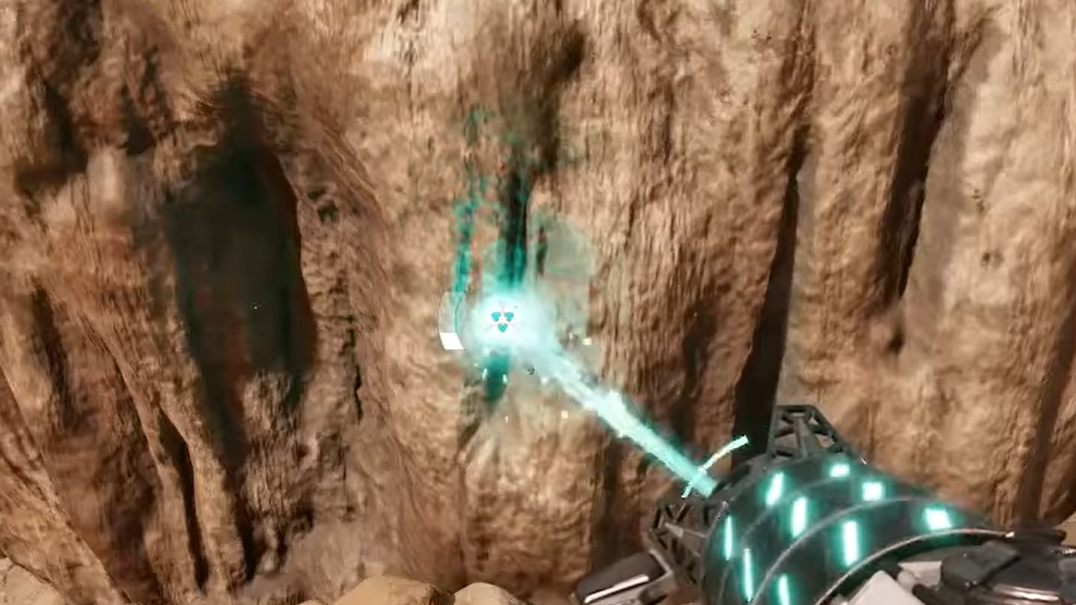
How Calcium spawns: meteorites vs. Calcium Ore deposits
Calcium appears in two main forms in StarRupture’s early access build.
- Meteorites: Both small and large meteorites can drop small amounts of Calcium alongside other materials. This is useful in the very early game when you just need enough for a single unlock or tech requirement, but it scales poorly once Moon Energy starts asking for stacks.
- Calcium Ore deposits: These are static mining nodes in the world. Each deposit supports an Ore Excavator and can run continuously as long as it’s powered and connected to your factory network.
The entire Calcium bottleneck flips as soon as you transition from random meteorite farming to permanent Excavators on deposits. That makes finding and recognizing these plateaus the real turning point.
How to recognize Calcium Ore deposits
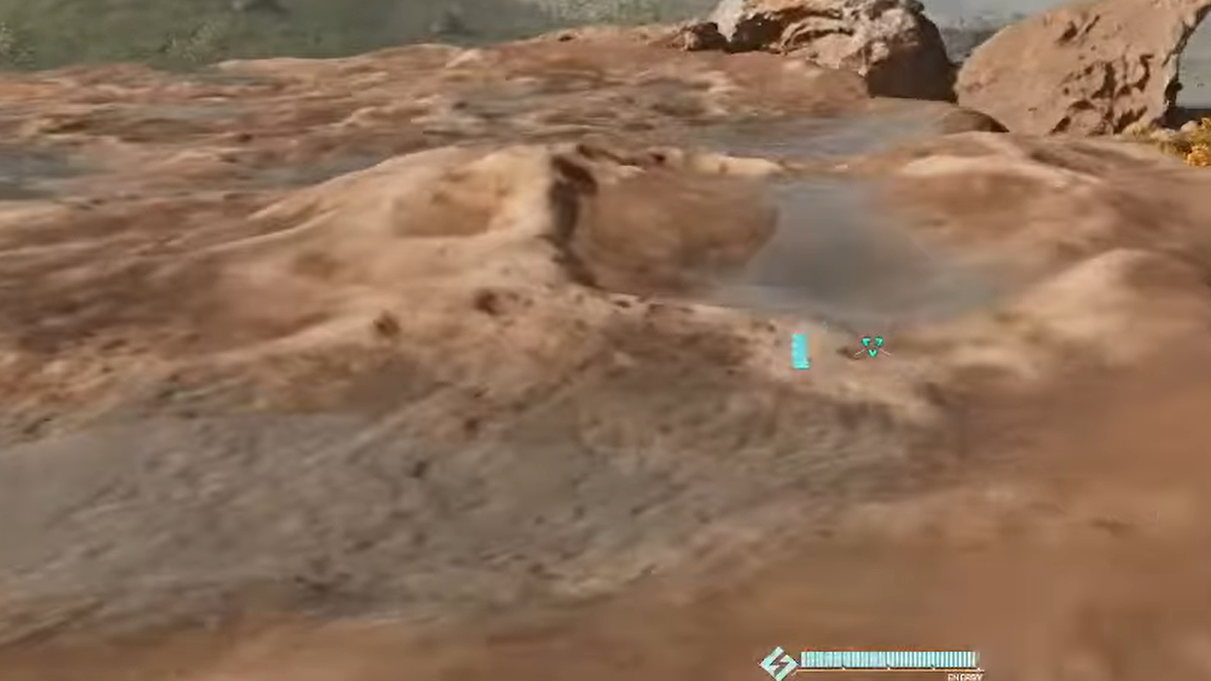
Calcium deposits are visually distinct from Titanium, Wolfram, and other surface veins. Instead of compact boulders, they appear as broad slabs.
- Shape: Wide, flat ledges or plateaus rather than small protruding rocks.
- Material: A pale, sandstone-like surface, lighter than the surrounding terrain.
- Surface detail: Shallow puddles of water commonly sit on top, making the plateau look damp or speckled.
Once you’ve unlocked the in-game map through Moon Energy, these deposits gain an extra tell: the Calcium fields show up as large sandy patches around your position. That makes scouting for additional veins much faster after your first setup.
Where to find Calcium near the starting area
You don’t need to roam far across Arcadia‑7 to find your first big Calcium fields. There are reliable groupings close to the Orbital Lander.
- Directly north of the Orbital Lander: Head out from the tutorial base and travel almost straight north. You’ll reach a band of pale plateaus with puddles that contain mineable Calcium Ore nodes.
- East and northeast of the Orbital Lander: A second cluster sits to the east; TechRaptor also notes a grouping to the northeast on the global map. All of these fall within reasonable travel distance from your initial crater region.

Why meteorite mining is a trap for Calcium
It’s tempting to lean on meteorites since they are already part of your early loops for Wolfram and Titanium. For Calcium, that’s a dead end once you move past the first couple of corporate levels.
- You only get a handful of Calcium units per meteorite, often mixed with other loot.
- Rupture cycles randomize surface nodes, so meteorite density and composition shift constantly.
- Running between impacts is time you’re not spending advancing your factory or commissions.
By comparison, a single Ore Excavator running on a Calcium deposit quietly chews through hundreds of units while you focus on base expansion, Rupture-safe shelters, or combat unlocks. As soon as Moon Energy calls for more than a couple of dozen Calcium, treat meteorites as incidental bonuses, not your core strategy.
How to build a Calcium mining outpost
The first major Calcium plateaus sit far enough from the tutorial base that you should not try to feed them directly into your starter rails. Instead, set up a dedicated outpost anchored by its own Base Core.
Step 1: Travel to a Calcium plateau and clear nearby threats. Bring food, water, and enough Basic Building Material to place core structures. Expect to be away from your main base for a while.

Step 2: Place a Base Core close to, but not on top of, the Calcium field. A Base Core requires a Meteor Heart, so break a large meteorite beforehand and carry at least one with you.
Step 3: Surround the Base Core with power infrastructure. A ring of Solar Generators v1 is enough for a starter Calcium setup; later Moon Energy unlocks like upgraded solar and wind turbines, let you scale output without redesigning the outpost from scratch.
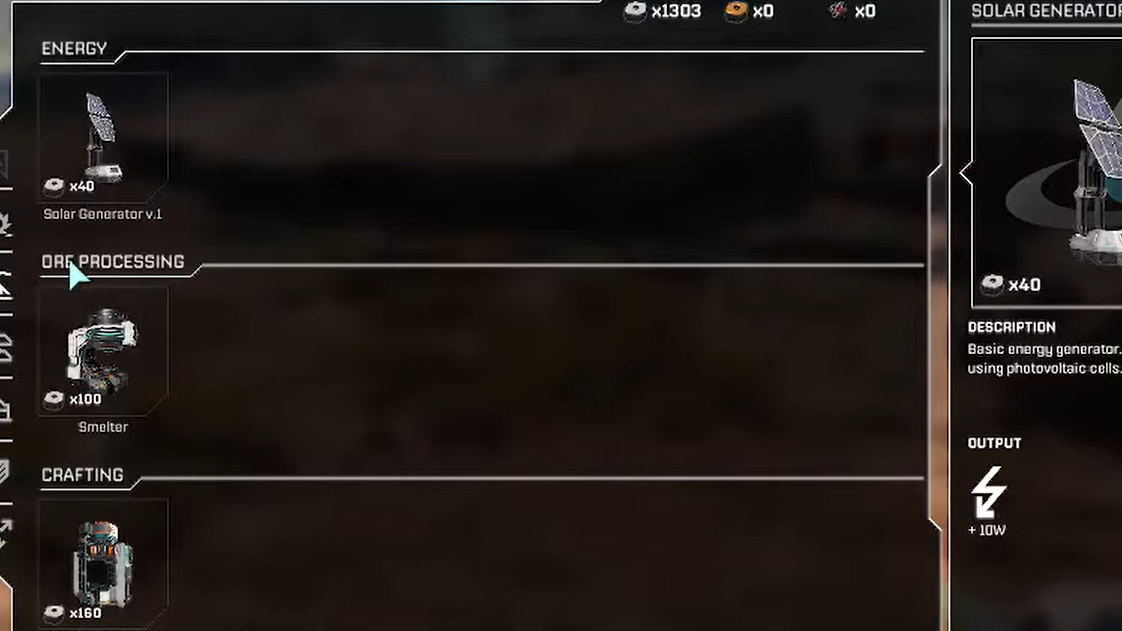
Step 4: Build one or more Ore Excavators on the Calcium Ore spots on the plateau. Each Excavator must sit directly on a valid deposit tile to function; adjust placement until the hologram highlights in the “valid” color.
Step 5: Decide how you want to move the ore. You can either ship raw Calcium Ore to a central hub, smelt it locally, or do a hybrid.
- Raw export: Connect rails from the Ore Excavators back to an Orbital Cargo Launcher or Storage Depot, then handle smelting and block production at a main factory.
- Local processing: Place Smelters and, once unlocked, a Recipe Station and Calcium Block line at the outpost, then ship Blocks or Sheets instead of unprocessed ore.
Step 6: Lay down Rails from each Ore Excavator to your chosen destination. Early on, a simple point-to-point rail into a Smelter or Orbital Cargo Launcher is enough. Once Clever Robotics unlocks advanced rail tech, you can rebuild this network with Multirails and higher‑tier conduits.
Step 7: Add minimal shelter. Given how often Ruptures hit, a small Habitat with an Airlock near the plateau keeps you alive during Waves and reduces downtime. If hostiles are common in the area, tie this into your combat network later with turrets and towers from GriffithsBlue unlocks.

Choosing what to export from your Calcium outpost
With Excavators and rails running, you have three main ways to use that flow of Calcium.
- Fulfil Moon Energy commissions: At lower corporation levels, Moon Energy requests raw Calcium Ore, later switching to Calcium Sheets and Blocks. Use an Orbital Cargo Launcher to send the right form whenever a commission is active.
- Feed local industry: If your main factory isn’t close enough, process ore on-site into Calcium Blocks and Calcite products that directly support local builds like Heat Resistant Sheets or infrastructure tied to other corporations.
- Stockpile for tech spikes: Some unlocks need large one‑time dumps of Calcium products. Keeping a dedicated Storage Depot v1 or v2 stacked with Blocks next to the outpost prevents last‑minute scrambles.
Synergy with Moon Energy and other corporations
Calcium does more than satisfy a single checklist. It underpins an entire slice of the power and infrastructure meta.
- Moon Energy levels 3–4: These stages ask for Calcium Ore, then processed Calcium Sheets and Blocks. In return, you gain core utilities like the Recipe Station and Map at level 3, and specialist LEM augments and upgraded generators as you climb higher.
- Heat-resistant and industrial parts: Later Moon Energy level rewards include Heat Resistant Sheets and generator-related components that combine with Titanium and Wolfram items unlocked through Selenian Corp and Clever Robotics.
- Cross‑corp crafting: A stable Calcium pipeline makes it easier to satisfy complex commission chains that pull in Chemicals, Helium‑3, electronics, and other refined goods from multiple trees.
Once Calcium stops being scarce, you can route more of your attention to combat unlocks from GriffithsBlue, storage and automation upgrades from Clever Robotics, and habitat and medical systems from Future Health Solutions. The resource that was blocking your Moon Energy map unlock turns into a routine input in broader factory planning.

Once you’ve stood on a Calcium plateau and watched Excavators hum away under a clear Arcadia‑7 sky, Calcium ceases to be a mysterious wall in the tech tree and becomes what it always was meant to be: another line item in a growing industrial graph. The key is to stop chasing random meteorites, push north and east from the lander until you hit those pale plateaus, and commit to a second Base Core and outpost that treats Calcium as a first-class citizen in your production chain.