

Light leather is one of the first crafting bottlenecks you'll hit in Hytale. It's the key ingredient for every piece of iron-tier gear — swords, pickaxes, armor, shields — and you'll burn through it even faster if you're also using it for repairs. The material doesn't drop directly from animals, though. You need to collect light hides first, then process them at a tanning rack.
Quick answer: Kill small animals like rats, deer, pigs, chickens, or sheep to collect light hide, then place the hide in a tanning rack to convert it into light leather. No additional fuel or resources are needed.
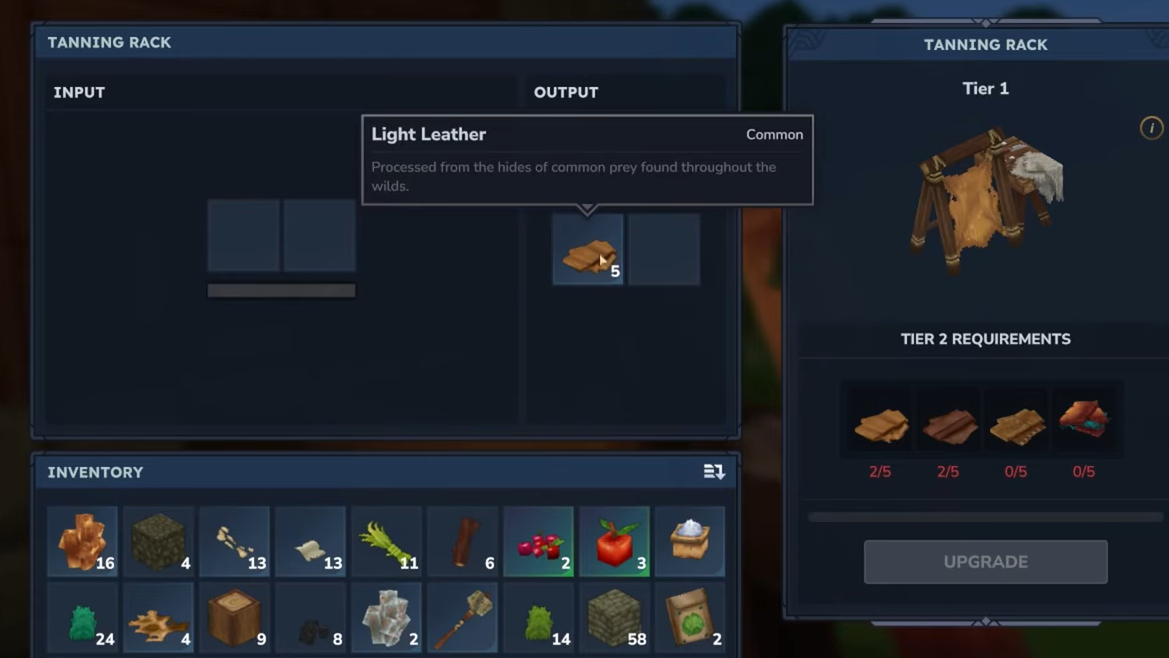
Animals that drop light hide (post-Update 2)
Following Hytale's Update 2, the hide-drop tables shifted. Cows, boars, horses, warthogs, and bison no longer drop light hide — they now drop medium hide instead. That narrows the light-hide pool, so knowing exactly which creatures still qualify matters more than before.
| Animal | Zone(s) | Notes |
|---|---|---|
| Rats | Zone 1 | Abundant in mines; one of the fastest farms |
| Horned rabbits | Zone 1, Zone 3 | Only adult-sized ones drop hide |
| Deer | Zone 1 | Passive; won't fight back |
| Pigs | Zone 1 | Passive; common in Emerald Grove |
| Chickens | Zone 1 | Passive; low health |
| Sheep | Zone 1 | Passive; easy to find near villages |
| Antelopes | Zone 2 | Will fight back |
| Camels | Zone 2 | Passive |
| Skrill (red birds) | Zone 2 | Small and fast |
| Rams | Zone 2 | Can be aggressive |
| Mouflons | Zone 3 | Found in Borea |
| Undead cows | Zone 4 | Hostile |
| Undead pigs | Zone 4 | Hostile |
| Undead chickens | Zone 4 | Hostile |
Very small or young animals — mice, calves, baby rabbits — never drop any hide at all. Only target fully grown creatures.

Best early-game farming spots for light hide
If you're still in Zone 1 (Emerald Grove), the most efficient light-hide farm is underground. Rats spawn frequently in mines and cave systems, and they die quickly even to a crude sword. A short mining session can net you a dozen or more light hides without much effort, making rats the single best source early on.
Above ground, deer and pigs roam the Emerald Grove in groups and are completely passive. Sheep are similarly easy targets, though they tend to cluster near Kweebec villages. Be careful around those settlements — killing animals that belong to Kweebec villagers will turn their guards hostile toward you.
Once you reach Zone 2 (Howling Sands), antelopes and camels provide light hide in the desert biome. Antelopes will fight back, so bring at least a copper or iron weapon before engaging them.
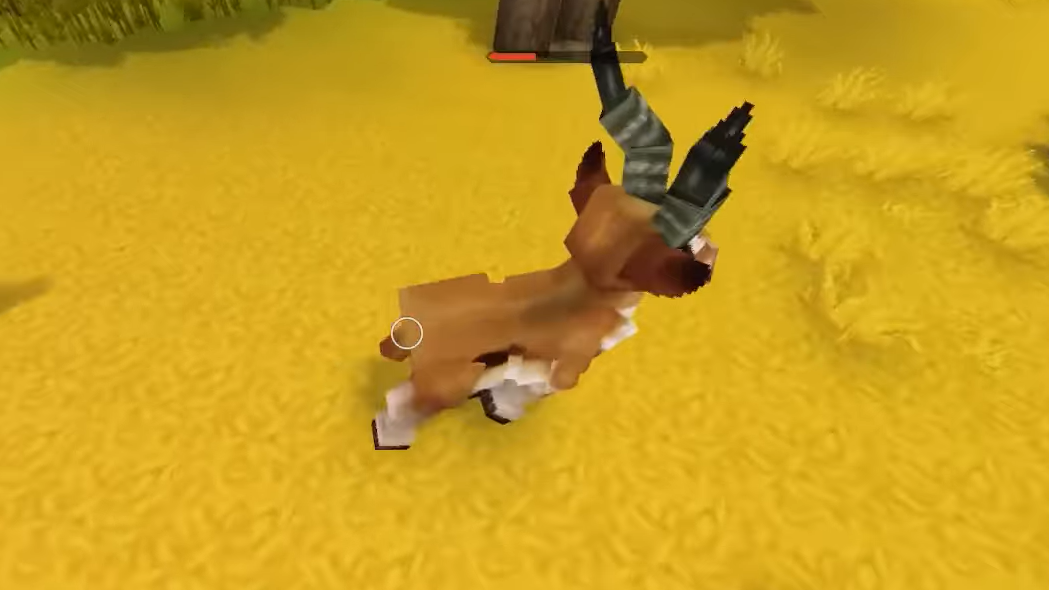
Building and using the tanning rack
Raw hide is nearly useless on its own — two pieces of unprocessed light hide can craft a crude bedroll, but every weapon and armor recipe calls for actual leather. Converting hide into leather requires a tanning rack.
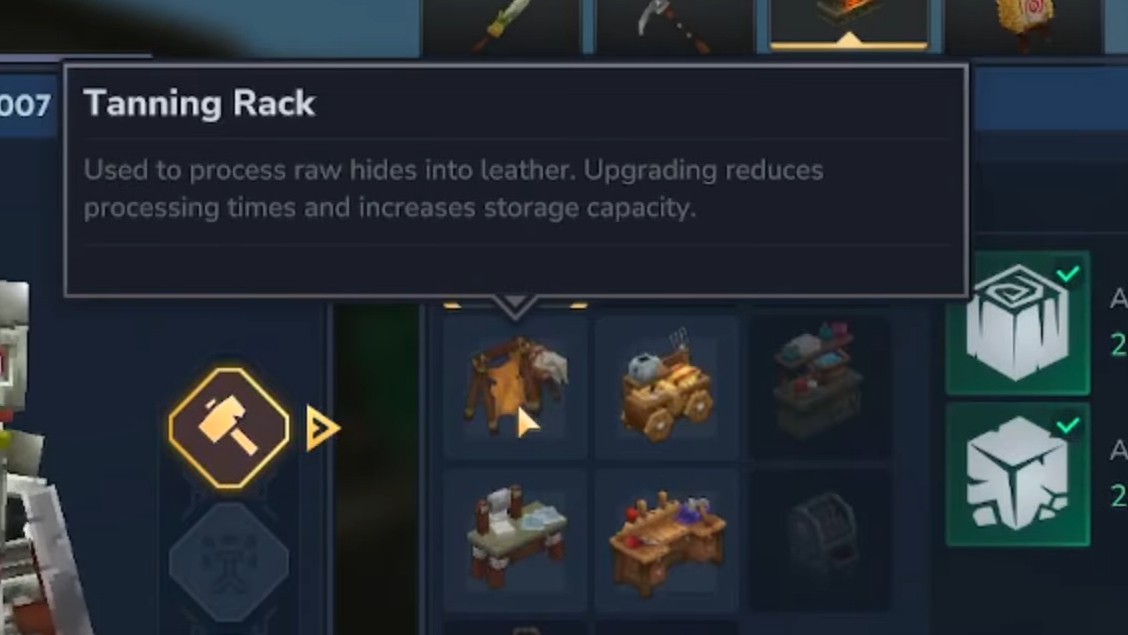
Step 1: Open your standard workbench and navigate to the "crafting" tab. Select the tanning rack recipe, which costs six pieces of wood, three stones, and three light hides.
Step 2: Place the tanning rack in the world and interact with it. Drop any hide into the input slot. The rack processes hides automatically without fuel or additional materials.
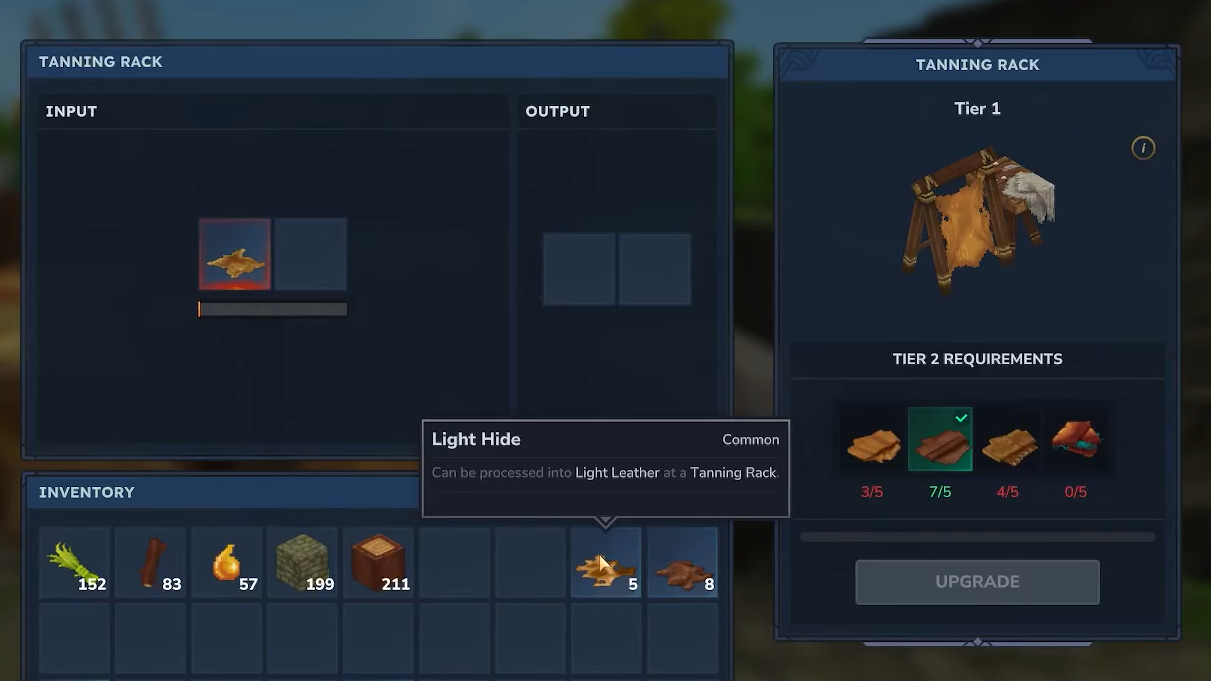
Step 3: Wait for the conversion to finish. Processing takes roughly 30 seconds per hide. Stay within chunk-loading range — the tanning rack pauses if you wander too far away.
What light leather is used for
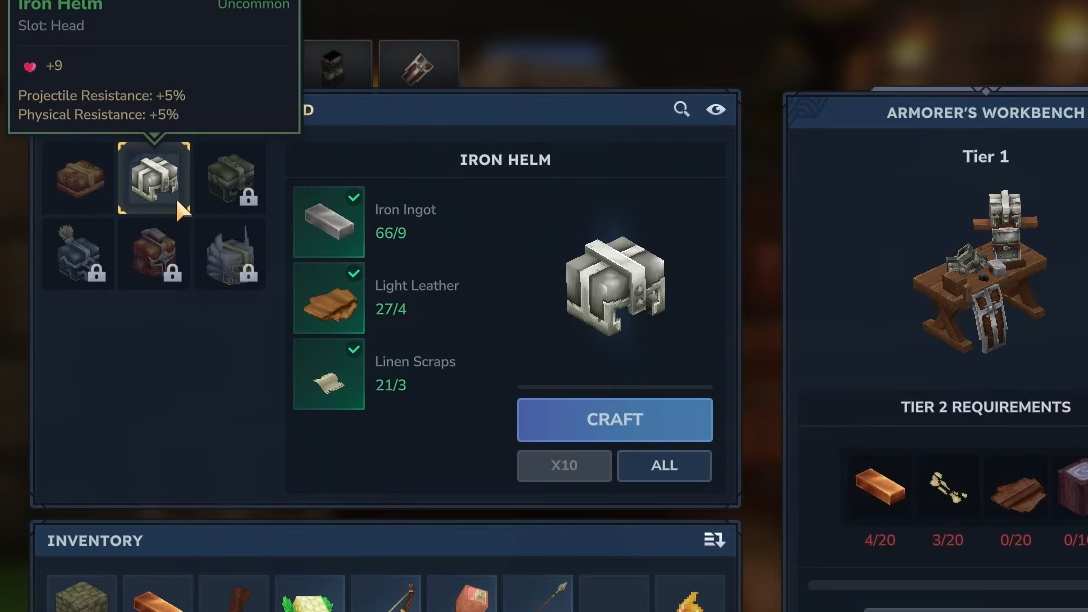
Light leather is the binding material for the entire iron tier of equipment. Every iron weapon — sword, mace, battleaxe, daggers, hand crossbow, shortbow, and hammer — requires it. The same goes for iron tools like the pickaxe, hatchet, shovel, and hammer. On the armor side, the iron helm, cuirass, gauntlets, greaves, and iron shield all consume light leather in their recipes.
Because light leather feeds into both your combat gear and your gathering tools, demand stacks up fast. If you're also repairing iron equipment (which costs additional leather), you can easily find yourself short. The most practical approach is to stockpile light hides early and keep a tanning rack running whenever you're at your base.
Avoiding the leather bottleneck
Light leather can feel scarce if you try to craft every tier of gear in sequence. One effective strategy is to skip armor tiers entirely — jumping from copper straight to iron, or even from iron to adamantite — so you're not burning leather on intermediate sets you'll replace within an hour or two of play.
Another approach is to make hide collection a passive habit rather than a dedicated grind. Kill every animal you encounter while exploring or traveling between objectives. Over the course of normal play, the hides accumulate steadily. By the time you need a full set of iron armor, you'll likely have enough leather sitting in a chest if you've been consistent about it.
Once you've moved past the iron tier and start needing medium leather for thorium gear, your light-leather surplus becomes less of a concern. But early on, treating every rat, pig, and deer as a walking crafting material makes the difference between a smooth progression and an annoying resource drought.