

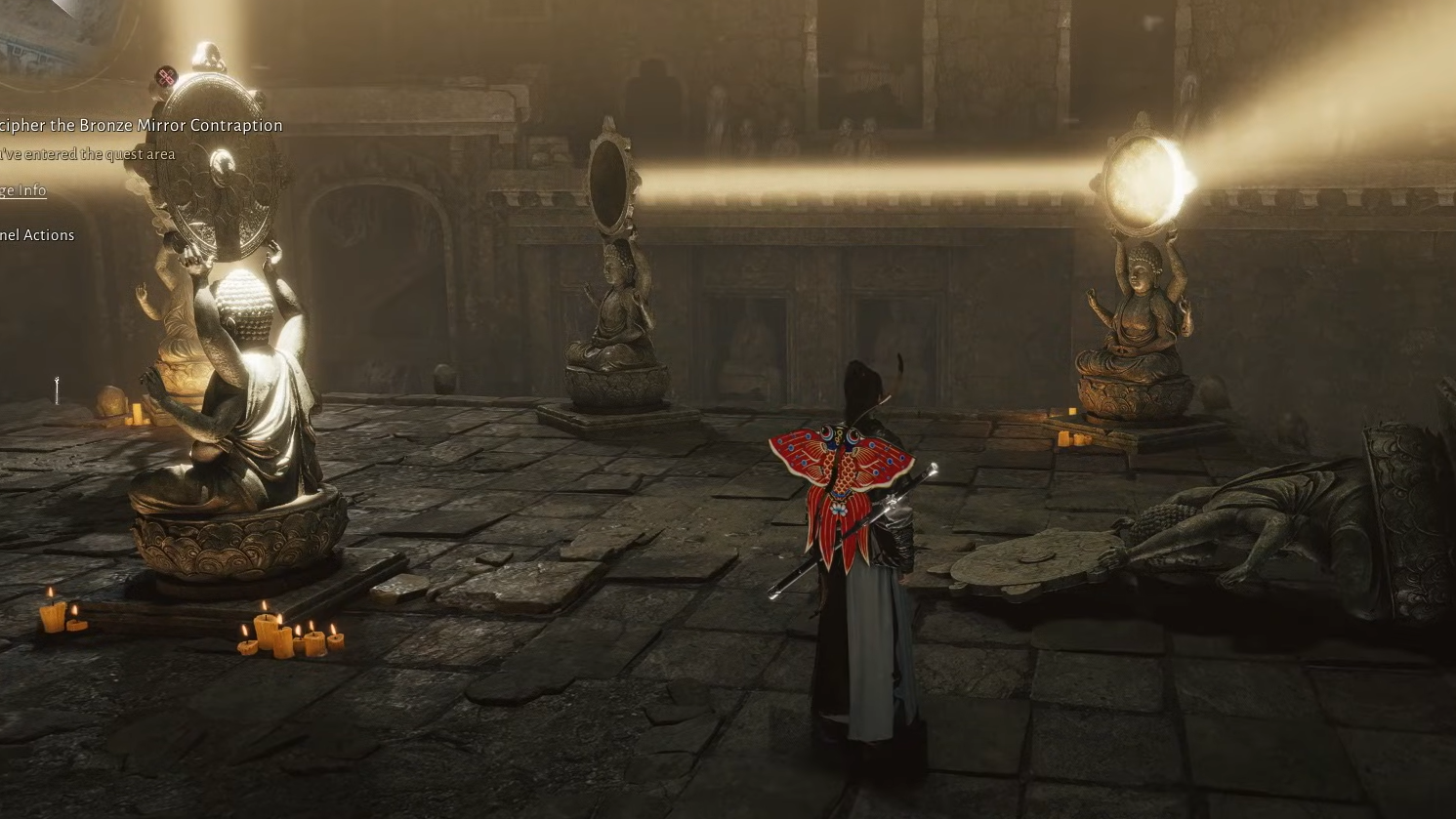
The Bronze Mirror Contraption appears early in The Promised Light Lost Chapter in Where Winds Meet, inside the Buddha’s Light Pagoda beneath Halo Peak. The puzzle uses a line of Buddha statues fitted with bronze mirrors to bounce a beam of light around the room and into a target symbol. Progress is locked until the beam reaches that symbol, so correct statue rotation is essential.
Where the Bronze Mirror Contraption fits in The Promised Light
After placing the Buddha’s Light Jade on top of the Buddha’s Light Pagoda during Wu hour and opening the pagoda, you descend into a hidden dungeon. The first light puzzle involves a single movable statue directing light from the ceiling onto a symbol to open a door. Passing through that door leads into a chamber with several Buddha statues carrying bronze mirrors.
Your task here is summarized in the quest objective “Decipher the Bronze Mirror Contraption.” The goal is simple: make the continuous light beam strike a specific circular symbol on the wall above a Buddha statue’s head. The execution is less obvious because multiple statues can turn, and each rotation changes the path of the beam.
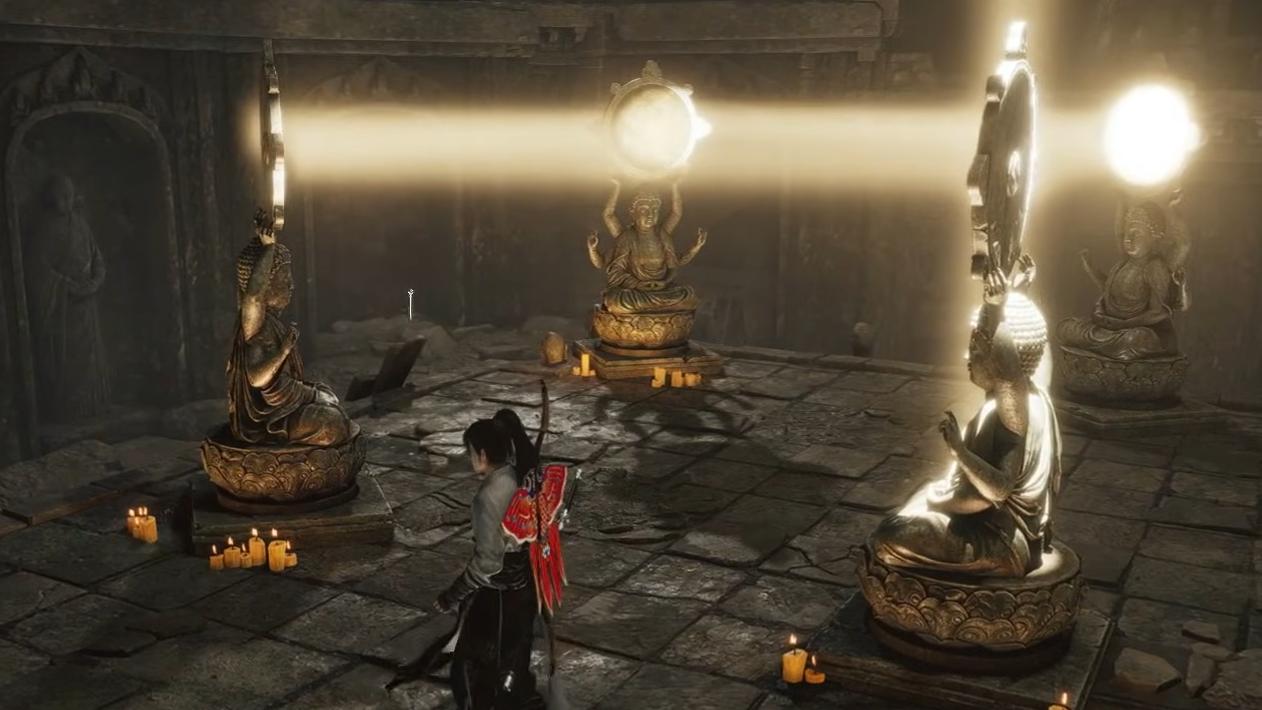
Basic controls for rotating the bronze mirror statues
The statues in this room respond to Meridian Touch rather than standard interaction. Each one can pivot in fixed increments, which changes the direction of the light it reflects.
Step 1: Equip Meridian Touch in your Mystic Art slot if it is not already active. You need it to manipulate the statues.
Step 2: Face a Buddha statue with a bronze mirror until an interaction prompt appears. Use Meridian Touch here to bring up the rotation options.
Step 3: Choose either Clockwise or Counterclockwise. From the statue’s point of view, clockwise rotates it to the right and counterclockwise to the left, usually in 45° increments in this room.
Each mirror statue redirects the beam along the new line it faces. Small adjustments often cause big changes later in the chain, so it helps to think of the room as a circuit you are closing rather than a set of isolated switches.
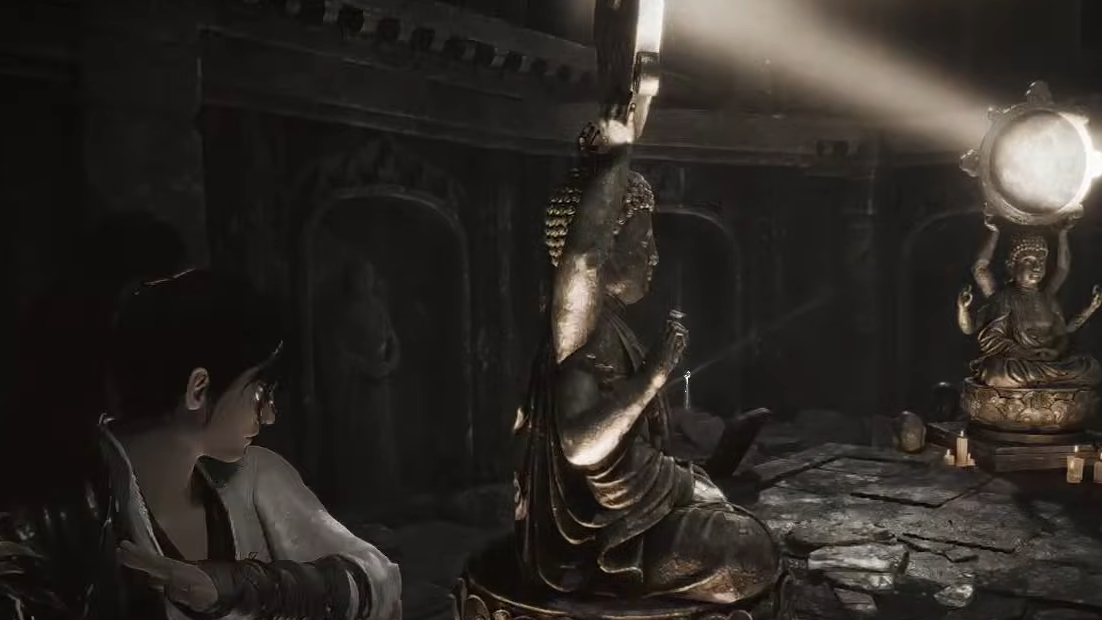
Bronze Mirror Contraption solution using numbered statues
The most straightforward way to handle this puzzle is to treat the statues as numbered positions. Standing at the entrance and looking into the room, the statues are often referred to as #1 through #5 in order. That layout lets you apply a repeatable sequence of rotations that always lands the beam on the correct symbol.
Use the following rotations once you have line-of-sight to all five key statues:
Step 1: Rotate statue #1 clockwise once. This starts the beam turning away from its initial dead-end direction and into the main loop between the statues.
Step 2: Rotate statue #2 clockwise twice. Two turns flip its facing through 90 degrees, sending the light further along the chain instead of back toward the entrance.
Step 3: Rotate statue #3 twice in either direction. Two 45° turns (clockwise or counterclockwise) result in the same final facing, so choose the direction you find easier to track. The goal is again to swing it by 90 degrees to pass the beam onward.
Step 4: Rotate statue #4 twice, any direction. As with statue #3, you only care about the total 90° change, which continues the beam’s circular path across the room.
Step 5: Rotate statue #5 counterclockwise once
Once the last rotation is correct, the beam will land squarely on the marked symbol, and a hidden door or passage opens, allowing you to continue deeper under the pagoda.
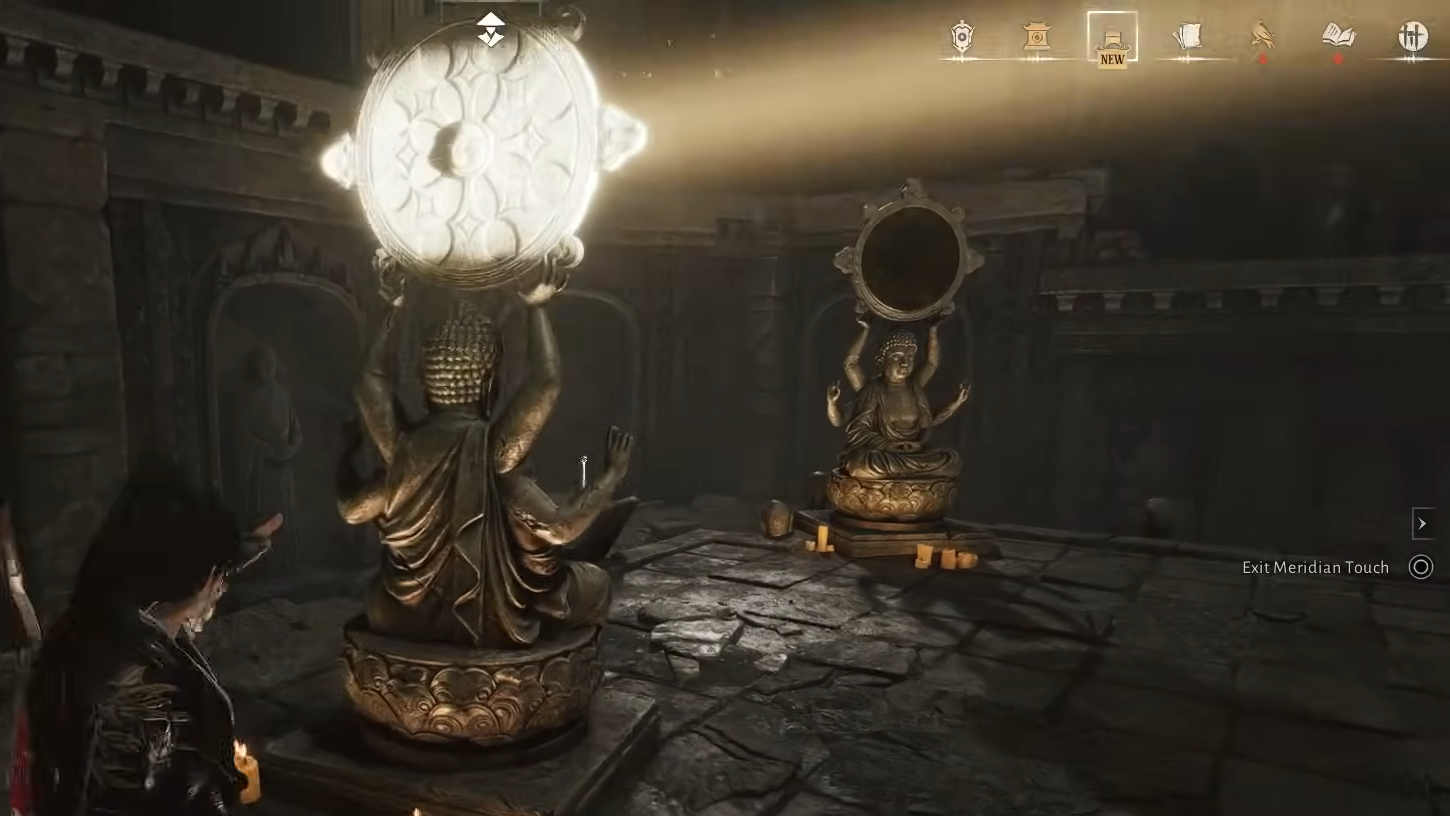
Bronze Mirror Contraption solution using visual cues
If you prefer to solve the puzzle using what you see in front of you instead of thinking in numbered positions, the same logic still applies. The beam must form a loop that runs around the room and closes at the symbol above the final statue.
Step 1: Focus on the middle statue that receives the initial light and appears to be sending it into a dead wall. Rotate this statue by roughly 90° twice (two clockwise turns) so the beam leaves it and heads toward a neighboring statue instead of straight into stone.
Step 2: Watch where the beam lands next. If it strikes a statue that is clearly facing away from the chain, use Meridian Touch on that statue and rotate it in 45° increments until the light reflects further along the line of mirrors instead of back where it came from.
Step 3: Continue following the beam statue by statue, always rotating each one so the beam leaves it in the direction of another mirror. You are aiming for a smooth circular or polygonal route around the room, with no segment of the beam wasted on blank walls.
Step 4: When the light finally reaches the last statue near the target symbol, rotate that statue until the reflected beam lines up with the circular symbol above the Buddha’s head. One 45° turn is usually close but not enough, so expect to rotate it a second time to align it precisely.
The key is that every mirror must pass the light onward; any statue sending the beam into bare stone breaks the chain and must be adjusted. Once all statues are feeding the next one in line, the final adjustment to the last statue completes the circuit.
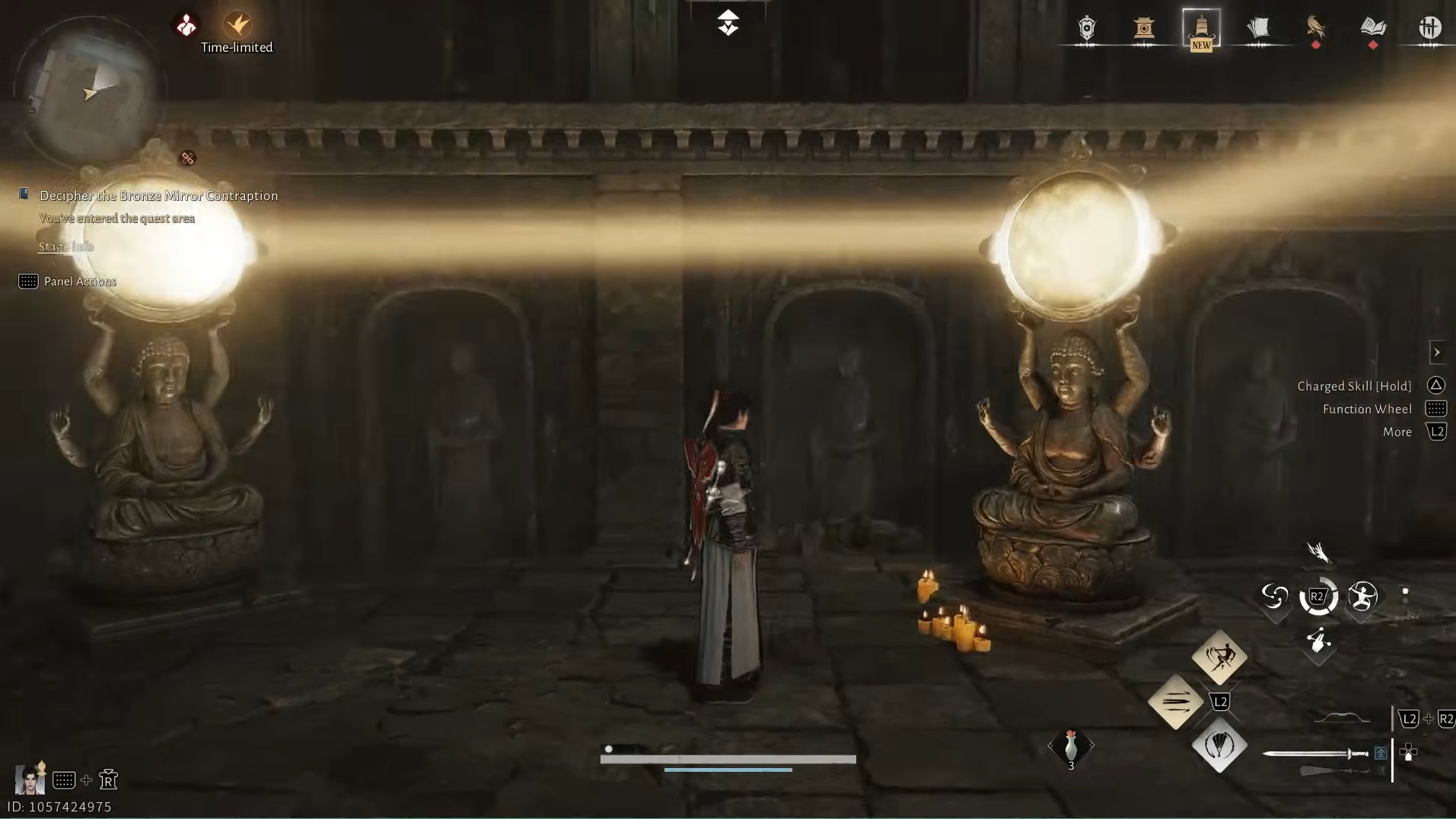
Using Wind Sense alongside the mirror puzzle
Wind Sense remains useful even in the mirror chamber. It highlights important interactable symbols and can make it easier to see where the light should end up.
Step 1: Activate Wind Sense when you first enter the room of statues. Scan the walls for glowing or marked symbols above Buddha figures; these indicate potential targets for the light beam.
Step 2: Identify the specific symbol the quest objective implies: typically a circle-like mark above a statue’s head. Treat this as your final destination when deciding where to send the beam.
Step 3: After each statue rotation, briefly tap Wind Sense again if the beam path is hard to follow visually. The glowing line and highlighted endpoint help confirm whether your current configuration is moving you closer to or farther from the target symbol.
Wind Sense is not mandatory, but it reduces guesswork in a room where tiny 45° changes can be hard to track by eye, especially on lower brightness settings or from oblique angles.
What happens after solving the Bronze Mirror Contraption
Once the Bronze Mirror Contraption is aligned and the beam hits the correct symbol, the hidden mechanism in the room responds. A new opening appears, usually in the wall behind the symbol, leading into a tight passage where you must crouch to proceed.
Advancing through that cramped tunnel ends with the floor collapsing, dropping you into a chamber filled with motionless bronze figures called Halo Peak Residents. Interacting with a nearby corpse triggers an ambush: the bronze statues animate and attack, but can only be damaged by parrying their strikes. Defeating them yields the Arhat Hall Key, which opens the door out of the room and moves you further along The Promised Light’s sequence of objectives.
Completing this mirror puzzle, therefore, does more than tick off a single objective. It unlocks the route into the combat-heavy core of the dungeon beneath the Buddha’s Light Pagoda and keeps you on track toward the later sections in the Mural Corridor, the Thousand-Buddha Cavern, and ultimately the boss battle against Tian Ying.
The Bronze Mirror Contraption looks complex at first glance, but it follows consistent rules: every statue reflects the light in 45° steps, and the beam must reach the marked symbol without being wasted on bare walls. Once you know how to rotate each Buddha and think of the room as a closed loop of mirrors, the puzzle turns into a short sequence of deliberate adjustments rather than random trial and error.