

The Furnace is one of the first major upgrades for any Hytale base. It turns raw ore into ingots, which you then use for stronger tools, weapons, armor, and higher-tier workbenches. Setting it up early makes the rest of your progression much smoother.
How to unlock a Workbench (prerequisite for the Furnace)
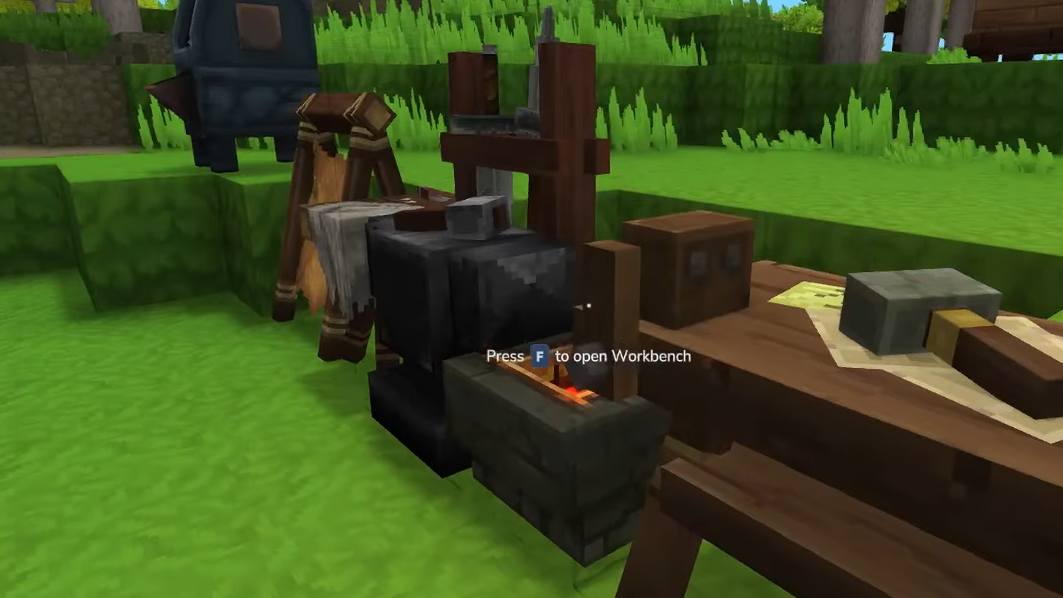
Step 1: Open your inventory and use the pocket crafting menu to make a Workbench. The recipe is four pieces of Tree Trunk of any single type and three pieces of any Stone. Tree Trunks come from felling trees with a crude hatchet, while Stone requires a crude pickaxe and proper rocks, not loose rubble.
Step 2: Place the Workbench in the world and interact with it. This level 1 Workbench has four tabs – Survival, Tools, Crafting, and Tinkering. Crafting is where you’ll find recipes for other stations, including the Furnace.
How to craft a Furnace in Hytale
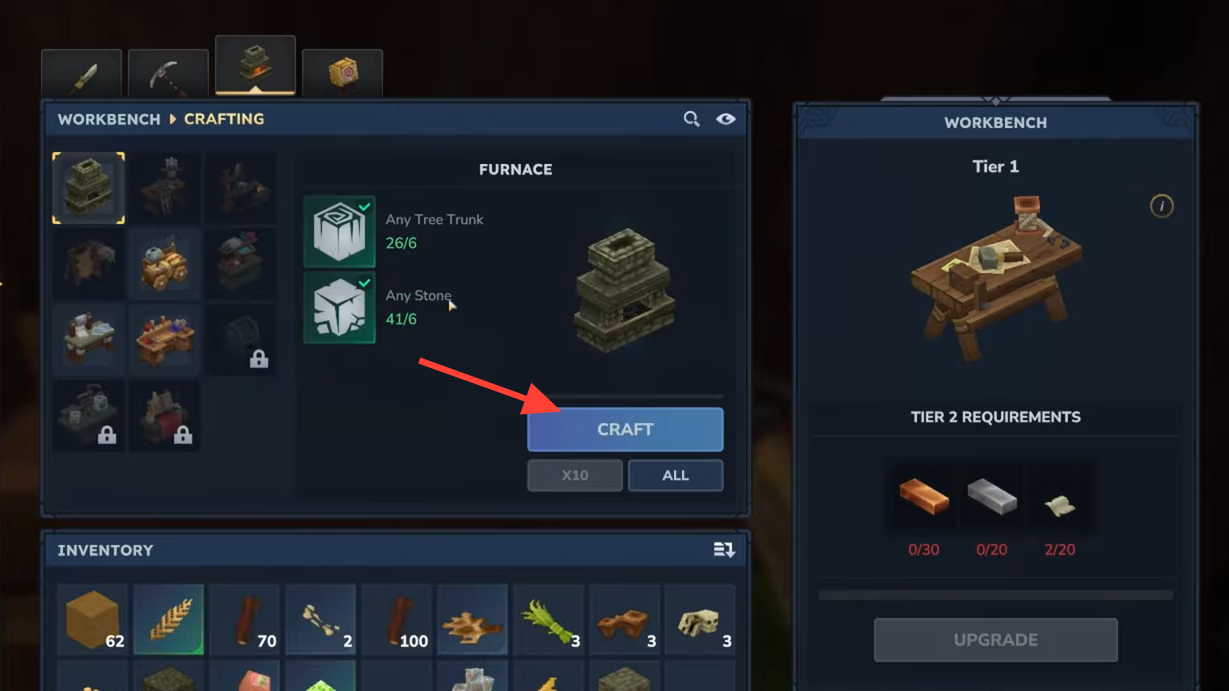
Step 1: Gather six Tree Trunks of one wood type and six Stones of one stone type. The game accepts any variety as long as each stack is consistent, so six Oak Tree Trunks plus six Granite Stones, for example, works.
Step 2: Return to your placed Workbench and interact with it. Open the Crafting tab. The Furnace is a tier one crafting table recipe there, using the materials you just gathered: six Tree Trunks (any) and six Stone (any).
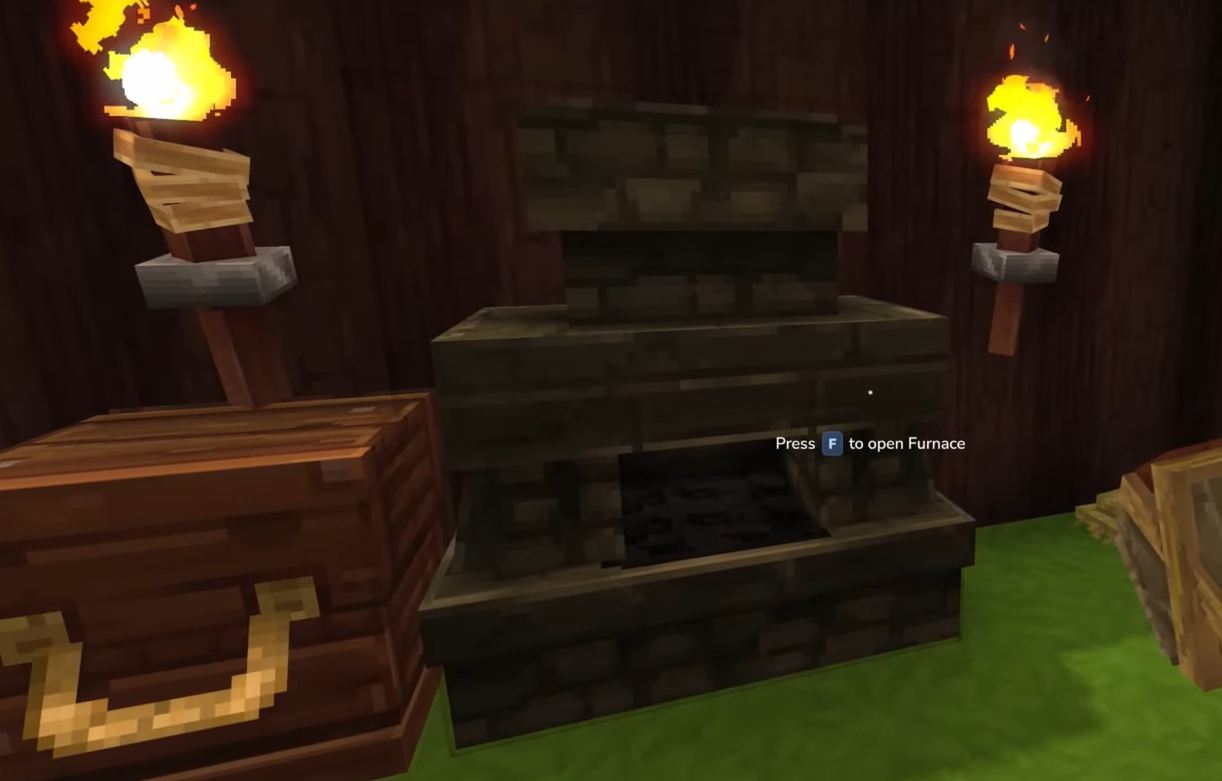
Step 3: Craft the Furnace from the Workbench menu, then place it anywhere in your base. It doesn’t require a specific floor material or clearance, so you can drop it beside your other benches as soon as it’s in your inventory.
Furnace basics: layout, fuel, and throughput
The Furnace UI is simple but has a few rules that matter once you start processing a lot of ore.
- Fuel slot: Holds the burn material that keeps the Furnace running. Tree Trunks, other wood items, and charcoal all work as fuel.
- Input slot(s): Holds the ore you want to refine into ingots. A level 1 Furnace can queue up to two ore stacks, while a level 2 Furnace can queue three.
- Output slot: Holds the finished ingots and any byproducts once smelting completes.
Only one stack is smelted at a time. If you load multiple stacks, the Furnace finishes the first, then automatically moves on to the next as long as fuel remains.
How to use the Furnace to smelt ore into ingots
Step 1: Collect raw ore. Early on, this usually means Copper, then Iron, followed by rarer materials such as Thorium, Cobalt, Adamantite, and Mithril as you push into deeper, more dangerous cave systems. Look for ore veins exposed in cave walls or underground tunnels.
Step 2: Interact with the Furnace and place fuel in the Fuel slot. Tree Trunks are an easy option early in the game. Charcoal is more efficient later and is also produced as a byproduct of some smelting runs.
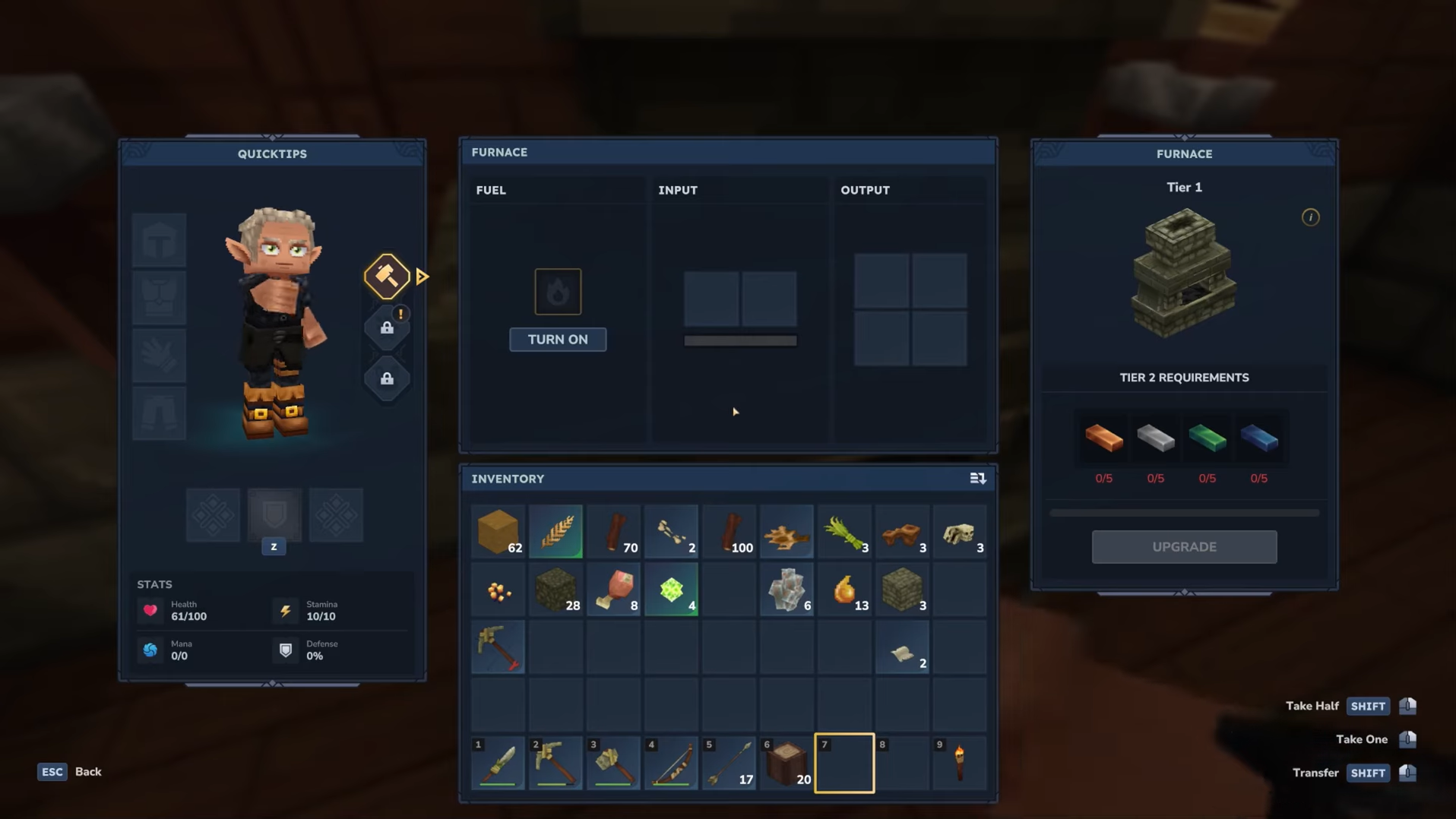
Step 3: Place one or more stacks of ore in the Input slot(s). The Furnace will begin consuming fuel and slowly convert the first stack into ingots. This process takes a short amount of in‑game time rather than happening instantly.
Step 4: Wait for the smelting animation to finish, then collect the ingots from the Output slot. If there is more ore queued and fuel remaining, smelting continues automatically until either the ore runs out or the Furnace is starved of fuel.
What you can smelt in the Furnace
Each raw ore type refines into a matching ingot. These ingots then sit at the center of nearly every mid‑ and late‑game recipe.
| Ore | Resulting ingot use |
|---|---|
| Copper | First metal tools, basic Workbench upgrades, and early specialist stations such as the Armorer's Workbench. |
| Iron | Stronger tools, weapons, armor, Salvager's Workbench, and backpack unlock recipes. |
| Thorium | Higher‑tier tools and workbench upgrades, including advanced armor paths. |
| Cobalt | Late‑game tools and gear, and high‑tier backpack upgrades. |
| Adamantite | Top‑tier tools and gear in many melee‑focused loadouts. |
| Mithril | End‑game hatchets and pickaxes and other premium crafting recipes. |
Alongside ingots, some Furnace recipes return charcoal as a byproduct, which loops straight back into the Fuel slot or feeds into other crafting needs.
How Furnace tiers affect smelting
Furnaces can be upgraded, and that has a direct impact on throughput rather than raw output.
- Level 1 Furnace: Up to two ore stacks can be loaded into the Input at once. The Furnace still processes only one stack at a time, but you spend less time juggling inventory.
- Level 2 Furnace: Up to three stacks can sit in the queue. This matters once you are running multi‑ore mining trips and want to leave the Furnace working while you manage other tasks around your base.
The Furnace does not change the ratio of ore to ingots as it levels. Upgrading is about convenience and pipeline efficiency, not better yields.

Why the Furnace is central to Hytale progression
Smelted ingots flow into nearly every major progression system. The Armorer's Workbench relies on them for heavier armor sets. The Blacksmith's Anvil uses them to repair or upgrade weapons. Higher tiers of tools in the Workbench: Tools tab each specify Copper, Iron, Thorium, Cobalt, Adamantite, or Mithril Ingots alongside leather and cloth components.
Workbenches themselves climb a similar ladder. For example, Salvager's Workbench recipes call for Iron Ingots, while the Arcanist's Workbench requires Thorium Ingots, Essence of the Void, and linen‑based materials. Without a working Furnace, these recipes are effectively blocked, even if you have mined the relevant ore.
The net effect is simple: once you can reliably mine ore, the limiting factor on your progression is how efficiently you can turn that ore into ingots. Keeping a Furnace fueled and running in the background turns that bottleneck into a background process rather than the focus of your play session.

Once your first Furnace is running, it’s worth treating it like any other core utility block in Hytale: keep it near your main Workbench cluster, keep a dedicated chest of wood and ore beside it, and keep it burning whenever you come back from a mining trip. That steady flow of ingots unlocks better tools, tougher armor, and more capable workstations across your entire base.