

Player survivability in Hytale is built around three main stats, sometimes grouped as overall wellbeing: Health, Hunger, and Mana. Understanding how they interact is the starting point for staying alive.
Health is your life pool and is shown as a long red bar above the hotbar. A full bar represents the default 100 health points; when it reaches zero, your character dies. Health does not stay fixed at one value, it goes up and down constantly as you take damage and recover between fights.
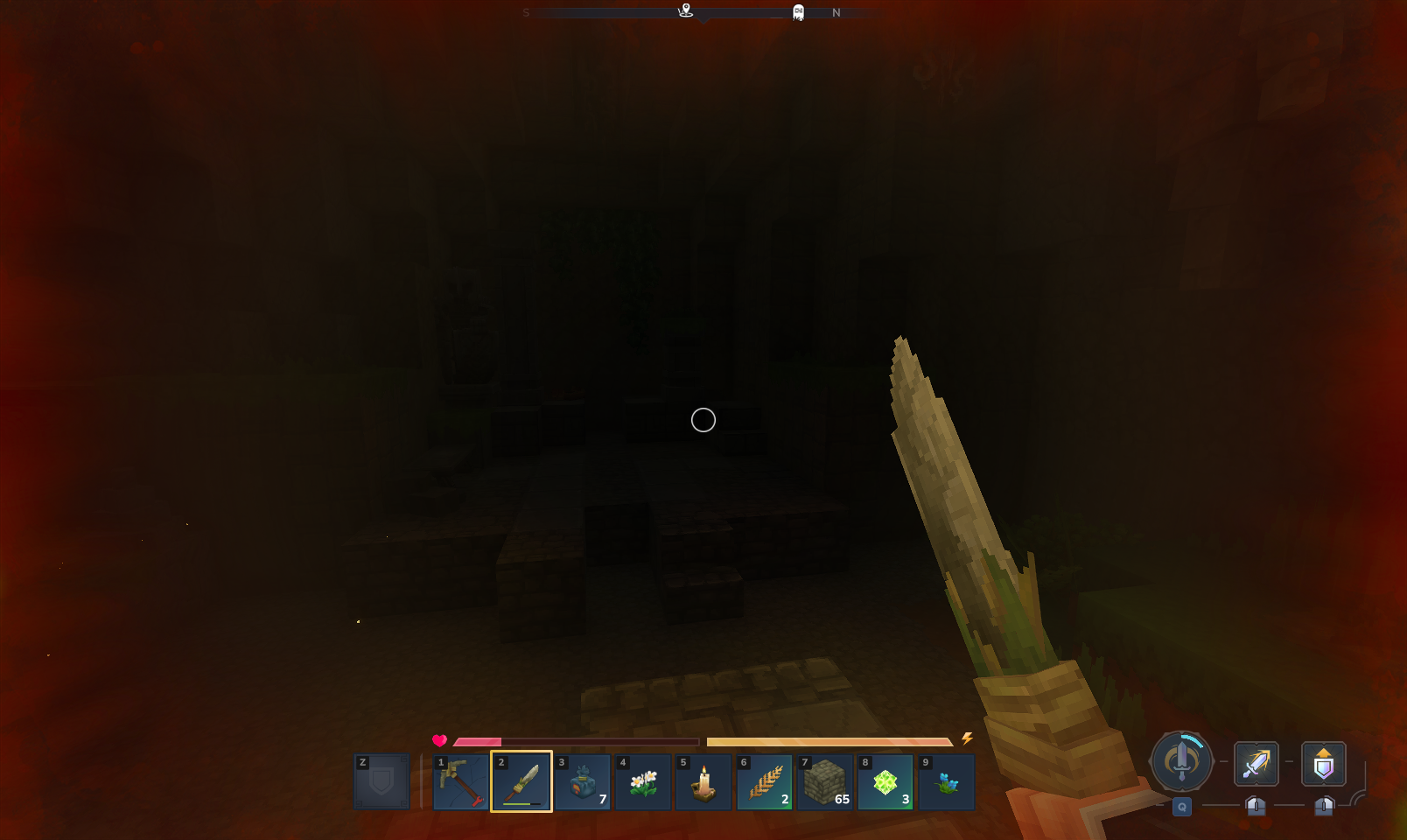
Hunger is a separate bar linked to how well fed your character is. Eating fills this bar and also plays a central role in regenerating health. Well-managed hunger effectively turns food into a renewable source of healing over time.
Mana appears as a blue gauge near the hotbar. It governs the use of Magical Weapons rather than your life total, but it sits alongside health and hunger as a core resource. When mana is low, magical attacks stop working until it is restored, for example with Mana Potions.
Restoring health with hunger and food
Food is the most common way to keep health high during normal exploration. Filling your Hunger bar gradually restores lost health and can also trigger direct healing depending on what you eat.
Early in Zone 1 you can gather simple foods such as Wild Berries and Apples while collecting basic materials like Plant Fibers, Sticks, and Stone Rubble. These early foods already support health recovery, so picking them up as you travel is important.
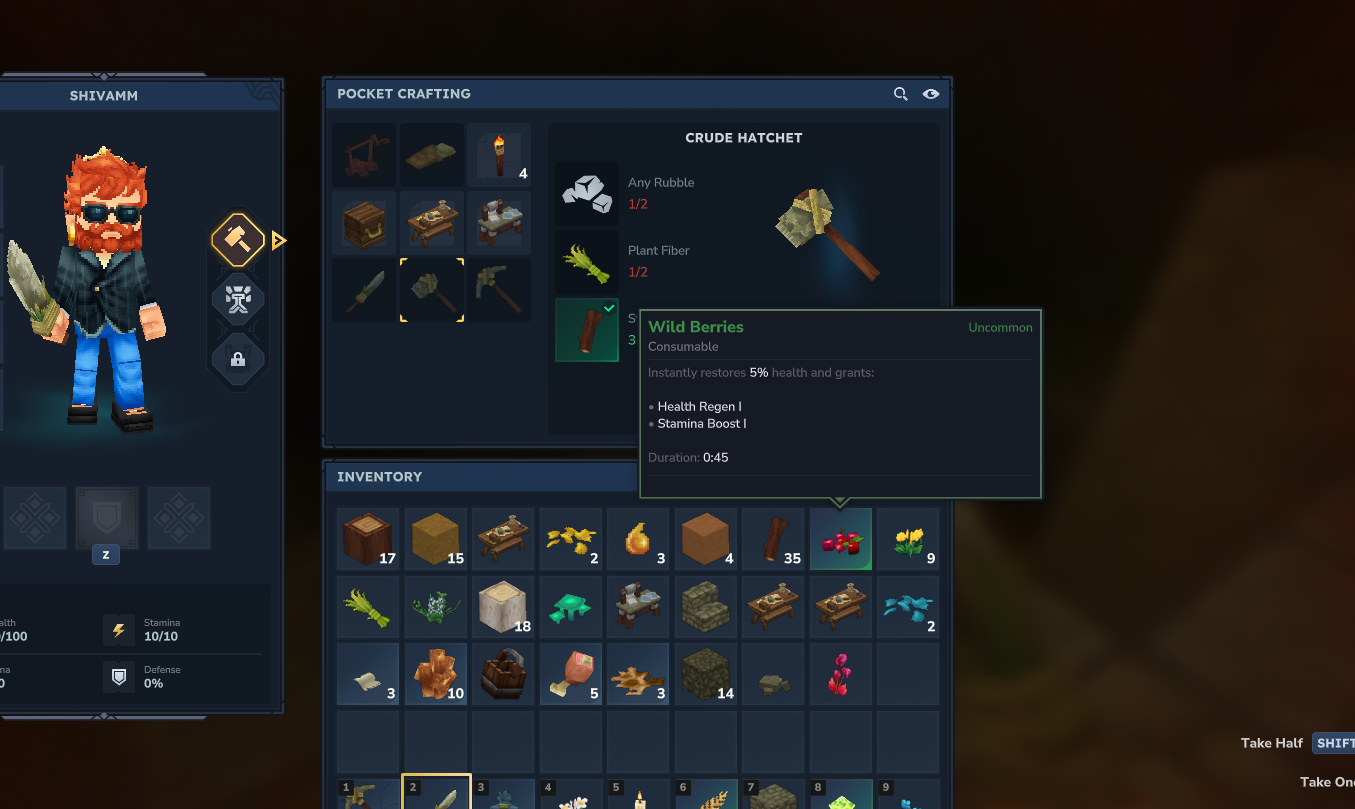
Hunger converts into healing over time. When the Hunger bar is topped up, your character regenerates health gradually without using other items. In addition, eating food can restore health immediately, so a single bite might both give an instant boost and then continue to heal you as long as you remain well fed.
Not all food is equal. Better quality food provides stronger and longer lasting regeneration than weak snacks. This makes high-value meals worth saving for dangerous situations or long expeditions, while cheaper or more common foods can be used for routine healing after minor skirmishes.
Tip: Avoid eating whenever your health and hunger are already near full. Waiting until you actually need healing makes your strongest foods last longer and keeps spare items available when combat turns against you.
Using potions to increase health quickly
Potions offer faster and more controlled healing than food alone, which becomes crucial in dungeons, boss fights, or when you are caught off guard in the open.
Healing Potions and other health potions restore health immediately. Drinking one can pull you back from the brink of death during a fight far more quickly than natural regeneration or hunger-based healing. This burst effect is ideal when an enemy combo or environmental hazard has dropped your health bar dangerously low.
Regeneration potions work differently. Instead of a single large heal, they create steady health recovery over a short period. This gradual effect stacks well with a full Hunger bar, letting you climb back toward full health faster than either method on its own while you kite enemies or take cover.
Step 1: Acquire basic healing or regeneration potions through crafting or loot as you progress, and store spares in your base and inventory. Focus first on having at least one emergency potion whenever you head into more dangerous areas.
Step 2: Place your most important healing potions onto your hotbar or into the Z Slot wheel. This keeps them ready to use without opening the full inventory, which is risky while under attack.
Step 3: Use potions reactively when your health bar drops sharply or proactively just before entering a difficult fight. Try to avoid wasting them when food and hunger-based regeneration would be enough to recover between minor encounters.
Natural regeneration and safe recovery locations
Health in Hytale recovers over time even without constant item use, provided you are not taking damage. This slow regeneration accelerates when your Hunger bar is full and can be further boosted by regeneration potions.
Safe locations matter because natural regeneration is only useful when you can stay out of danger long enough for it to work. At the start of a new world, the Default Spawn Location functions as a ready-made shelter. It is a temple-like cave with a sturdy door that keeps enemies outside and gives you a controlled space to heal.
Another common option is to claim or dig out an Underground Cave as a base. Adding walls, a door, and basic lighting with torches creates a defensive bubble where you can eat, craft, and wait for health to tick back up between trips to the surface.
Step 1: Retreat to a secure area such as your Default Spawn Location or fortified cave whenever your health falls to a level where a surprise attack could kill you.
Step 2: Eat enough food to refill your Hunger bar, prioritizing lower-tier items if you only need moderate healing so you can save better food for emergencies.
Step 3: Wait in safety while your health regenerates, using a regeneration potion only when you need to speed the process up before heading back into danger.
Taking less damage with armor, shields, and combat basics
Keeping health high is not only about healing; reducing incoming damage dramatically extends how far your 100 health points can carry you.
Armor directly lowers the amount of damage your character takes from attacks. As you craft stronger sets through the crafting system, each hit from enemies removes fewer points from the Health bar. This effectively increases your survivability even though the maximum health number stays the same.
Blocking with either a melee weapon or a shield lets you prevent or reduce damage from incoming strikes. Learning enemy attack patterns and timing your blocks well means you lose less health in each encounter, which in turn saves food and potions for when they are truly needed.
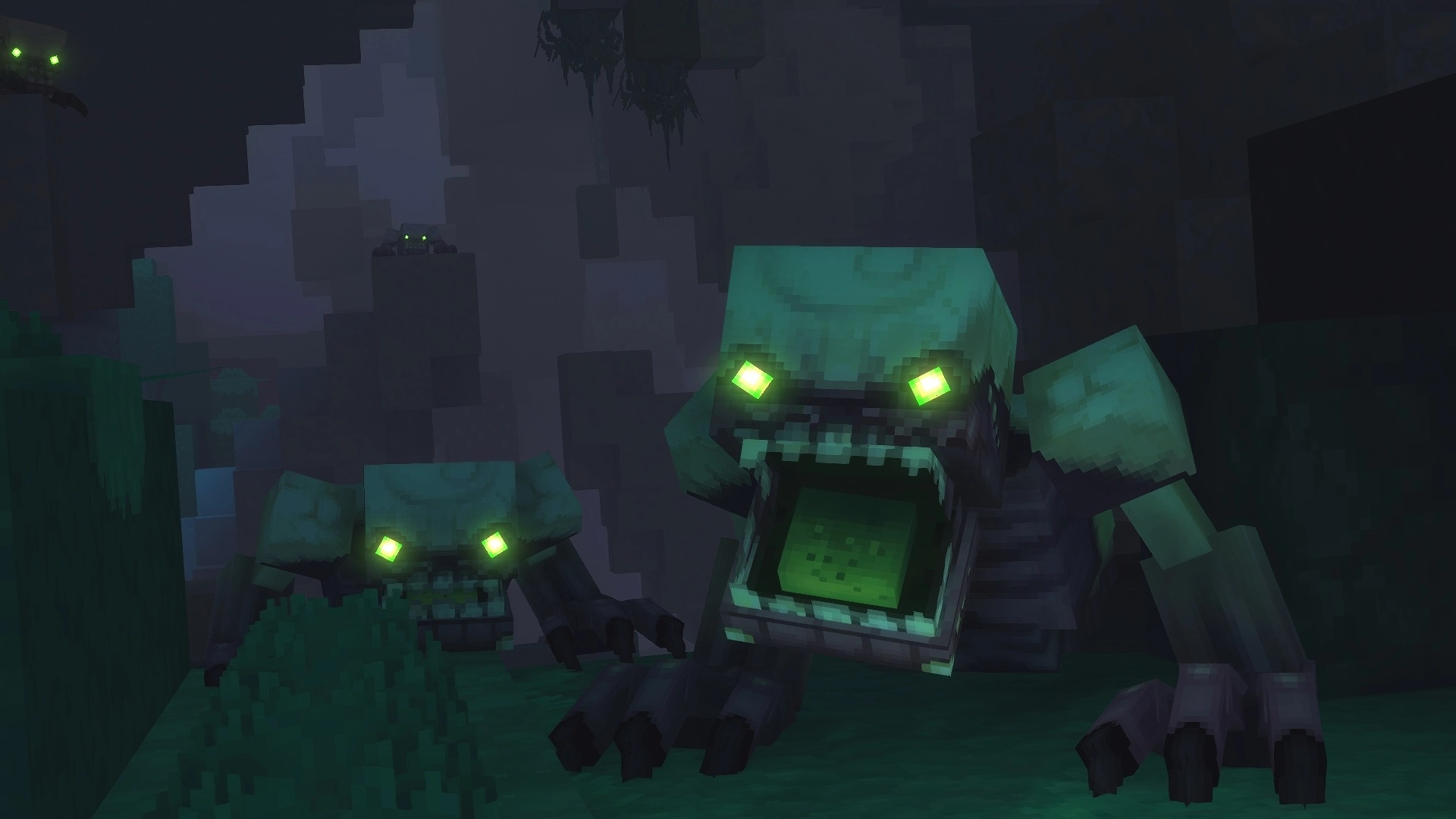
Combat fundamentals also matter. Dedicated Weapons deal much more damage than bare hands or tools and often come with special attacks, so fights end more quickly and enemies have fewer chances to hurt you. Entering combat without a proper weapon usually leads to unnecessary health loss.
The Z Slot provides fast access to up to four important items such as shields, torches, or emergency healing. Putting a shield or key potion there allows you to switch defenses or heal instantly with minimal distraction, which can determine whether you survive a close fight.
Death in Hytale is relatively forgiving because you keep your items. However, every death reduces the durability of all gear by 10 percent. Staying alive through good armor choices, blocking, and health management not only keeps you in the action but also preserves your weapons, tools, and armor for longer.
| Method | Effect on health and survivability |
|---|---|
| Armor | Reduces damage per hit, letting the same 100 health sustain more attacks. |
| Blocking with shield or melee weapon | Prevents or mitigates incoming blows when timed correctly. |
| Using proper weapons | Shortens fights so enemies have fewer opportunities to damage you. |
| Careful death avoidance | Maintains gear durability, so defensive and offensive stats stay high. |
Early game health management routine in Zone 1
Zone 1 is designed as a relatively gentle starting area, but it still punishes players who ignore health and hunger. A simple routine helps you stay topped up without burning through resources.
Step 1: As soon as you spawn, gather basic resources like Plant Fibers, Sticks, and Stone Rubble while picking up Wild Berries, Apples, and other visible food items. Prioritize stocking a small pile of food before engaging tougher creatures.
Step 2: Use pocket crafting from your inventory to create a Crude Hatchet, Crude Pickaxe, and Crude Sword. These tools and your first weapon let you harvest logs and stone more efficiently and end early fights faster, which keeps health losses low.
Step 3: Turn your Default Spawn Location or a chosen Underground Cave into a temporary base with a Workbench and storage. This becomes your main healing hub where you can safely eat, regenerate, and sort resources after each outing.
Step 4: Before heading out, check that your Hunger bar is mostly full and carry a mix of basic food plus any Healing or regeneration potions you have obtained. Place one healing option and, if available, a shield or other defensive tool into the Z Slot for quick access.
Step 5: During exploration and combat, watch the Health bar closely. Retreat early to your base when it drops to a level where a few hits could kill you, rather than waiting for a full emergency, and use food-based regeneration in safety instead of wasting rare potions.
Following this pattern turns health management into a background routine instead of a constant crisis. With hunger under control, potions reserved for real emergencies, and armor plus blocking reducing incoming damage, your character spends far more time at or near full health and far less time scrambling to recover from near-death encounters.