

Hytale splits its main world, Orbis, into large themed regions called zones. Each zone is more than a single biome or climate band. It is a curated cluster of related biomes, creatures, structures, and quests that share a visual style, elemental identity, and difficulty curve.
Zones sit at the top of Hytale’s world structure. Biomes form the smaller tiles inside each zone, while prefabs, props, and points of interest populate those tiles. That hierarchy is central to how the game controls progression, storytelling, and modding.
What a zone is (and how it differs from a biome)
In Hytale, a biome is a distinct environment type such as plains, swamp, pine forest, or volcanic field. Biomes define local terrain shapes, materials, vegetation, weather patterns, and ambient life. Several of these biomes are grouped together into a single zone.
A zone is a large, procedurally generated region with its own:
- Biome mix such as plains, swamps, and forests in one region, or deserts and savannas in another.
- Creature sets including animals, monsters, and NPC tribes tuned to that climate and story.
- Prefab library covering structures like dungeons, villages, shrines, and cave entrances that only appear in that zone.
- Quest and character focus tied to that zone’s history, factions, and elemental theme.
- Difficulty range that controls enemy strength and reward quality as you move deeper through the world.
This structure lets Hytale layer its narrative and progression onto a procedural world without giving up randomness. Orbis feels like a single planet, but each zone has a clear identity and role in the overall adventure.
The six main zones and their elements
The Orbis concept art and early world generation work outline six numbered zones, each aligned with a different element of Hytale’s magic system.
| Zone | Working name | Element | Core surface themes | Underground themes |
|---|---|---|---|---|
| Zone 1 | Emerald Grove | Earth | Lush green plains, lakes, swamps, forests | Sprawling stone caves over deep magma |
| Zone 2 | Howling Sands | Wind | Vast arid deserts, mesas, savannas, sand temples | Cave structures similar to Zone 1 but built in sand, little fresh water |
| Zone 3 | Borea / Boreal | Water | Snowy mountains, taiga and pine forests, frozen rivers | Ice and snow caves with pockets of fragile life, less lava |
| Zone 4 | Devastated Lands | Fire | Scorched rock, lava rivers and lakes, volcanic terrain | Calmer caves with water and foliage, leading to overgrown, predator-filled depths |
| Zone 5 | “Skylands” (placeholder) | Lightning | Floating islands implied by early tooling | Not detailed |
| Zone 6 | “Poisonlands” (placeholder) | Void (planned) | Not described yet | Not described yet |
These names and labels originated during early development and have been treated as placeholders. The final naming and exact content of zones, particularly 5 and 6, remain flexible as Orbis is fleshed out in the current world generator.
Zone 1: Emerald Grove (Earth)
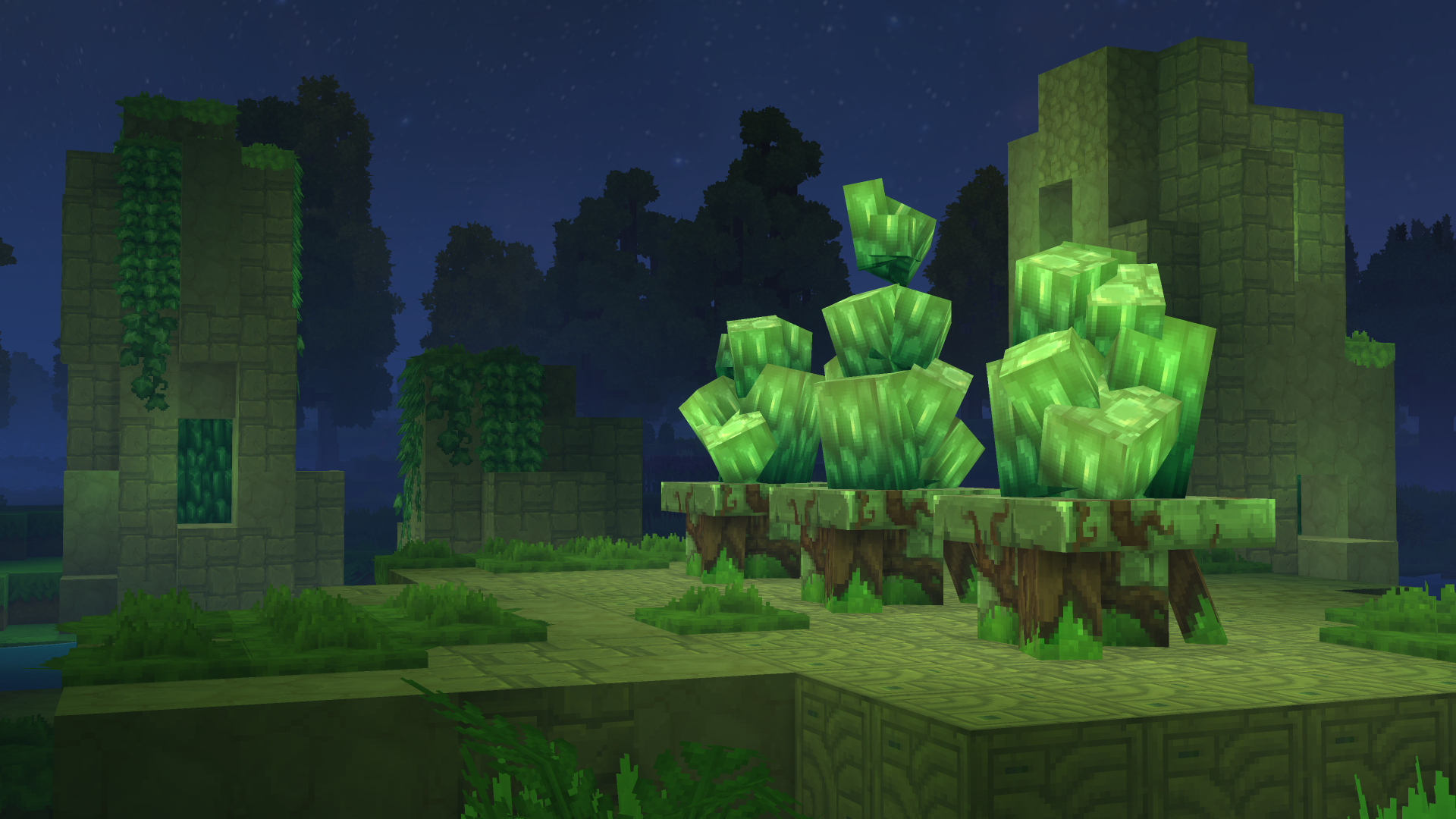
Zone 1, commonly referred to as Emerald Grove, is designed as the archetypal starting region. Its surface is dominated by green plains, forests, lakes, and swamps. Underground, layered stone caves sit above deep magma far below.
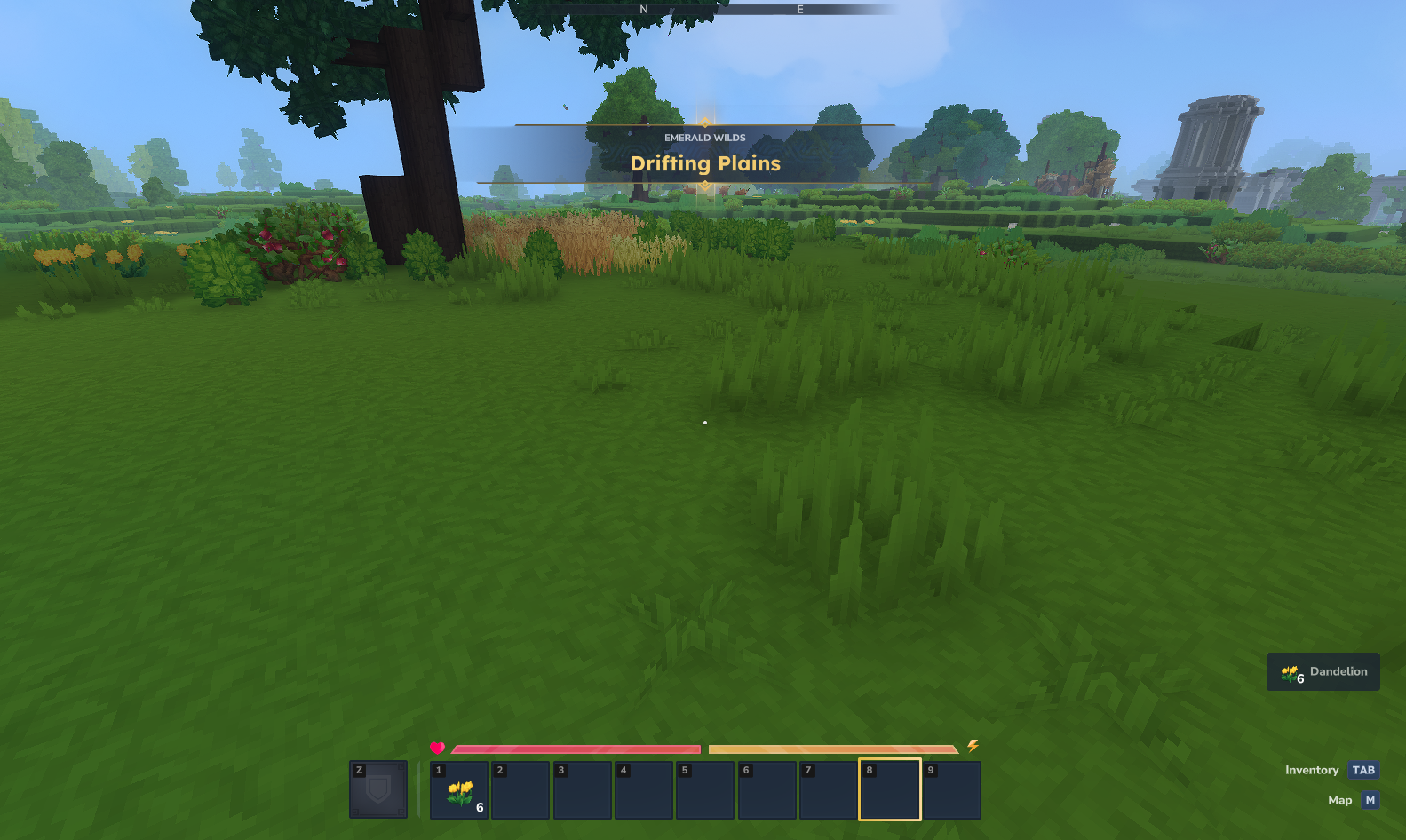
Biomes tied to this zone include plains, generic forests, cherry blossom groves, snowy mountains, swamps, caves, and autumn forests. The mix pushes a broad “temperate Earth” fantasy: a place for early-game exploration, farming, and base building, with enough underground danger to introduce mining and combat.
Emerald Grove embodies the Earth element, which influences its color palette, resource distribution, and likely its magical themes and enemy abilities. It is also closely associated with the Emerald Wilds region shown in newer Orbis V2 footage.
Zone 2: Howling Sands (Wind)
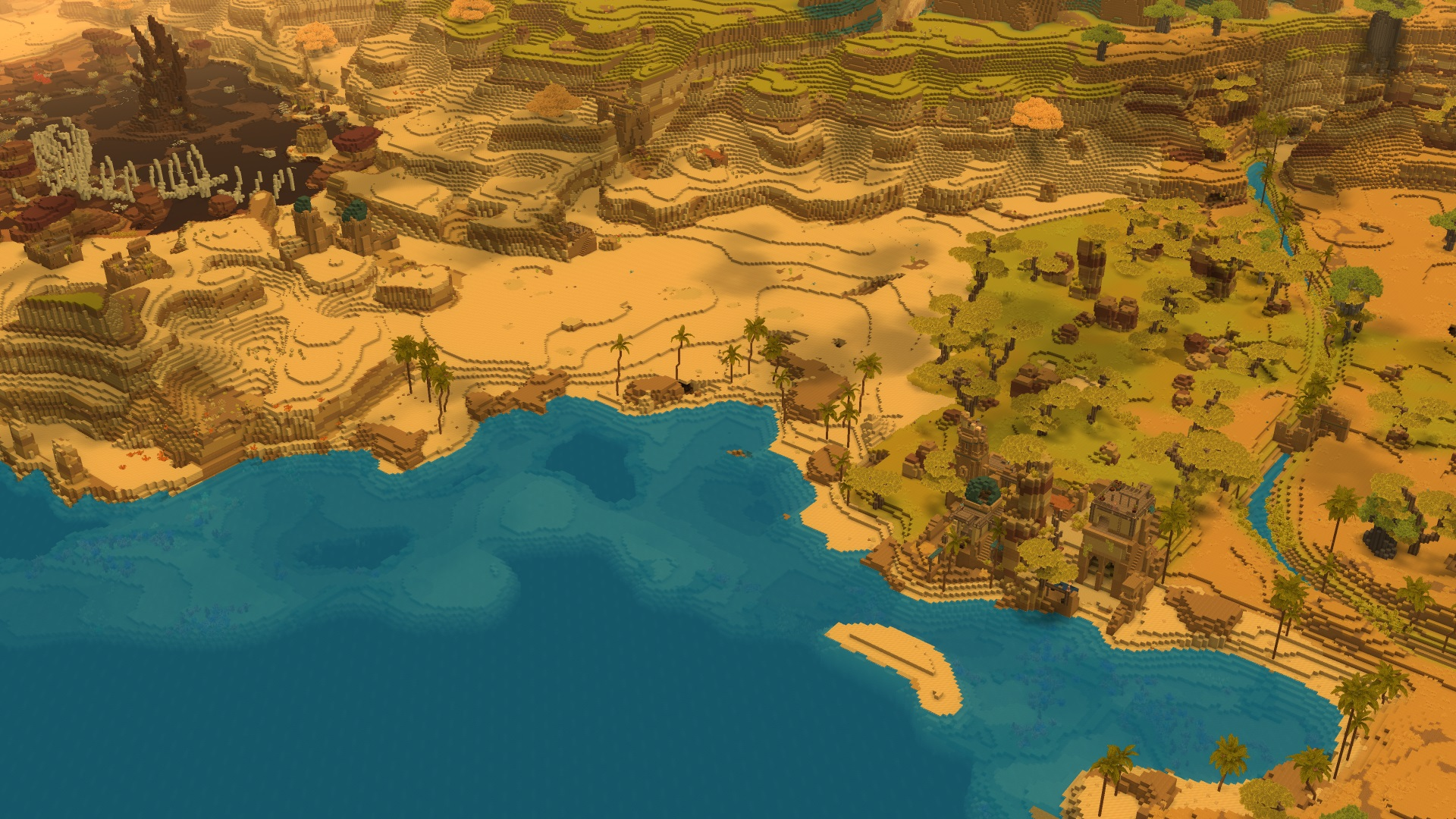
Zone 2, the Howling Sands, pushes the climate toward harsh heat and wind. It is described as an arid environment with sparse vegetation, closer to a massive desert basin than a single dune sea.
Its biome cluster includes deserts, savannas, and oases wedged into dry valleys or sheltered basins. Large sandstone-style temples and ruins sit on the surface, connected to underground spaces that structurally echo Zone 1 but swap stone for sand and reduce fresh water to a minimum.
The Wind element runs through the zone’s design. The idea is to evoke erosion, sandstorms, and long sightlines broken by architecture and rock formations. In Orbis V2 work, this shows up in oasis biomes and river-adjacent trees forming strong visual cues in Howling Sands.
Zone 3: Borea / Boreal (Water)
Zone 3, seen in early material under names like Borea or Boreal, shifts into a wintry landscape focused on water in all its forms. Forested valleys give way to steep, snow-covered mountains, frozen rivers, and taiga forests.
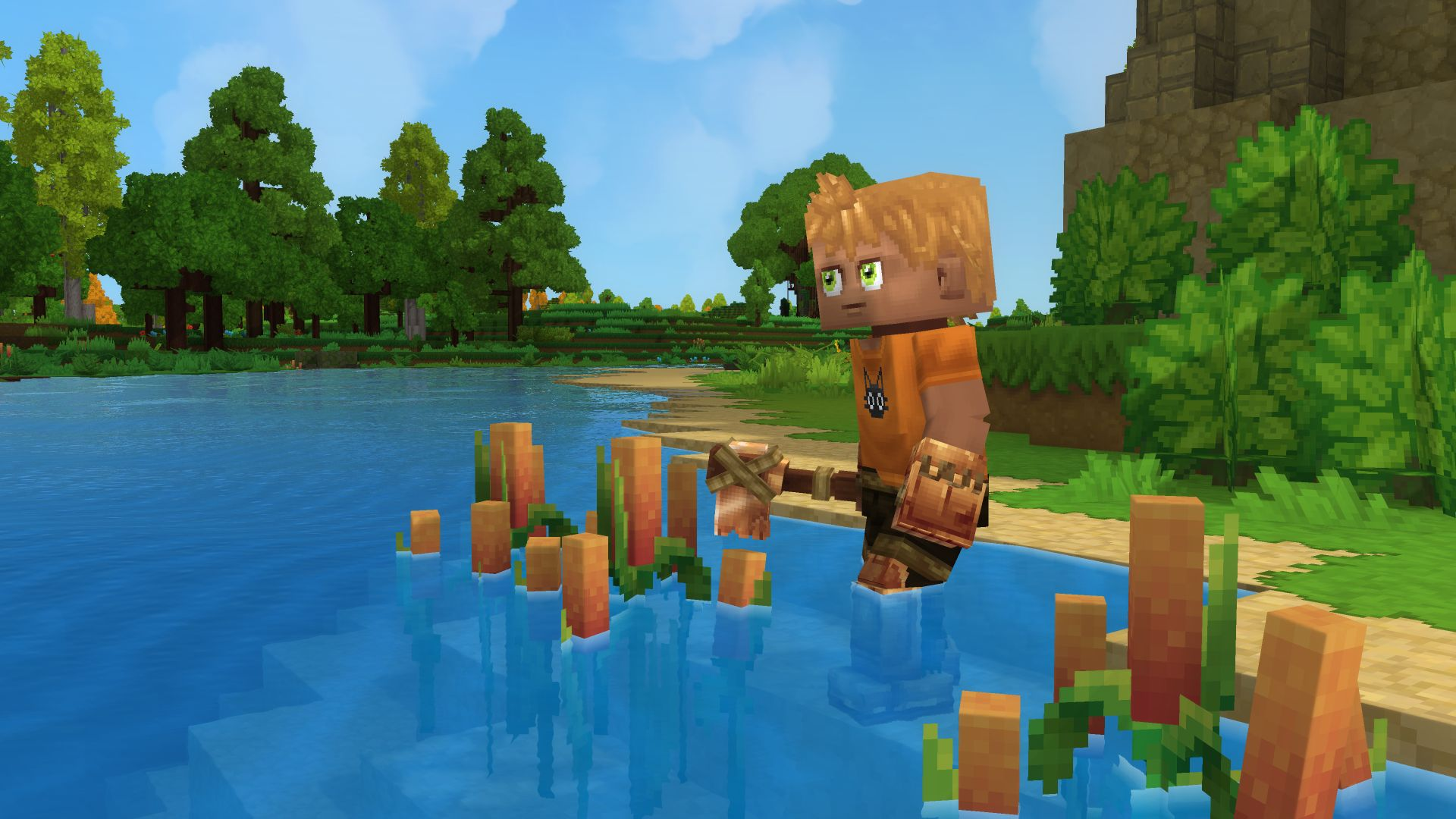
Surface biomes associated with this zone include pine forests, snowy forests and plains, snowy mountains, and moorland areas. The lighting and weather cycles emphasize cold blues and greys that occasionally warm at sunrise and sunset.
Under the surface, ice and snow caves wind through rock, illuminated by bioluminescent fungi and other fragile life. Mine entrance prefabs drop players into layered shaft networks and scripted dungeons. The zone’s Water element expresses itself through rivers, ice sheets, and the way caves carve through frozen terrain rather than magma fields.
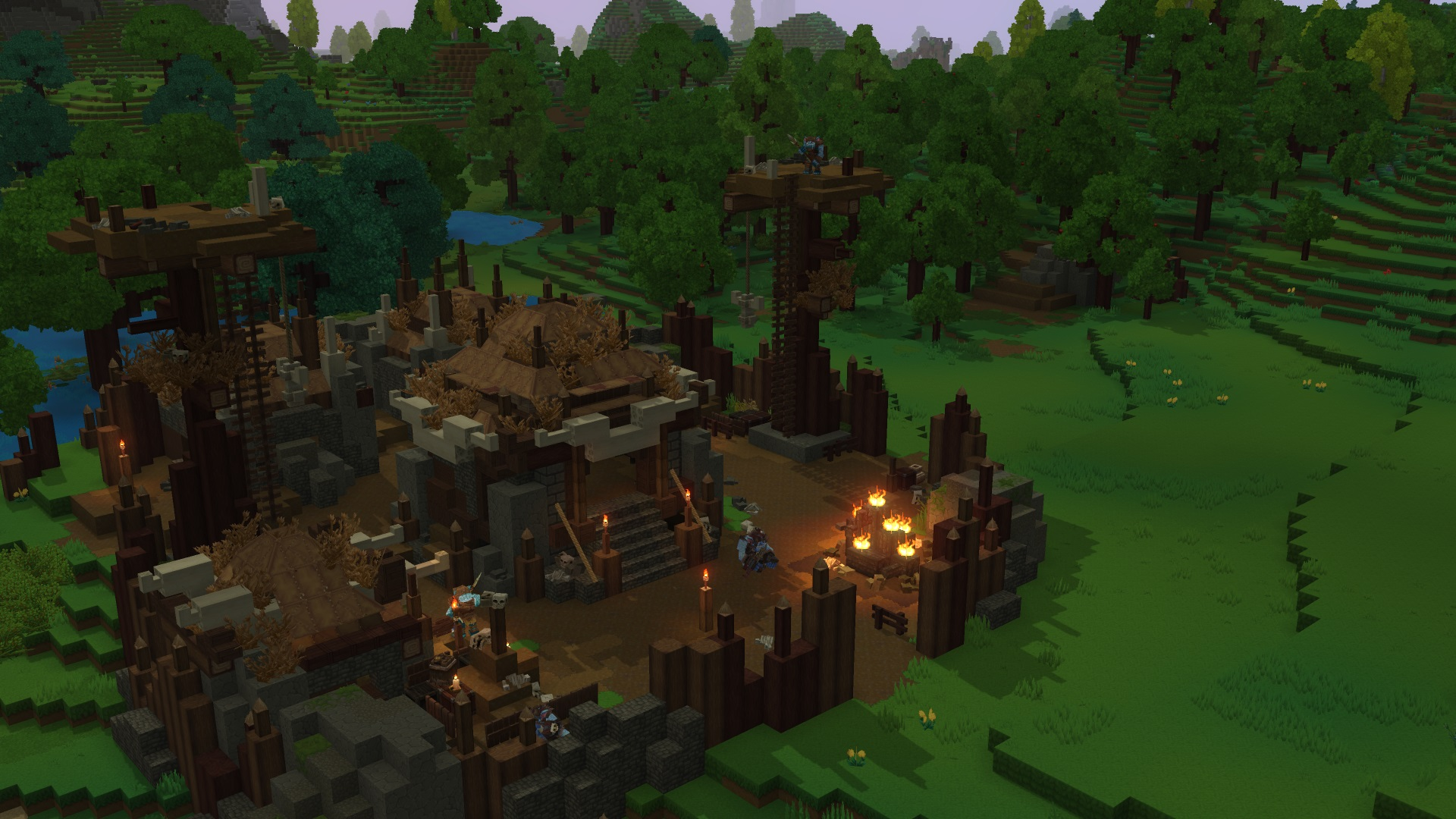
Zone 3 is also tightly coupled to human factions like the Outlanders, whose forts and camps are generated from modular prefabs. That faction focus gives the region a more grounded, historical tone compared with more elemental or otherworldly zones.
Zone 4: Devastated Lands (Fire)
Zone 4, the Devastated Lands, is pitched as a post-cataclysmic Fire-aligned region. The surface is described in stark terms: scorched stone, open lava flows, and a generally hostile, barren atmosphere.
Biomes for this zone include volcanoes, fiery plains, and at least one tropical jungle environment embedded into or bordering the harsher terrain. That jungle component hints at sharp transitions, where life pushes back against the Fire element and reclaiming forces show through.
The underground profile is more complex than the surface suggests. At shallower depths, caves become calmer, with water, lush foliage, and varied creatures despite the devastation above. Deeper still, foliage and water overrun the rock entirely, creating a dark, dangerous ecosystem dominated by predators and limited visibility.
This inversion of expectations makes Zone 4 structurally interesting: the surface is openly lethal, but survival and exploration often depend on learning how to exploit safer pockets and then venturing into overgrown lower layers on your own terms.
Zones 5 and 6: Skylands and Poisonlands placeholders
Beyond the four core Orbis regions, early tooling and internal references flag two more zones.
Zone 5 uses the placeholder “Skylands” and is tied to the Lightning element. Development tools have displayed it with floating islands, suggesting a more fragmented, vertical style of world generation that could showcase aerial traversal and unusual gravity or weather events.
Zone 6 uses the placeholder “Poisonlands” and is linked to the void element. No firm details have been exposed on its surface or underground structure, only that its existence is recognized within the game’s zone framework.
Both of these zones sit in a conceptual space for later Orbis and alterverse expansion rather than forming part of the initial, grounded quartet of elemental continents.
Zone-like areas: Deep Ocean and islands
Not every large-scale environment is labeled as a zone. The Deep Ocean stands apart as its own category. It separates the Infinite Lands from the main Orbis continent and is treated internally almost like a standalone region.
Concept work shows the Deep Ocean supporting its own ecosystems, underwater caves, and points of interest such as shipwrecks and coral formations. Tropical islands break up the water surface, acting as stepping stones between continents, gateways into marine biomes, or starting points for ocean-focused exploration.
Functionally, the Deep Ocean behaves like a zone in terms of scope and content density, even if it is not numbered alongside the primary six.
Zones, difficulty, and progression
Zones are not only about aesthetics. They are a key part of Hytale’s progression design. The further you travel outward across Orbis, the more the game raises the stakes, scaling both enemy difficulty and the quality of the rewards you can find.
That progression was originally described as a linear sequence of increasingly tough zones, but the approach has shifted. The first three zones now carry multiple internal tiers of difficulty, with resources and loot scaling alongside. Instead of a straight line from “easy” to “hard” across the world map, Hytale uses its zones to support a less linear path where you can push deeper into a familiar region or branch into another one at similar power levels.
Zone 4 and beyond fit into a higher-risk band, but their exact placement in the final progression curve will depend on how the Orbis adventure is structured in the new generator.
World generation V1 vs V2 and what happens to zones
Hytale currently maintains two world generators. The first, V1, was created between 2016 and 2020 and already supports a wide range of biomes and early-zone content. Exploration mode at launch uses V1 to produce playable worlds with the existing Emerald Grove, Howling Sands, and Borea-style regions.
The second generator, V2, has been in development since 2021 and is positioned as the long-term foundation for Orbis. It is built to overcome the scaling problems of V1, especially around adding more zones, richer biomes, and more complex transitions between them.
Hytale’s early access phase launches on V1, but fragments of Orbis generated by V2 are already accessible in Exploration mode through Gateways. Once Orbis is ready in V2, that new world will become the primary experience, while old V1 worlds will remain accessible but stop generating new chunks.
From a zone perspective, this shift matters because V2 treats zones as composable tiles inside an even more flexible system. Designers and modders can add, remove, or reconfigure zones more safely, with better control over how their biomes connect and how their props and prefabs spawn.
How zones, biomes, and props come together in V2
World-gen V2 is built around a visual node editor and a pattern-based placement system. Biomes are treated as tiles that can define their own terrain shape, material rules, and edge behavior. Zones then become higher-level tiles in a patchwork that stitches those biomes together into continents and regions.
Several key concepts underpin this structure:
- Node-driven terrain where creators adjust heightfields, erosion, cliffs, and valleys at biome scale, and the engine blends those shapes where biomes meet.
- Material providers that decide what blocks make up each layer of terrain based on depth, exposure, and context. Grass, for example, can be blocked from spawning under overhangs with less than a set amount of air above.
- Props that spawn trees, ruins, bridges, mushrooms, or larger POIs on a procedural grid, each governed by rules about slopes, proximity to water, overhead cover, or neighboring structures.
- Pattern scanning that lets designers define heuristics such as “place ash trees only above caves” or “build log bridges only where two shores face each other across a river.”
By treating zones as modular tiles in this system, designers can build entire regions like Howling Sands or Whisperfrost Frontier by assembling and tuning their constituent biomes. Prefabs such as mine entrances, dungeons, or Outlander forts are then slotted into those regions with rules that respect both narrative needs and player readability.
What zones mean for modders and custom worlds
Hytale’s world-gen V2 is exposed through the in-game node editor and modding APIs. The same tools used to build Orbis are planned for creators, making zones a first-class concept for custom content rather than an internal-only system.
Modders can:
- Duplicate or fork existing biomes and zones, then tweak terrain, materials, props, and prefabs.
- Introduce entirely new biomes that plug into Orbis alongside official ones.
- Create custom zones for alternate worlds, dimensions, or themed adventure packs.
- Combine multiple mods’ biomes and zones into a single consistent world-gen pipeline via the node editor.
The API is designed to be multithreaded and context-aware, so code-based mods can read surrounding terrain and structures when making generation decisions. Non-coders can still operate entirely in the node editor, pushing complex terrain and zone logic through visual graphs.
Over time, Orbis itself is intended to be fully inspectable. Every biome used in the official world will be shareable, so players can see how Emerald Wilds, Whisperfrost Frontier, or Howling Sands are assembled and use those patterns as templates for their own designs.
Zones are the backbone of how Hytale turns a blocky procedural world into a structured adventure planet. They define where you start, how you progress, what stories you encounter, and how custom content slots into that framework. As Orbis continues to move onto the V2 generator, zones will only become more important, both for official updates and for whatever the community builds on top.