

XP is everywhere in Icarus, but not every activity moves the bar in a meaningful way. If you want tech and talents quickly, you need to lean into the systems that pay out the most experience per minute and stack every multiplier you can.
How XP works in Icarus
Icarus pays XP for almost every interaction: harvesting, mining, hunting, skinning, crafting, building, and completing missions. The numbers vary a lot. Cutting down a tree, finishing off an ore node, or taking out a predator can be worth thousands of XP, while individual crafts might only give a few points, but repeat hundreds of times in the background.
Two things matter more than anything else: how fast you can repeat an action and how safely you can keep doing it without dying and losing XP to death penalties. The strongest strategies combine constant background XP (mass crafting or farming) with high-value bursts (predator hunting, missions, deep mining).
Use food buffs and talents to boost XP gain
Before worrying about what to grind, it’s worth improving how much XP each action gives you.
- XP foods: Several cooked foods grant a flat “XP gained” bonus and often a shared XP bonus in co-op. Combinations such as bacon variants, prime meat, and pickled carrots can reach roughly +20% XP and +20% shared XP. More complex recipes like honey bacon or crispy bacon push the bonuses higher. Once you can cook boar bacon, always keep it running.
- Extra stomachs and duration: Talents and suit modules that add stomach slots or increase food effect duration let you stack more XP foods and keep them active longer. That alone can more than double XP per hour in long grinds.
- XP talents: Solo and talent-tree bonuses to experience gained, plus speed talents like Speed Mining and Speed Chopper, indirectly raise XP by letting you complete more actions per minute.
Set XP foods and relevant talents first, then start any serious leveling session so you aren’t leaving free experience on the table.
Early game (levels 1–15): hunt, mine, and chop
Early on, your toolkit is limited, but some activities are far more efficient than others.
Early-game hunting (especially wolves)
Hunting is one of the strongest XP sources from the first minutes.
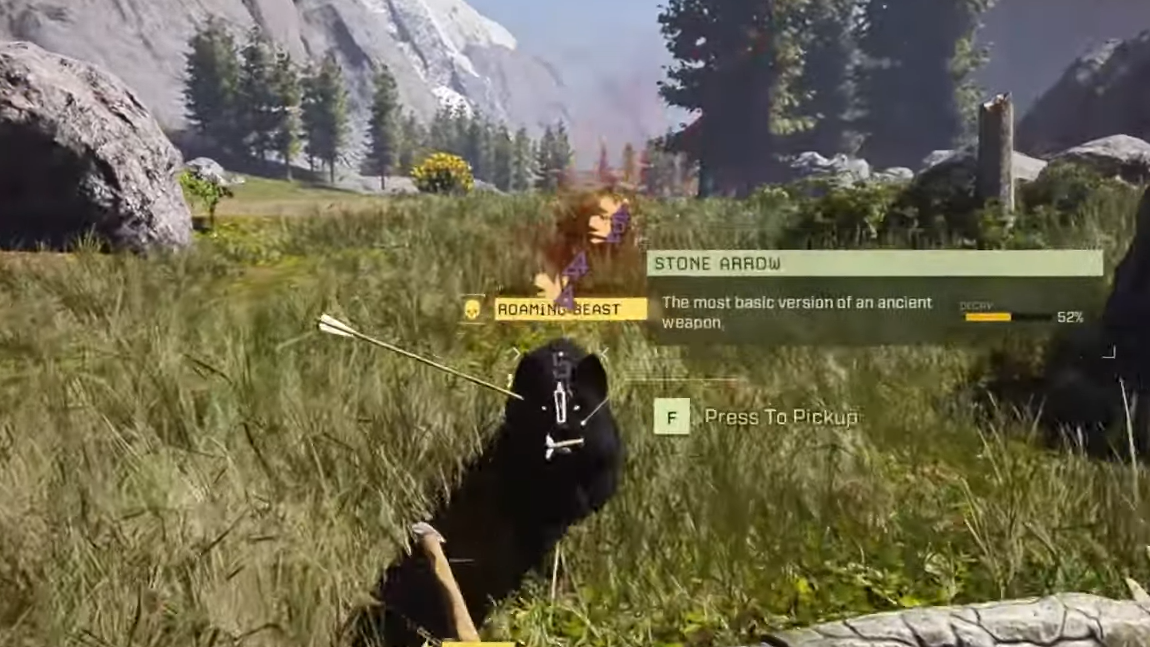
- Predators pay the best: Wolves and other predators award far more XP than passive animals. Players routinely see individual wolves granting around 1,300–2,500 XP for the kill, with another ~1,000 from skinning and processing the carcass. Larger predators like bears and polar bears are even better but also riskier.
- Use stealth headshots: A Tier 1 or Tier 2 bow with stone or bone arrows, combined with bow damage talents and stealth, allows one-shot headshots on wolves and similar predators. Crouch, get behind them, and aim for the head to take them out cleanly.
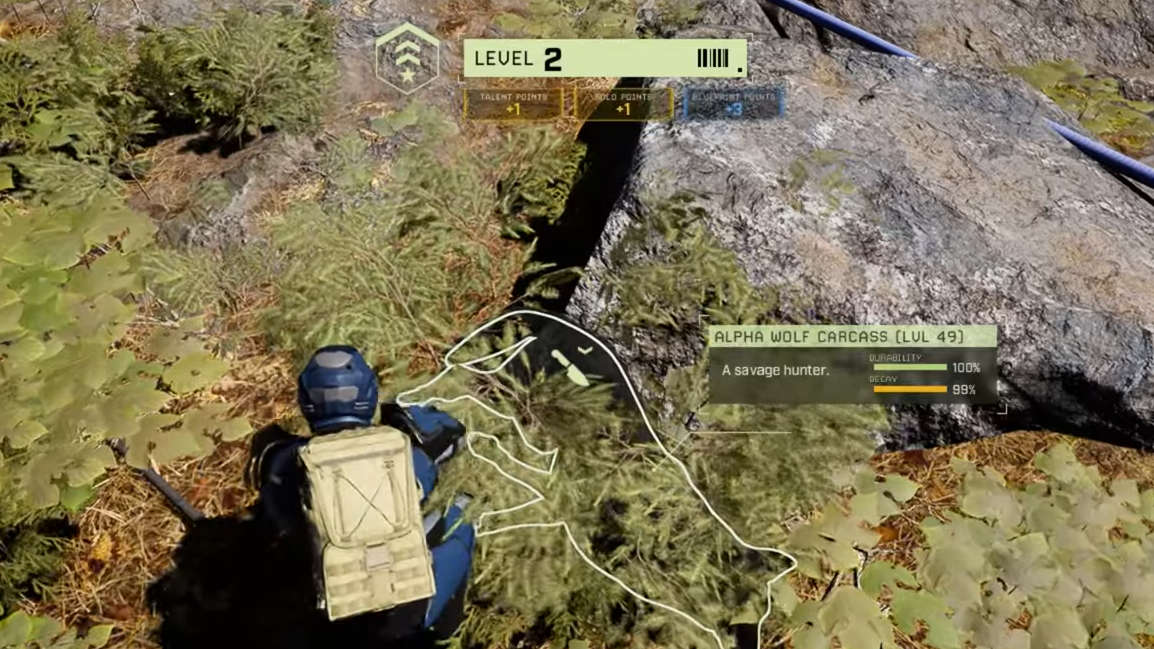
- Skin everything: Always skin kills. You gain extra XP, bones for arrows and epoxy later, leather for armor, and meat for food buffs.
- Target-rich biomes: Forests provide wolves, boars, deer, and bears, but the desert and snow biomes are especially strong later because enemies are easier to see and can spawn densely (hyenas, cougars, polar bears, etc.).
Early-game resource grind: mining and trees
While you move between hunting spots, keep your tools working.
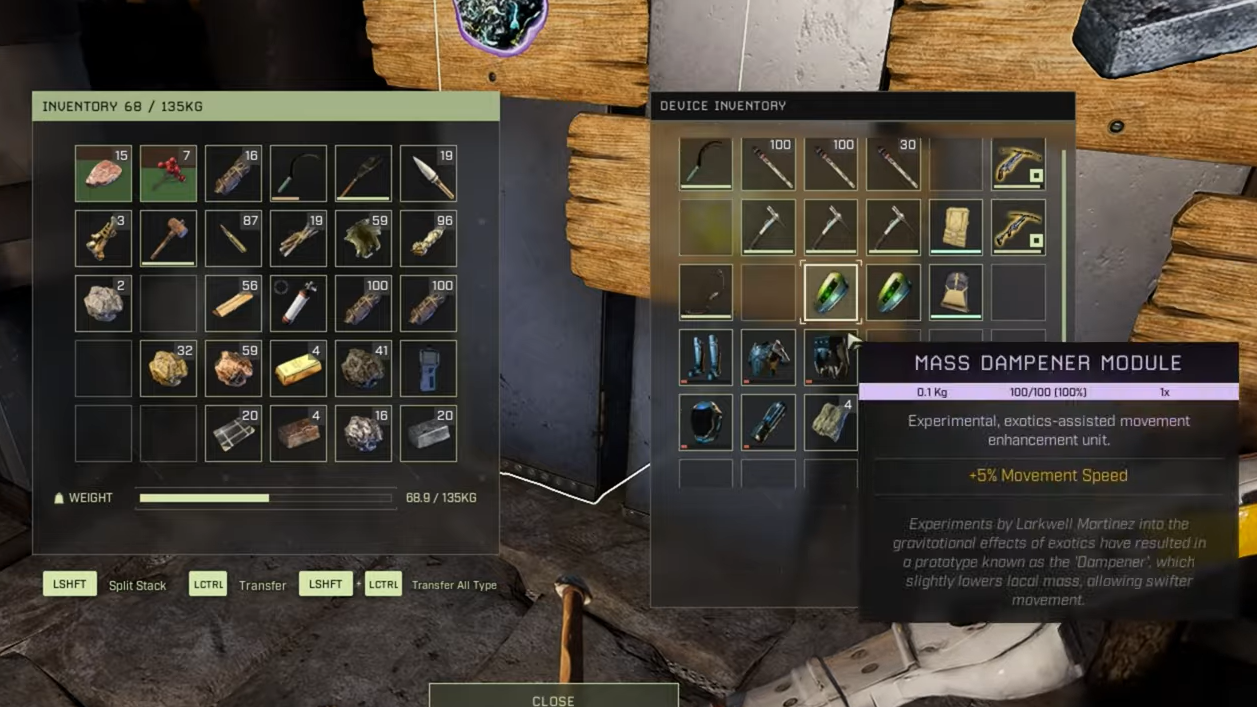
- Mining ore: Breaking down ore nodes with a stone or iron pickaxe gives solid XP, especially for rare ores in caves (gold, platinum, titanium). Large boulders and nodes can yield several thousand XP each once fully mined.
- Chopping trees: Cutting a tree to the point it falls over currently grants about 300 XP per tree. This is simple, safe XP, particularly when you have stamina food and axe speed talents. The logs themselves give relatively little XP, so focus on felling a lot of trees quickly instead of fully processing every log.
- Grab everything you walk through: While running, spam the interact button on bushes, baby trees, and plants. The XP is small but constant and costs only a button press. Drop extra materials if you don’t need them.
Blueprint priorities that speed leveling
Certain early tech choices make XP farming much faster.
- Core combat tools: Stone Knife, Wood Bow, Stone Arrow, then Bone Arrow and Longbow. These let you hunt predators reliably for big XP spikes.
- Survival basics: Campfire and Bedroll so you can sleep through the night; simple shelter pieces (thatch or wood) to avoid storms and debuffs that slow you down.
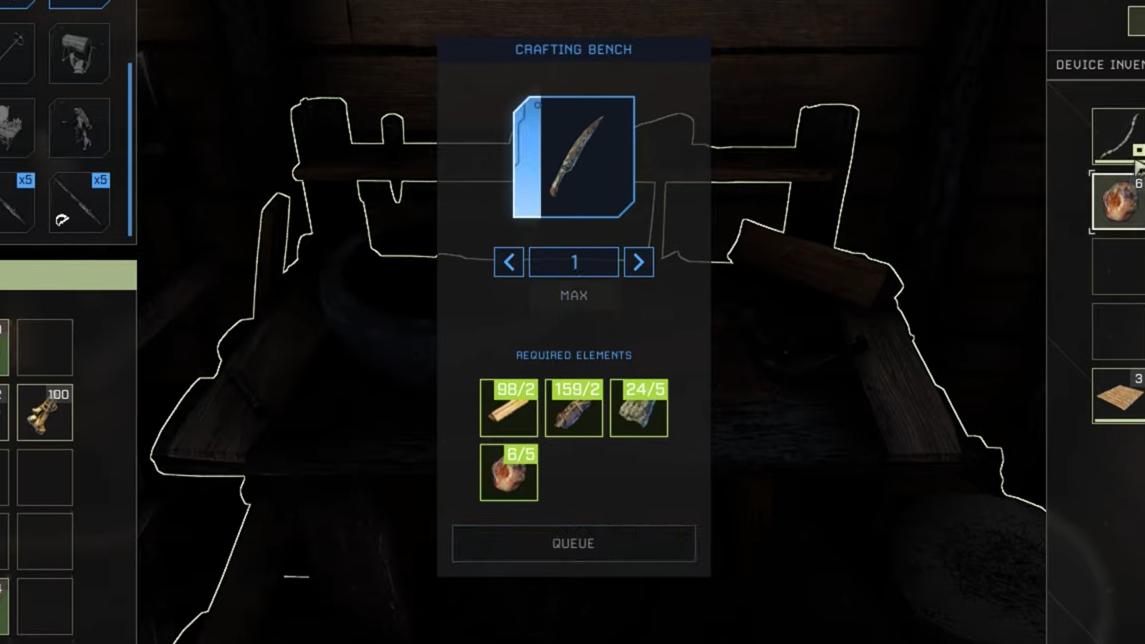
- Tier 2 economy: Crafting Bench, Stone Furnace, Anvil Bench, Iron Pickaxe, and Iron Axe, so you mine caves quickly and unlock iron tools. Mortar and Pestle is especially important for background XP crafts.
- Fiber armor: Early fiber or cloth armor gives minor stats, but the more important effect is that it consumes the fiber you’re constantly gathering. Craft full sets, equip what you need, and discard extras for cheap XP.
Plan talent and blueprint spending with level milestones in mind. Hitting level 10 for the basic machining path, and level 15 for radios and open-world missions, changes how you can earn XP.
Mid-game (15–40): predators, missions, and open-world loops
Once you reach mid-game, you have options that are both more lucrative and less linear than chopping trees in a starter valley.
Hunt in high-density biomes
Predator loops remain one of the most effective XP engines.
- Desert runs: The desert is a favorite leveling zone. Visibility is high, and animal density is strong. Run wide circuits with a bow, rifle, or later weapons, and kill everything you see: hyenas, cougars, antelopes, zebras, elephants, boars. Use bones to keep yourself supplied with bone arrows.
- Snow biome hunts: Spec into bow talents, bring warm gear and food, and sneak-kill wolves and polar bears. With the right kiting techniques, even polar bears become repeatable XP piñatas.
- Bestiary and bosses: Aggressive hunting also progresses Bestiary entries and unlocks account-wide buffs at 40% and 100% completion per creature. Bosses now reward improved XP along with exotics, which makes them worthwhile targets once you can handle them.
SMPL3 and open-world missions for large XP chunks
Open-world operations and SMPL3 (or similar) side missions add structured XP payouts on top of the XP you earn while completing them.
- Short Range Radios in open world: Once you unlock the Short Range Radio (around level 15 with iron ingots and mid-tier benches), you can place one or more radios near your base in open world. These allow you to pick up repeatable missions — hunting crazed creatures, mining quotas, and similar tasks — with XP rewards that scale by difficulty.
- Difficulty scaling: Easy, Medium, and Hard mission choices on the board give progressively higher XP rewards. Typical payouts are on the order of 5,000 XP for Easy, 10,000 XP for Medium, and roughly 16,500 XP for Hard, on top of all the XP you earn from the required actions (kills, mining, etc.).
- Mission selection: The fastest missions tend to be simple predator-kill tasks (such as feral or crazed creatures) that spawn close to your radios. Mining missions are workable, but crafting-heavy missions consume huge amounts of resources and time for relatively poor XP and are usually not worth spamming.
- Handling bad rolls: If you roll only slow, crafting-heavy objectives, you can accept and abort a mission, then wait out the cooldown (about 600 seconds) while you gather, hunt, or chop trees for XP, then pick a better contract.
In harder open-world difficulties, mission rewards stack with the general XP multiplier of the world and your food buffs, so repeating fast predator missions becomes a core leveling loop for many players.
Background XP from mass crafting
Crafting shines as a mid- and late-game XP source because it runs in parallel with everything else you do.
- Wood, sticks, and tree sap: A famous loop uses the talent that converts a log into 10 sticks. Turn harvested wood into sticks, then use Mortar and Pestle stations to convert sticks into Tree Sap. Sap can be processed again into products like biofuel in a Biofuel Composter. You get XP at each stage: wood to sticks, sticks to sap, sap to biofuel. With multiple mortars running, your XP ticks up constantly even when you leave base.
- High-volume, non-spoiling crafts: Turning wheat into flour on several Mortar and Pestles, or cooking meat into animal fat at a Kitchen Bench, are strong because flour and fat do not spoil. You can queue enormous batches, walk away, and enjoy background XP while you mine or hunt.
- Ammo and arrows: Craft large stacks of arrows or bullets you will use anyway. Arrow crafting is a classic early-game strategy; later, ammunition and explosives perform the same function.
- Structural spam: With multiple carpentry benches and strong axes, clearcutting a forest and constantly crafting wood floors or walls (both in inventory and on benches) provides heavy XP. Periodically demolish the pieces to recover some materials, then craft more. Doing this inside a mission rather than open world yields higher XP per hour, but you lose the stored materials.
Farming and watering exploits
Farming is intended as a steady XP source, but certain patterns turn it into an extremely aggressive leveling tool.
- Watering crop plots: Once you can craft Crop Plots and a Water Can or Water Skin, place a plot directly next to a water source. Standing in place, repeatedly water the plot, refilling instantly from the lake or river beside you. Each water action grants XP (around 100 XP per use for some players). With XP foods and double XP weekends, it’s possible to gain dozens of levels in a very short session, though it is physically repetitive.
- Mass harvesting: Maintaining a large farm, then harvesting many crop plots at once, also yields a significant burst of XP. This is less extreme than the watering spam but more in line with the intended progression.
Late game (40+): deep caves, electronics grind, and predators
Once you reach higher tiers, XP focuses less on unlocking basic tools and more on fueling late tech and unlocking every blueprint. After level 60, you continue to gain tech points (around three to four per level), which makes infinite leveling relevant if you want every recipe.
Mining and resource stockpiles
High-tier building and electronics demand enormous amounts of material, and mining them is excellent XP.
- Deep mining drills: Missions like Deep Vein Extraction reward both XP and exotics while you farm dense veins of ore. Building bases near rich valleys filled with wolves, moa, buffalo, and bears lets you combine constant hunting with drill upkeep.
- Ore priorities: Copper, gold, and iron are especially important for electronics and structural parts. A single big cave mined aggressively with steel or platinum tools yields hundreds of ore and many thousands of XP.
- Mass materials for construction: Concrete Mix, Refined Wood, Nails, Wire, Cured Leather, Epoxy, and Organic Resin are all produced in large volumes and consumed quickly for stone/concrete builds, reinforced glass, electronics, and furniture. Each conversion step is an XP opportunity, so treat your prep for T4 builds as a leveling engine, not just a chore.
Open-world and desert mission grinds
At this point, you likely have guns and strong armor, so leveling is mostly about choosing how aggressive you want to be.
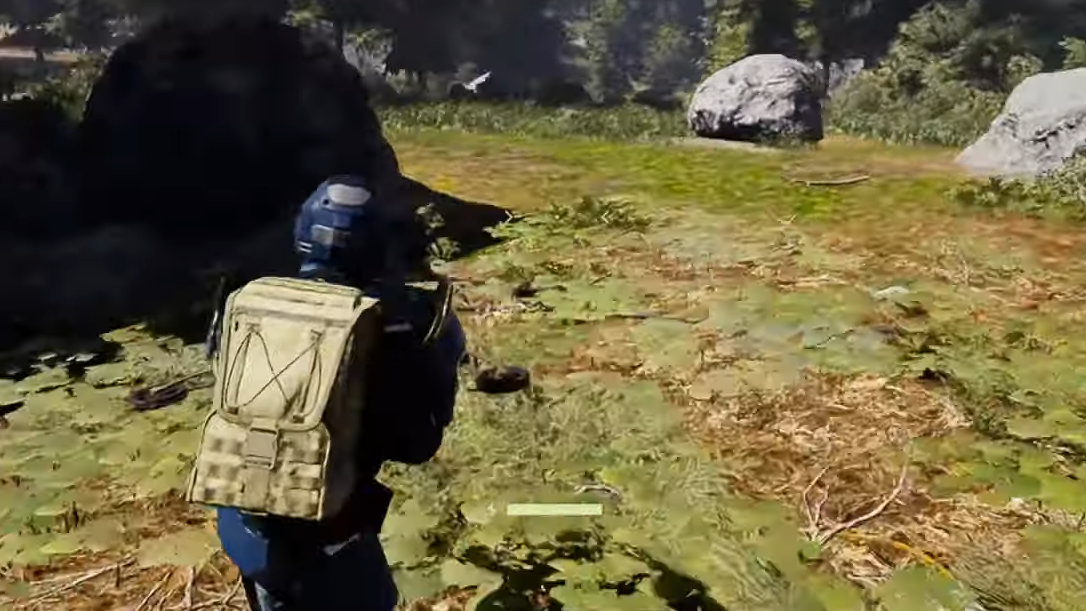
- Desert kill sessions: Joining a desert mission or open world and killing wildlife for an hour is enough to reach max level for many players, especially with bow or rifle builds. Predators and large animals pay particularly well.
- Boss events and geyser hordes: Horde events around geysers, plus mission bosses, now provide meaningful XP and exotics. If your base defenses and gear are ready, cycling these events is an efficient way to progress while also collecting rare resources.
Fast leveling tricks and edge cases
Some methods are situational but can be extremely strong when used correctly.
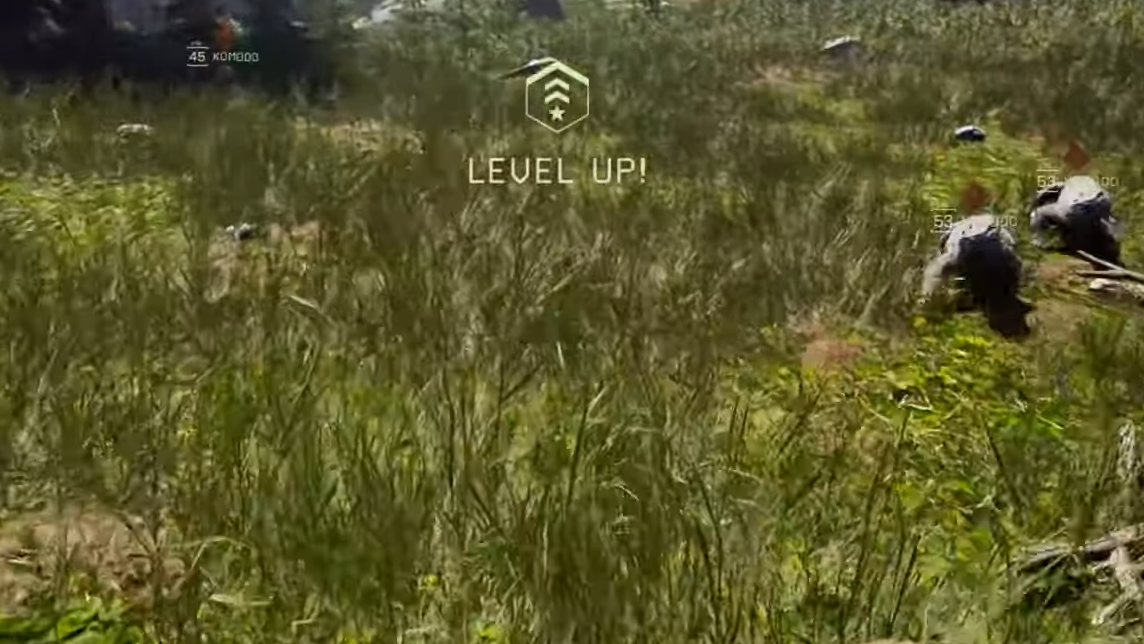
- Komodo dragon infinite spawns: On the STYX map’s first mission, a specific area contains constantly respawning Komodo dragons. Each kill can award 1,000–3,000 XP depending on level. Staying there and repeatedly killing them, especially in co-op with shared XP, levels characters at a very high rate. This pattern may change with patches, but when active, it is one of the fastest ways to grind.
- Bees and swarms: Fighting bee swarms with a knife and proper medicine grants several hundred XP per swarm (reports hover around 500 XP). It’s not as efficient as high-level predator loops, but it can be useful if you’re near hives anyway.
- Save editing: Directly editing XP values or XP per action in local files is possible on PC, but bypasses normal play. If you’re interested in progression and tech pacing, it’s better to avoid this and rely on in-game systems.
Character and world flow: missions, open world, and exotics
Leveling is tied to your character, not a specific mode, so you can freely move between operations.
- Shared character between worlds: You can take the same character into open world, leave to run deployment missions for exotics, then return to the open world session later. This makes it practical to maintain a long-term open-world base while using missions for XP spikes and exotic farming.
- Missions vs open world for “feel”: Pure XP farming in open world can feel grindy. Running structured missions, where you’re building to T3 or T4 in under a couple of hours, mining, and hunting along the way, often makes levels “just happen” in the background and feels less like a chore.
The most sustainable approach is to pick a higher-level goal — a desert outpost, a concrete megabase, a set of T4 machines — and let XP come from the resource and hunting work that project demands, boosted by smart food, talents, and mission choices.