

Kingdom Come Deliverance launched in 2018 with a clear focus on grounded medieval role‑play, demanding combat, and systemic simulation. Its storytelling and worldbuilding still hold up, but the technical foundation now shows its age, especially next to Kingdom Come: Deliverance II.
By early 2026, the discussion is no longer just about whether a remaster would be nice to have. The gap between the original game and its sequel, combined with a new wave of players coming in through Kingdom Come Deliverance II and its DLC, creates a strong practical case for updating Henry of Skalitz’s first outing.
Kingdom Come Deliverance in 2026: What still works and what doesn’t
The first game built its reputation on three things: a convincing medieval Bohemia, a story that commits to a low‑born perspective, and combat that demands patience and practice. Those pillars still stand. Narrative beats, side quests, and the broader arc of Henry’s growth remain central for anyone who wants to understand the events leading into Kingdom Come Deliverance II.
The friction now comes from presentation and feel. On a modern TV or monitor, the original console versions show soft, often pixelated textures, simple foliage, and character models that lack the density and material detail many players expect after several years of visually ambitious open‑world RPGs. Lighting and atmosphere still carry a lot of weight, but the rest of the image no longer has the same impact.
Mechanical design also shows its age in small ways. Clothing management, inventory flow, and several convenience features were tightened in the sequel. Going back to the first game can feel clumsy even for players who appreciate its slower pace and heavier simulation.
Why console performance is the strongest argument for a remaster
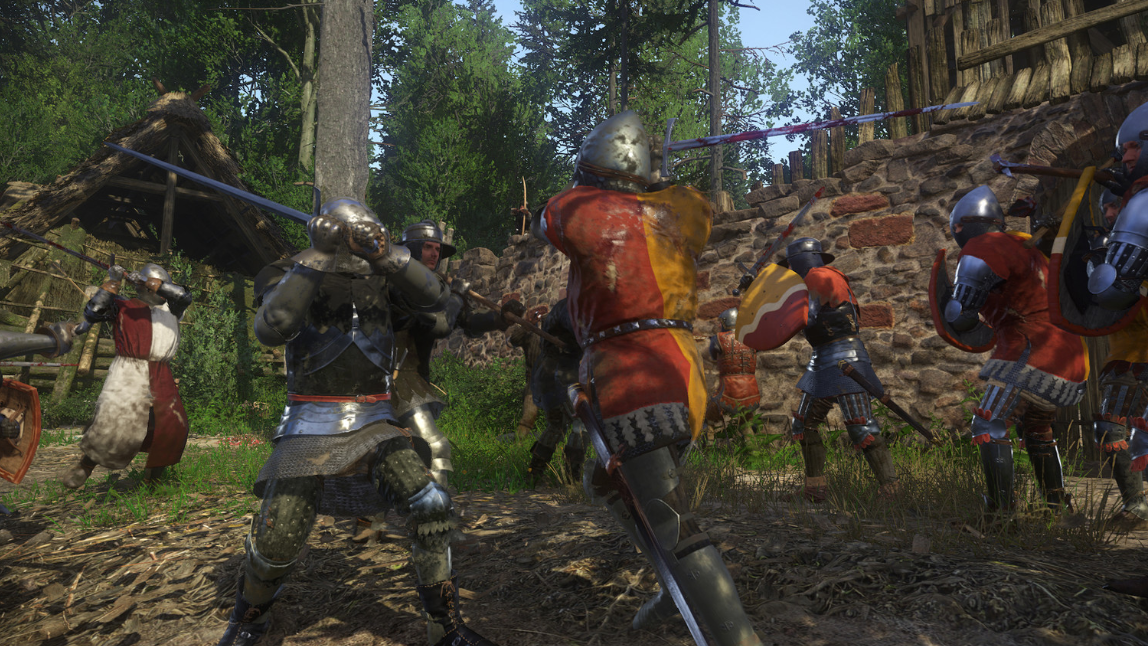
The original PlayStation 4 and Xbox One releases targeted 30 frames per second and often fell short, especially in large battles, busy town hubs, or dense forest areas. Asset streaming caused visible pop‑in, and camera movement could feel uneven. Even when run through backward compatibility on PlayStation 5 and Xbox Series X/S, the code path does not fully exploit the newer hardware.
For many players, the single most impactful upgrade would be a stable 60 frames per second mode on current‑generation consoles. Higher and more consistent frame rates make the directional combat system easier to read, reduce input latency, and smooth out traversal on horseback. In a game where timing is central to blocking, ripostes, and archery, that matters as much as sharper textures.
There is also a basic accessibility angle. Lower and inconsistent frame rates can cause eye strain or motion discomfort for some players. A modern port that normalizes performance across the open world would remove a barrier that has nothing to do with the core design.
Visual aging and the impact of Kingdom Come Deliverance II
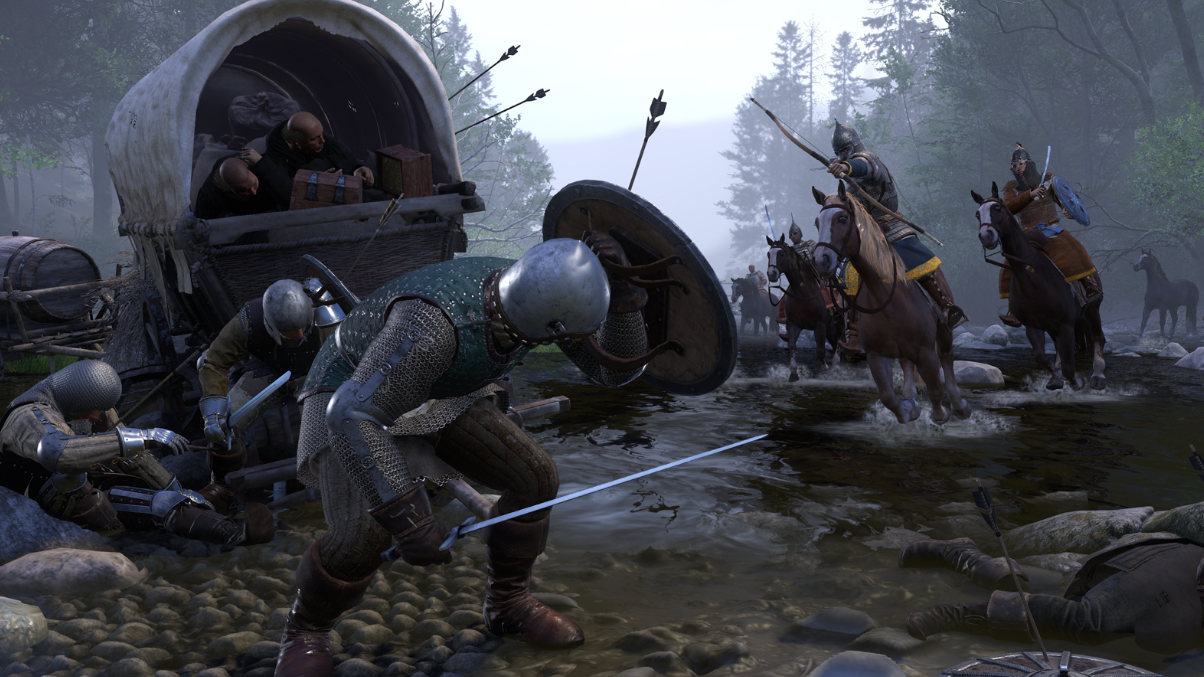
On high‑end PCs, Kingdom Come Deliverance can still look impressive with settings pushed up, but consoles are locked to older presets and asset budgets. When players move directly from Kingdom Come Deliverance II back to the first game, the downgrade is obvious. The sequel offers denser environments, more detailed character models, and more refined lighting, all running on stronger hardware profiles.
This contrast is not only aesthetic. Visual clarity—how cleanly silhouettes read, how well you can judge distance and terrain—affects combat and stealth. Grass, bushes, and ground cover in the original often resolve into coarse patterns on current‑gen displays when rendered from last‑gen configurations. Character faces and armor can appear flat at typical couch distance, undercutting the cinematic framing of conversations and cutscenes.
A remaster framed as a current‑generation port of the high‑end PC build, with 4K‑targeted textures and updated settings, would not need to redefine the art direction to feel significantly more in line with the sequel. Many players would experience the story for the first time without feeling like they have stepped back a hardware cycle.
What the 2026 remaster rumors are actually pointing to
Multiple reports point to a Kingdom Come Deliverance remaster or upgrade arriving around February 2026, aligning with the original game’s launch anniversary. The consistent thread across these reports is modest scope: a port of the PC version to PlayStation 5, Xbox Series X/S, and likely other current platforms, with upgraded resolution, textures, and performance rather than extensive new content or a deep mechanical overhaul.
The expectation set by those leaks is clear: do not look for a remake that rebuilds systems from scratch. Look for a cleaner, sharper, more stable version of the game that already exists, brought into parity with what strong PCs have been able to do for years and tuned for console hardware that no longer needs to struggle to render the world.
There is currently no publicly confirmed release plan from Warhorse Studios. Timelines, feature lists, and upgrade paths for existing owners remain unannounced, so all of those details should be treated as unfinalized until an official reveal.
Where the original design collides with modern expectations
Not every point of friction can or should be solved by a remaster, but several pain points line up cleanly with what a current‑gen rework can realistically address.
| Area | Original experience | Why it feels dated now | What a remaster can plausibly do |
|---|---|---|---|
| Frame rate | Often below 30fps on PS4/Xbox One, inconsistent in heavy scenes | Harder combat timing, camera judder, more noticeable on 120Hz displays | Target 60fps modes on PS5/Series X/S with better streaming and LODs |
| Image quality | Soft textures, visible aliasing, lower foliage density on consoles | Obvious downgrade after playing the sequel on the same display | Higher‑resolution textures, better anti‑aliasing, richer vegetation presets |
| Combat feel | Directional system with lock‑on that becomes chaotic in groups | Sequel refines readability and camera behavior, making the original feel rough | Minor tuning possible, but large systemic changes would move into remake territory |
| UI & systems | Heavier clothing and inventory management, fewer quality‑of‑life shortcuts | Longer sessions feel more micro‑management‑heavy than in the sequel | Selective QOL backports that do not alter progression or balance |
The key distinction is scope. A remaster can comfortably solve frame rate, texture quality, asset streaming, and some interface friction. Rewriting combat or core progression systems crosses into full remake territory, which would be far more expensive and time‑consuming for a studio that has just shipped a large sequel and multiple DLCs.
New players arriving through Kingdom Come Deliverance II
Kingdom Come Deliverance II has brought in a broader audience, helped along by strong sales and post‑launch support through DLC like Legacy of the Forge and Mysteria Ecclesiae. Those expansions add new regions, repeatable guild content, and new weapons, and they keep the sequel visible in the release calendar.
This success creates a pipeline effect. Players who enjoy the sequel often look back to the first game to see where Henry’s story began. Without a modernized version, they drop into a technically rougher, less polished experience that can feel like a step back in more ways than one. Some will adapt and push through; others will bounce off the older frame rate and jank before the narrative hooks can land.
A remaster aimed at current‑gen consoles directly addresses that onboarding problem. It gives late adopters a version of the first game that feels consistent enough with the sequel that the transition is about era and plot, not about fighting with camera stutter and texture pop‑in.
How much change would be enough?
For a game like Kingdom Come Deliverance, which built its identity on unforgiving combat and grounded systems, any upgrade has to walk a line. The goal is not to sand away every point of friction, but to remove technical obstacles that were byproducts of hardware limits and a young engine, not design intent.
On that basis, several priorities stand out for a 2026 remaster.
- Stability and performance on PS5 and Xbox Series X/S so that frame pacing and asset streaming no longer undercut fights and exploration.
- Higher‑resolution assets and cleaner image treatment on consoles to match what strong PCs have been doing for years.
- Selective quality‑of‑life improvements inspired by Kingdom Come Deliverance II, like more streamlined clothing and inventory handling, where they do not rewrite the game’s balance or identity.
Once those fundamentals are in place, smaller touches—such as modest adjustments to camera sway, optional motion settings, or more flexible save behavior—could make the game less hostile to newcomers without undermining its “earn your victories” tone.
Is a remaster necessary, or just inevitable?
On PC with strong hardware, mods, and community tweaks, Kingdom Come Deliverance already behaves like a soft remaster. That reality leads to a split view: PC players who tuned their own experience may not feel much urgency for an official update, while console players who struggled through sub‑30fps sequences remember a very different game.
Viewed from the console side, a remaster in 2026 is close to a necessity if the series is going to build a durable audience around both mainline entries. The sequel has raised expectations for how this world should look and run. Leaving the first game frozen in its launch‑era state on current machines would increasingly box it in as “homework” rather than a living part of the series.
The rumored plan—a February 2026 current‑gen port of the PC build with improved performance and visuals but no sweeping redesign—fits that need. It respects the original’s systems while finally giving consoles access to an experience closer to what the game has quietly offered high‑end PCs for years.
Until Warhorse Studios announces concrete details, pricing, and upgrade paths, there is still uncertainty about the exact form and value of the remaster. What is clear already is the demand: players who discovered Henry in Kingdom Come Deliverance II want a technically modern way to see where his story began, and the hardware landscape in 2026 finally makes that practical.