

League of Legends’ first patch of the new season is less about a few number tweaks and more about rewiring how games are played. Patch 26.1 pushes power away from piling into epic monsters and toward breaking turrets, adds a new vision mechanic with Faelights, rebalances the jungle from top to bottom, and layers on new systems across Arena and a long‑running metagame called Demacia Rising.
Season 1 structure and pacing changes (Summoner’s Rift and Swiftplay)
Patch 26.1 opens Season 1 with a deliberate shift in macro priorities. Strategic play is nudged toward turret pressure and away from constant contesting of epic monsters. Crystalline Overgrowth on the map reinforces that push‑and‑pressure style, while pacing changes make both standard Summoner’s Rift and Swiftplay a bit faster on average.
Role strength is also rebalanced. Each position now has its own Role Quest that reflects its responsibilities on the map, and these quests tie into broader systems like jungle pets and objective control. Most champions’ base critical strike damage is standardized at 200%, which simplifies item math and raises the ceiling on crit‑focused builds.
Ranked players see structural updates intended to make auto‑fill less punishing. The intent is to keep queue times and role coverage manageable without turning off games when someone is placed off their primary role.

Jungle changes (jungle rules and pet tuning)
The jungle in 26.1 is overhauled to be less punishing to the player moving through it while making individual clears and pathing decisions more meaningful. The core jungle rules now lean heavily toward survivability and tempo rather than attrition.
| Jungle mechanic | Previous value | New value in 26.1 |
|---|---|---|
| Monster damage amp vs champions | 25% | 10% |
| Smite damage tiers | 600 / 900 / 1200 | 600 / 1000 / 1400 |
| Damage taken by junglers from non‑epic monsters | Normal | 50% of previous damage |
| Max heal on monster kill | 81 + 13.5/lvl (1–10), max 202.5 | 90 + 20/lvl (1–9), max 250 |
| Min heal on monster kill | 36 + 6 (44% of max), max 90 | 0 (no guaranteed minimum) |
| Energy restored on large monster kill | None | 15 energy |
| Pet heal per second | 14–37 (levels 1–10) | 6–36 (levels 1–18) |
| Pet base DPS | 20–90 | 20–150 |
| Pet base DPS vs epic monsters | 15.5 (flat) | 20–150 (scales like base DPS) |
| Scuttle Crab level | Spawns at –1 level | No longer –1 level (more gold/XP) |
| Kills needed for first pet evolution | 20 | 15 |
| Jungle Role Quest completion | 40 stacks | 35 stacks |
The headline effect is clear. Junglers take significantly less damage from non‑epic monsters and receive stronger healing and resource returns from camps, particularly early. That keeps more health and tempo for ganks or counter‑jungling, and it lets champions that were previously too fragile to clear reliably now path with far less risk.
Smite’s top-tier damage goes up from 1200 to 1400, which tightens secure windows around major objectives and makes late‑game contesting slightly more explosive. Pet damage is raised, especially against epic monsters, while passive pet healing per second is spread over the full level curve instead of front‑loading sustain early. Combined with lower monster damage, the jungle becomes less about being chipped down by camps and more about how quickly you can translate clears into proactive plays.
Scuttle Crab spawning at a normal level, rather than under‑leveled, means it is now a more rewarding mini‑objective. Early fights around Scuttle offer more gold and experience, but with the lower monster amp and stronger Smite, those skirmishes should be defined more by champion strength than by neutral damage.
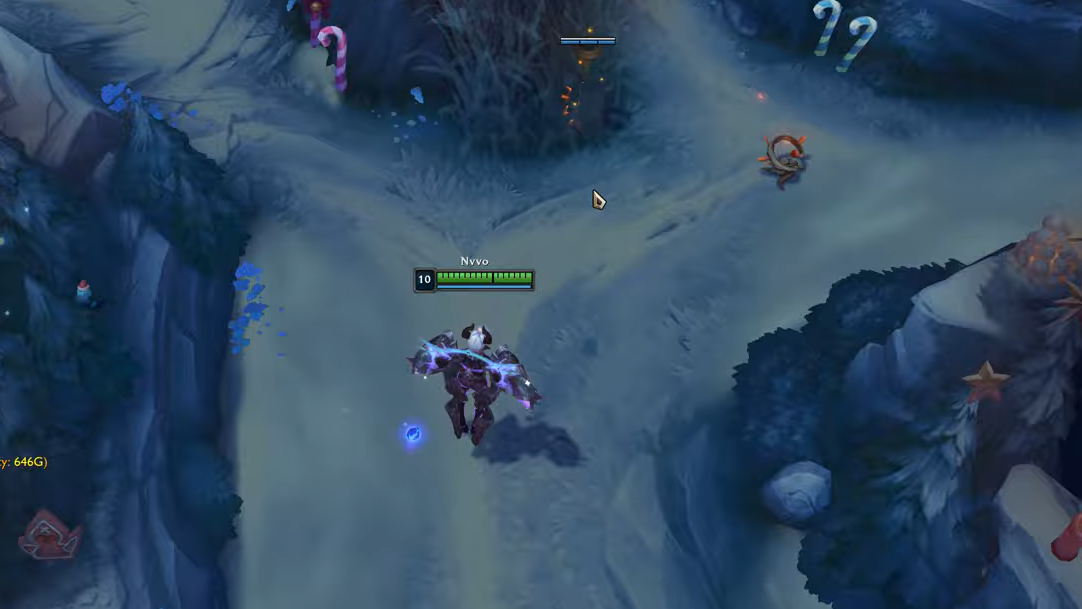
Faelights and vision changes
Patch 26.1 adds Faelights as a new vision mechanic on Summoner’s Rift. Faelights appear on the map as circular rings of glowing mushrooms. Some exist from the start of the game, while others only appear when the Elemental Rift transformation happens.
When you place a ward on a Faelight ring, that ward briefly reveals a nearby area of the map. The twist is that this extra reveal is not globally obvious to the enemy team. Opponents only see that the Faelight has been triggered if they use a detector effect or ping the ward directly.
The feature targets a few specific pain points. Solo laners and split‑pushers often want deep vision but rely heavily on support players to place and refresh wards. Faelights create high‑value ward spots near side lanes, especially after Elemental Rift, that any role can leverage without burning multiple trinkets. Paired with changes to Scryer’s Bloom, they make it easier to set up extended pushes or cross‑map plays without permanently overcommitting your team’s vision resources.
Because Faelights are fixed map objects, they also become predictable points of contention. Teams can pre‑plan around common Faelight spots for picks, flanks, or disengages. Vision control becomes less about randomly sweeping fog and more about contesting a small set of known, powerful information nodes.
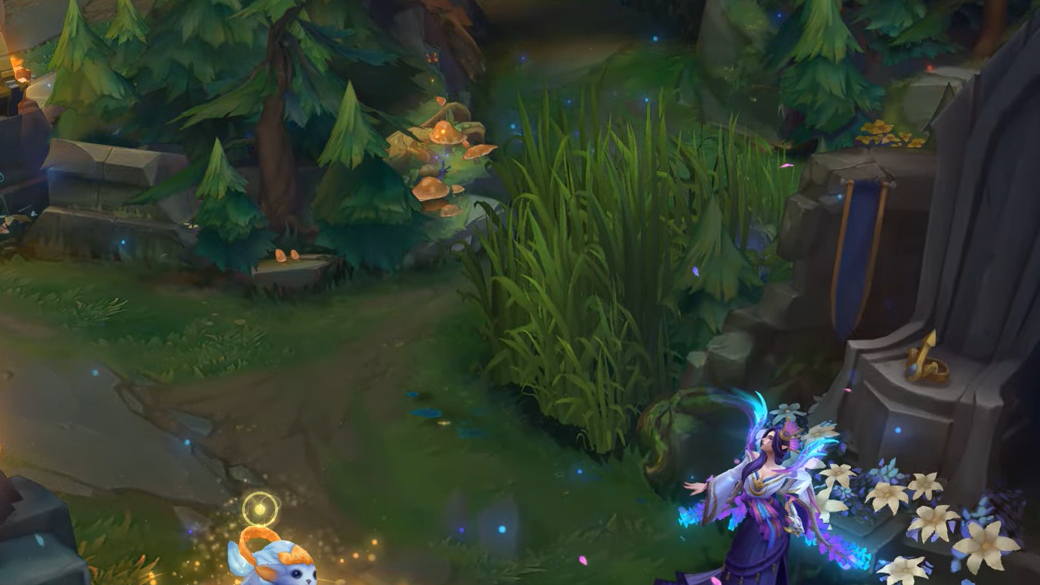
Crystalline Overgrowth and turret‑first macro
Crystalline Overgrowth is the other major map‑level change that pushes the game away from constant epic monster stacking. While the specific terrain details sit in the full patch notes on the official site, the overall direction is straightforward: turrets matter more, and the map layout supports plays that prioritize sieging and structural damage.
Between Overgrowth layouts, higher pet damage into epic monsters, and increased Smite damage, objective fights cluster into sharper, more decisive windows. Teams that win early side‑lane pressure can translate it into turret plates and structures faster, rather than being forced into every single neutral objective just to keep pace.
Role Quests and crit damage changes
Role Quests are introduced for every position, including the jungle. These quests track how well you are performing the expected duties of your role and tie into rewards such as pet evolutions for junglers. With the jungle Role Quest requiring 35 stacks instead of 40, early‑to‑mid game junglers hit their key milestone earlier, which amplifies their impact during the most contested stage of the game.
On the mechanical side, most champions now share a 200% base critical strike damage value. Normalizing crit numbers like this removes hidden differences between champions and lets item designers adjust around a single baseline. It also makes build evaluation easier in practice; once a champion reaches sufficient crit chance, the payoff on crit‑oriented items is more predictable.

Faelights in practice: how to use the new vision rings
Faelights reward teams that plan their warding routes around them rather than treating them as incidental map decorations. A few patterns emerge immediately.
Step 1: Identify Faelight rings near your primary side‑lane focus. As soon as the Elemental Rift transformation finishes, pan your camera or walk through common side‑lane paths to confirm which Faelight spawns you can realistically control.
Step 2: Reserve a ward for the Faelight before starting a deep push. Instead of dropping a standard river ward out of habit, hold a charge so that when you walk into the Faelight ring, you can instantly place and trigger the extended reveal.
Step 3: Pair Faelight vision with wave timing. Trigger the Faelight when your wave is about to crash into the enemy turret, not 20 seconds earlier. That way the temporary reveal covers the exact window where the enemy might flank or collapse on your split‑pusher.
Step 4: Force detector trades. When you see a Control Ward or detector effect used to check a Faelight, treat that as a mini victory. The enemy is spending limited detection resources on a single, discrete vision node instead of sweeping your entire jungle or river network.
Step 5: Rotate Faelight control with lane swaps. Once you have taken one side‑lane turret with the help of Faelights, mirror your setup to the opposite side of the map. This keeps your team playing around the same set of predictable, high‑value vision rings rather than improvising fresh ward lines for every play.
Arena updates in patch 26.1
The Arena mode is pulled into Season 1’s broader refresh instead of being left static. Many of the new items introduced on Summoner’s Rift are now available in Arena, adding more build options and synergies in the smaller‑scale format.
A new Fame track gives Arena players long‑term progression to chase across runs. There are also new Augments, expanding the draft space and opening up more extreme combinations. Balance changes in Arena are kept relatively light in this patch; the focus is on injecting fresh toys and progression hooks, with a larger Arena‑specific update promised later in the year.
Demacia Rising metagame
Beyond standard matches, 26.1 adds a long‑form metagame called Demacia Rising that will run across the whole of Season 1. In Demacia Rising, you play as Lux, with her aunt Tianna acting as a mentor in military strategy. The scenario begins with the founding of Zeffira, Demacia’s first settlement, in the ancient petricite forests.
From there, the campaign unfolds like a strategy game. You expand Demacia’s territory, generate resources, train armies, research upgrades for both your forces and towns, and defend the kingdom against various threats alongside several League champions.
Demacia Rising is designed to evolve over time. Throughout Season 1, new upgrade tiers, research options, story chapters, unit types, champions, threats, and events are slated to be added. Progression in this metagame is tied directly to playing League of Legends and Teamfight Tactics; you earn a resource called Silver Shields primarily by playing those games, which you then spend inside Demacia Rising to grow your kingdom.
Demacia‑themed map and other mode updates
Season 1 also brings a Demacia‑themed version of Summoner’s Rift, which serves as the backdrop for the new macro and vision systems. Structures, terrain, and ambient design draw from Demacian aesthetics, tying the main map more closely to the Demacia Rising narrative.
ARAM receives its own round of balance adjustments under the ARAM Mayhem banner, targeting champions and interactions that skew too hard in one direction on the single‑lane map. Swiftplay is reworked to be “even swifter,” with pacing adjustments intended to compress games further while preserving their structure.
Finally, behavioral and lobby systems get attention. Changes targeted at “lobby hostage” situations aim to reduce the ability for players to stall or disrupt the pre‑game flow when they are unhappy with role assignments or drafts. Paired with the Ranked auto‑fill tweaks, the overall experience from queue to loading screen is meant to be smoother and less prone to being derailed by one frustrated player.
Patch 26.1 sets the tone for the year by changing where and how power is expressed on the map. With Faelights and Crystalline Overgrowth redefining vision and terrain, the jungle rebuilt around faster, safer clearing, and long‑running systems like Arena and Demacia Rising layered on top, the Season 1 experience is built to feel different from the very first game.