

Lycia is one of the most talked‑about faces in Arknights: Endfield right now, and it is almost entirely because she looks like she walked straight out of Talulah’s character sheet. White hair, Draco‑style horns, fire everywhere, a massive flaming sword, and even a serpentine tail that has players immediately thinking of Kaschey. She appears briefly, leaves a strong impression, and raises far more questions than she answers.
Who Lycia is in Arknights: Endfield
Lycia is listed as an NPC associated with the Landbreaker faction. She is not an Endfield operator in the usual sense and does not belong to the core Endfield roster. Instead, she acts as an external ally with her own agenda who occasionally cooperates with the Administrator’s team.
Within Landbreaker, she comes across as a powerful combatant who is comfortable cutting her own deals. The Administrator already knows her before the player meets her, and there are hints that a prior agreement between them shapes how she gets involved. Perlica is later mentioned as having dealings with her as well, which pushes Lycia further into the “dangerous but useful contractor” category rather than a cleanly aligned squadmate.
Her role in the story leans on ambiguity. She helps when it suits her, but she is not portrayed as taking orders from Endfield. That framing is important for reading every appearance she makes: she is a third force, not simply “another operator” who happens to have strong Arts.
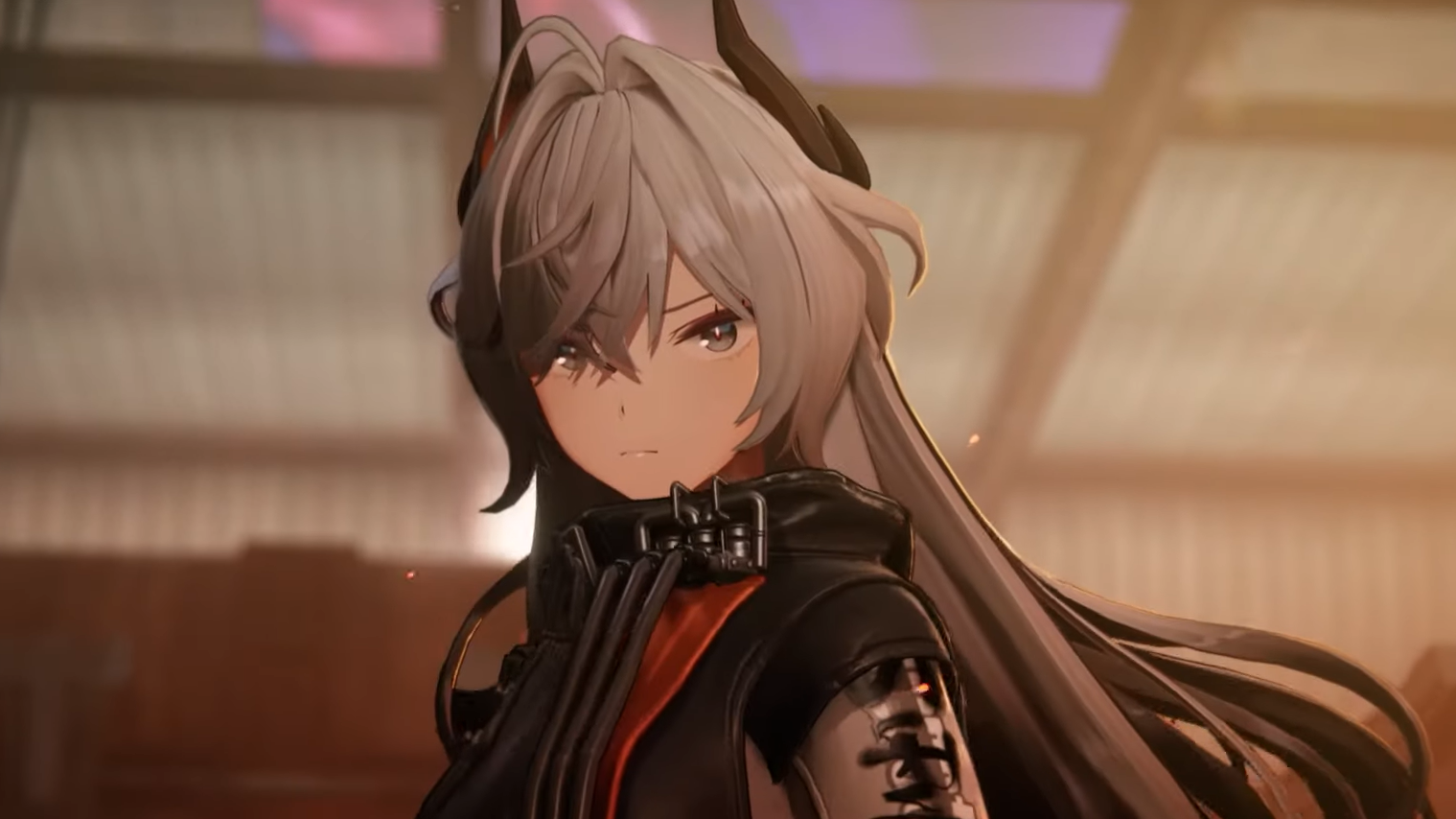
Lycia’s design and why everyone calls her “Talulah 2”
Lycia’s first real splash came through gameplay footage where she appears in a cutscene unleashing blazing Arts. That was enough to set off immediate comparisons with Talulah from the original Arknights storyline. Fans point to a few specific design beats:
- Draco‑like horns and white hair. Her silhouette tracks closely with Talulah’s later designs, with curved horns and flowing light hair that read as clearly Draco‑coded.
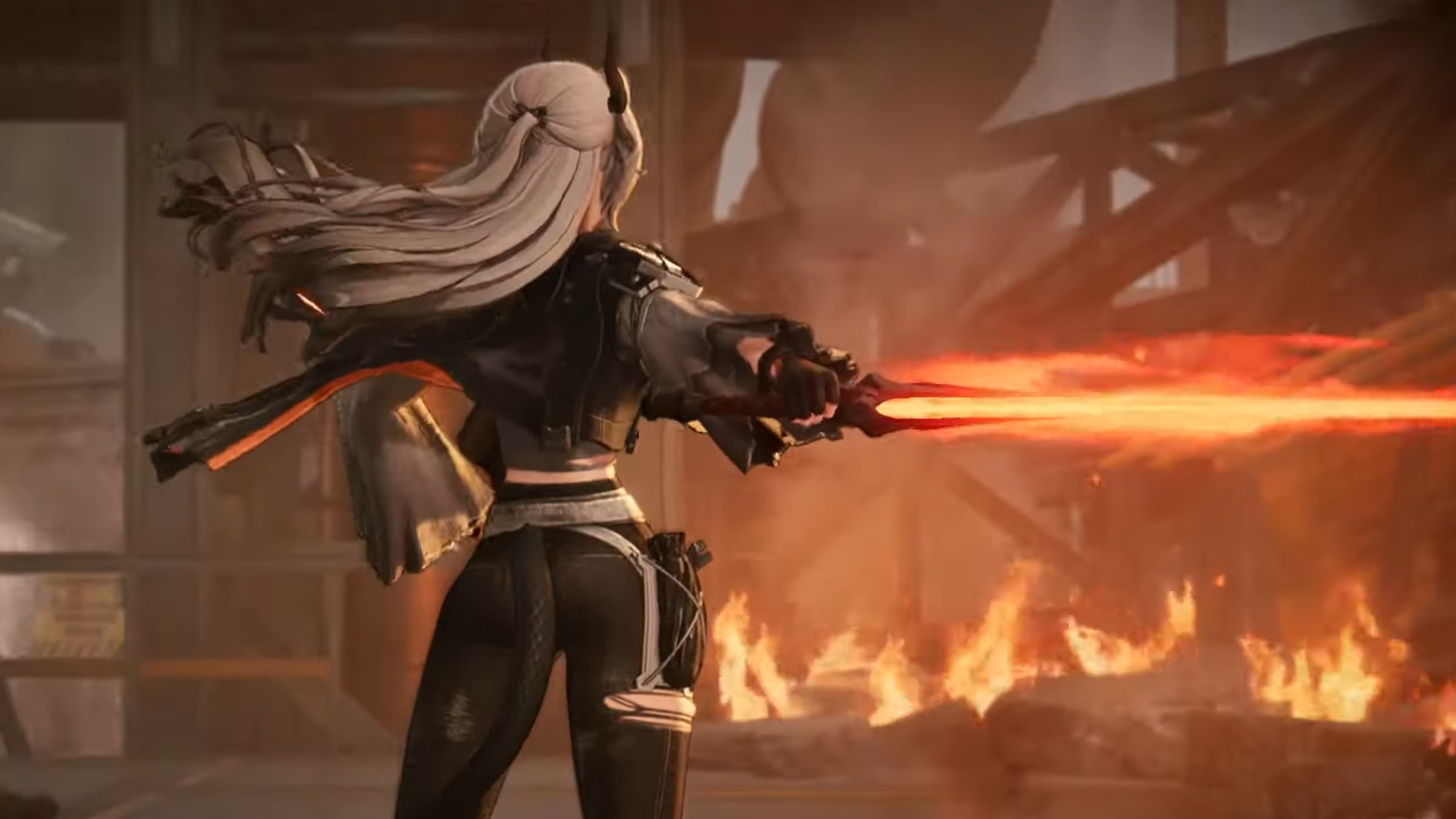
- Fire‑based Arts and a flaming sword. Lycia fights with heat Arts that ignite enemies, and the weapon she brandishes is wreathed in flame. For players who associate Talulah with catastrophic fire, the parallel is hard to ignore.
- A serpent‑like tail. In some shots, a “snek tail” is visible, which has led players to joke about Kaschey’s influence and to read her as something more complicated than a straightforward Draco.
The combination has made “Talulah 2” a running nickname. It also feeds into more elaborate speculation that she could be a “reconvener” or descendant linked to Talulah, especially in a setting where Originium, infection, and memory fragments make long‑term survival and restoration at least conceptually plausible. None of that is confirmed in‑game; what exists is a deliberate echo in visual language and power set that invites fans to draw the line back to Lungmen’s most infamous Draco.
What the story actually gives Lycia so far
Lycia’s documented role is still thin, but a few elements stand out.
First, she is consistently described as independent. She cooperates with Endfield when interests align, but “pursues her own agenda” and is never framed as a subordinate. That independence is reinforced by the sense that the Administrator had to bargain with her in the past, and that Perlica later follows up with her separately. Lycia is someone powerful enough that Endfield has to treat her like a peer.
Second, she leans into ambiguous cooperation. She is not introduced as a villain faction leader the way Talulah was in the Chernobog saga, but she is also not a stable anchor like a core operator. Her presence on Landbreaker’s side gives her room to oppose Endfield in one situation and stand alongside them in another, all without contradicting her stated independence.
Third, she has distinctive heat Arts. In battle segments and cutscenes, her Arts do more than simply deal damage. They visually dominate the field and mark her out as someone whose personal combat power can swing an encounter. That is consistent with how Landbreaker frames high‑end threats in Endfield: individuals whose skills warp the tactical situation rather than just slotting into a class template.
In short, the story treats Lycia less like a mystery cameo and more like a recurring wildcard who can credibly influence major conflicts if and when she chooses to step in.
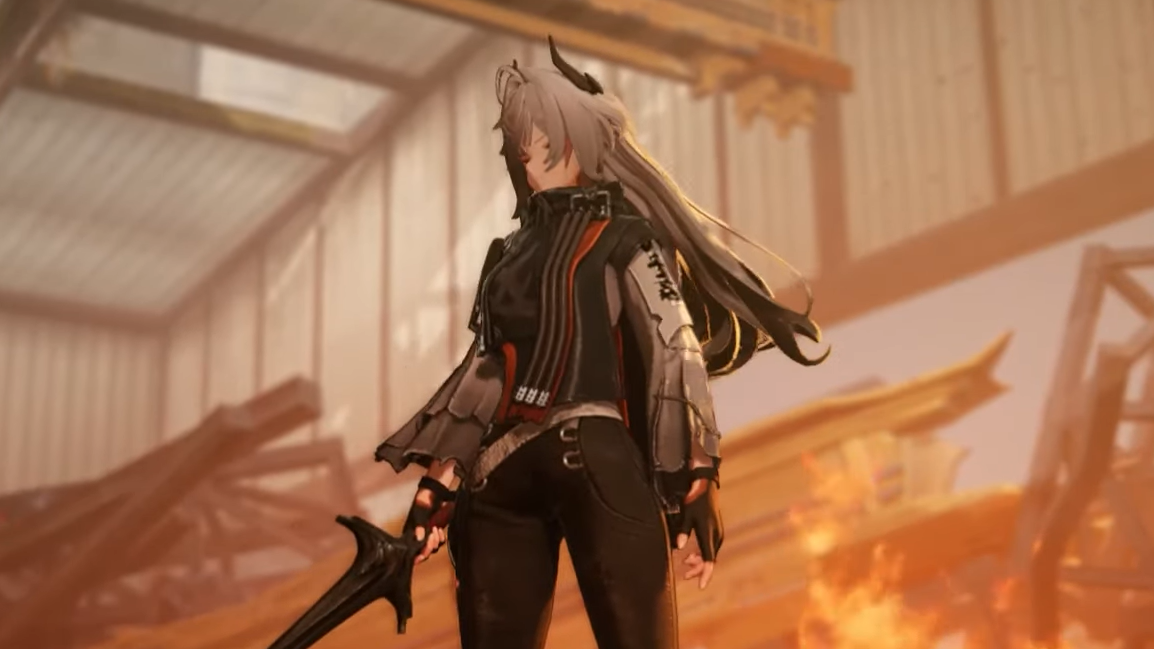
Lycia and the Landbreaker faction
Landbreaker serves as a catch‑all banner for characters who operate on the planet’s surface with a mix of force, ideology, and survivalism. Within that space, Lycia is presented as “a person from the Landbreaker”, which places her outside Endfield’s corporate and research structures.
Her connection to Landbreaker matters in three ways.
- Power framing. Landbreaker already includes heavy hitters like Levatein and Last Light. Lycia being grouped with them pushes her closer to that echelon than to generic grunts.
- Philosophical lean. Landbreaker characters often talk in terms of autonomy, will, and the right to carve out their own space in a hostile world. Lycia’s insistence on her own agenda and the way she negotiates cooperation fit that pattern neatly.
- Enemy or ally, depending on context. Landbreaker as a whole is not strictly antagonistic, which makes Lycia’s association with them flexible. She can stand on the opposite side of a skirmish without being written off as irredeemable, and she can show up as backup without feeling like she has been absorbed into Endfield’s hierarchy.
This positioning is also what makes the “reconvener Talulah” theory attractive to some fans. A Talulah‑like figure who is not locked into Reunion’s history or Rhodes Island’s politics can be slotted into Endfield’s frontier conflicts much more freely while still carrying that visual and thematic weight.
What Lycia is not (yet)
Fans naturally want to know whether Lycia will be playable and whether she is “really” Talulah or a direct descendant. Both questions are still unanswered in‑game.
There are a few grounded points worth keeping in mind.
- Not an operator in the Endfield roster. Lycia is described as an NPC and an ally with an agreement, not as an Endfield operator with a recruitment profile, kit, or rarity attached.
- No explicit bloodline confirmation. Jokes about her being Talulah’s daughter or a reconvener rely on visual parallels and on broader Originium lore. The story text that names her does not spell out any family relationship or revival mechanic.
- Comparison with Ch’en’s descendant. In contrast, Endfield has already signposted a descendant of Ch’en more directly. The fact that the script chose to be explicit there and not with Lycia is another hint that, for now, she is meant to sit in the realm of deliberate echo rather than explicit legacy.
That uncertainty is part of her appeal. Lycia stands at a crossroads between fan memory of Arknights’ past antagonists and Endfield’s new frontier narrative, and the story uses that tension without resolving it outright.
Why players keep mixing up Lycia and Lucilla
Separate from the Talulah comparisons, another confusion has started popping up: Lycia versus Lucilla. The names are similar enough that they occasionally get tangled, especially in quick conversations.
Lucilla is a completely different character in the original Arknights tower‑defense game. She is a 5★ Ægirian Hexer Supporter operator who was introduced in the Path of Life event. Lucilla fights at ranged positions, deals Arts damage, applies Fragile and Enfeeble to enemies through her trait and talent, and manipulates enemy speed and vulnerability with skills such as Camouflaging Current Chart and Release‑retarding Chromogen. She also has a UMD‑X module, “Multifunctional Mapping Instruments (Early Access)”, that upgrades her debuff capabilities over three stages.
Lycia, on the other hand, belongs to Arknights: Endfield’s Landbreaker cast and is not a recruitable operator in Arknights. She does not share Lucilla’s Aegir background, Hexer Supporter class, or chromogen‑themed kit. The overlap is in the letters of their names, not in their gameplay roles or narrative slots.
What Lycia’s presence suggests for Endfield’s future
Even in limited screen time, Lycia signals a few trends for how Arknights: Endfield is willing to play with its own history.
First, she shows a willingness to riff on iconic figures from the original game without copying their arcs one‑for‑one. Lycia hits many of Talulah’s visual beats, but she arrives without Reunion, Chernobog, or Lungmen hanging over her. That gives Endfield room to explore what a Talulah‑class figure looks like in a very different context.
Second, she reinforces Endfield’s emphasis on powerful non‑aligned characters. Landbreaker already houses several named NPCs who feel operator‑sized in power but are not under Endfield’s control. Lycia sliding into that roster underlines that the Administrator’s influence is not absolute, and that some of the most dangerous people on the planet will always be only loosely affiliated.
Finally, she keeps the door open for cross‑era speculation without committing to firm answers. As long as the script leaves her origins unclear, she can serve as a bridge between players’ memories of Talulah and whatever new conflicts Endfield wants to stage on the frontier.
For now, Lycia is best read as a deliberate callback and a narrative wildcard: a Landbreaker firebrand who looks like Talulah, fights like a boss, works with Endfield on her own terms, and keeps players guessing about exactly where she came from.