

ARC Raiders already leans hard into scavenger aesthetics: dented armor, repurposed gear, and outfits that look built from whatever survived on the surface. The Milwaukee PACKOUT collaboration takes that idea and bolts one of the most recognizable real-world tool storage systems straight onto your Raider’s back.
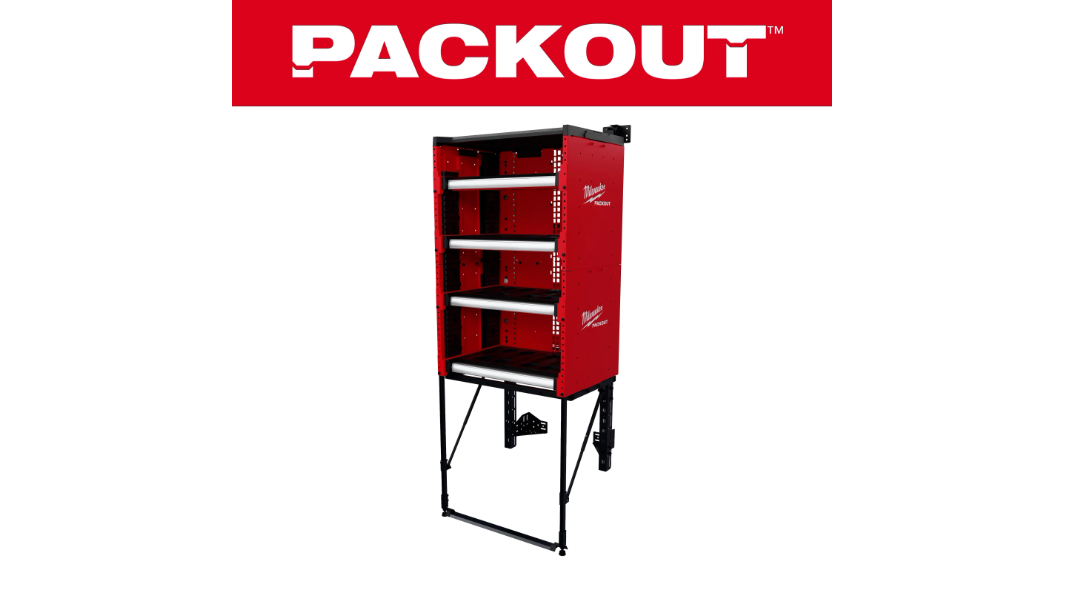
What Milwaukee PACKOUT is in the real world
PACKOUT is Milwaukee Tool’s modular storage ecosystem. It’s built around interlocking cases, drawers, racks, totes, and soft bags that all clip together into a single stack, cart, wall system, or van install.
The hardware spans a few broad categories:
- Rolling storage such as the Rolling Tool Box (48-22-8427) and Rolling Drawer Tool Box (48-22-8420), with 250 lb capacity, 9-inch all-terrain wheels, and IP65-rated shells designed to be dragged across job sites.
- Tool boxes and drawers like the XL Tool Box, 2-, 3-, and 4-Drawer Tool Boxes, compact cases, and the PACKOUT Cabinet, all using impact-resistant polymer, metal-reinforced corners, and a common locking interface.
- Racks and mounting, including steel PACKOUT Racks and the PACKOUT Rack Kit that can be stacked three units high in vans or CONEX boxes, plus wall plates and mounting plates that turn a shop wall into a docking surface.
- Totes and soft storage such as the PACKOUT Backpack, Structured Backpack, structured totes, and tool bags, built with 1680D or 1800D ballistic fabric, molded bases, and 30–65 pockets depending on model.
- Clip‑on accessories and drinkware that twist or latch into place, from battery racks and hooks to insulated bottles and coolers, all sharing the same “twist to lock” or plate interface.
The throughline is modularity. A PACKOUT stack is meant to be configured per job, whether that’s a rolling tower of drawers, a wall of hanging crates, or a single backpack that still locks into the rest of the system.
How ARC Raiders frames gear and cosmetics
ARC Raiders sets players loose on a ruined, machine-haunted Earth with a strong focus on gear identity. Raiders drop from Speranza, scavenge, fight ARC machines and rival humans, then race for extraction with whatever they can carry.
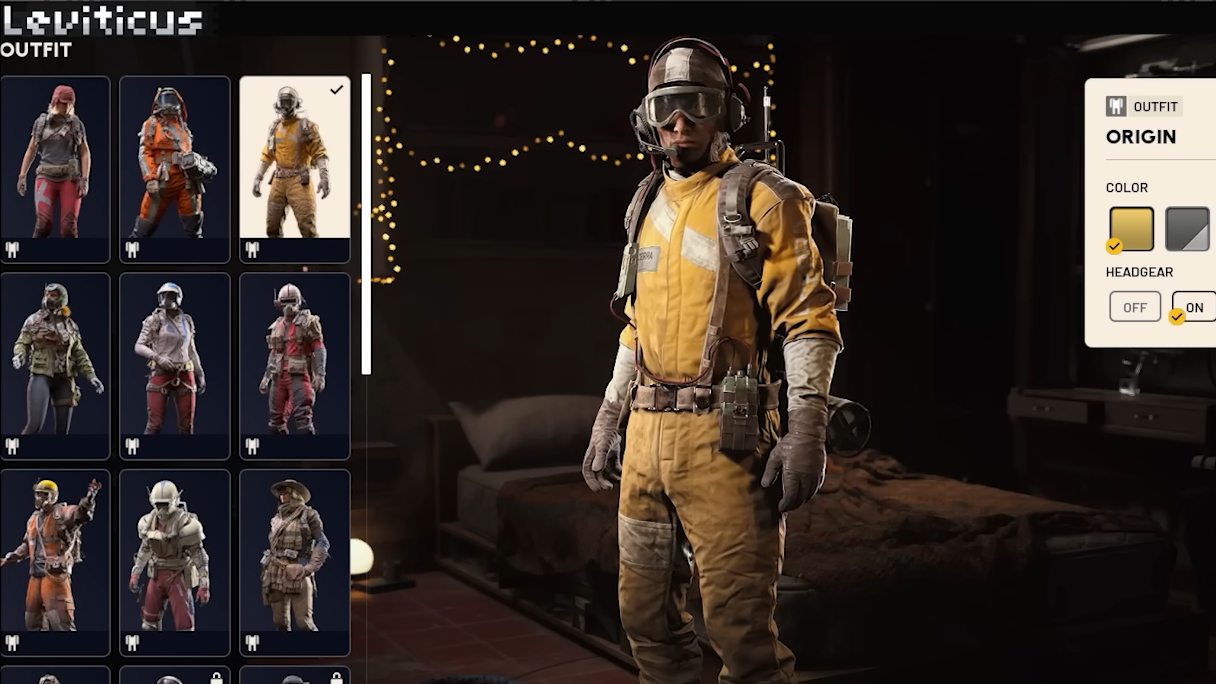
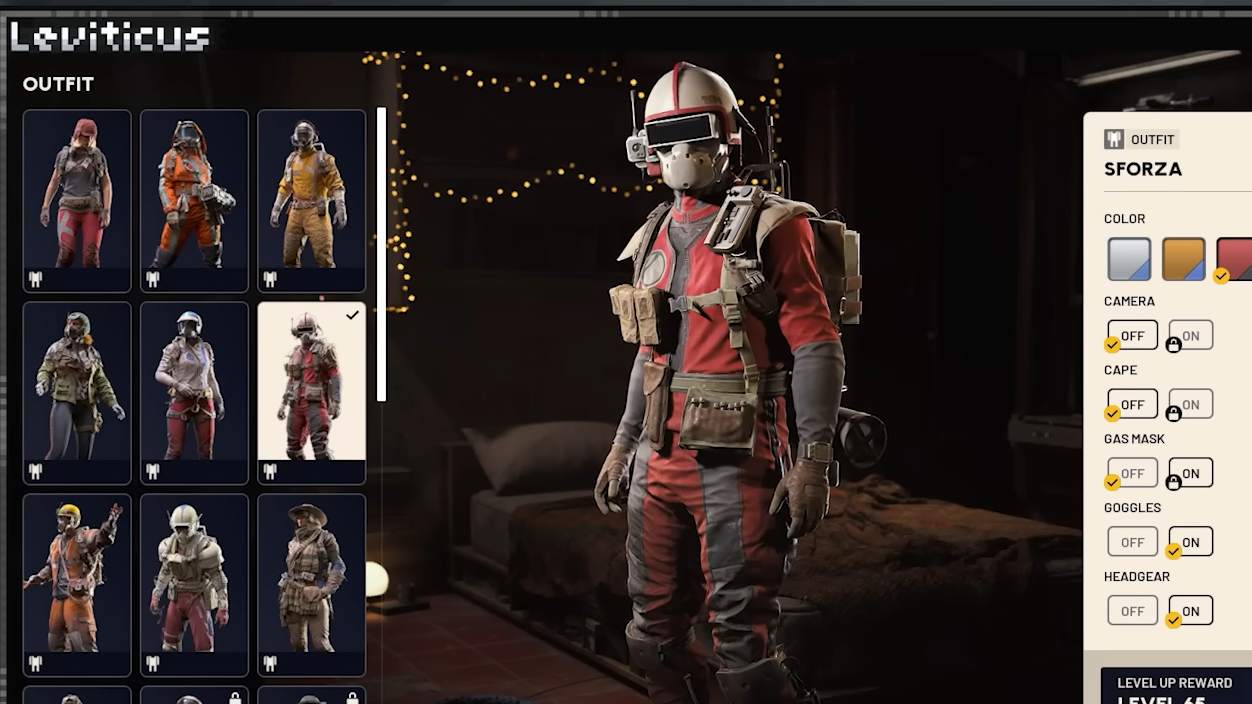
Cosmetics sit on top of that risk–reward loop. Full-body Outfits replace your character’s appearance and are treated as indivisible sets: you can’t mix and match parts like helmets or jackets. Many outfits come in different colorways and have toggleable add-ons that must be unlocked separately.
The wardrobe spans progression unlocks such as the initial Origin outfit, the level‑gated Sforza, quest rewards like Aviator, and store sets like Gearshifter, Leviathan, or Mirage purchased with Raider Tokens. Seasonal Raider Decks add more themed looks over time, like the hockey‑inspired Goalie gear introduced with the Cold Snap update.
Backpacks, weapon charms, and emotes layer more personalization on top, signaling how you play and what you care about long before anyone checks your loadout.
What the Milwaukee Packout collab brings into ARC Raiders
The collaboration centers on a Milwaukee‑branded PACKOUT backpack that appears as a cosmetic item in ARC Raiders. Visually, it pulls directly from the PACKOUT language players already recognize in workshops and on job sites: red and black shell, hard-edged geometry, and the sense that the pack could snap straight off your character and into a rolling stack of tool boxes.
In-game, it functions like other cosmetic backpacks. It doesn’t change capacity or stats and doesn’t introduce new mechanics. Instead, it acts as a visual crossover, bridging the game’s scavenger fantasy with an object that already lives in the real-world gear culture many players inhabit.
That’s a subtle but important distinction. PACKOUT inside ARC Raiders is not a gameplay system; it’s a way of wearing a brand that already stands for modularity and preparedness in another context.
Why PACKOUT fits the ARC Raiders world so neatly
ARC Raiders leans on makeshift engineering: repurposing civilian tech, bolting scrap onto armor, and improvising around scarce resources. PACKOUT’s real-world design embodies many of the same principles, just built for tradespeople instead of Raiders.
A few specific parallels stand out.
- Modularity vs. extraction runs – PACKOUT’s snap‑together shells and drawers mirror the way ARC Raiders encourages you to build a repeatable loop: set up, deploy, gather, extract, then reconfigure before the next run.
- Durability vs. lethal terrain – Features like IP65‑rated protection, impact-resistant polymer, and metal‑reinforced corners are made for rain, dust, and drops. On the surface, Raiders deal with environmental hazards and debris constantly, so a pack that feels overbuilt makes sense aesthetically.
- Organization vs. high‑stakes inventory – PACKOUT drawers and organizers are all about knowing where everything is, even after being tossed in a van. ARC Raiders asks you to manage blueprints, crafting components, and gear builds across repeated runs, so a strong organizational metaphor on your back tells a coherent story.
- Wall and van systems vs. Speranza – In reality, PACKOUT Racks and wall plates line trailers, vans, and shop walls. In the game’s fiction, Speranza’s maintenance spaces, tunnels, and depots feel like places where a system like that would naturally end up.
That alignment is why the collab lands cleaner than a simple logo slap. The backpack looks like something a Raider might actually have salvaged from an old workshop, then never gave up.
Where the PACKOUT backpack sits among other ARC Raiders cosmetics
Cosmetics in ARC Raiders revolve around three big levers: progression, time‑limited events, and direct purchase.
Progression outfits like Origin and Sforza reward continued play. Community unlocks, such as Striker, tied to events like Breaking New Ground, ask players to contribute to shared goals. Trials, with ranks like Daredevil 1, add another skill-based unlock path. The premium store fills in the gaps with themed sets—forest rangers, space cowboys, urban scouts—priced in Raider Tokens, and bundle pricing encourages picking up full looks.
Brand collaborations slot into that matrix as another theme rather than a new category. Milwaukee’s PACKOUT backpack sits alongside, not above, the Expedition, Goalie, or Leviathan looks that players gravitate toward. It’s one more way to signal taste, background, or sense of humor.
In practical terms, that means the pack is a purely cosmetic choice. It won’t help you survive frostbite in the Snowfall condition, clear a Northline community event faster, or tweak your Trials performance. It just makes your Raider look like someone who treats a scav run the way an electrician treats a long shift in the field.
What this kind of crossover says about live games in 2026
ARC Raiders is positioned as a long‑running extraction adventure, with a 2025 roadmap that stretches into early 2026 and promises more maps, conditions, events, and cosmetics. The Milwaukee collaboration fits that trajectory: it’s a low-friction way to introduce something new and memorable without rewriting balance or systems.
For players, the value is mostly social. A PACKOUT backpack is a conversation starter in the same way as a rare Raider Deck skin or a community event outfit. It’s instantly recognizable to anyone who lives in trades or tool‑nerd spaces, and it stands out against more generic sci‑fi packs.
For Embark and Milwaukee, it’s a small but sharp way to collapse the distance between a digital scavenger fantasy and the everyday reality of hauling gear. One lives in a lethal future Italy; the other lives in vans, trailers, and CONEX boxes. The backpack is where they meet.