

Mythril sits in that awkward spot in The Forge where it is powerful enough to chase, but rare enough that you do not want to waste a single chunk. Treat it as a targeted investment, not just another purple rock.
Mythril stats and trait overview
| Property | Value |
|---|---|
| Rarity | Legendary ore |
| Base drop chance | 1 in 813 from eligible nodes |
| Forging multiplier | 3.5x |
| Selling price | $52.5 per ore |
| Trait effect | +15% maximum health when applied to armor |
| Trait scope | Armor only; stacks with other equipment bonuses |
Mythril’s defining feature is its defensive trait. Armor forged with Mythril increases your maximum health by 15 percent. This bonus stacks with traits from other equipped pieces, so a full armor set using Mythril in its recipes can noticeably increase your HP pool over the base 100.
Health here is different from raw defense. Defense-focused ores like Obsidian reduce damage taken; Mythril instead pushes your HP ceiling higher. In practice, that means better survivability against large single hits and more room for error in high-level encounters, especially when paired with healing or lifesteal effects.
On top of the trait, the 3.5x forging multiplier makes Mythril an efficient stat contributor in recipes. Gear built with a high Mythril ratio can hit strong numbers while also unlocking the max‑health bonus.
Where Mythril drops in The Forge
Mythril is not tied to a single region. It appears from late‑game rock types in both volcanic and icy biomes.
| Node type | Area / region | Mythril chance |
|---|---|---|
| Basalt Vein | Forgotten Kingdom (including Ashen Passage and Volcanic Depths) | 1/813 |
| Icy Pebble | Frostspire Expanse and related icy zones | 1/813 |
| Icy Rock | Frostspire Expanse and related icy zones | 1/813 |
The Forgotten Kingdom’s Basalt Veins are the earliest consistent source most players will see. These nodes start appearing once you leave Stonewake’s Cross and head into the second region. In the icy endgame, Icy Pebbles and Icy Rocks offer an alternative way to continue collecting Mythril while you work on other cold‑biome ores with traits.
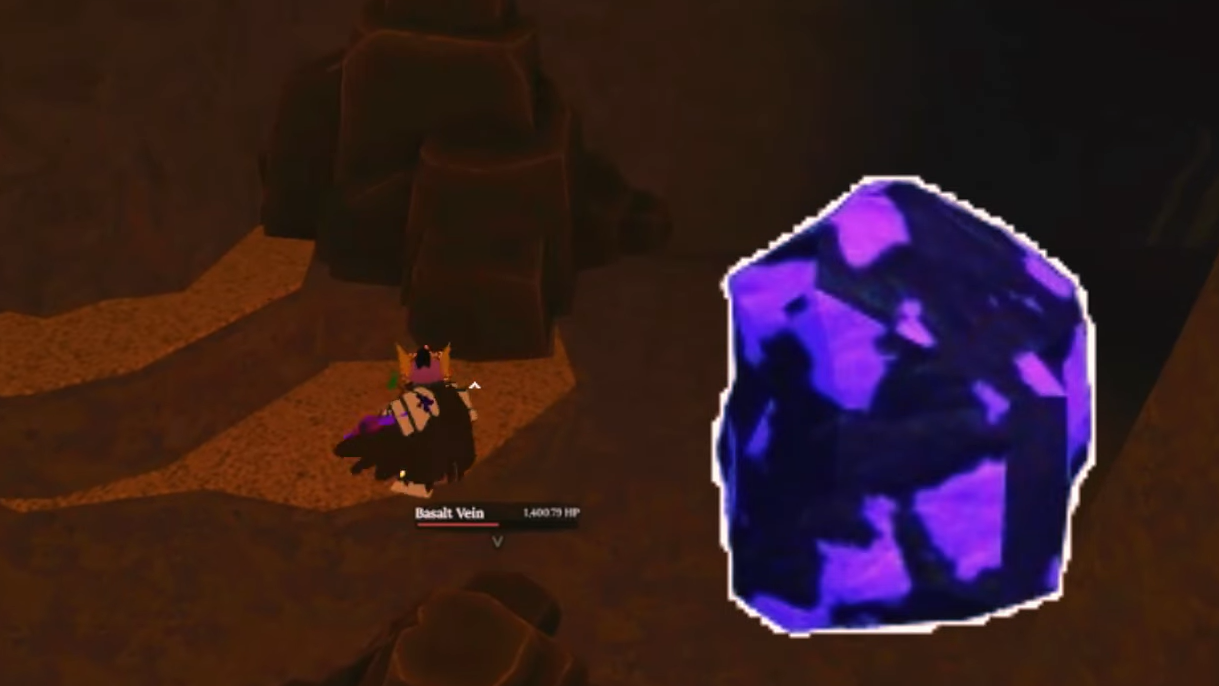
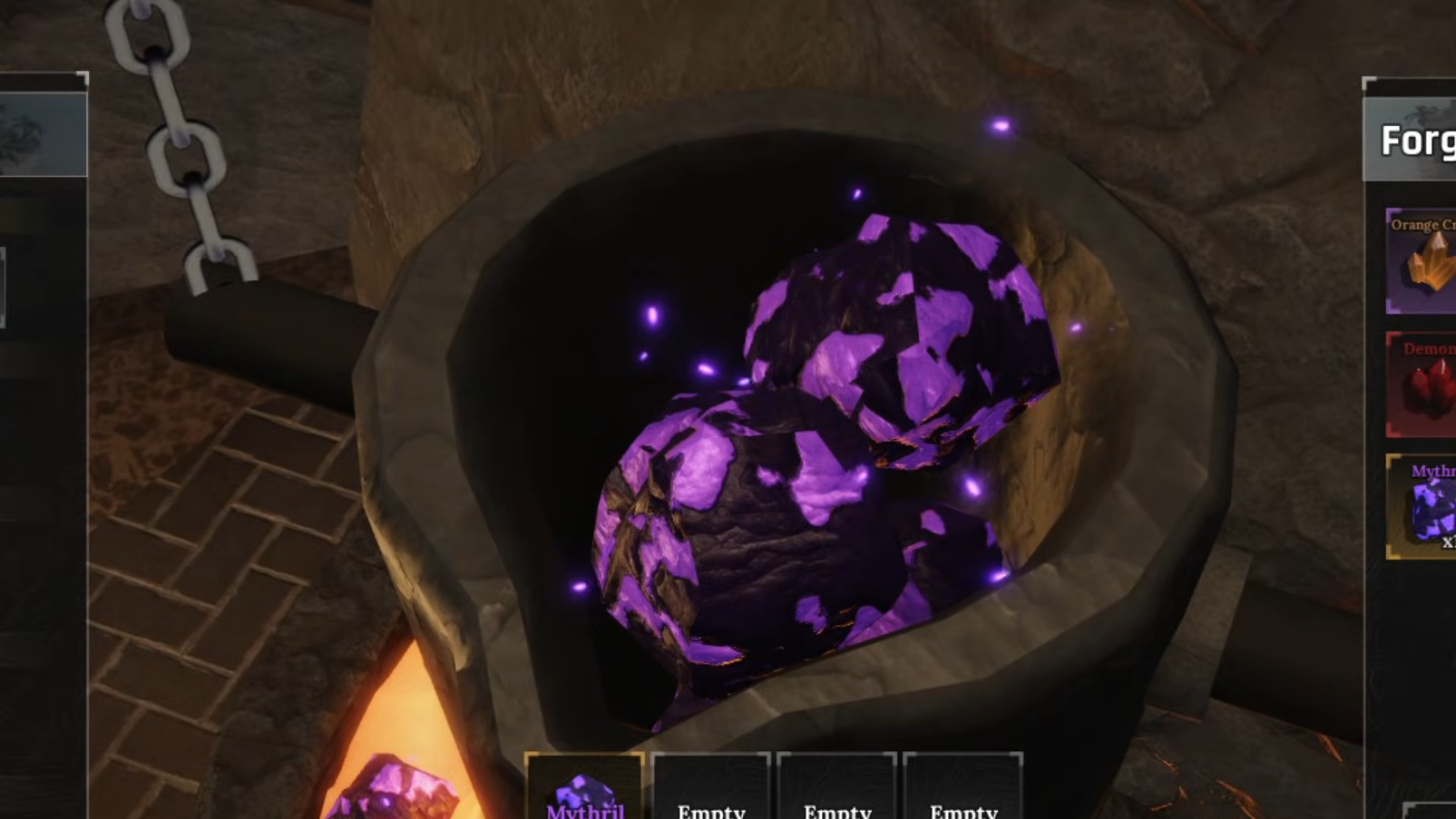
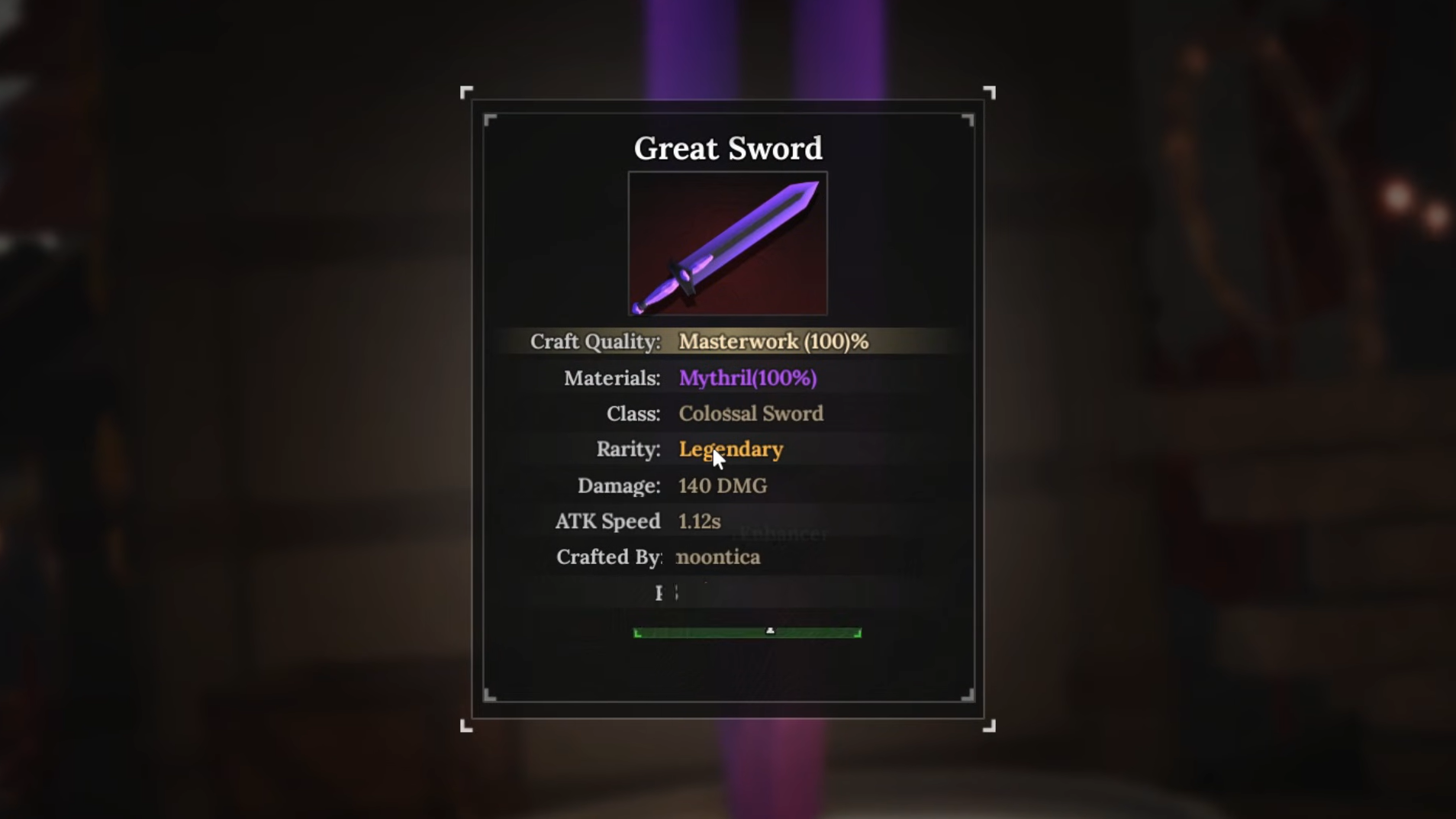
Visually, Mythril ore itself is a dark purple stone threaded with brighter, royal‑purple deposits. When used in recipes for weapons or armor, it tints the finished item purple and adds small purple particle effects around the model. If you care about “aura” and visual identity on your build, Mythril‑heavy pieces are easy to recognize even in a crowded party.
Requirements to mine Mythril efficiently
Mythril’s base drop rate is low enough that every extra node matters, so your ability to break the right rocks gate‑keeps your progress.
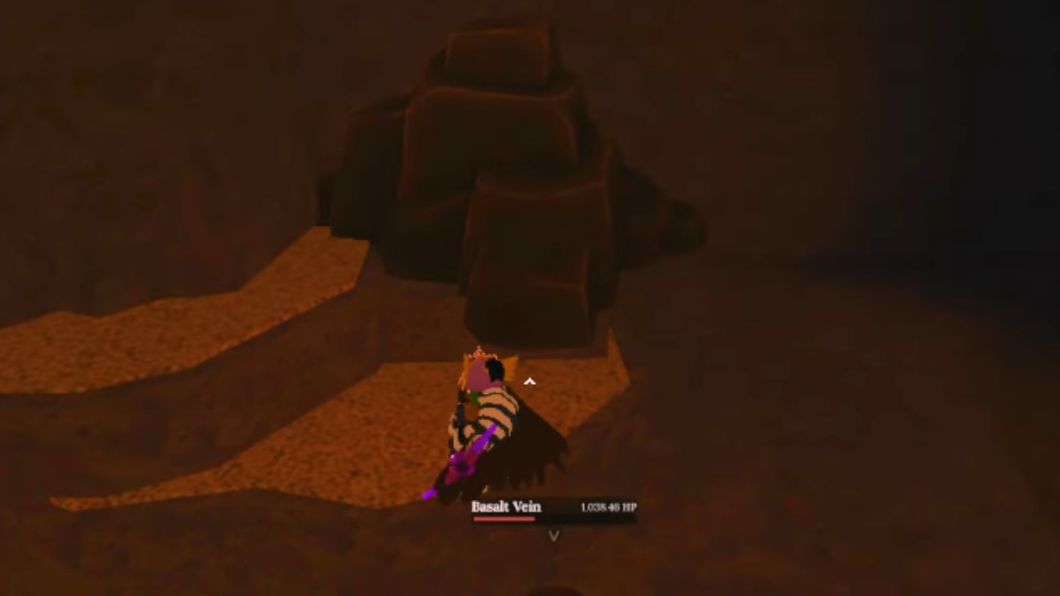
You only start mining Basalt Veins effectively once your pickaxe reaches at least 78 base damage. In practice, this means unlocking the Mythril Pickaxe from the Forgotten Kingdom’s store and paying the $67,500 cost. Once you have that threshold pickaxe, Basalt Veins go from painfully slow to manageable, which makes long Mythril sessions realistic.
In the icy regions, Icy Pebbles and Icy Rocks are less demanding individually, but you are still dealing with high‑HP nodes. A pickaxe line that keeps up with your region progression is important, so the time per node does not outweigh the gain from Mythril’s rare drops.
Best spots to farm Mythril
Farming Mythril from Basalt Veins (Forgotten Kingdom)
Basalt Veins can appear in several Forgotten Kingdom sub‑areas, but one cluster stands out for consistency and density.
Volcanic Depths route:
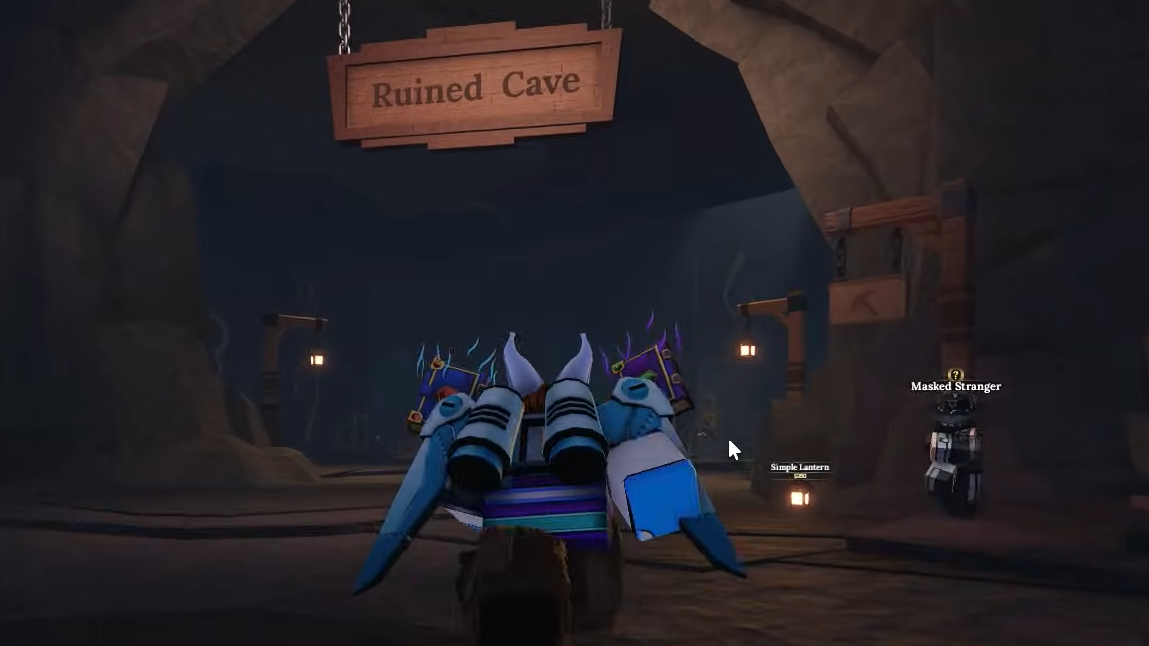
Step 1: Enter the Ruined Cave area at Descent’s Beginning and walk into Ashen Passage. This corridor acts as your starting lane for Basalt Veins.
Step 2: From the Ashen Passage entrance, take the right path and move toward the northeast, where a danger sign hangs on the wall. This sign is your landmark that you are approaching the high‑risk zone.
Step 3: Continue along the path until you reach the first right‑hand turn into a chamber. On the right side of this chamber, there is a partially blocked hole formed by Basalt Veins.
Step 4: Use your Mythril Pickaxe or any pickaxe with at least 78 base damage to break through these Basalt Veins. Behind them lies the Volcanic Depths, where multiple Basalt Veins spawn close together.
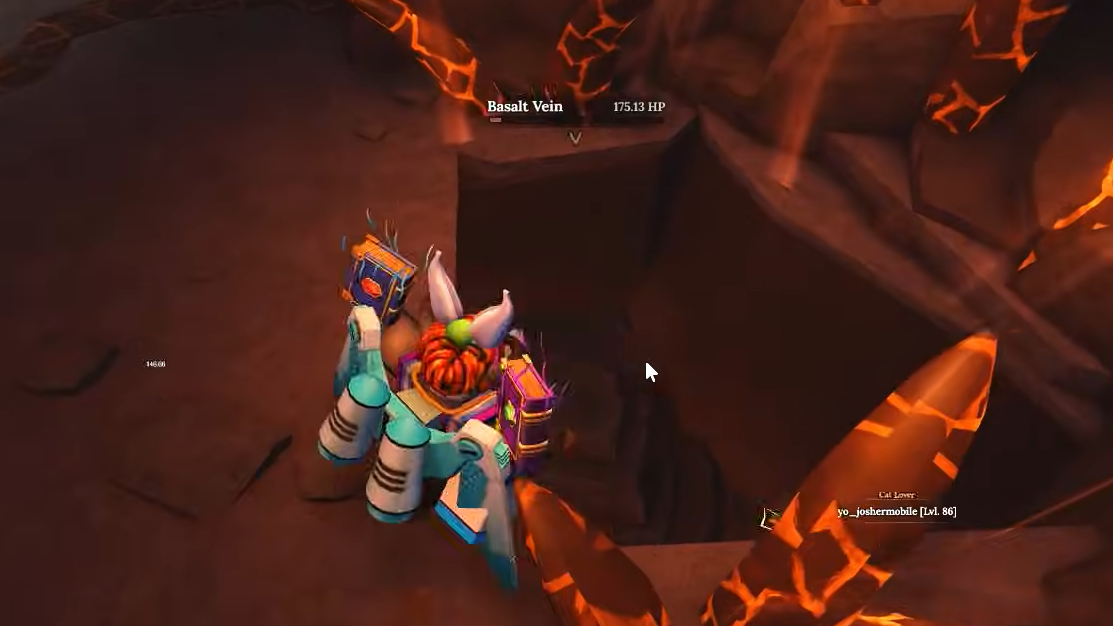
The Volcanic Depths combine a high concentration of Basalt Veins with dangerous enemies. It is an efficient farm for players who already feel comfortable surviving the Forgotten Kingdom’s late‑game combat and want Mythril plus a secondary chance at Ruby.
If the Volcanic Depths are too punishing, deeper segments of Ashen Passage itself can also spawn Basalt Veins. This alternative path is slower but safer.
Farming Mythril from Icy Pebbles and Icy Rocks
Later in progression, Mythril begins appearing in Frostspire Expanse on Icy Pebbles and Icy Rocks. These nodes compete with several other high‑end ores that carry strong traits, so you can fold Mythril farming into a broader icy‑ore grind.
While specific micro‑routes vary, the general rule is simple: prioritize any small or medium icy rocks labeled as Icy Pebbles or Icy Rocks, especially in areas that already drop trait‑bearing ores like Aetherit, Graphite, and Frost Fossil. Mythril’s 1/813 chance from these nodes makes it a background reward while you chase more specialized icy traits.

How to increase Mythril drop rates
With a 1 in 813 base chance per node, playing without any luck bonuses can turn Mythril into a long haul. Several systems stack to push that number in your favor.
- Dedicated Player achievement line increases your general Luck by 8% to 40%, depending on total time played. Long‑session players effectively get a permanent background boost for all rare ore drops.
- Luck potions from the in‑game shop provide a temporary Luck increase. Popping one before starting a Volcanic Depths loop makes each session more efficient.
- Miner Shards with a Luck trait can be socketed into your pickaxe. This turns every swing with that tool into a slightly better roll for Mythril and other rare ores.
- Luck Totems add a 25% Luck bonus while active. These are obtainable from the in‑game store or via special redemption codes. Used together with potions, they noticeably compress the time to see your first Mythril drops.
Using Mythril in armor recipes
Mythril’s trait only applies when used in armor. Weapons made with Mythril benefit from its multiplier and visuals, but do not gain the max‑health bonus.
When you add Mythril into a chestplate, helmet, or leggings recipe and succeed at forging, that armor piece can roll the +15% max health trait. Players who aim for “pure Mythril” armor (using only Mythril in the ore slots) are primarily chasing two things: maximal health scaling and a strong purple visual identity.
The health bonus is especially attractive in late zones like Volcanic Depths or the Reaper fights in the deepest skeleton areas. A larger HP pool combines well with:
- damage‑over‑time effects on your weapon, which benefit from longer uptime without dying,
- runes that trade survivability for damage, since Mythril gives you a buffer,
- high‑risk melee playstyles that frequently take chip damage while staying aggressive.
In practice, many players mix Mythril with other Legendary ores rather than going fully pure. Blending Mythril with Uranium or Eye Ore can stack multiple traits on a single piece of armor, trading some raw health for extra area damage or offensive power.
How Mythril compares with other trait ores
Trait‑bearing ores in The Forge cover a wide range of roles. Mythril lands firmly in the defensive, sustain‑focused end of the spectrum.
| Ore | Primary trait effect | Typical use | Relative role |
|---|---|---|---|
| Mythril | +15% maximum health on armor | Survivability, HP scaling builds | Defensive, HP‑focused |
| Obsidian | Up to +30% extra defense on armor | Damage reduction tank sets | Defensive, mitigation‑focused |
| Uranium | Deals 5% of player max health as AOE damage from armor | Hybrid offense/defense, HP‑based AOE | Defensive‑scaling offense |
| Eye Ore | -10% health, +15% damage on armor/weapons | Glass‑cannon setups | High‑risk offense |
| Rivalite | Up to +20% crit chance on weapons | Critical‑hit weapons | Pure offense |
| Fireite | Up to 30% burn chance for 20% damage over 2s | Damage‑over‑time weapons | Offensive, DOT |
| Magmaite | 50% AOE explosion damage with 35% on‑hit chance | High‑burst AOE weapons | Top‑tier offense |
For pure damage builds, ores like Magmaite, Fireite, and Eye Ore rank higher. Mythril instead provides a reliable defensive backbone that lets you slot these aggressive options elsewhere. In tier list terms, Mythril usually sits around the middle of trait ores: strong and useful, but not as game‑warping as the top‑end offensive picks.
Where Mythril shines is in synergy with other systems. Because Uranium’s AOE damage scales off your maximum health, a set that uses both Mythril and Uranium on armor pieces can push that AOE output significantly higher. Similarly, pairing Mythril armor with lifesteal or healing runes on weapons creates a sustain loop where each extra point of HP directly translates into more time spent alive and dealing damage.
Is Mythril worth targeting for your build?
For players still climbing toward Forgotten Kingdom and basic Legendary ores, Mythril is aspirational. You will likely pick up a few pieces while chasing money or other drops, and even a single Mythril‑trait armor item is a noticeable upgrade from purely stat‑based gear.
Once you reach late game, Mythril becomes part of a broader trait mix. It is most valuable if:
- You prefer melee or brawler playstyles that naturally take hits,
- You are building around Uranium’s health‑scaled AOE,
- You already own heavy offensive traits on weapons and need more room to survive mistakes,
- You care about the distinctive purple look for fashion as well as function.
If your priority is maximum DPS per second at any cost, other ores will push you further. If you want a sturdy character that stays upright while your weapon traits do the work, Mythril is one of the most reliable defensive options to farm and forge into your armor rotation.