

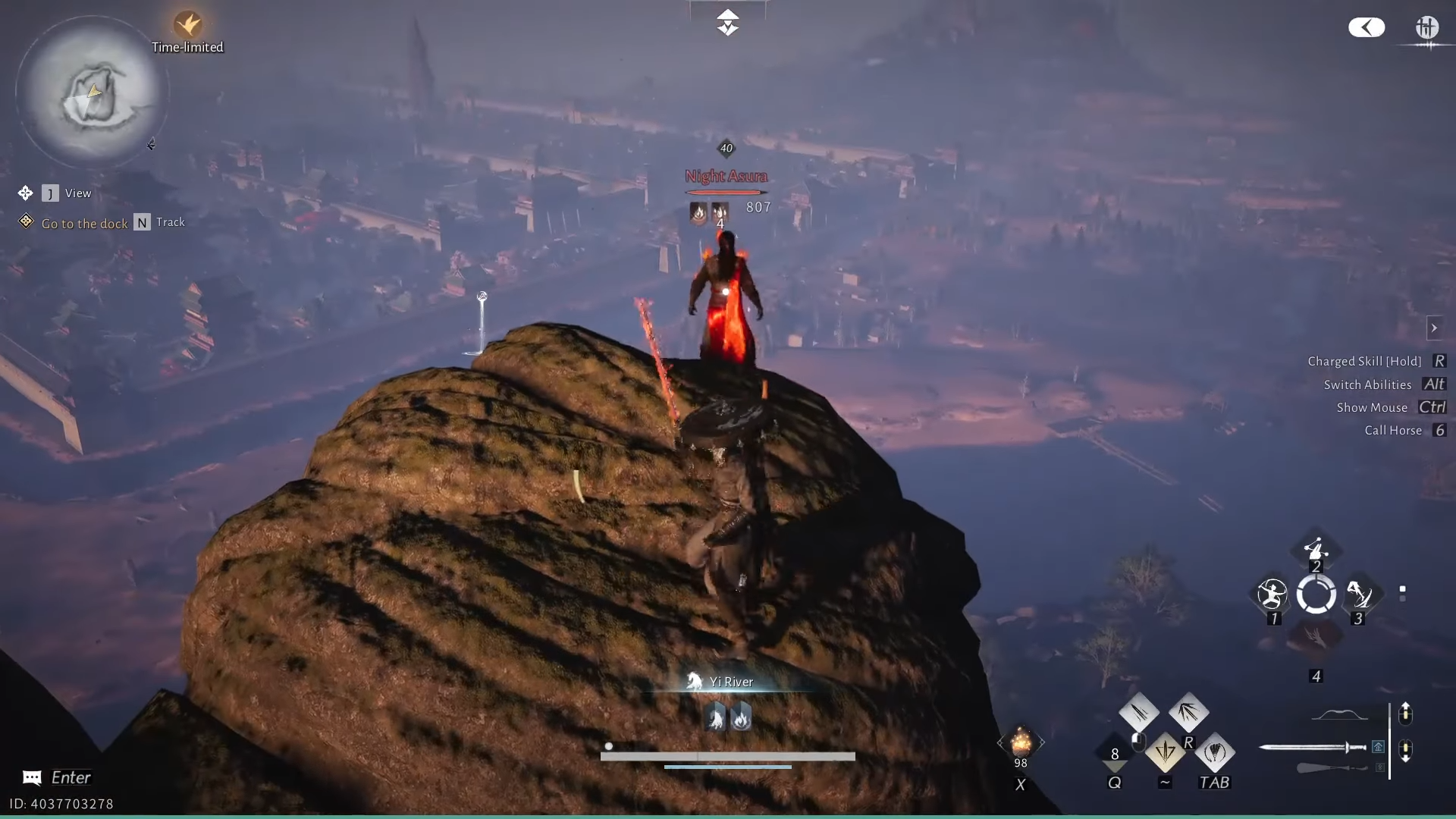
Night Asura is a named combatant who stands on the head of the huge Buddha statue in Where Winds Meet. The encounter combines several core ideas in the game at once: permanent consequences for killing NPCs, the Asura-killer philosophy of the Midnight Blades sect, and high-risk combat in a precarious location.
Night Asura’s role and where to find him
Night Asura appears as a solitary figure at the very top of the giant Buddha statue. Reaching him requires climbing all the way up the monument, so most players run into him only after some focused exploration or when following nearby sect-related clues.
If you approach without attacking, he speaks in short lines that imply he is waiting for someone specific and that your character is not the person he expects. The mood is closer to a wandering elder or assassin on pilgrimage than to a generic enemy or quest marker.
From a lore perspective, placing someone called “Night Asura” on a Buddha’s head puts a practitioner of a violent path directly above a symbol of compassion. That contrast underlines the Asura theme that runs through the Midnight Blades sect and its devotion to killing as a way of life.
What happens if you attack or kill Night Asura
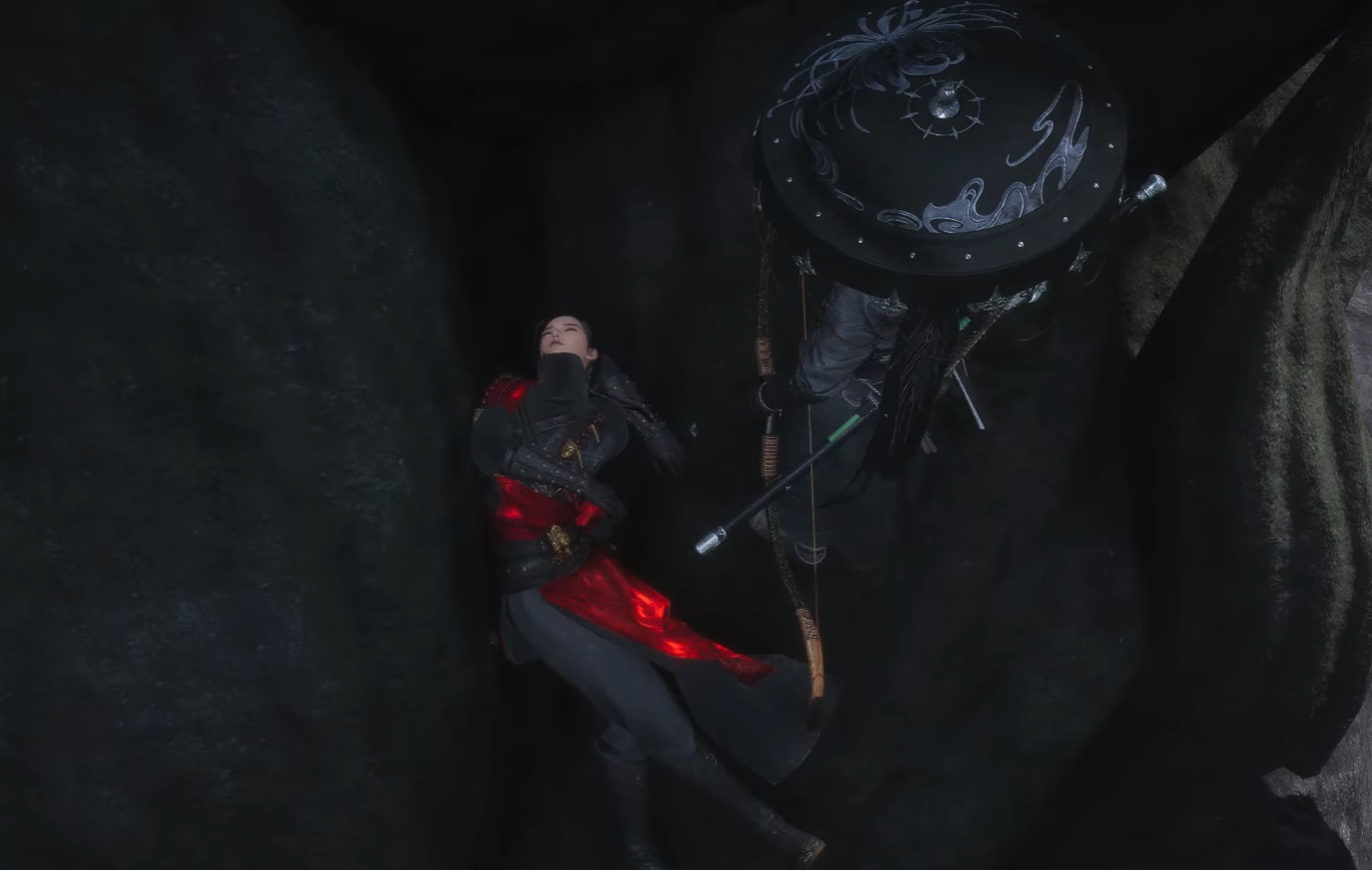
Once you initiate combat, Night Asura uses fast melee strikes and powerful kicks. His most dangerous move on this arena is a blow that sends you flying off the statue. Falling off ends the attempt and lets him reset to full health.
If you do manage to defeat him, several things are important:
- He does not respawn. Night Asura’s death is permanent for that character save. The only way to see him again is on another character or by loading a save from before the kill.
- He can drop a unique letter. Instead of normal loot, the notable reward is a letter item. Not every kill necessarily yields it, but it is tied directly to his death.
- Main story progression continues. Campaign chapters and regional arcs carry on normally whether he lives or dies. No central story branch is locked by this encounter.
Killing him therefore functions more as a world-choice with lasting consequences than as a required step for story or system unlocks. You remove a unique NPC from the world permanently in exchange for a one-off item and the roleplaying weight of that decision.
Night Asura’s letter and what it is known to do
The key reward from killing Night Asura is the letter found on his body. Its description notes that it is “only attainable with probability after killing,” which matches the fact that it is tied to his death rather than to dialogue.
The text itself reads like a duel challenge rather than a straightforward quest ticket. At the moment, no specific follow-up chain is tied directly and visibly to having this item in your inventory. It behaves more like a collectible lore piece than like a key that obviously unlocks new content.
One detail to keep in mind is that Night Asura does not return after he is killed. If any future use for that NPC exists in later updates or deeper systems, it will not be available to characters who have already killed him, because there is no way to reverse the choice in-world.
Using Wind Sense to read Night Asura’s letter without killing him
You can inspect Night Asura and the objects on his person by using Wind Sense while he is still alive. When you focus on him with Wind Sense, two inspection tabs appear: one for his character description and one for the item he is holding.
Switching to the item tab reveals the letter and allows you to read its contents in place. This is enough to see that it is framed as a duel challenge and to get a sense of its tone.
However, reading the letter through Wind Sense does not add it to your inventory. The game treats that as peeking at what he carries, not as taking it. Any effect that depends on possessing the item uses the actual letter drop from killing him, not the read-only view from Wind Sense.
Does Night Asura affect the Midnight Blades sect or the main story?
Night Asura’s name strongly echoes the Asura path associated with the Midnight Blades assassin sect, and his placement above the Buddha mirrors the sect’s fascination with bringing killing into sacred or liminal spaces. Even so, his encounter behaves like an optional event rather than a hard prerequisite for sect content.
Several points are clear:
- Joining Midnight Blades does not require Night Asura’s death. The entry route into the sect uses other NPCs and items, and does not depend on killing him or holding his letter.
- Losing him does not cut off Midnight Blades systems. Access to Perception Forest, Karma Points, sect tokens, and sect shops comes from the standard initiation path, not from this encounter.
- Main storyline branches remain intact. Whether Night Asura lives, dies, or is ignored, core story content remains available.
Game behavior around his status and the Midnight Blades flag can vary between characters. In some cases, he continues to be attackable even after you have sworn to the sect. In others, he functions more like an untouchable elder. Either way, the broad structure of sect progression does not hinge on his survival.
How Night Asura fits into Midnight Blades Asura lore
The Midnight Blades sect presents itself as a brotherhood of assassins who embrace the Asura path, a life defined by killing. Sect rules and activities revolve around hunting other wanderers, collecting Karma Points through combat, and treating death as a cost of their chosen path.
Night Asura feels like an embodiment of that philosophy, but removed from the day-to-day PvP grind. He is alone, high above the world, lingering in a place associated with enlightenment rather than in the battlefields where most Midnight Blades content happens.
| Aspect | Midnight Blades details | Relation to Night Asura |
|---|---|---|
| Identity | Assassin sect that calls its creed the Asura path, centering life around killing and Karma. | His title suggests a veteran or exemplar of that same Asura path. |
| Progression | Ranks such as Novice Cultivator, Truth Walker, Sufferer, and Chief Elder are represented through differently colored sect tokens. | He stands outside the visible rank ladder, hinting at an older or more personal Asura journey. |
| Core rule | Killing wanderers grants Karma Points, while dying in turn consumes them, enforcing a “kill to gain, die to lose” cycle. | Slaying an Asura atop a Buddha dramatizes that rule against a backdrop of nonviolence. |
| Weekly activity | Perception Forest serves as a high-density PvP mode for farming Karma quickly and competing with other sect members. | His remote post contrasts with that arena, emphasizing contemplation over farming efficiency. |
| Rewards | Membership grants items like Infernal Twinblades, access to sect shops, cosmetics such as the Blazing Midnight set, and participation in Sufferer’s Trials for leadership. | His letter is more of a narrative token than a power upgrade, fitting the sect’s spiritual flavor. |
Seen through this lens, Night Asura is less a mechanical gate and more a thematic mirror held up to anyone who follows, or opposes, the Asura path.
How to join the Midnight Blades sect
The Midnight Blades initiation chain starts elsewhere and can be completed without interacting with Night Asura. It centers on Halo Peak and a sequence of choices that test whether you truly accept an Asura life.
Step 1: Level your character to at least level 22. At that point, open-world PvP and the systems that the sect relies on become fully practical, and sect requirements can be met.
Step 2: Open the in-game Sects menu and locate the entry for Midnight Blades. Use the tracking feature there so that the world map highlights the general starting area for the sect clue.
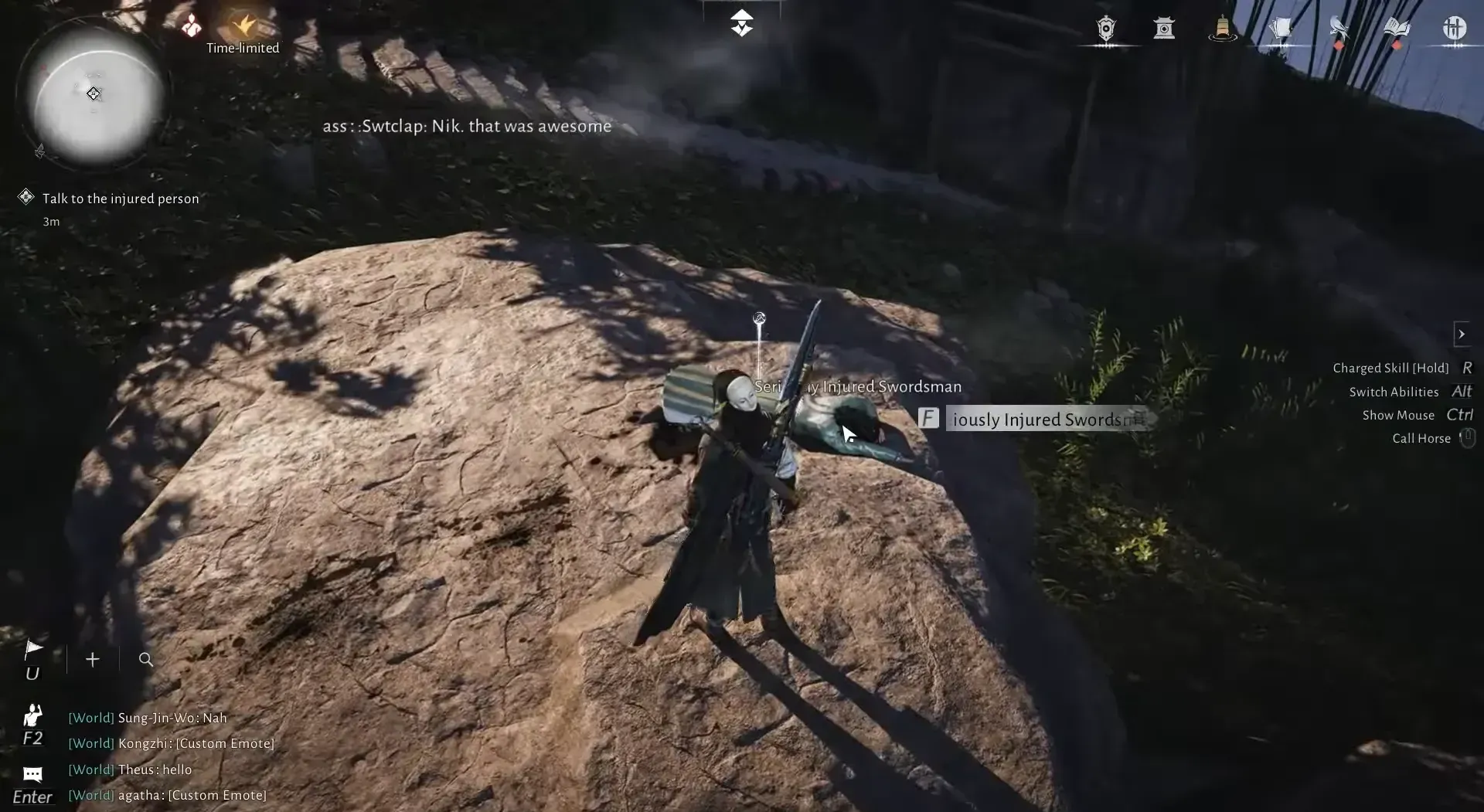
Step 3: Travel to Halo Peak and look for a seriously injured swordsman lying in that area, somewhat northwest of the nearby boundary stone. Speak to him and then follow the trail of blood he leaves behind.
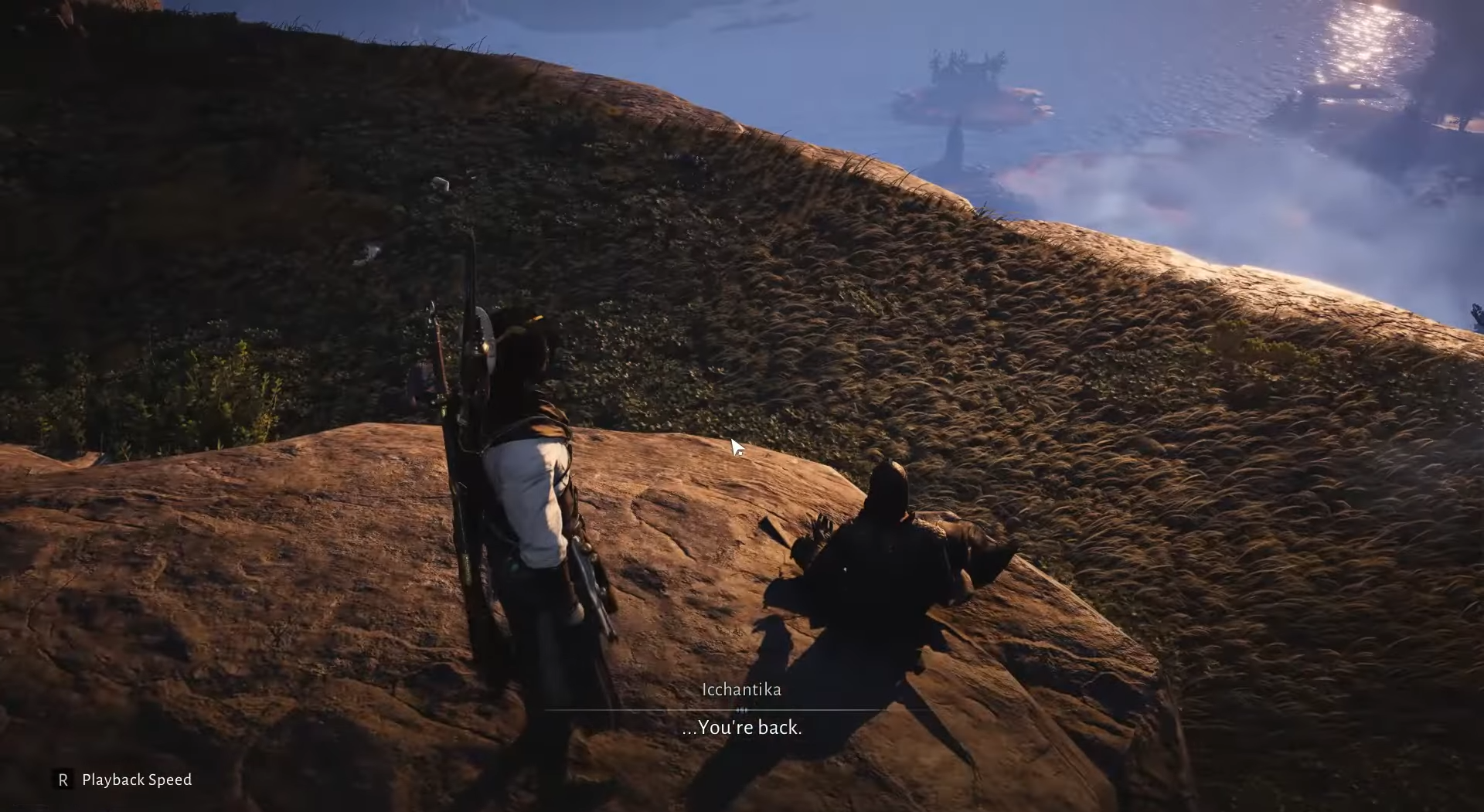
Step 4: The blood trail leads east of Halo Peak to Icchantika, known as the Ferryman of the Midnight Blades. Talk to him and, when given the option, choose the dialogue line “My heart is that of an Asura.” This marks your character as someone willing to walk the sect’s path and earns you a rogue token.
Step 5: Prove that commitment by obtaining an Annihilation Token. Any valid kill in Exploration Mode or in PvP can generate the token, so you can target either hostile players or eligible NPCs, as long as the game recognizes the kill for this purpose.
Step 6: Return to Icchantika and hand over the Annihilation Token. This completes the initiation and formally joins you to the Midnight Blades sect.
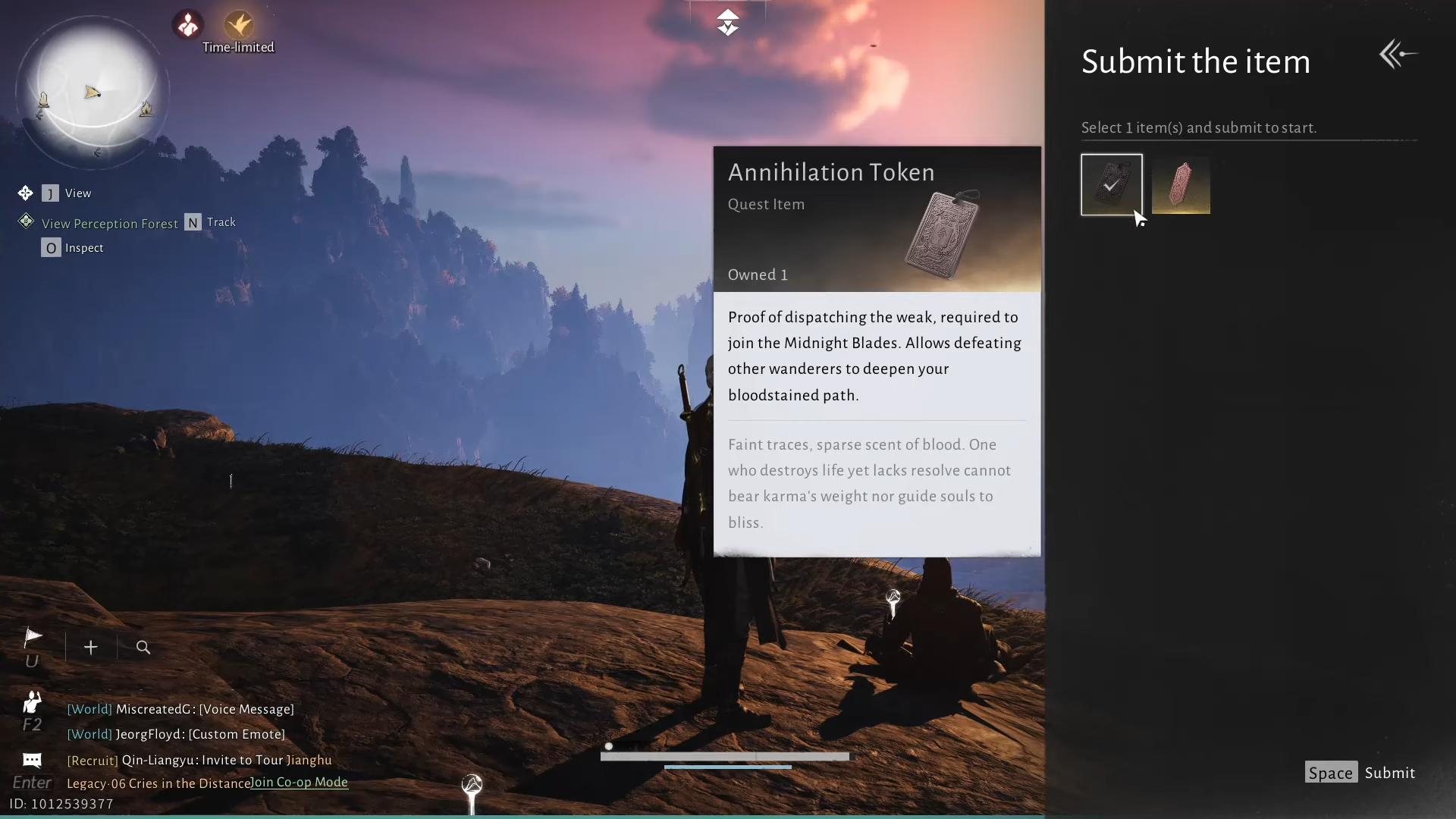
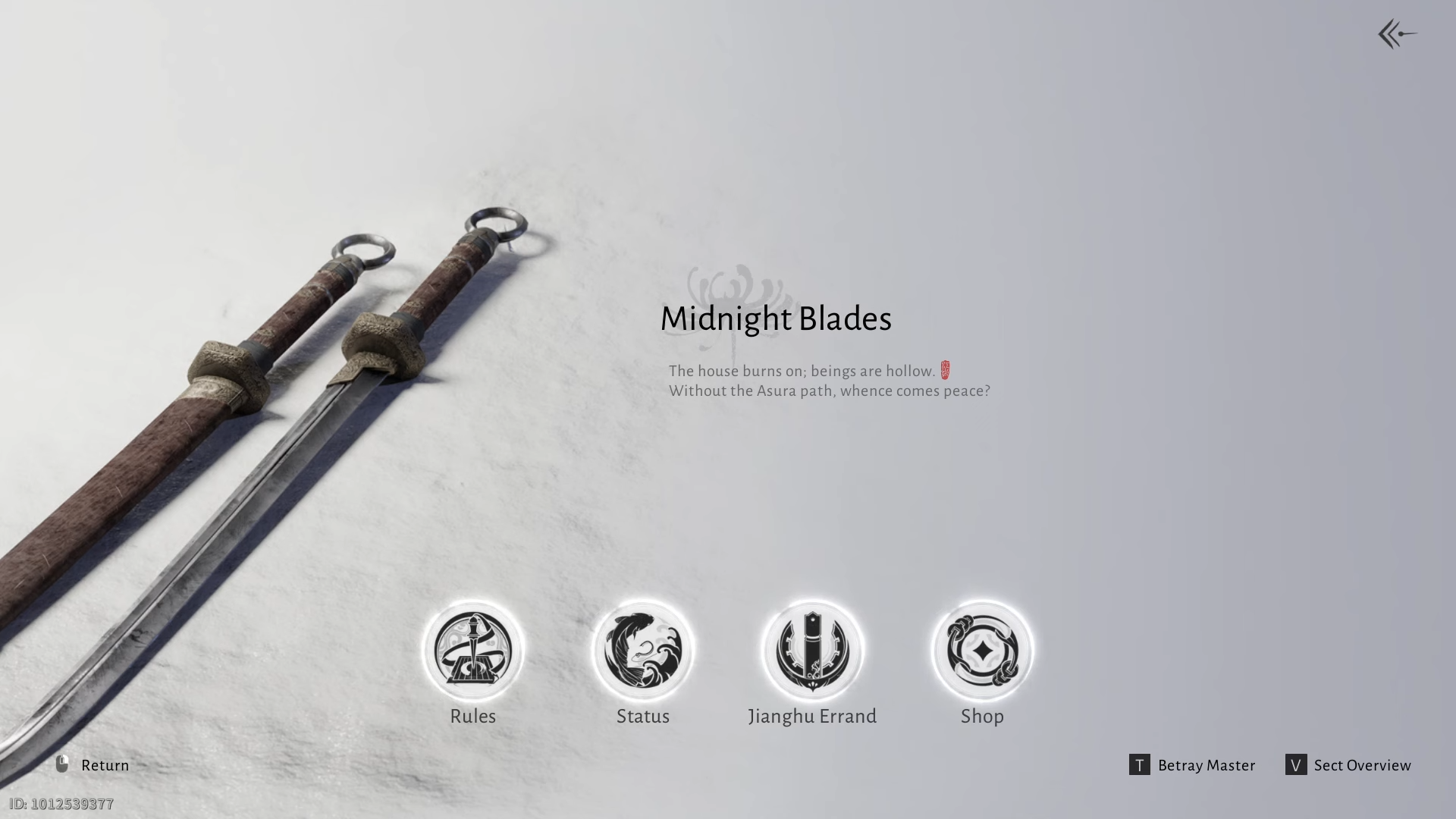
After joining, you gain access to Infernal Twinblades, the Midnight Blades shop, sect rankings, and the Sufferer’s Trial that determines the weekly Chief Elder based on performance. Leaving the sect later is handled through the Sect menu’s “Betray Master” option, which requires completing a Severance Trial round in Perception Forest first.
Combat strategy: How to kill Night Asura on the Buddha statue
Many players struggle with Night Asura not because of his raw damage, but because the arena is so small and exposed. His kicks can easily send you into empty air, which instantly fails the attempt and restores his health.
Step 1: Before engaging, familiarise yourself with the area on top of the statue. Move around the head to understand where the safest footing is, and try to fight where you have a little room behind you so a single hit is less likely to kick you straight off.
Step 2: Start the fight with fast melee weapons or any setup that lets you chain quick attacks. Dual blades work well for some players because the light attack string can keep him under pressure and prevent him from acting between hits.
Step 3: Focus on keeping him in stagger. One effective tactic is to “stunlock” him: push him toward the edge, then repeatedly use basic attacks without giving him time to recover. If you maintain the rhythm, he can remain trapped in hit animations until his health is depleted.
Step 4: If your weapon set offers strong heavy attacks with good poise damage, another option is to spam those heavies as soon as you see an opening. On this small arena, a few well-timed heavy blows can interrupt his own attack chains and prevent the knockback kick from ever firing.
Step 5: Make use of parries and control-oriented mystic arts. Parrying his more telegraphed strikes creates a window where you can unload a full combo. Mystic arts that inflict stuns, such as Meridian Touch, can also give you the breathing room needed to reset your positioning or push him into a new stun loop.
Step 6: If you are knocked off, accept that the encounter has effectively reset. Climb back up, allow him to fully re-enter his idle state, and then re-engage with a clearer plan about spacing and stun pressure.
Because of the permanent nature of the kill, it can be worth taking a more cautious, methodical approach rather than treating Night Asura like a disposable mini-boss. A single successful attempt is all you get on that character.
Deciding whether to kill Night Asura
The decision to attack Night Asura is mostly about how you want your version of Jianghu to feel. Leaving him alone preserves a mysterious, Asura-aligned figure meditating above the Buddha, and keeps open whatever minor interactions he might have later. Killing him removes that presence permanently but grants a rare letter and the satisfaction, or regret, of having cut him down.
Mechanically, killing him does not gate or unlock the Midnight Blades sect, nor does it cause obvious shifts in the main campaign. The impact is concentrated on your game’s atmosphere, your personal narrative, and the knowledge that in Where Winds Meet, some NPCs vanish forever once you draw blood.
If you have not yet met Night Asura, a simple approach is to speak with him first, try Wind Sense on him, and only then decide whether the Asura on the Buddha should live on in your world or fall under your blade.