

Perception Forest is one of the more opaque systems in Where Winds Meet. It looks like a simple matchmaking prompt buried in the PvP menus, but it also doubles as a mandatory arena for some Sect story beats and for Severance Trials when you leave certain factions. That mix of uses, plus its “drop you in without warning” behavior, is why so many players first meet it through frustration rather than curiosity.
What Perception Forest actually is
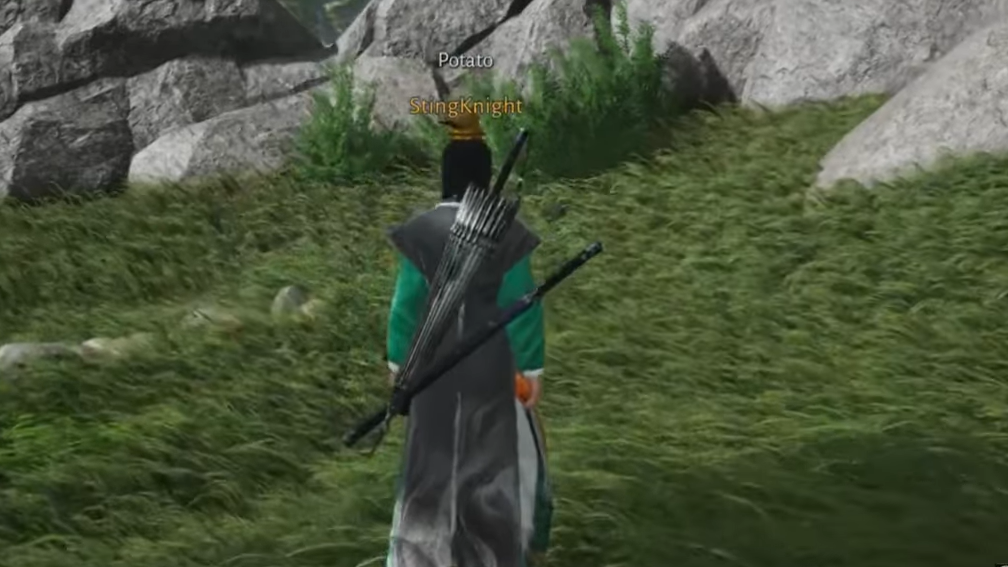
Perception Forest is a small-scale battle royale mode. Up to five players enter a dedicated arena that slowly fills with gas, shrinking the safe zone and forcing everyone toward the center. You do not load in with your usual open-world build; instead, you start unarmed and have to gear up on the fly.
- You spawn without weapons or items.
- Combat power comes from what you loot: weapons, skills, and consumables found in chests or dropped by others.
- The winner is determined by a score at the end of the match, not just by the last person standing.
That score takes into account:
- How much damage you dealt to other players.
- How many enemies you defeated.
- The value of the items you are carrying when the match ends.
Because matches are short and the zone closes quickly, Perception Forest emphasizes fast routing between loot spots, opportunistic fights, and knowing when to disengage so you do not bleed points right before the final tally.
How to unlock and enter Perception Forest PvP
Perception Forest is part of the broader PvP suite that unlocks once your character is established.
Step 1: Play through the early story until the main tutorial portion is complete and your character can roam more freely.
Step 2: Level your character to at least Level 22. At this point, the Wandering Paths system opens in the menu.
Step 3: Open Wandering Paths, select the Arena section, and choose the Perception Forest mode to enter matchmaking.
Step 4: Switch from solo to online mode in the main menu before you queue; otherwise, none of the PvP options, including Perception Forest, are available.
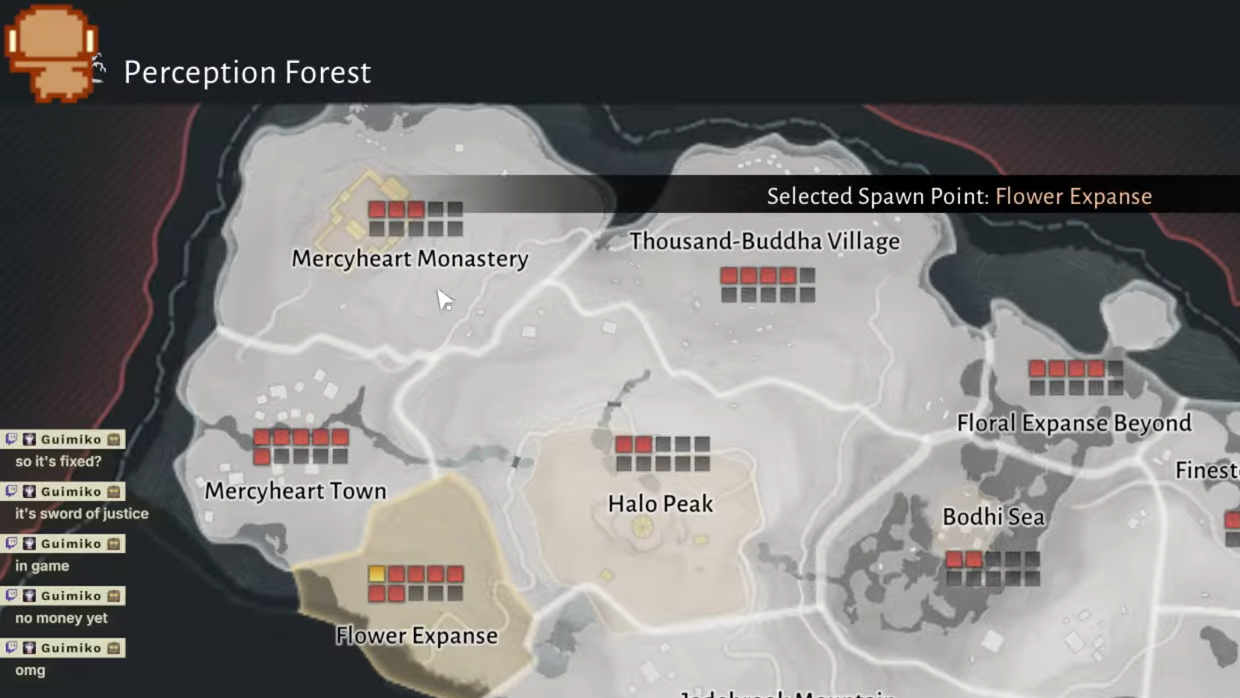
Once you hit queue, the game groups you with other players and then lets everyone pick a spawn point on the Perception Forest map. The arena layout, loot density, and gas timing stay consistent enough that repeated runs quickly turn into a routing puzzle: where to land, which chests to prioritize, and when to rotate toward the center.
Why your weapon and buttons feel “wrong” in Perception Forest
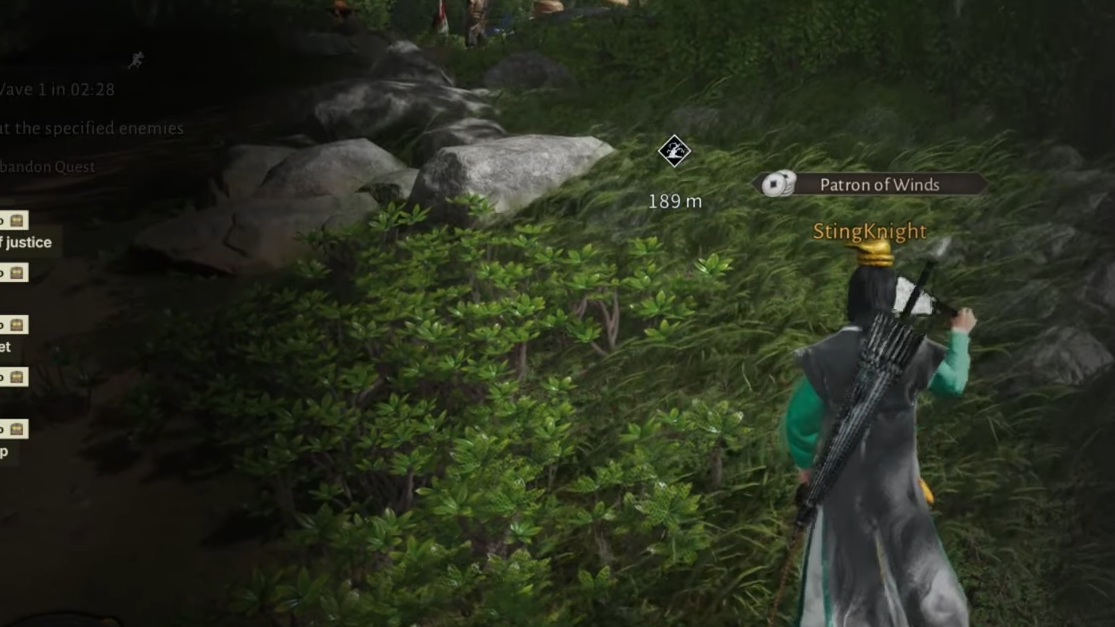
A common first reaction to Perception Forest is that something is “bugged”: UI prompts pop up, someone’s weapon suddenly changes, or a finisher input does nothing. Most of that comes from how the mode standardizes combat.
- You do not bring your open-world weapon loadout in with you.
- Your starting weapon is effectively random, and it may be a weapon type you have never used before.
- Any weapon you pick up replaces the one you are holding, which makes accidental pickups a real risk mid-fight.
That design is intentional. Perception Forest wants each run to feel like a fresh scramble rather than a continuation of your PvE build. The downside is obvious: if you main dual blades and healing fans and spawn holding a heavy Mo Blade you have barely touched, the first fight can feel like playing someone else’s character.
Several other quirks feed into the “my buttons don’t work” feeling:
- Finisher prompts, such as a blue glow and a specific button combo, still rely on the current weapon’s move set. If you do not know that set, it is easy to misread timing or range and assume the input is dead.
- Latency or desync in a live PvP match can make contextual inputs fail even when they work consistently in PvE.
- Perception Forest uses its own internal rule set, so certain world interactions or comfort macros players rely on elsewhere are simply unavailable.
There is also at least one reported issue where contextual finishers and certain skills trigger fine in the open world but fail inside Perception Forest or in instanced content like trials and dungeons. That behavior lines up with a real bug affecting some players, not just user error.
Are you fighting real players in Perception Forest?
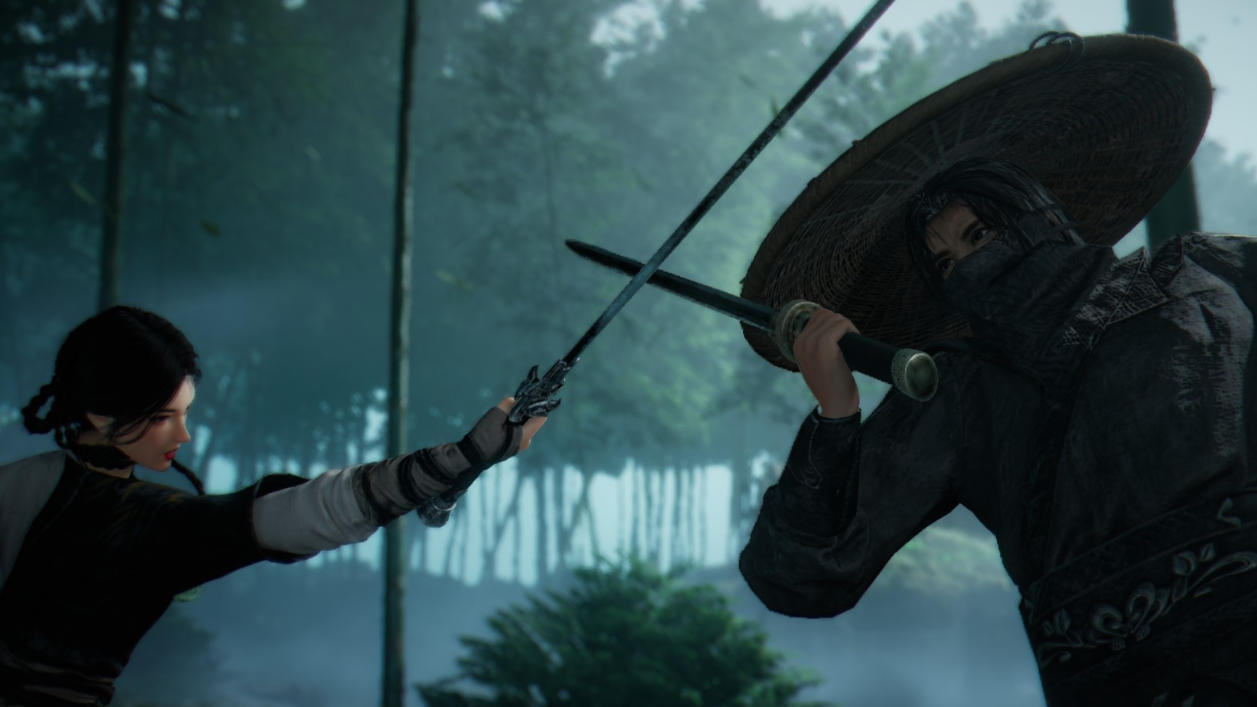
Perception Forest is built as a PvP mode; its default assumption is that you are facing other humans. However, not every encounter feels that way. Many players report lobbies where opponents move in simple patterns, do not react to baits, or seem strangely forgiving compared to Arena 1v1s.
Two things can contribute to that impression:
- Matchmaking sometimes needs to fill a lobby quickly, especially in off-peak hours. When that happens, behavior can skew toward bots or heavily mismatched players.
- The shrinking-zone design pushes everyone together quickly. Less experienced players who do not understand routing or spacing can easily be mistaken for scripted opponents because their decision-making is so predictable.
From a mechanical standpoint, though, Perception Forest is part of the same Arena PvP feature set as strict 1v1 duels and open-world Spar challenges. It expects you to treat other contestants as real, dangerous opponents, even if their movement occasionally suggests otherwise.
How Midnight Blades and other Sects interact with Perception Forest
Perception Forest is not just a standalone game mode; it is woven directly into how some Sects function.
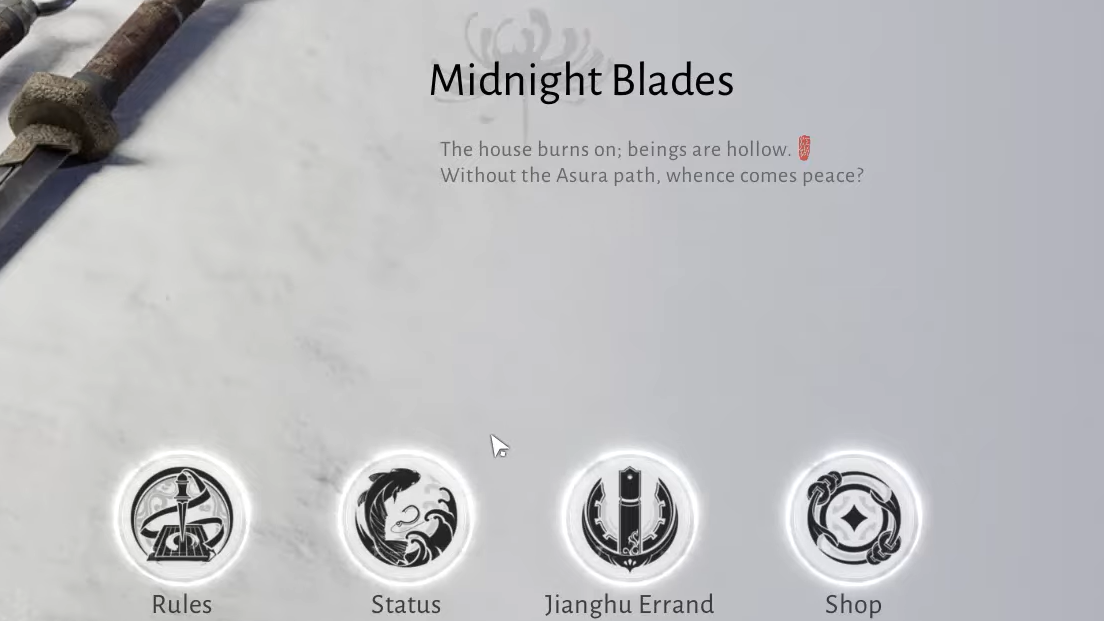
The Midnight Blades Sect is the clearest example. Their rules explicitly call out Perception Forest as a way to harvest large amounts of Karma Value. The Sect’s fantasy leans hard into player-versus-player aggression:
- Hunting “Sufferers” in special Midnight Judgement activities to steal identities and karma.
- Defeating wanderers in the open world to gain Karma Points and accepting that dying will reduce that value.
- Maintaining a negative reputation through constant combat.
In practice, that means Midnight Blades disciples who want to climb the Asura Path and farm Karma efficiently are funneled toward Perception Forest runs. The mode becomes both a playground and a work obligation: it is where they go to live out the Sect’s rules and to keep their internal metrics from decaying.
Other Sects lean on Perception Forest less directly but still connect to it.
| Sect | Core identity | Perception Forest role |
|---|---|---|
| Midnight Blades | PvP-focused, negative karma hunters | Primary place to gain large amounts of Karma Value and act out Sect rules |
| Well of Heaven | Order, brotherhood, taxes, mutual support | Used for Severance Trials when you leave the Sect |
| Silver Needle | Healers-for-hire, earning payments and “likes” | Also uses Perception Forest for Severance Trials |
| Nine Mortal Ways | Tricksters and disguisers driven by profit | Leaves the Sect through a coin payment instead of a Perception Forest trial |
Severance Trials: when the game drags you into Perception Forest
Leaving a Sect is not just a menu toggle. For three of the early Sects—Well of Heaven, Silver Needle, and Midnight Blades—walking away means being forced through a Severance Trial, and those trials are special Perception Forest matches.
How leaving Sects works
Step 1: Open the main menu and select the Sects tab.
Step 2: Look for the option labeled Betray Master in the lower-right corner of the screen.
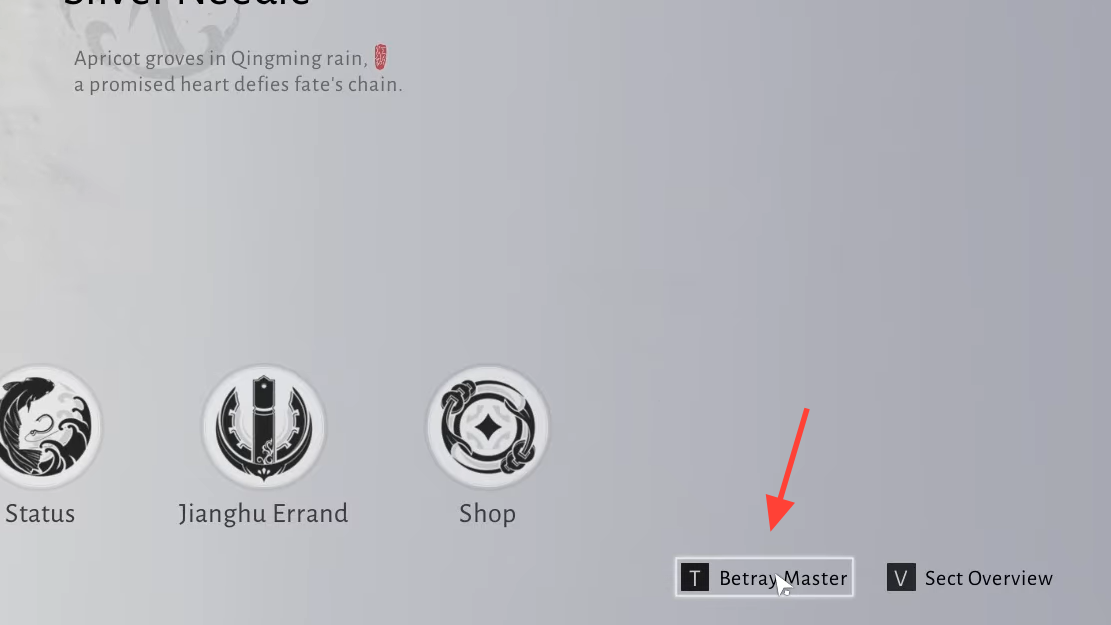
Step 3: Confirm that you want to leave. Once you do, your Sect reputation, status, and access to that Sect’s shop are revoked immediately. Any items or cosmetics you already purchased remain in your inventory, and the Sect weapon you unlocked stays available.
At that moment, your path diverges depending on the Sect:
| Sect you left | Requirement to fully sever ties |
|---|---|
| Well of Heaven | Complete a Severance Trial in Perception Forest |
| Silver Needle | Complete a Severance Trial in Perception Forest |
| Midnight Blades | Complete a Severance Trial in Perception Forest |
| Nine Mortal Ways | Pay Elder Ni Laoshan 50,000 Coins at Harvestfall Village |
Only Nine Mortal Ways bypasses Perception Forest and lets you buy your way out instead.
How Severance Trials use Perception Forest
Severance Trials are not a separate type of arena; they are Perception Forest runs with a twist. Once the game marks you as needing a Severance Trial, several things become true:
- You carry a special bounty: anyone who defeats you in that trial earns extra rewards.
- Retreat points and normal exit options are disabled. You either survive to the end of the match, or you die and are removed.
- You do not need to win. Simply staying in that match until it fully concludes is enough to satisfy the trial requirement.
What makes Severance Trials feel jarring is that you do not decide when they start. After you leave a Sect that requires one, the game begins watching for an active Perception Forest lobby with room for you.
Once a free slot appears:
- You are pulled into Perception Forest automatically, with no advance warning or ready check.
- This can happen whether you are in solo mode or co-op.
- The trigger overrides everything else: main story quests, boss fights, idle time in a city—whatever you were doing is interrupted.
The delay between leaving a Sect and being thrown into a Severance Trial can range from about an hour to as long as two days of real time, depending on how active Perception Forest matchmaking is on your server. That unpredictability is why some players return from being AFK to find their character dead in a Perception Forest arena they never consciously queued for.
Important nuance: you do not have to wait for the Severance Trial to complete before joining a new Sect. Once you have used Betray Master, you can immediately go pursue another faction, even if the game still owes you a trial and will eventually drag you into Perception Forest to settle that debt.

Time locks and rejoining Sects after Perception Forest trials
Leaving and rejoining Sects is intentionally throttled to stop players from hopping between factions every day just to farm their shops and perks.
- After leaving a Sect, there is a 24-hour real-time delay before you can rejoin that same faction.
- When you come back, you start from scratch: no reputation, no merits, and novice rank.
- Once you are back in a Sect, you cannot leave again for six real-time days.
Changing the in-game time of day has no effect on these timers; they are tied to the real clock, not the game’s internal time system.
These restrictions sit on top of the Severance Trial logic. You might pay coins to exit Nine Mortal Ways instantly without a trial, or you might leave a combat-focused Sect and then get yanked into Perception Forest a day later to settle your Severance Trial, but in both cases, the 24-hour and six-day restrictions still govern how soon you can re-enter or exit again.
Sin Leaves and long-term Perception Forest rewards
Beyond karma and Sect obligations, Perception Forest has its own currency loop. Regular runs earn Sin Leaves that feed into cosmetic rewards such as the Yaksha outfit. That path is deliberately long:
- Sin Leaves you can earn from Perception Forest are capped at 2,000 per week.
- Large rewards like the Yaksha clothing set take multiple weeks of capped earnings to unlock.
The weekly cap means you cannot simply no-life Perception Forest for a weekend and walk away with everything. You are expected to treat it as a side activity you chip away at over many resets. For some players who enjoy the mode’s pacing, that turns it into a comfortable ritual. For others who just want the cosmetics and dislike the loot randomness, the math feels punishing.
Why Perception Forest feels so abrasive and how to set expectations
Perception Forest has three overlapping identities:
- A self-contained battle royale built around randomized weapons and shrinking zones.
- A karma engine and playground for PvP-heavy Sects like Midnight Blades.
- A mandatory arena for Severance Trials that can override whatever you are doing in the rest of the game.
Those roles collide in ways that make the mode feel hostile when you first encounter it. You might be testing a new build in PvE and suddenly find yourself in a high-stakes Perception Forest match as punishment for betraying a Sect. You might queue expecting to use your comfortable dual-blade loadout and instead spawn with a giant Mo Blade you have never touched. And if you are unlucky enough to be hit by the contextual-input bug that affects some players in instanced content, your first impression can be an arena where none of your usual finishers or combos seem to register.
Framed correctly, though, Perception Forest is not trying to replace the rest of the game’s combat. It is the place Where Winds Meet uses to reset everyone to roughly equal footing, force uncomfortable weapon choices, and resolve big social decisions like walking away from a Sect. Knowing that going in—and knowing that most Severance Trials only ask you to stay until the match ends, not to win—takes a lot of the sting out of those unexpected pulls into the forest.