

Ranked mode in Roblox Rivals is where the game stops being a chaotic shooter and starts behaving like a ladder. Every duel feeds into an ELO number, that ELO translates into a visible rank badge, and those ranks dictate who you play with and what rewards you walk away with at the end of a season.
Ranked basics: queues, ELO, and placements
Ranked is a separate mode from casual Rivals, with three queues:
- 1v1
- 2v2
- 3v3
Each ranked match adds or subtracts ELO. Win, and your ELO goes up; lose, and it goes down. The amount gained or lost depends on the gap between your ELO and your opponent’s. Beating someone several tiers above you can give a large jump, while losing to them barely moves your number. The reverse is true when you lose to lower-ranked players.
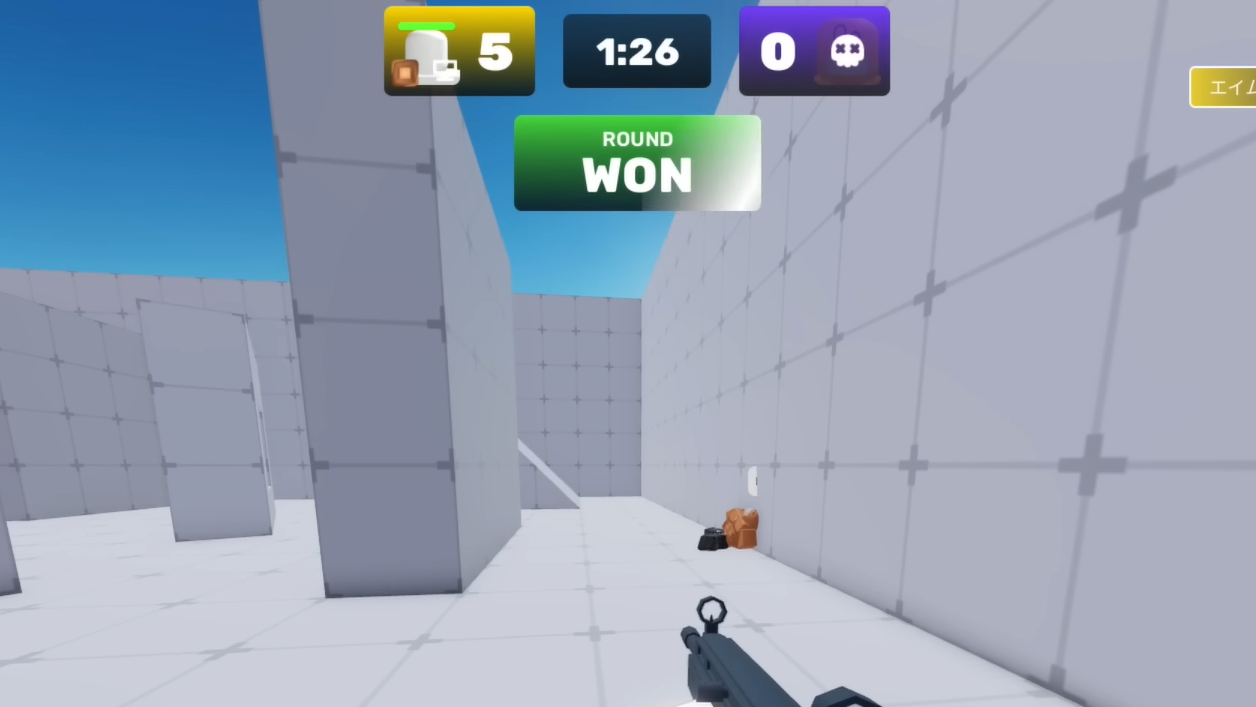
Before any rank badge appears on your profile, you have to complete 10 placement matches in ranked. Those placements are not a simple “wins = higher tier” formula; the game evaluates who you played and how those matches went. A player who wins only a couple of placements against strong opponents can start higher than someone who wins most of their matches against weaker ones. The maximum initial placement is capped at Diamond 1 (around 2,500 ELO), so even very strong players still need to climb from there.
Requirements to unlock ranked
Ranked mode is gated behind a few account checks meant to slow down throwaway accounts and obvious alts:
- Complete 10 regular duels (win or lose).
- Reach at least level 30.
- Use a Roblox account that is at least 14 days old.
Those requirements have two effects: they raise the time cost of returning after a ban on a fresh account, and they filter out very new players who are still learning basic mechanics before they enter ranked lobbies.
All ranks and ELO thresholds in Roblox Rivals
Rivals uses a familiar metal-based ladder with a twist at the top. Each rank from Bronze through Onyx has three sub-tiers (I, II, III), and above that sit Nemesis and Archnemesis.
| Rank | Tier I ELO | Tier II ELO | Tier III ELO |
|---|---|---|---|
| Unranked | Below 0 ELO (before placements are finished) | ||
| Bronze | 0+ | 200+ | 400+ |
| Silver | 600+ | 800+ | 1000+ |
| Gold | 1200+ | 1400+ | 1600+ |
| Platinum | 1800+ | 2000+ | 2200+ |
| Diamond | 2400+ | 2600+ | 2800+ |
| Onyx | 3000+ | 3200+ | 3400+ |
| Nemesis | 3600+ | No II/III sub-tiers | |
| Archnemesis | Top 200 players by ELO | ||
Promotion and demotion are straightforward. Crossing the next threshold promotes you; dropping below your current threshold demotes you. In practice, the size of each ELO gain or loss makes it clear whether you are favored in a matchup and how risky each game is for your current badge.
How a ranked match works: bans, maps, and gameplay changes
Ranked games strip Rivals down into a more controlled ruleset.
Map and weapon bans
Every match starts with a short veto phase:
- Three maps are shown as options.
- Each side can ban one of those three maps.
- The remaining map becomes the arena for the duel.
Weapon bans work similarly. Each team can ban two non-default weapons. The default set—Assault Rifle, Handgun, Fists, and Grenade—cannot be banned unless every player in the lobby owns at least four weapons in each category. That rule prevents situations where newer players are left completely without a usable primary or secondary.
These bans are meant to take out specific problem picks for your opponent and push both of you toward more symmetrical gunfights. In practice, it often means high-impact picks like Sniper, Bow, Freeze Ray, Katana, or Riot Shield get removed before a round even begins, especially in higher tiers.
Ranked-specific gameplay rules
Once the match loads, ranked imposes several constraints that do not exist in standard Rivals modes:
- Camera is locked to first-person; third-person is disabled.
- The map pool is restricted to a curated set of “competitive” layouts.
- Aim Assist Strength is capped at 0.5.
- Auto Shoot Mode is forced to Dynamic, which favors faster weapons and punishes slow reaction times on heavy hitters like Sniper, Crossbow, or Revolver.
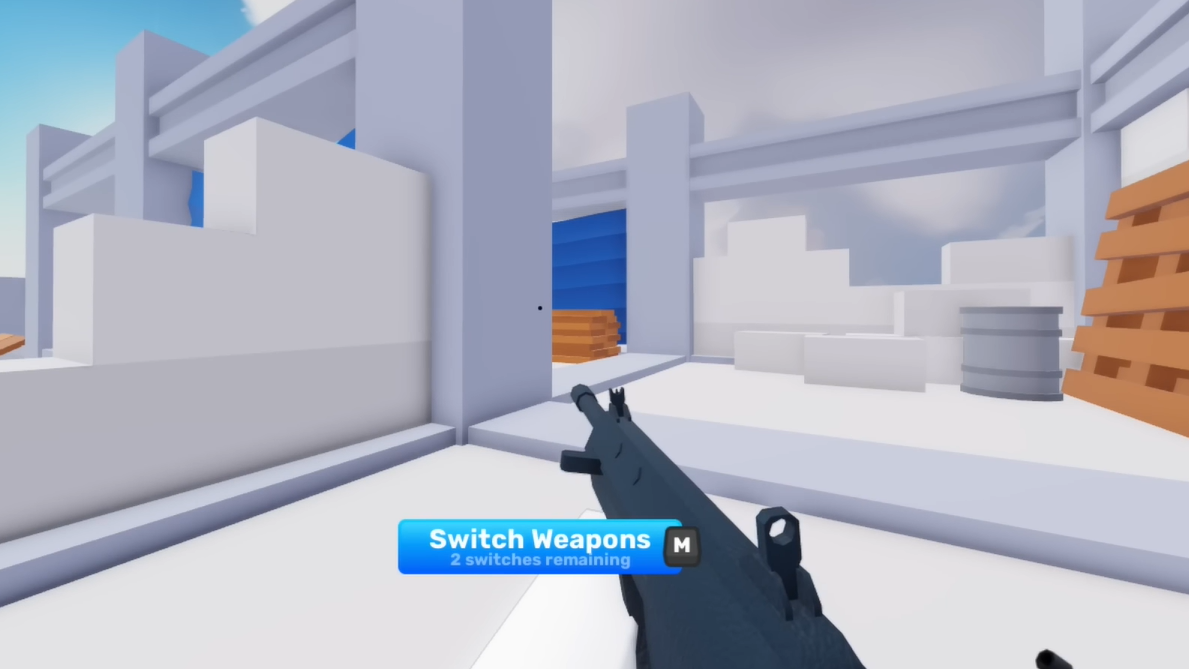
- You can only change your weapons twice during a duel, limiting on-the-fly counter-picking.
- Win streaks from casual play are protected and do not break when you lose a ranked match.
The net effect is a more aim- and positioning-heavy experience with fewer crutches. Lower aim assist, fewer weapon swaps, and tighter maps all work together to reward consistency rather than last-second loadout gimmicks.
ELO Shields: how they work and when they stop
Once your rank is unlocked after placements, a protective layer comes online for lower and mid-tier players: ELO Shields.
- You receive one ELO Shield per day while ranked.
- Each Shield blocks ELO loss from a single defeat in ranked.
- Shields cannot stack; if you do not use the daily Shield, it is effectively overwritten by the next one.
- Winning a match still consumes an active Shield—you keep the ELO gain but lose the protection.
There are two key limits to understand:
- Players at Platinum 1 (around 1,800 ELO) and above no longer receive new Shields.
- There is a one-time safety net: the first time in a day you fall from Platinum 1 to Gold 3, you are granted a Shield.
The system is clearly tuned to ease new ranked players into the ladder without punishing every early misstep, while ensuring high ELO play remains unforgiving.
ELO decay at high ranks
At the very top of the ladder, holding onto ELO becomes its own mini-game. Once you reach Onyx 1 or higher:
- There is a seven-day grace period where your ELO does not decay.
- After seven days with no ranked games, you lose 100 ELO per day.
- Decay continues until you either play another ranked match or your ELO falls to exactly 3000.
- In some cases, this decay can slide your visible badge all the way back to Diamond 3.
This keeps the top of the ladder active. Players who reach Nemesis or Archnemesis cannot simply stop logging in and expect to sit on those positions indefinitely; staying there means continuing to play on a roughly weekly basis.
Queue restrictions and partying with friends
Rivals uses your rank to limit who you can party with in ranked queues. The goal is to avoid extreme skill gaps in premade squads.
- Party members must be within four ranks of one another.
- The same restriction is expressed as roughly 800 ELO difference in later updates.
In practical terms:
- A Platinum 1 player can queue with anyone from Silver 3 up to Diamond 2.
- A Nemesis player at 3600 ELO can queue with teammates between 2800 and 4400 ELO.
This restriction only affects premade parties. Solo queue matchmaking can still pair you with (or against) players above or below your badge, depending on how the lobby fills, which is why lower ranks sometimes report running into Nemesis or Onyx opponents despite these rules.
Penalties for leaving and how ranked handles timeouts
Quitting mid-match in ranked is treated as a loss with extra consequences. If you leave during a ranked game:
- The match is counted as a defeat for ELO purposes (unless an ELO Shield is active).
- You receive a timed penalty of around 15 minutes with no access to ranked queues.
The intent is simple: discourage dodging, trolling, and rage-quitting so that remaining players are not continually left in lopsided games. On top of that, when a match timer expires without a clear kill to decide it, the win is awarded based on remaining health rather than a full rematch. That keeps matches from stretching indefinitely and reduces the opportunity for deliberate stalling.

Seasonal rewards and Glory currency
Ranked play is structured into seasons. At the end of each season, performance converts into cosmetics and currency:
- Your final ELO and total ranked wins determine what you earn.
- High win milestones have granted exclusive weapon skins in past seasons, such as:
- Phoenix Rifle for 200 ranked wins in Season 0.
- Warp Handgun skin for 200 wins in Season 1.
- Players finishing the season as Archnemesis receive a mythical katana skin called Arch Katana.
- Other ranks receive a universal charm themed to their final tier.
- Your ending ELO is converted into a currency called Glory, which can be spent in a dedicated Glory shop.
This structure makes ranked more than a badge hunt. Even if you miss the top tiers, consistent play toward win milestones and ELO thresholds feeds into permanent cosmetics and a currency balance for later purchases.
What your rank tends to say about your play
While there is no official description attached to each rank, the ladder naturally clusters players into rough archetypes:
- Bronze: Often very new players, returning players adjusting to current weapon balance, or those pulled down by poor placements and rough matchmaking.
- Silver: Still learning fundamentals; mistakes in positioning, utility use, and movement are common. Some are held here by early games versus much stronger opponents.
- Gold: A transitional tier. Players know the maps and weapons but lack consistency and often struggle to close out tight rounds.
- Platinum: Above-average mechanics and awareness. Platinum 3 in particular sits close to Diamond and contains many players who can spike higher when focused.
- Diamond: Strong aim, map knowledge, and dueling sense. For many, this is the plateau between serious play and true grind.
- Onyx: The bridge into high-end Rivals. These players put in real time to maintain their rank, often chasing Nemesis.
- Nemesis and Archnemesis: The practical ceiling of Rivals ranked. Nemesis players can often beat almost anyone they face; Archnemesis is limited to the top 200 by ELO and includes a mix of elite grinders and, at times, exploiters riding temporary advantages.
Because ELO gain and loss is influenced by opponent rank, individual games at these tiers can swing harder than they do in the middle of the ladder. Beating someone two or three bands above you might net over 30 ELO; losing to them might cost only a few points.
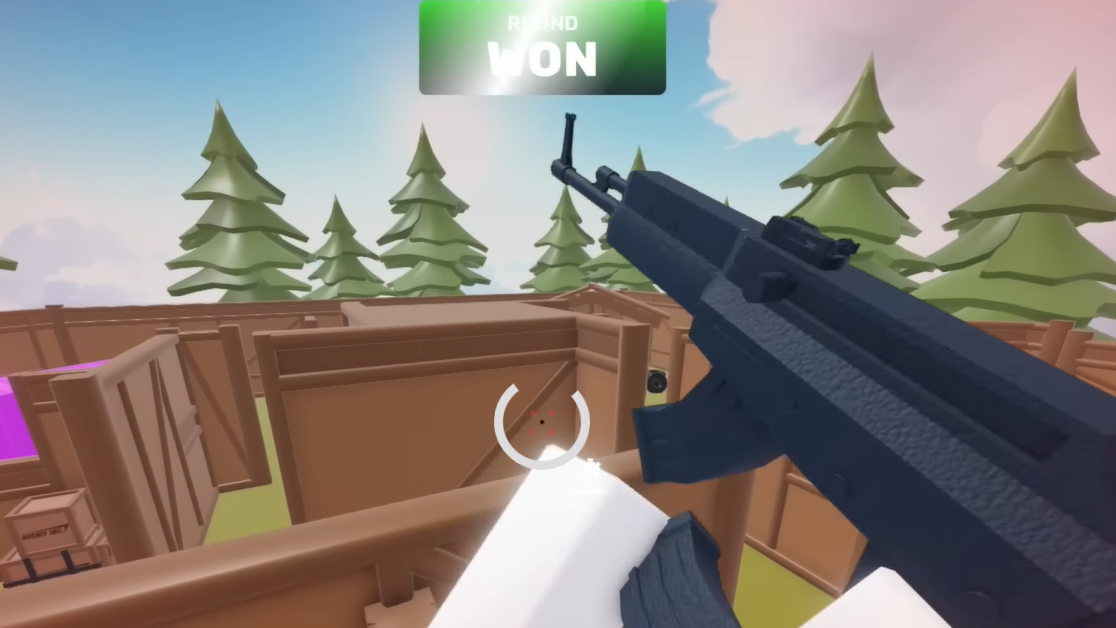
Rivals’ ranked system is a set of tradeoffs: strict map pools and equipment bans, limited party ranges, and real penalties at the top for going inactive. Understanding how ELO, ranks, decay, and shields interact makes the climb feel less random. Once those systems are clear, the rest of ranked comes down to the obvious but difficult part: better aim, better decisions, and enough games played to let the numbers catch up.