

Rogue arrives in Marvel Rivals Season 5.5 as a melee Vanguard built around disruption rather than raw shielding. Her game is movement, forced positioning, and turning enemy pressure into momentum. She can pull groups together, launch a target into the air to set up burst, and use Ability Absorption to either steal a key tool or refresh her own engage.
Rogue’s baseline identity: off-tank brawler, not a main wall
Rogue sits at 700 health and a 5-star difficulty rating. In practice, she plays like an engage off-tank: she wants quick entries, messy skirmishes, and short windows where enemies are clumped or isolated. She struggles when she’s the only Vanguard eating an entire team’s focus, because her mitigation is limited to brief blocking and positioning discipline.

Power Surge Punch and the rhythm of her basic damage
Rogue’s primary attack, Power Surge Punch, is a three-hit sequence where the third hit lands harder. It’s your default filler between abilities, and it matters because much of Rogue’s kit rewards you for constantly weaving basic hits while you reposition and set up control.
Defensive Stance and Southern Brawl: block to cash out
Defensive Stance is Rogue’s core survival tool. It reduces incoming damage and absorbs nearby projectiles, but it’s not a full negation. The key is that blocked damage powers a follow-up called Southern Brawl, a forward burst that slams a cone in front of you.
Used well, this is how Rogue punishes teams that mindlessly shoot the tank. Hold the block briefly, build charge, then cash it out as you close distance or finish a low-health target. The block has a stamina-like limit, so the goal is short, intentional blocks rather than “hold forever and hope.”

Fatal Attraction: engage, soft-zone, then pull everyone into a mistake
Fatal Attraction is Rogue’s Shift dash with a second activation. First, you dash forward; then you can trigger a ring-powered burst that deals damage around you and, after a delay, pulls enemies toward Rogue’s center. It’s both initiation and setup: the pull lines targets up for follow-up crowd control and makes it harder for a backline to maintain spacing.
Because the second activation isn’t immediate, Fatal Attraction can also function as a threat. If enemies see the zone and know the yank is coming, they either burn mobility early or give up space.
Chrono Kick Combo: mobility, launcher, and two ranged hits
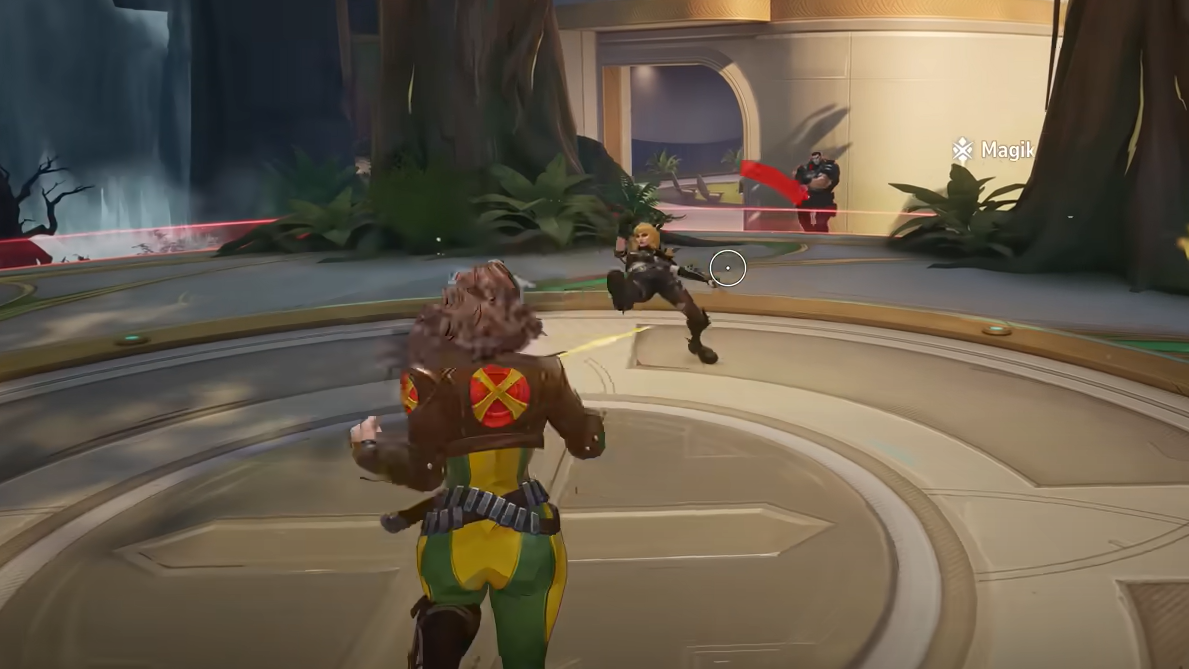
Chrono Kick Combo is Rogue’s most important button. It’s a forward dash that launches a target and puts Rogue into brief slow flight. While airborne, she can reactivate the ability to slam down, knocking down enemies in the landing area.
It also temporarily changes your next two basic attacks into ranged, piercing strikes and grants bonus health as you land those empowered hits. That detail matters: the safest time to take the ranged hits is often while you’re airborne and repositioning, because the extra health can cushion the window where you’re exposed.

Ability Absorption: steal an ability or steal tempo
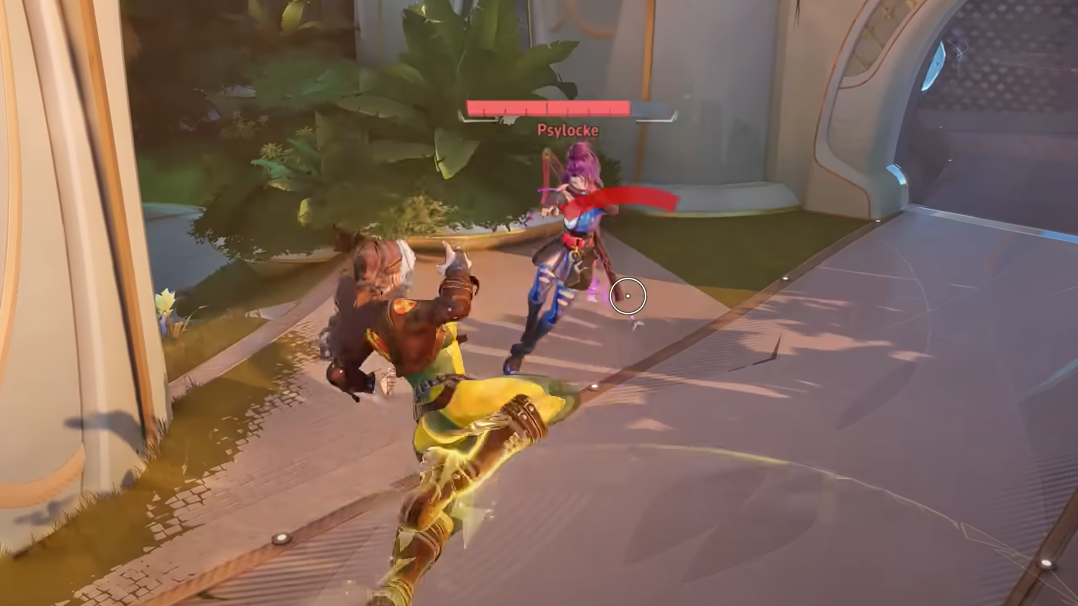
Ability Absorption is Rogue’s defining mechanic. She dashes forward, knocks down a target, and drains them. Afterward, the slot becomes either a stolen ability from that hero or a refresh of Fatal Attraction when the target doesn’t provide a steal.
Even when you don’t get a new ability, Ability Absorption still pays out via role-based effects:
- Vanguard target: Rogue gets a temporary max-health increase (+125). In some cases, she also steals 20 max HP from the target.
- Duelist target: Rogue gains a damage buff and reduces the target’s damage output by 10%.
- Strategist target: Rogue gains healing over time and reduces the target’s healing output for the duration of the stolen ability.
This is why “denying steals” isn’t a full counter by itself. You can limit which tools Rogue gets, but she still converts a successful drain into stats and tempo, and sometimes a free Shift reset that lets her engage twice.
High-value Ability Absorption targets
The best steals are the ones that either keep Rogue alive while she’s in the middle of the fight or let her chain more disruption before she has to leave. Several standouts consistently shape fights:
- Loki: Regeneration Domain is a high-impact sustain tool.
- Adam Warlock: Soul Bond can keep a team standing by linking health.
- Emma Frost: Diamond form reduces incoming damage and prevents crowd control effects.
Some steals are much lower impact, such as Jeff the Land Shark’s Healing Bubble or a single-use stun option from certain kits. When those are the only options available, Ability Absorption can still be worth using for the role-based buff or for the Fatal Attraction refresh.
Heartbreaker ultimate: AoE damage plus ultimate charge drain
Heartbreaker creates an area around Rogue for roughly eight seconds that deals constant damage and drains enemy ultimate charge while they remain inside. The drain rate is about 2% per second over the duration, which is enough to disrupt timing and force teams to either disengage or fight without their planned ult economy.
Heartbreaker also grants Rogue the same role-based benefits she gets from Ability Absorption, depending on who is inside the zone. That can mean healing over time when Strategists are nearby, a damage boost when Duelists are present, and increased max health when Vanguards are in range. It’s strong, but it’s not invulnerability: Rogue can still be focused down if she dives into five players without support.
Combos Rogue players should internalize
Rogue’s strongest sequences are less about a single “true combo” and more about sequencing control so enemies can’t reset spacing.
- Group engage into isolation: Fatal Attraction dash in, trigger the pull, then Chrono Kick Combo to launch a priority target and finish with the slam and empowered hits.
- Block cash-out during aerial pressure: Use Chrono Kick Combo to go airborne, briefly block to reduce incoming fire, then cash out Southern Brawl to surge forward and keep pressure while the target is vulnerable.
- Double-Shift tempo loop: Fatal Attraction engage → Ability Absorption on a target that refreshes Fatal Attraction → Fatal Attraction again to re-pull or to escape.
The most common failure mode is spending every dash to stay glued to one target, then having nothing left when the enemy team turns. Rogue lives or dies on leaving herself an exit.
How to play Rogue in real fights
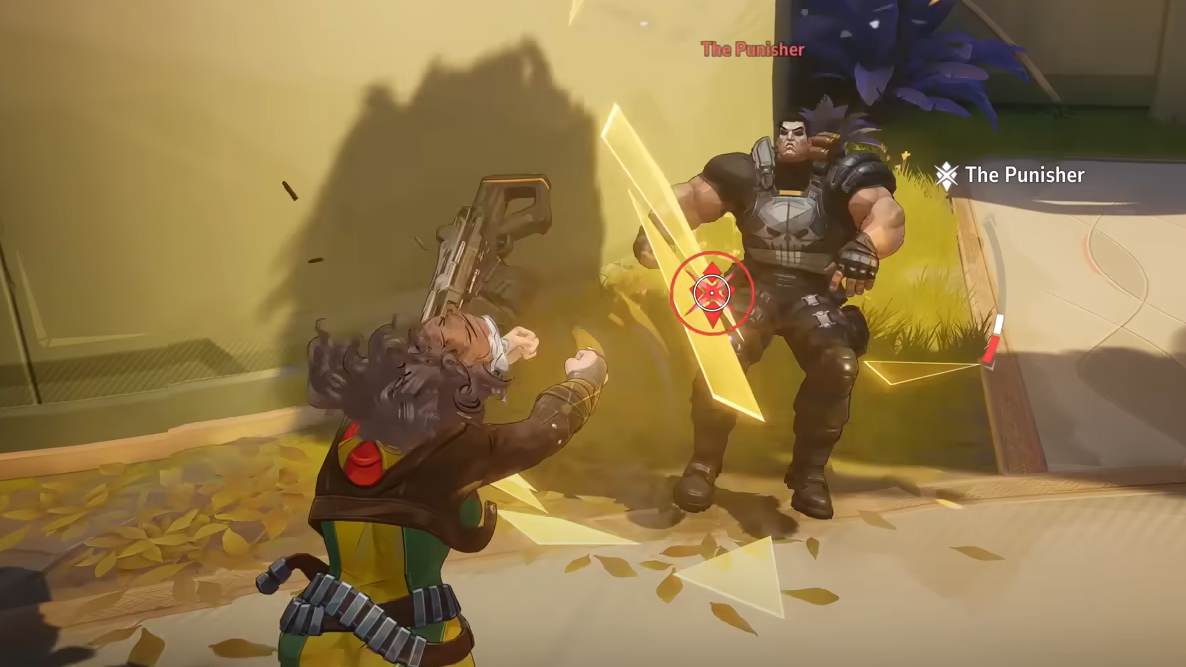
Rogue works best when she’s creating short, ugly fights at angles the enemy team didn’t plan for. Look for side targets that have drifted away from their Strategists or stepped out from behind cover. Your displacement is the point: pull them out of healing lines, launch them into the air, and force the fight to happen where your team can follow up.
Try to enter with one tool and leave with another. If you open with Fatal Attraction, plan on keeping Chrono Kick Combo for either a confirm (launching a low target to finish) or a getaway (airborne reposition into cover). Terrain matters more for Rogue than for many Vanguards because breaking line of sight is often her only “mitigation” once her block window ends.
Counters: what shuts Rogue down
The cleanest answers to Rogue are tools that stop movement and interrupt her ability sequencing. Hard crowd control is especially effective because many of Rogue’s plays require chaining dashes and reactivations.
- Hard CC and movement denial: Winter Soldier, Luna Snow, Mantis, Namor, and Scarlet Witch are recurring problems for Rogue when their control lands at the start of her engage.
- Tank-busters: Wolverine and Iron Fist can punish Rogue’s durability and make dives expensive.
- Range and flight: Flying heroes can force Rogue to overextend, since her baseline pressure is melee.
- Peni Parker: Mines and area control make Rogue’s commit-heavy style harder to execute safely.
- Cloak & Dagger: Vanish effects can reduce Rogue’s effective uptime during Heartbreaker and make it harder to capitalize on the drain window.
Even with counters, Rogue doesn’t need perfect steals to be relevant. If she’s pulling key targets off angles and bleeding ultimate charge during objectives, she’s doing the job her kit is designed to do.
Team comps that tend to fit Rogue
Rogue generally wants a second Vanguard who can provide more traditional protection or stable frontline presence, plus damage dealers who benefit from clumped enemies. Pairing her with Vanguards like Magneto, Doctor Strange, Groot, or Emma Frost helps cover the “main tank” gap that Rogue often can’t fill alone.
She also has a Team-Up that joins “Explosive Entanglement” with Gambit and Magneto. When activated, Rogue’s basic attacks explode on impact, damaging nearby enemies while healing allies in a small area, which turns her brawling into a moving splash-heal zone during close fights.
Rogue is at her best when she plays like a controlled problem rather than a reckless diver. Pick your steal target early, treat your dashes as a budget, and use Heartbreaker when it denies the enemy team’s most important ult window, not when you simply want extra damage.