

Shadow Step is the Nameless Sword’s signature evasive special skill in Where Winds Meet. It looks like a simple backstep at first glance, but it is wired into some of the weapon’s strongest interactions, including multi-hit sword energy from the Sword Morph Inner Way.
Shadow Step basics (Nameless Sword)
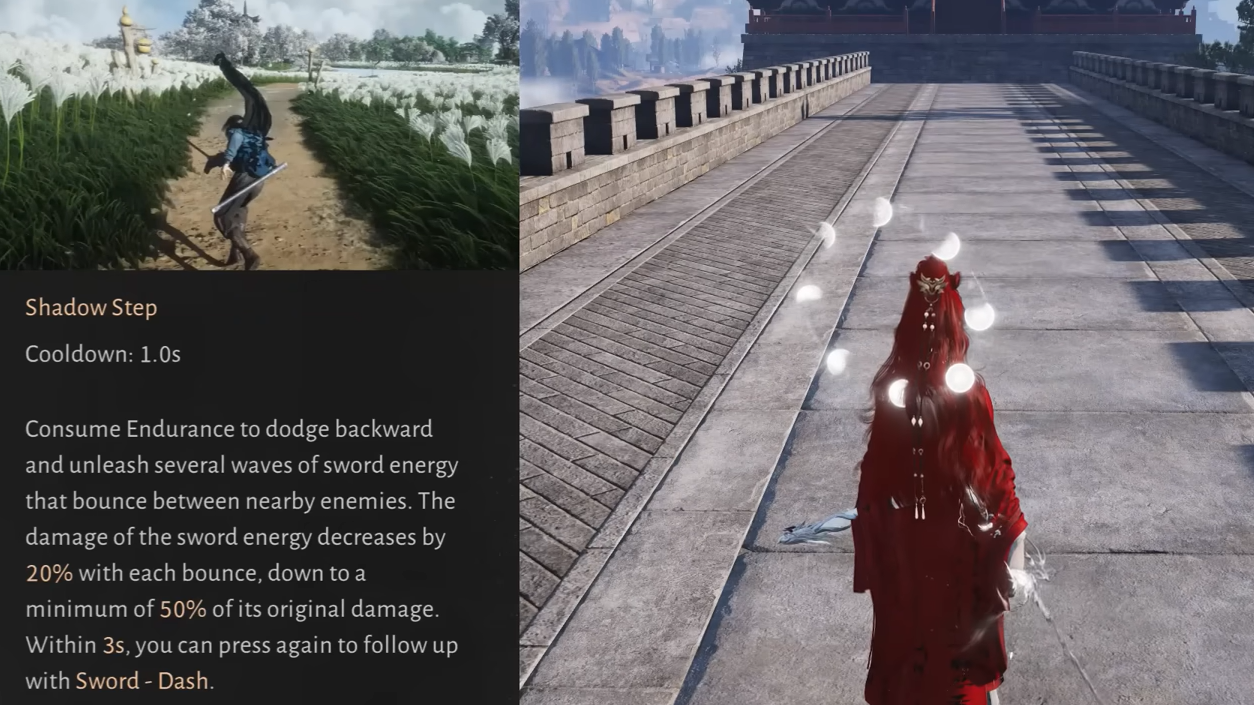
Shadow Step is a Martial Art skill tied to the Nameless Sword path. In the weapon’s kit it is classified as a Special Skill with the following core properties:
- Weapon: Nameless Sword (Bellstrike – Splendor path)
- Type: Special Skill
- Recovery: 1 second
- Effect: Consumes Endurance to dodge backward and emit Sword Qi
In practice, pressing the Shadow Step key triggers a quick backward displacement while projecting a wave of sword energy in front of you. It is both an evasive move and an attack, which is why it is categorized as a special skill rather than just a pure movement option.
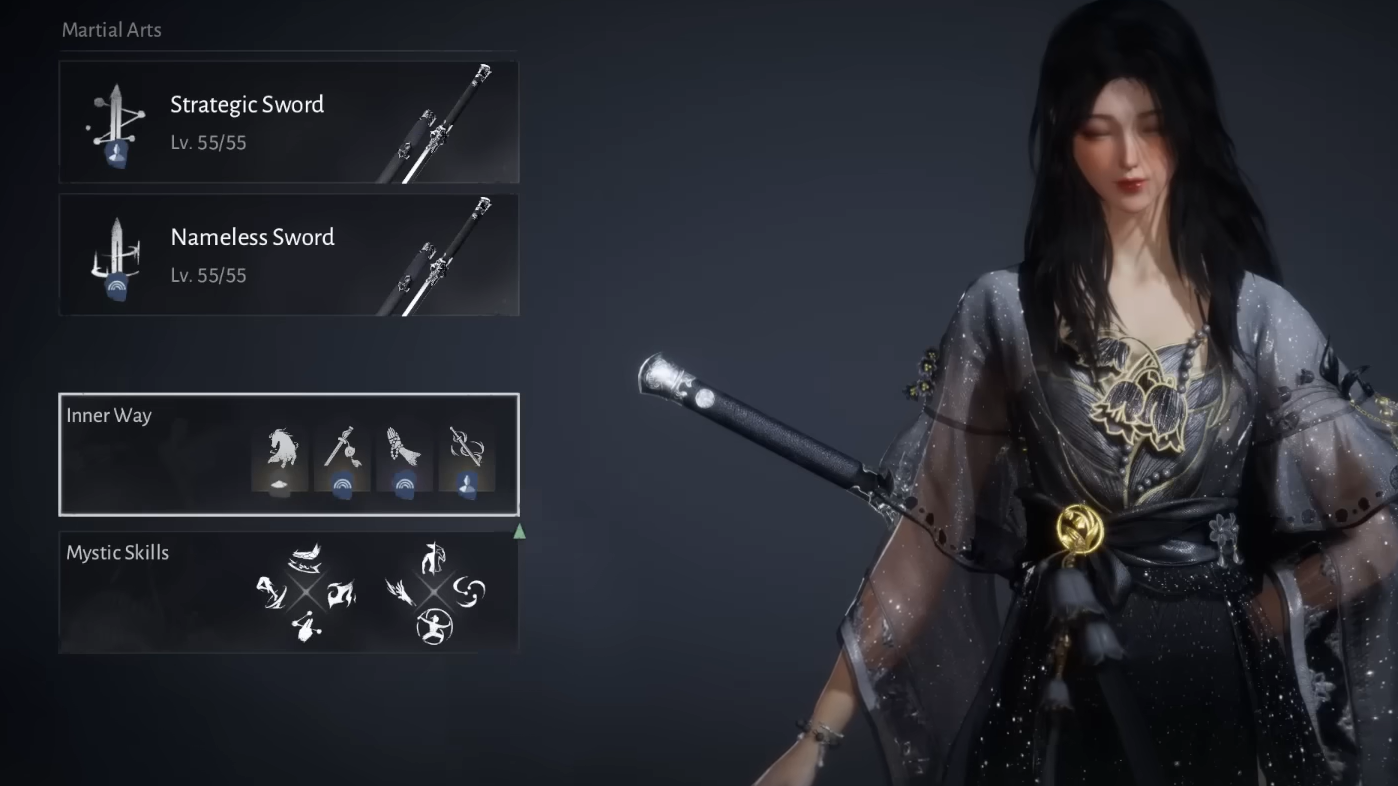
No Inner Way currently lists a direct bonus to Shadow Step itself. There is a table entry that explicitly states there are no Inner Ways that modify this Martial Art. However, Shadow Step still acts as a trigger for other effects in the Nameless Sword ecosystem, most notably Sword Morph.
How to unlock Shadow Step
Shadow Step is not unlocked by a quest or drop; it sits inside the Nameless Sword’s basic talent progression.
Step 1: Equip or unlock the Nameless Sword path so that the Bellstrike – Splendor talent line becomes available in your Basic Talents tab.
Step 2: Progress the relevant Basic Talent line until you reach the talent named Blade Out.
Step 3: Activate the 8th node in the Blade Out Basic Talent. Once this node is lit, Shadow Step is unlocked as the Nameless Sword’s Special Skill and can be bound to the Special key (by default this is ~ on PC).
After that, Shadow Step remains permanently available whenever you are using Nameless Sword, subject only to its Endurance cost and short recovery.
How Shadow Step interacts with Sword Morph
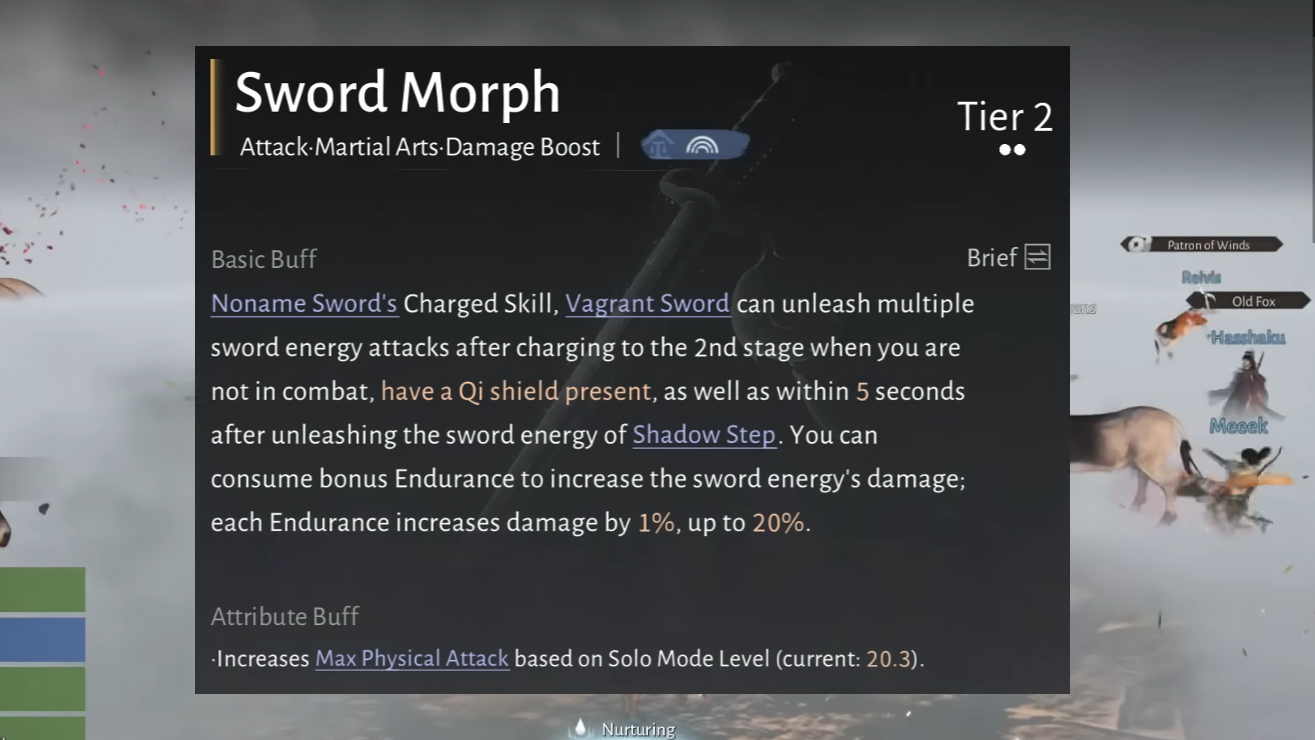
The Inner Way Sword Morph is where Shadow Step becomes more than just a backstep. Sword Morph is an Inner Way that requires Nameless Sword or Nameless Spear on the Bellstrike – Splendor path. Its effect centers on the Nameless Sword’s Charged Skill (Vangrand Sword) and Qi shield, but player testing shows that it also has a conditional clause tied to Shadow Step:
- When Vangrand Sword is fully charged while the Qi shield is active, it can unleash additional sword energy waves at the second charge stage.
- You can spend extra Endurance to further increase the damage of those extra sword energies, with each unit of Endurance giving a small percentage increase up to a cap.
- The breakthrough text for Sword Morph includes a condition that multiple sword energies are only generated outside combat or within a short window after using Shadow Step.
This leads to a practical rule during gameplay: multiple sword energies from Sword Morph will only fire when you either are not in combat, or you charge your heavy attack within a few seconds after triggering Shadow Step.
Why multiple sword energies do not trigger in some situations
A common complaint from Nameless Sword players is that Sword Morph’s multi-wave behavior seems inconsistent. There are three recurring reasons.
Shadow Step and combat state
The Sword Morph breakthrough places a hard constraint on when the extra sword energies appear. It specifies that the three-sword-energy version only happens when you are not flagged as being in combat, or when your heavy attack is charged within a short period after using Shadow Step.
That means if you simply stand in combat range and charge heavy attacks without weaving in Shadow Step, you will typically see only a single energy wave, even though you can still fully charge the heavy attack and hear the double-charge sound.
Trials and Inner Way breakthrough limitations
Another trap is the behavior in boss trials (the easy–abyss trial modes). Inner Way setups used in those trial instances are not treated as having their breakthrough bonuses active. Sword Morph’s extra behavior sits on its breakthrough effect, so in trials you may see only the baseline charged attack even if your build outside trials has Sword Morph fully unlocked.
In other words, if you are testing Shadow Step and Sword Morph interactions against trial bosses, expect the multi-wave behavior to be disabled. The interaction works normally in the open world, normal dungeons, and other modes where your full Inner Way breakthroughs apply.
Timing your heavy attack after Shadow Step
Even outside trials, timing still matters. Sword Morph’s extra waves only trigger in a specific timing window tied to Shadow Step.
Step 1: Press the Special Skill key to cast Shadow Step. You should see your character dodge backward and emit the basic Sword Qi wave.
Step 2: Immediately start holding the heavy attack button to charge the Nameless Sword’s charged skill. Do not wait or perform any other actions between the end of Shadow Step and the start of the charge, or you risk falling out of the allowed time window.
Step 3: Hold until you reach the second charge stage (you will typically get both the visual effect and the second charge sound) and then release. If the conditions are met (not in trials, Sword Morph breakthrough unlocked, and within roughly five seconds of Shadow Step), this release should produce multiple sword energy waves instead of a single one.
Players also report that the timing window is generous enough that you can chain two early releases in quick succession, each benefitting from the Shadow Step window, provided you are still within the few-second limit.
Ghostly Steps and other movement skills, and how they differ
Shadow Step is not the only tool that plays with dodging and positioning in Where Winds Meet, which sometimes causes confusion with other “shadow-style” skills.
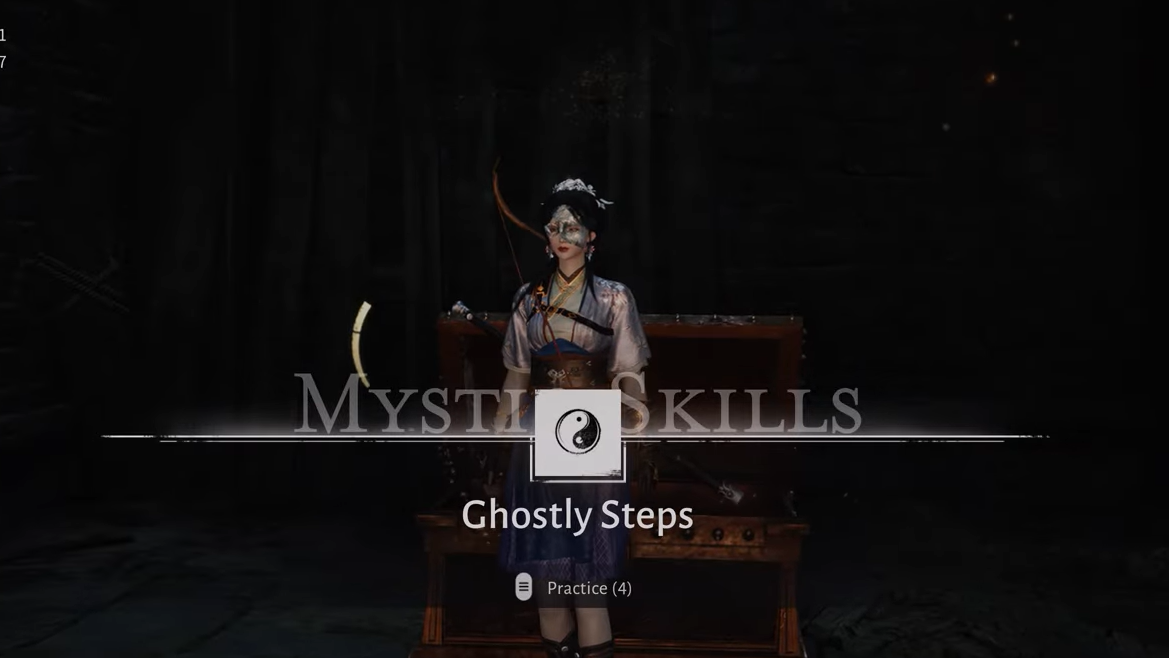
Ghostly Steps is a Mystic Skill, not a Martial Art, and is completely separate from Shadow Step. Ghostly Steps grants the Mirage status for 20 seconds, which cuts the Endurance cost of ground-based dodge skills by 40 percent and slightly lengthens the period during which you are untargetable when dodging. It does not deal damage and it does not trigger Sword Morph interactions.
Ghostly Steps is obtained through dungeon content associated with Ghostlight Market. You need to reach Ghostlight Market via its exploration entry, manipulate a contraption to open a cave, and then clear that cave to reach a chest at the far end. That chest contains Ghostly Steps, after which you can equip it as one of your Mystic Skills. While active, it makes aggressive dodge-heavy play far more sustainable in long fights, but it does not replace Shadow Step, which remains specific to Nameless Sword.
Movement Mystic Skills such as Threefold Skywalk, Skywalk Dash, and Wind Rider sit in a separate category again, tied to traversal rather than weapon paths. They use their own resource and restrictions and do not interact with Shadow Step or Sword Morph.
Mobile controls and the Shadow Step key
On PC, Shadow Step is bound to the Special Skill key by default, usually ~. On mobile, the same Special Skill is exposed as a dedicated on-screen button when Nameless Sword is equipped.
Step 1: Equip Nameless Sword on your character so that its Martial Arts bar is active.
Step 2: Check the ability bar on the right-hand side of the mobile UI. The Special Skill slot will show Shadow Step’s icon once it is unlocked via the Blade Out 8th node.
Step 3: Tap that Special Skill icon to cast Shadow Step, then immediately hold the on-screen heavy attack button to charge Vangrand Sword if you want to trigger Sword Morph’s extra sword energies.
Controls can differ slightly depending on layout presets, but the key point is that Shadow Step always occupies the Nameless Sword Special Skill slot rather than being a separate generic movement button.
Shadow Step’s value comes from this layering. On its own it is a fast, cheap backstep with a built‑in Sword Qi hit; coupled with Sword Morph, it becomes a gateway to high‑damage, multi‑wave charged attacks. Once it is unlocked through the Blade Out Basic Talent and you understand the timing constraints and trial limitations, it becomes a reliable tool rather than a confusing conditional effect.