

Stat Points in Solo Hunters look simple on the surface, but the game never spells out what each number actually changes. That makes it easy to waste early levels on stats that barely move your damage or survivability.
The stat system is straightforward once you separate the core combat stats from the utility ones. Most builds live or die on how much you put into Strength, Defense, and (later) Magic Power, while Energy and Agility play a much smaller role than they appear to.
Solo Hunters stats: what every point really does
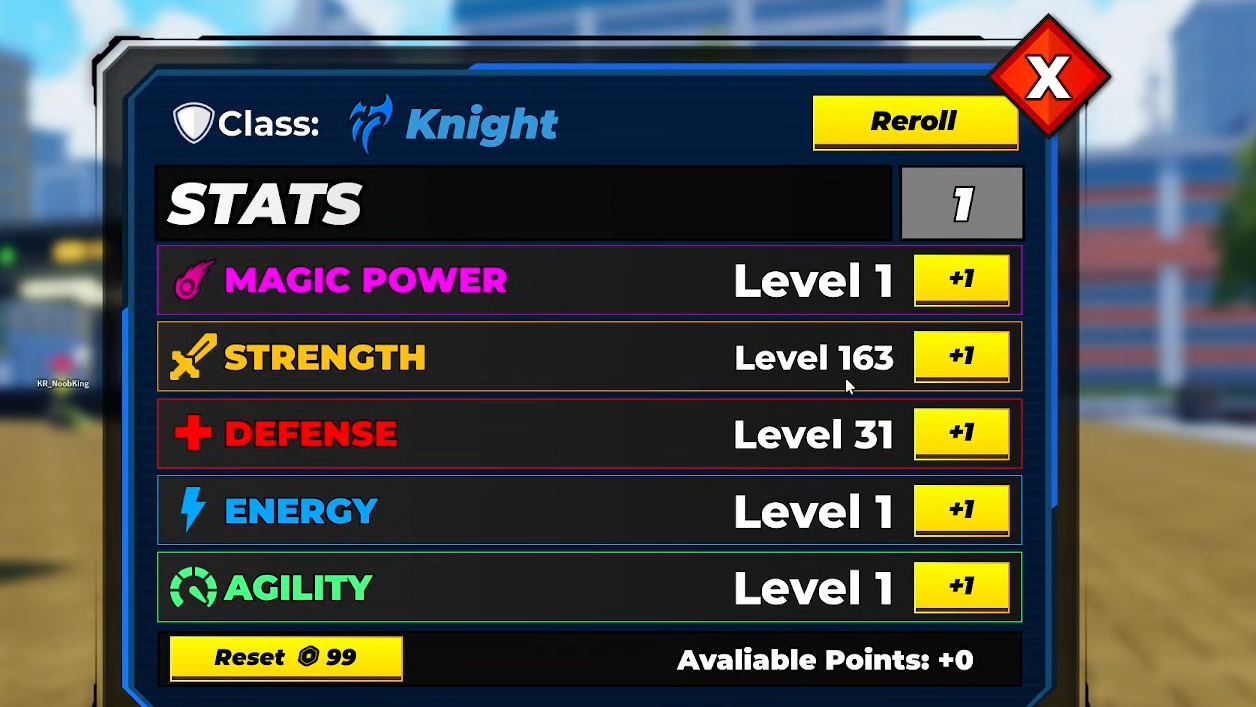
Each time you level up, you gain Stat Points that can be distributed into your character’s stats. These stats affect either your raw combat numbers or your movement and stamina.
| Stat | Main effect | Primary use |
|---|---|---|
| Strength | Increases physical damage and your basic M1 weapon attack. | Main damage source while you are playing melee or weapon-focused builds. |
| Defense | Raises total Health and reduces damage taken from enemies. | Core survivability stat for all builds. |
| Energy | Expands your Energy bar so you can Dash more often before running out. | Mobility between fights and occasional repositioning during combat. |
| Agility | Increases run speed only; it does not affect attack speed. | Faster map traversal, minor value for dodging telegraphed attacks. |
| Magic Power | Boosts ability damage and the effectiveness of your skills. | Key damage stat once your build centers on abilities. |
Two things are worth highlighting:
- Strength scales the attacks you are using most in early game. Basic M1 weapon swings are your primary damage source at low levels, which makes Strength disproportionately valuable early on.
- Agility does not touch attack speed at all. If you are hoping for faster combos, Agility will not deliver that; it only changes how quickly your character moves around the map.
Best Solo Hunters stats for early game (up to around level 50)
For most players in the early game, the optimal use of Stat Points is to lean hard into damage and survivability and ignore utility stats. That means focusing almost entirely on Strength and Defense.
A simple approach that works well while you are leveling:
- Prioritize Strength and Defense evenly. Treat them as your two main stats and keep them roughly in balance. Strength speeds up every kill; Defense reduces the number of mistakes that actually cost you a run.
- Skip Agility completely at first. Faster run speed feels nice, but it does not shorten your clear times nearly as much as extra damage, and it will not save you from burst damage the way Defense does.
- Leave Energy at or near its base value. You rarely Dash enough in real fights to justify heavy investment here. Most players can manage positioning with base Energy and a few well-timed dashes.
The reason this works is practical: early dungeons are cleared almost entirely with weapon attacks while you are still unlocking abilities and gear. Every point in Strength increases the value of the weapon you are already using, and Defense lets you stay in melee range longer without being forced to disengage.
When to start investing in Magic Power (level 50+)
Once you reach roughly level 50, the flow of combat changes. Ability sets become stronger, cooldowns feel more impactful, and a larger share of your total damage starts to come from skills instead of basic weapon swings. At that point, continuing to put every point into Strength is less efficient.
A practical late-game pattern looks like this:
- Maintain a solid base of Strength and Defense from your early levels so your weapon attacks and survivability do not fall behind.
- Redirect new Stat Points into Magic Power once your ability kit is doing a meaningful share of your damage. This is especially important for builds that chain abilities on cooldown.
- Avoid overcommitting to utility stats even in late game. Movement speed and extra dashes help, but they rarely compete with more damage on ability rotations.
If you are playing a build or class that leans heavily on skills, you can shift more aggressively into Magic Power after you reach your comfort thresholds for Strength and Defense.
Why Agility and Energy are low priority
On paper, Agility and Energy sound like core combat stats. In practice, they usually behave like quality of life upgrades that do not significantly change how quickly you clear content.
- Agility only affects how fast you move. It does not speed up your attack animations or make combos smoother. For most content, staying alive comes from learning enemy patterns and having enough Defense, not from marginal increases in movement speed.
- Energy increases how often you can Dash in a row before your bar empties. In most fights, you are not spamming Dash continuously. A small base pool is enough for dodging big telegraphed attacks, especially once you learn boss behavior.
Investing into these stats too early spreads your build thin and slows down progression. They are best treated as last touches after your core damage and survival needs are fully covered.

How to reset stats in Solo Hunters
Misallocated points are not permanent as long as you still have a reset available. Stat resets return every spent point, letting you rebuild around a more focused plan.
Step 1: Open the in-game stat screen by clicking the green Stats button. This button sits in the main HUD while you are in town or a lobby.
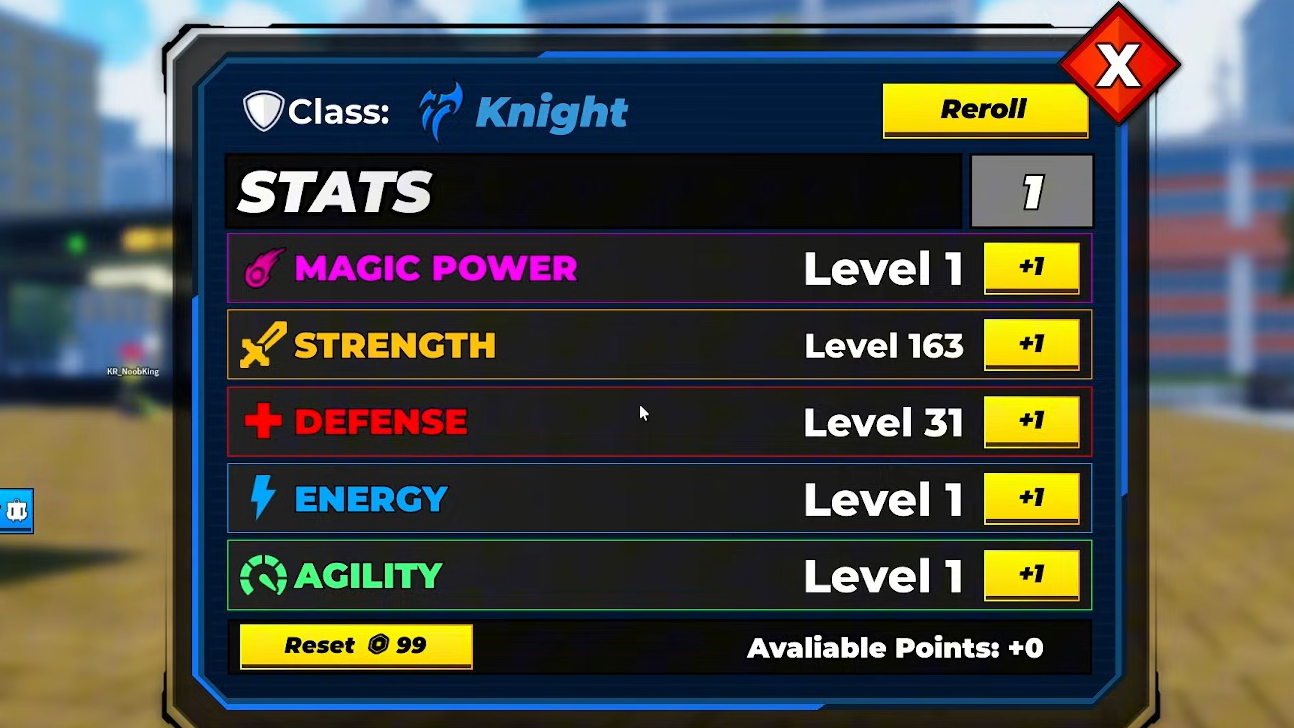
Step 2: On the Stats screen, look at the bottom of the window and click the yellow Reset button. This button is only active if you have at least one reset available on your account.
Step 3: Confirm the reset when prompted. The confirmation step prevents you from burning a reset by mistake.
Step 4: Once confirmed, all previously spent Stat Points are refunded to your pool. Your stats return to their level 1 baseline, but your character level stays the same, so you can immediately reallocate every point.
Free stat resets are granted by some Solo Hunters codes. After those are gone, further resets require spending Robux or other premium routes, so it pays to plan your next build before you commit.
Stat Crystal and Perfect Stat Cube explained
Stat Crystal and Perfect Stat Cube do not touch your character’s core stats at all. They exist purely for rerolling the stats on gear.
| Item | Cost | Purpose |
|---|---|---|
| Stat Crystal | 7,500 Gold | Rerolls the stat lines on weapons and other equipment. |
| Perfect Stat Cube | 30,000 Gold | Rerolls gear stats, with a higher-end option at a much higher price. |
Both items are sold by the Merchant NPC in the main square. They are used when you are happy with a weapon or armor piece’s base type or rarity, but want a better spread of sub-stats. They never refund or move your character Stat Points, so they are not a replacement for a stat reset.
How classes and stats interact in Solo Hunters
Classes in Solo Hunters currently function as stat packages rather than full-fledged playstyle changes. They apply passive bonuses to your core stats instead of unlocking unique skills or passives.
Because classes are effectively stat modifiers, understanding your Stat Point plan is the key to picking a class:
- If you plan to build around physical damage, classes that push Strength are naturally more attractive.
- If your endgame goal is ability-heavy combat, classes that favor Magic Power line up better with your planned late-game stat distribution.
- Survivability-focused classes that raise Defense synergize with aggressive Strength and Magic Power builds by covering some of the defensive burden.
Class rerolls are handled from the same Stats interface where you manage Stat Points. When you have a reroll available, the class reroll button shows the odds for each rarity tier, from Rare up through Mythic. Rerolls can come from in-game codes or from spending Robux.

Putting it all together: a simple stat plan to follow
If you do not want to overthink your build, a straightforward plan works for most players:
- Levels 1–50: Invest almost everything into Strength and Defense in a roughly 1:1 ratio. Ignore Agility and Energy unless you have a specific reason not to.
- Level 50 and beyond: Keep Strength and Defense at comfortable values, then start channeling new points into Magic Power as your abilities become central to your damage.
- Reroll and adjust once: Use your free stat reset to pivot into this focused distribution if you experimented heavily at the start.
- Use gear rerolls separately: Treat Stat Crystal and Perfect Stat Cube as tools to clean up weapon and armor rolls, not as a way to fix character stats.
Staying disciplined about where your Stat Points go has more impact than any single item upgrade. Focus on Strength and Defense early, layer in Magic Power once your skills justify it, and leave movement and utility stats until you are already cutting through content comfortably.