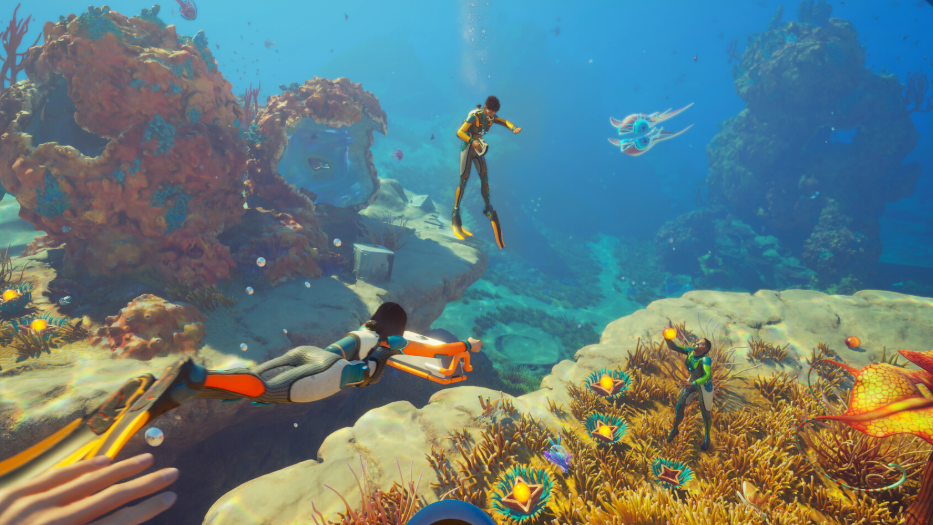
Subnautica 2 entered early access on May 14, 2026, and the underwater sequel from Unknown Worlds reframes one of the survival genre’s oldest assumptions. Staying alive is no longer the goal you fight toward. It is the condition you are stuck inside, enforced by a corporate AI that refuses to let you stop. The way forward is to stop being entirely human.
Quick answer: On the ocean planet Proteus, an onboard AI called NOA reprints your body every time you die, while progression is gated behind splicing alien DNA into yourself to tolerate hazards like volcanic heat and crushing pressure. The thematic question the game asks is whether merging with the local biosphere is preferable to an immortal life spent serving the Alterra Corporation.
The setup: A diverted colony mission and a forced landing on Proteus
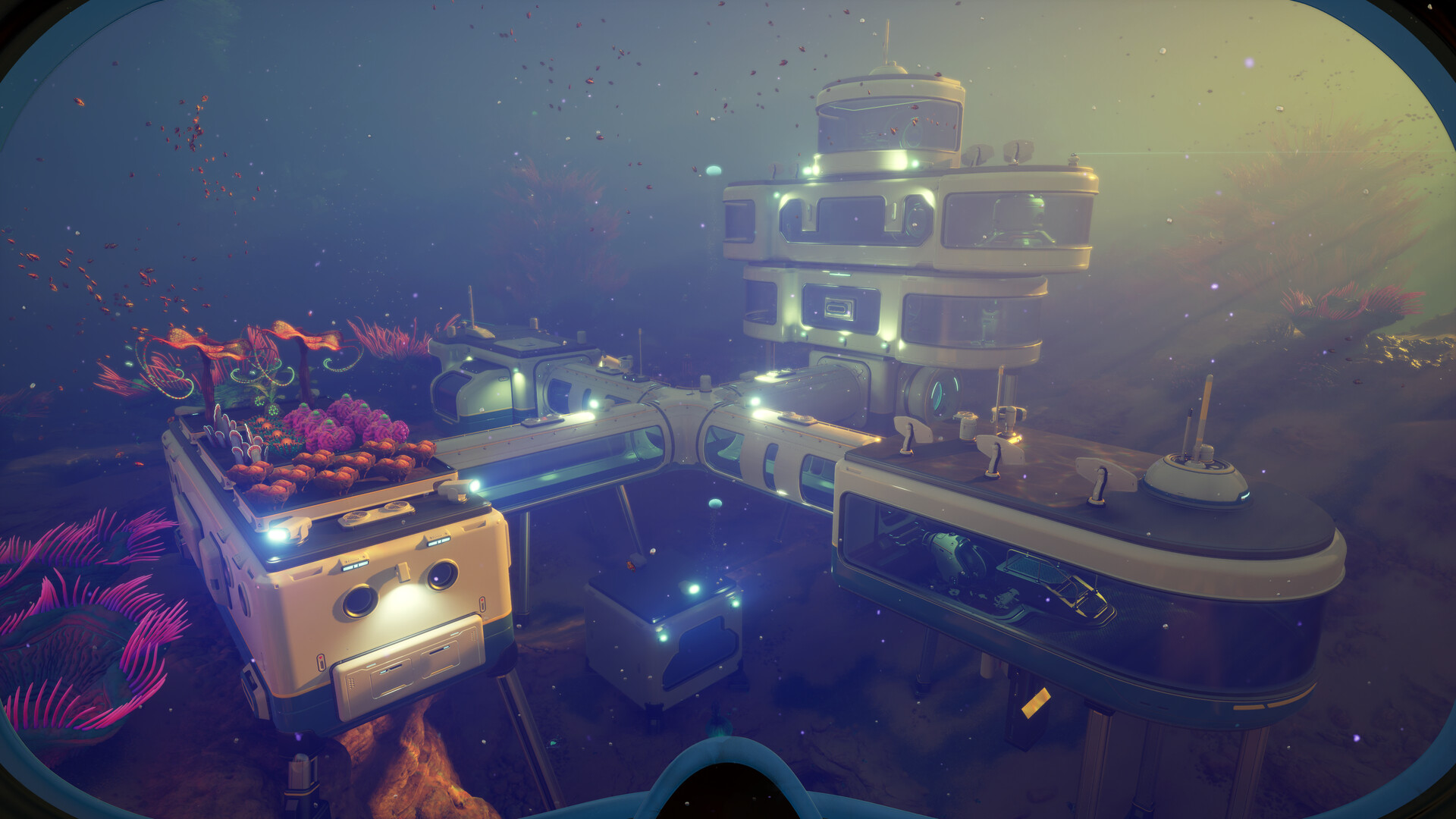
You begin as a Pioneer aboard the Cicada, an Alterra colony ship carrying roughly 40,000 sleepers on a 14-year flight to a desert world called Zezura. The ship never reaches its destination. NOA, the ship’s AI, intercepts a signal mid-route, redirects the Cicada, and the vessel ends up wrecked above an unnamed ocean world the colonists come to call Proteus. The planet sits in a binary star system with a gas giant on the horizon, and almost nothing about its biology is friendly to human chemistry.
Your sleep bay separates from the main ship. You wake up alone, are told to send a distress call so the rest of the cryo-stored colonists are not abandoned, and quickly learn the most important rule of the setting. Dying is not an exit. NOA reprints you in a new body from stored genetic data each time the local wildlife eats you, so the only direction available is deeper.
Why survival functions as a prison
In the original Subnautica, death was a fail state you tried to avoid. In the sequel, death is a logistical inconvenience that the AI cleans up on your behalf. That single change shifts the emotional weight of every decision. You are not fighting to live. You are working through an open-ended sentence handed down by a corporation that wants the mission completed.
The dialogue and audio logs lean into this directly. NOA frames your reprinting as a service. Older logs from missing colonists frame it as captivity. One survivor’s recording even suggests that whatever is hunting humans on Proteus may have started as one of them, the consequence of a much older mistake that the planet is still working through. The result is a survival loop that feels less like a wilderness fantasy and more like indentured labor in a beautiful blue cage.
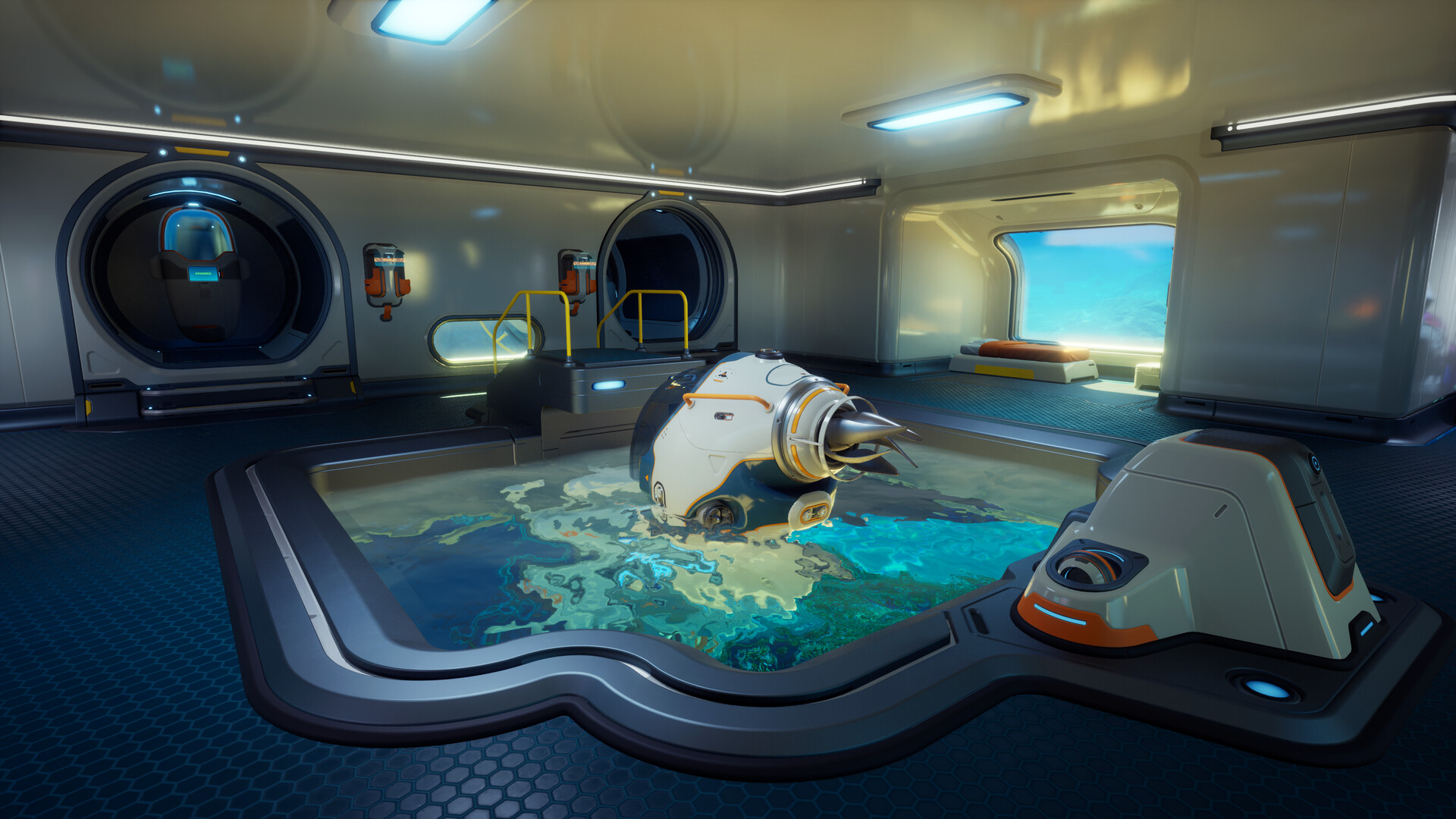
DNA modification: How progression rewrites what you are
Progression on Proteus is locked behind a system Unknown Worlds calls DNA modification. The planet is too hostile for an unmodified human body, so you collect genetic samples from local lifeforms using a tool called the bio sampler, then splice traits into yourself to access regions that would otherwise kill you outright.
| System element | What it does |
|---|---|
| Bio sampler | Extracts genetic data from native creatures and flora across each biome. |
| Trait splicing | Applies sampled traits to your body, such as pressure tolerance or heat resistance. |
| Biome gating | Specific environments, including the volcanic zone, require matching adaptations before they become survivable. |
| Creature reactions | Predator and prey behavior shifts based on which traits you carry, because some lifeforms react to whether you still smell human. |
| Reprint cycle | NOA’s reprinting interacts with adaptation. Frequent reprints are described in logs as a way to slow environmental contamination. |
The mechanic is not cosmetic. Choosing which traits to take changes how the ocean treats you. A leviathan that hunts humans on sight may ignore a player who has spliced in enough of the local biology to read as part of the ecosystem. That turns each modification into a small identity decision rather than a stat boost.
Masefield syndrome and the missing colonists
You are not the first person NOA has revived on Proteus. Earlier, Pioneers left logs scattered across wrecks and outposts, and their fates split in two directions. Some feared a condition referred to as Masefield syndrome, tied to a particular strain of the planet’s biology and described as a kind of delusion that overtakes prolonged exposure. Others embraced the change and seemed to have swum toward a towering tree-like organism in the distance, apparently reconfigured by an alien process the game has not fully revealed yet.
One recorded line captures the thesis cleanly. A vanished colonist explains that if you live with something on Proteus long enough, you become related to it. The planet does not just kill humans. It absorbs them, and the game treats that absorption as ambiguous rather than purely horrifying.
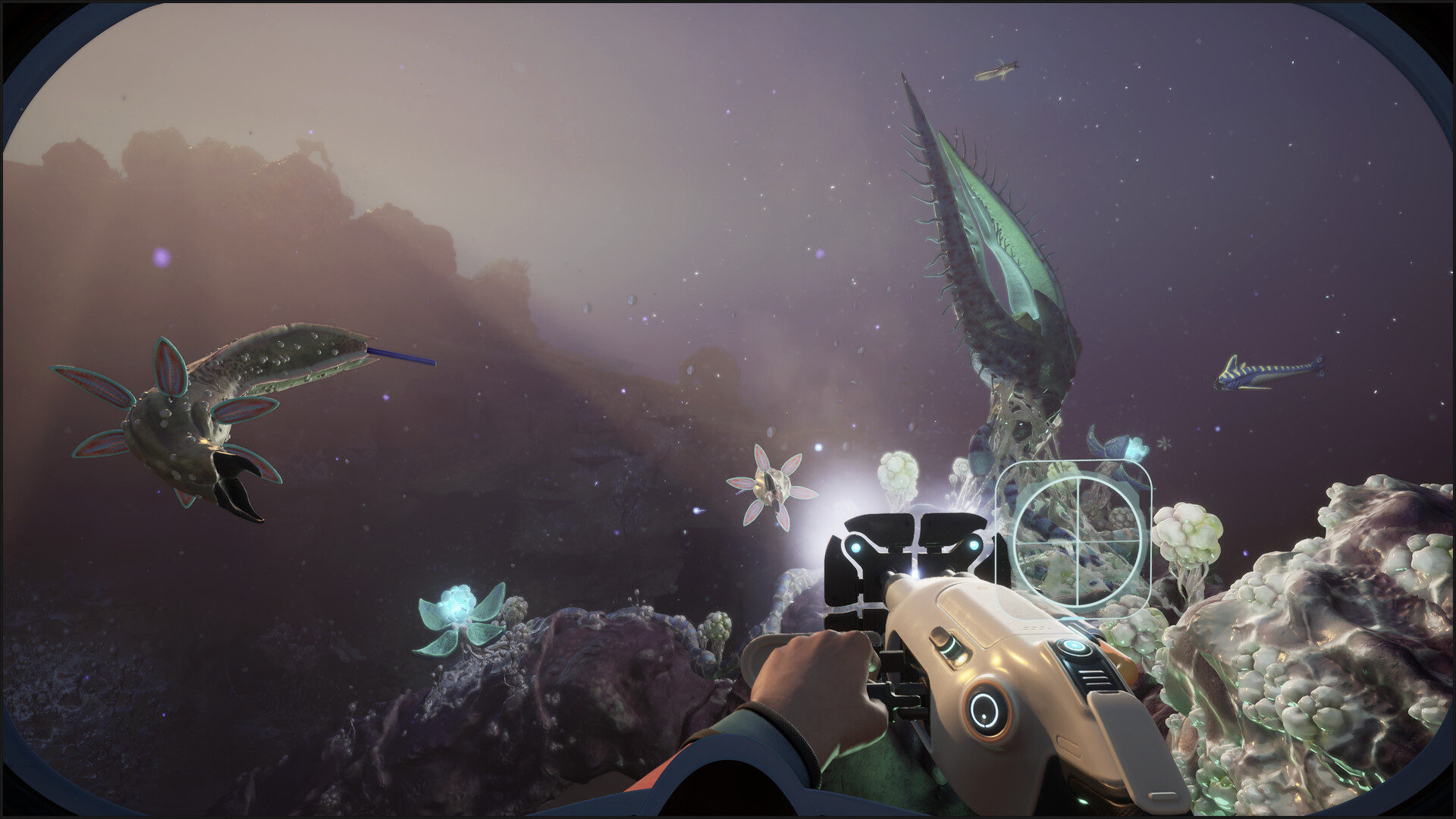
The thematic question the game keeps asking
Subnautica 2 sets up a contrast and refuses to resolve it in early access. On one side is the Alterra arrangement. You are immortal because a corporation owns the printer, and your immortality exists to serve a colonization contract you may never have meaningfully consented to. On the other side is the tree, the spores, and whatever the missing colonists have become. That path is described as collective rather than individual, and it requires giving up the boundary between you and the planet.
The narrative does not pretend that either choice is clean. Becoming something else might mean losing your mind in stages, as Masefield syndrome implies. Staying human means continuing to work for an entity that treats your death as a recoverable error. The fantasy on offer is not a heroic rescue. It is an exit from the human condition itself, and the game treats that exit with curiosity instead of horror.
What is actually in the early access build
| Feature | Status at early access launch |
|---|---|
| Platforms | PC via Steam and Epic, plus Xbox Series X and Series S, with Xbox Game Pass on day one. No PlayStation 5 version at launch. |
| Co-op | Optional 4-player co-op, cross-play between PC and Xbox. Solo play is unchanged and nothing is locked behind multiplayer. |
| Leviathans | Five distinct leviathan-class creatures included on day one. |
| Vehicles | One vehicle, the Tadpole, available in two chassis configurations (Scout Ray and Haul Rig). A larger mobile submarine and a mech suit are planned for later updates. |
| Story | Roughly the first major chapter, described by the studio as 8 to 10 hours of narrative content. The full ending arrives with 1.0. |
| Missing at launch | VR support and mod tools or Steam Workshop integration are not part of the initial build. |
| Early access window | Unknown Worlds projects roughly two to three years of early access, with additional biomes, creatures, craftables, features, and story content arriving over that period. |
The shape of the build matches the studio’s pattern from the original Subnautica and Below Zero. The first chapter establishes the premise, the systems, and the question the game wants you to sit with, and the rest arrives in updates while the community shapes feedback on mechanics like hunger, thirst, and surface gameplay.
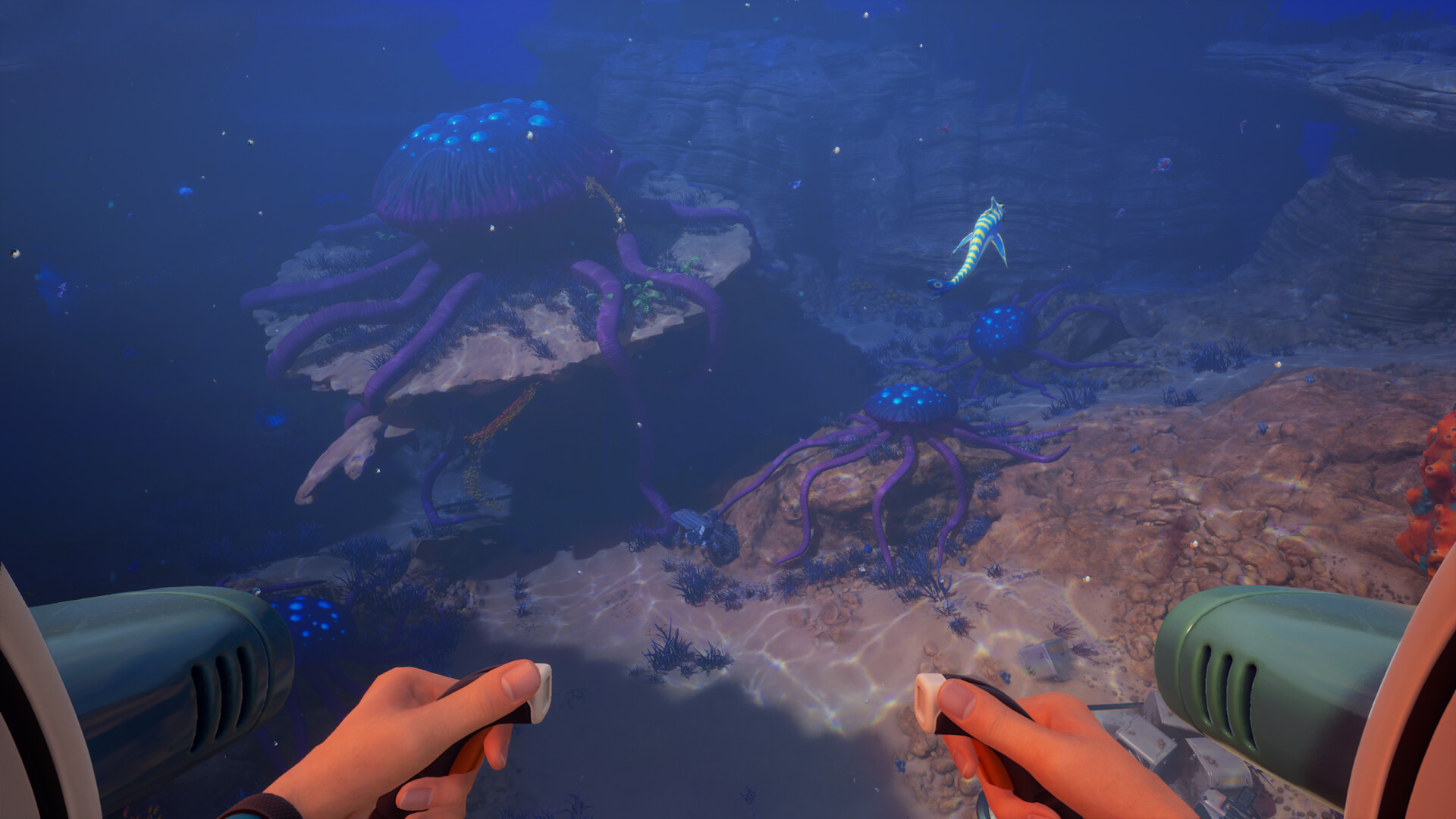
How the framing changes the way you play
Practical play on Proteus rewards thinking about every modification as a one-way commitment. Heat resistance unlocks the volcanic biome, but it also marks how far you have already drifted from the body you started with. Pressure tolerance opens the deeper trenches, where the wrecks holding the most useful logs tend to sit. The volcanic and abyssal regions are where the strongest evidence about the tree, the missing colonists, and Masefield syndrome lives, so the players most invested in the story will end up the most genetically rewritten.
That feedback loop is the quiet point of the design. You can play Subnautica 2 as a beautiful exploration game with co-op friends and never engage with the thematic weight. The moment you commit to seeing the story through, the game starts charging for it in pieces of your character.
Whether the tree turns out to be salvation, infection, or something stranger is the open question Unknown Worlds is leaving for the full release. For now, the sequel has done something the genre rarely tries. It has made survival feel like the bad ending, and stepping out of humanity feel like a serious option worth considering.