

Terminus is one of Honkai: Star Rail’s strangest and most threatening Aeons. Instead of watching over life, memory, or destruction, THEY embody Finality — the end point where every other Path and Aeon burns out, and a new cosmic cycle begins.
Who Terminus is and how Finality works
Terminus is the Aeon of the Path of Finality. THEY are born when any scenario from the “Theory of Four Apocalypses” becomes possible and then begin moving backward through time toward the birth of the universe. From the perspective of ordinary beings, Terminus comes from the far future and walks upstream against the flow of history.
Rather than existing as a single towering god-form, Terminus manifests as a pack of black cats. Each cat carries a strand of THEIR “divine corpus” and a fragment of divine power, and together they roam the cosmos while murmuring a prophecy that must be fulfilled. Those murmurs reach across eras as fragmented, often maddening sleep-talk; deciphering them is slow, dangerous work that has driven more than a few scholars insane.
Finality itself is described as the end of other Paths and Aeons. It ruptures amber, withers immortality, mutes music, dims light-arrows, turns the Dark Sun to ash, and leaves the Eternal Freeze’s Tavern buried in dust. Even Destruction, Nanook’s domain, is not exempt. Yet this is not a hard stop for reality. All things originate from Finality and move on to the next Finality, creating a cyclical, “big crunch into big bang” style universe where endings seed the next beginning.
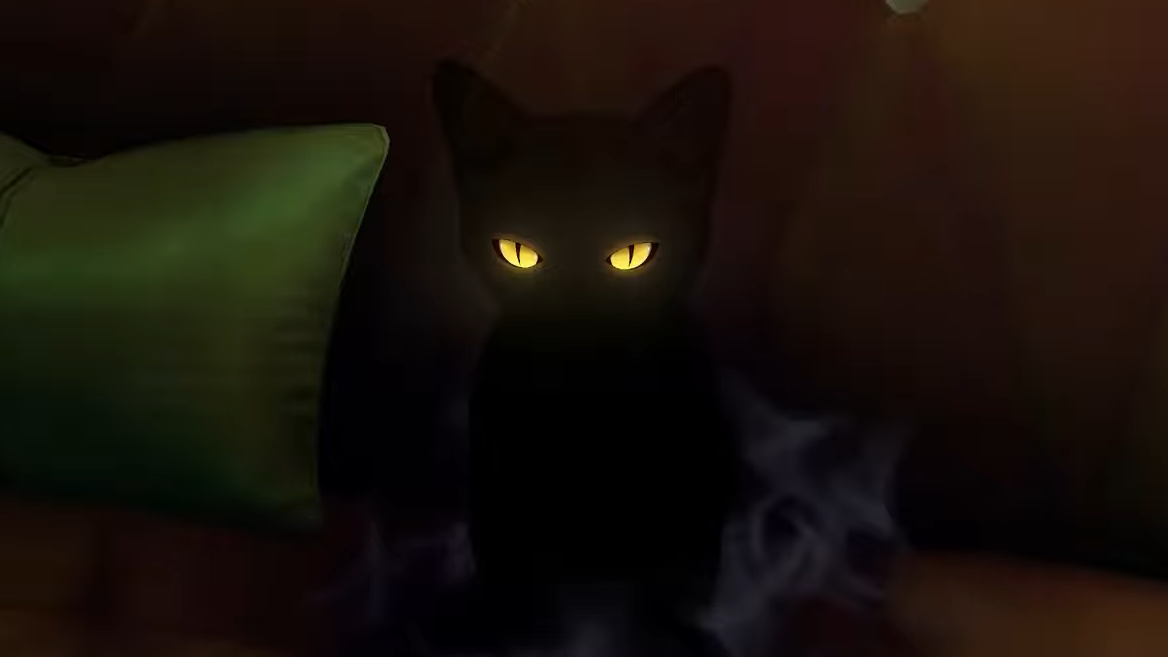
Terminus as a pack of black cats
By the time of later trailblaze missions, Terminus has already fragmented THEIR full divinity into those black cats scattered through spacetime. The cats are not simple familiars. Each one is a strand of Terminus THEMSELF, empowered with a portion of Finality’s authority and able to act across timelines.
That choice of form is also thematically loaded. A pack of cats lets Terminus sit in multiple “possible” endings at once, echoing the Schrödinger’s cat thought experiment: one entity, many mutually incompatible outcomes, all coexisting until the tape finally runs out. It also quietly mirrors the Astral Express — a train that travels forward along the rails of history — with Terminus as the “terminus station,” the last stop at the end of the line.
In-world, the connection between Terminus and timekeeping runs deep. Cuckoo clocks, including curios like the Broken Cuckoo Clock and IPC Cuckoo Clock, are built specifically to study or resonate with Finality’s rhythms. The implication is that measuring time precisely enough might let mortals catch echoes of those somniloquies and decode a few lines of the prophecy.
The Theory of Four Apocalypses
Terminus carries a specific prophecy known as the Theory of Four Apocalypses. It states that four Paths will collectively push the cosmos toward its end:
- Destruction — Nanook and the endless war of unmaking.
- Harmony — the Family’s hive-minded “order” that can subsume entire civilizations.
- Nihility — IX and the pull of meaninglessness, where even the dead are devoured by nothingness.
- A fourth Path — deliberately unnamed and blanked out in-script, but treated as equally pivotal.
Kafka and other characters recite this prophecy almost verbatim, and Amphoreus-era quests lean into its consequences. The four Paths aren’t just abstract philosophies; they are the last four great cosmic “plagues” expected to survive to the tail end of the Aeon War and shape how this universe’s Finality plays out.
The identity of the fourth Path is left open. In-universe speculation leans toward candidates like Propagation, Remembrance, Equilibrium, or even Veracity (Oroboros’ gluttonous consumption), each of which can be linked to famine and overconsumption — the traditional “fourth horseman” reference that clearly filters into the framing of this prophecy.
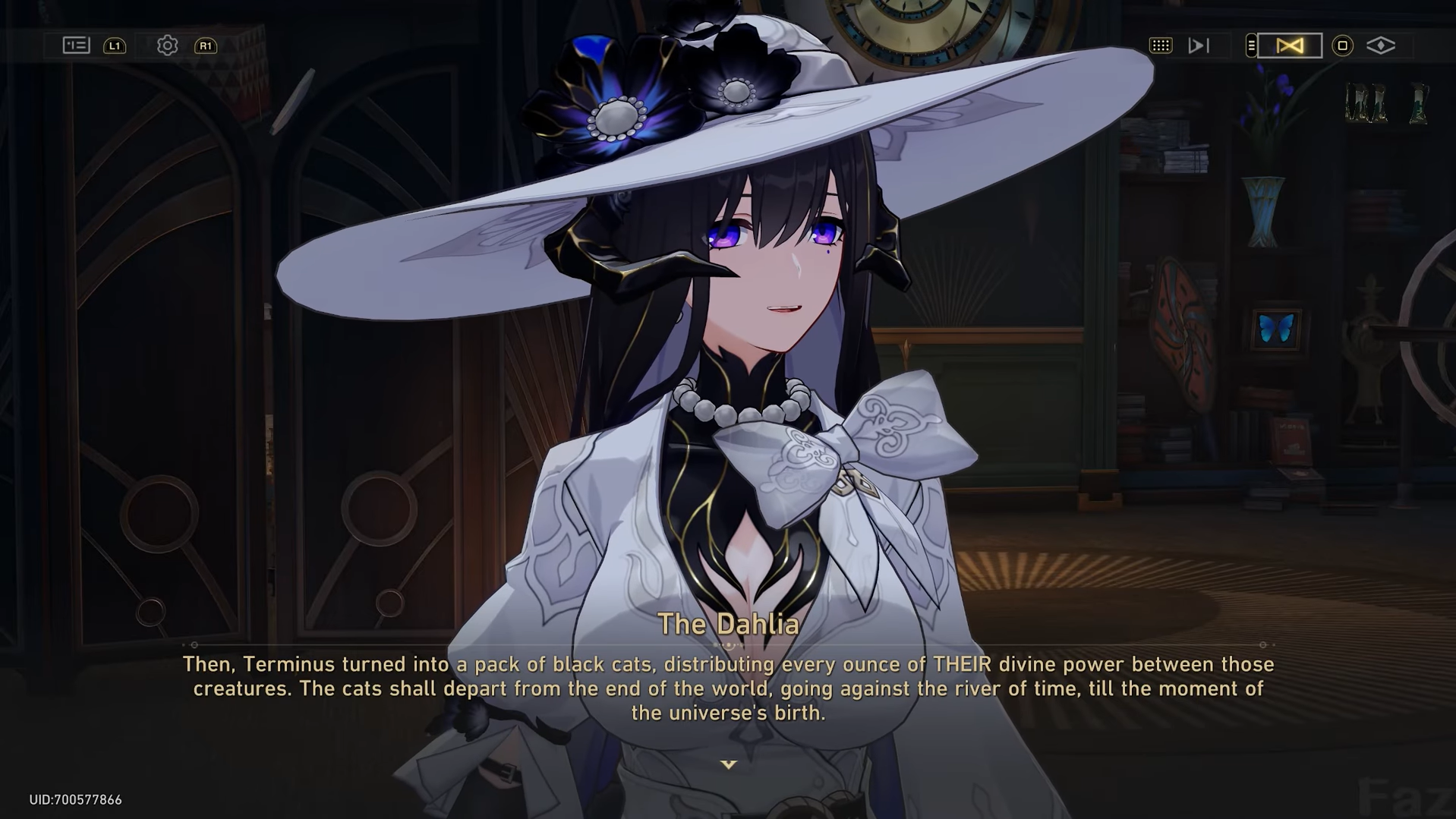
How Terminus experiences time
Terminus is often called “the one against the current.” THEIR past is the universe’s future; the future from the perspective of mortals is already part of THEIR history. When THEY “predict” something, THEY are effectively recounting an event THEY have already lived through.
That strange timeline also explains why almost no one has seen Terminus directly. The Aeon exists at the far end of time, when the universe has run down and almost everything else has ceased to exist. From there, THEY walk backward along the river of time, leaving behind murmured records at every “moment of Finality” — every world-ending, god-killing, Aeon-destroying threshold.
Crucially, Finality itself is cyclical. Once an ending is complete, a new cosmos eventually rises out of its ashes and moves toward its own Finality. Terminus, as an Aeon, is tied to that cycle: THEY are born whenever one of the Four Apocalypses can unfold, become the god of the final end, and then, when the wheel turns again, the role resets for the next universe.
Follower factions of the Path of Finality
For an Aeon obsessed with the end of all things, Terminus has a surprisingly active fanbase. Three major factions explicitly follow the Path of Finality, each interpreting it in a different way.
Omen Vanguards
The Omen Vanguards see Terminus as the definitive end of the universe and devote themselves to drawing concrete prophecies out of THEIR fragmented sleep-talk. They treat Finality as a cosmological fact and try to map its timetable: when worlds will collapse, when plagues will hit, when entire Paths will extinguish.
Historically, they appear during major crises, including conflicts with the Interastral Peace Corporation (IPC). In modern times, they have even cooperated with the IPC, warning of looming threats like silicon-eating bacteria on industrial planets. It’s a pragmatic interpretation of Finality: if you know how the story ends, you can choose to avert specific disasters on the way there.

Creed Exequy
The Creed Exequy is more introspective. Its members live for a once-in-a-lifetime encounter with Terminus and mine the past for signs of that meeting. Elegy, who runs the Apocalyptic Shadow in the Dreamflux Reef, is the most visible representative so far.
Rather than forecasting future disasters for others, Elegy dissects the Trailblazer’s past battles, searching for the fingerprints of Finality in extreme life-and-death moments. In her worldview, every brush with the brink is a potential point of contact with Terminus, a data point to triangulate the Aeon’s route through time.
Stellaron Hunters
The Stellaron Hunters are the most important Finality followers for the main story. Their leader, Elio, writes “scripts” — detailed foresight of multiple possible futures. Those scripts guide Kafka, Silver Wolf, Blade, Sam, and the other hunters as they place Stellarons, engineer conflicts, and manipulate who lives or dies in each crisis.
Only in later dialogues is it made explicit that the Stellaron Hunters walk the Path of Finality. Elio’s precognition, the hunters’ obsession with inevitability, and their role in shepherding the Trailblazer toward Nanook all echo Terminus’ own relationship with time and endings. Constance even hints that Elio’s very existence is “special” in a way tied to Finality, and the Stellaron Hunters themselves speak of a future where Terminus “ascends to godhood once more” and declares, “Now I am become Finality, lifting the wheel of time, the destroyer of worlds.”
Within that framework, Project Iron Tomb — the planned killing of Nanook — reads as a maneuver inside Terminus’ prophetic script. The Hunters are not trying to stop Finality; they are trying to choose which version of Finality wins.
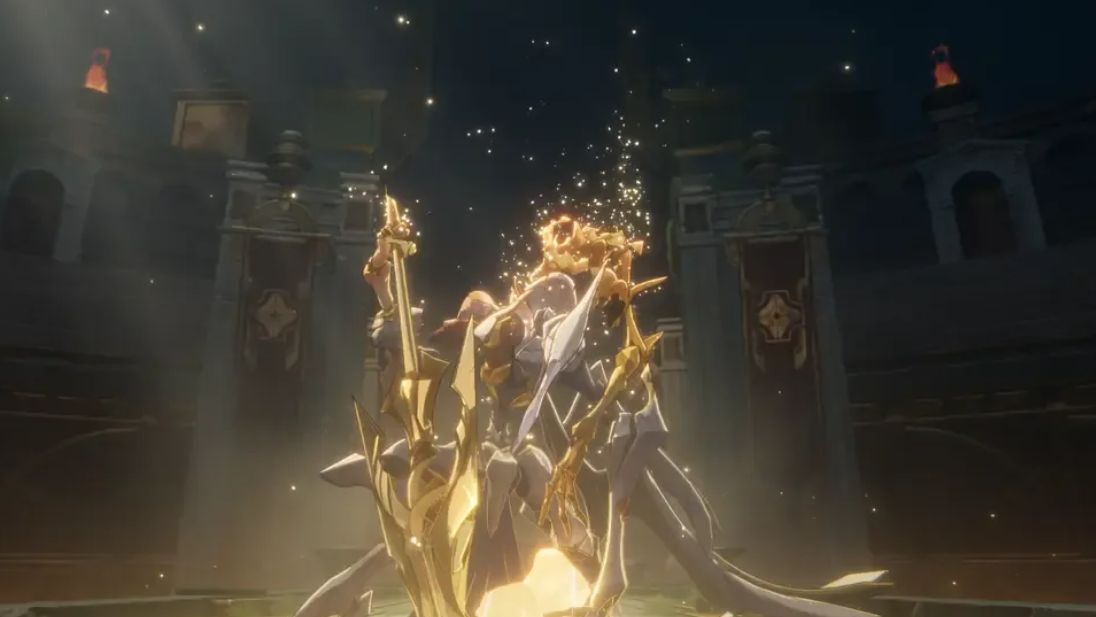
Terminus, Nanook, IX, and the other Aeons
Finality is framed as the end of other Aeons and Paths, but it has to contend with rivals that claim their own ultimate endings. Nanook of Destruction promises to end existence by burning everything down in war. IX of Nihility threatens to dissolve reality into a state where nothing has meaning. The Path of Finality sits beside these as a third major way the universe can reach an end state.
Other Aeons complicate that picture. Fuli of Remembrance is cataloging the entire universe, preserving a perfect record for when the cosmos dies. HooH maintains cosmic balance across ages. Qlipoth walls off reality against devouring threats like Oroboros. Harmony’s Family tries to unify minds and social orders into something “stable,” even at the expense of free will. None of these powers are going to quietly accept a Finality that erases them.
That resistance is baked into the prophecy itself. Finality ends Paths and Aeons, but it does so through the Four Apocalypses, which are themselves Aeon-backed Paths full of internal contradictions. Destruction creates the wars that might birth new Aeons of opposition. Harmony’s conquest breeds rebellion. Nihility’s despair occasionally triggers transcendence. The war of Aeons is as much about which flavor of “end” survives as whether the universe ends at all.
Is there an Aeon of beginnings?
If Finality exists, players naturally ask about its mirror image: an Aeon of beginnings or origin. Nothing in the current canon names such an Aeon outright. However, Trailblaze — Akivili’s Path — often fills that thematic niche.
Akivili embodies journeys and first steps. The Astral Express feels structurally opposite to Terminus: a train that endlessly departs vs. a station where all journeys stop. Dialogue about Finality explicitly notes that after the end, “all things will originate from there and move on to the next Finality,” implying a repeating cycle where something like Trailblaze restarts existence between cosmic deaths.
Fan speculation pushes this further, imagining a future where the Trailblazer or another character ascends as an Aeon of Creation or Origin to stand opposite Nanook and Terminus. That idea fits the structure of the narrative — especially if the goal is to kill Destruction without locking the universe into a single predetermined Finality — but it remains an open question inside the story.

Terminus, memory, and erasure
Finality’s relationship to other meta-paths is especially intriguing when you add Remembrance and Enigmata to the mix.
Remembrance, through Fuli, aims to record everything that happens in the universe. If Nanook, IX, or Terminus manages to wipe reality, Fuli expects to have a complete replica ready — a fourth “way the universe ends,” through archive and replay. In that sense, Finality and Remembrance are opposites: one ends all Paths, the other preserves them.
Enigmata, represented by Mythus, seems to target the very idea of a fixed history. Riddlers and History Ficciologists erase their own traces, and some interpretations suggest that their ultimate aim is to ensure Terminus’ prophecies never come true. If there is no stable record of “what happened,” then the notions of “beginning” and “end” lose their meaning. A universe with no narrative might be one where Finality cannot get purchase.
These meta-paths turn the Aeon War into more than a simple fight over who kills whom. They bring in questions about who gets to define what happened, what counts as “the same” universe between cycles, and whether an Aeon like Terminus can be outmaneuvered by changing the story rather than overpowering the god.
How Terminus reshapes the endgame stakes
Terminus matters because THEY reframe the entire scale of Honkai: Star Rail’s conflict. Nanook is no longer just a world-ending villain; Destruction is one of four apocalyptic vectors inside a larger prophecy. The Astral Express’ journey to face Nanook in Iron Tomb is, from Finality’s standpoint, only one move in a much longer game.
The Stellaron Hunters, Omen Vanguards, and Creed Exequy all position themselves around that game in different ways — scripting the future, decoding prophecies, or chasing personal encounters with the god of endings. Other Aeons like Fuli, HooH, and Qlipoth represent structural checks on any single end-state, ensuring that no one, not even Terminus, can easily claim total victory.
Finality is described as unavoidable in the cosmic long run, but its shape is not. That uncertainty is where Honkai: Star Rail lives: somewhere between Destruction’s total war, Nihility’s oblivion, Harmony’s smothering order, Remembrance’s archived reset, and a possible new beginning that has yet to gain a name or an Aeon.
Terminus, walking backward from the far end of time as a swarm of black cats and half-heard words, sits at the center of all of it — the quiet assurance that every path, every Aeon, and every journey, Astral Express included, eventually has to decide what kind of ending it believes in.