

The Forge keeps things deceptively simple: you mine ore, throw it in a furnace, and pull out a weapon. Under that surface loop, though, there’s a clear pecking order between individual drops and even whole weapon types. With ores and essences limited, it’s worth knowing what is genuinely strong, what’s fine as a stepping stone, and what’s mostly a fashion statement right now.
How weapons work in The Forge (and what actually matters)
Every weapon in The Forge is defined by three base stats:
- Base DMG – how hard each hit lands.
- Attack Speed – how often you swing (lower seconds = faster).
- Range – measured in studs, controlling how safely you can connect.
Those values are then scaled by two systems:
- Crafting quality – your performance in the forging minigames determines the quality tier of the finished weapon, which directly bumps its stats.
- Runes and enhancements – essences upgrade raw damage and unlock rune slots every three enhancement levels; runes add on-hit effects like lifesteal, burn, or poison.
For many weapon models within the same class (especially daggers and straight swords), the current beta build keeps the exact same statline and only swaps the model and animations. That’s why tier rankings group them together rather than pretending cosmetic variants behave differently.

Best individual weapons to forge (named drops)
Several specific crafts stand out on raw performance. The table below combines early rankings across multiple lists into a simple S–D layout.
| Tier | Weapon | Type | Base DMG | Attack Speed | Range (Studs) | Notes |
|---|---|---|---|---|---|---|
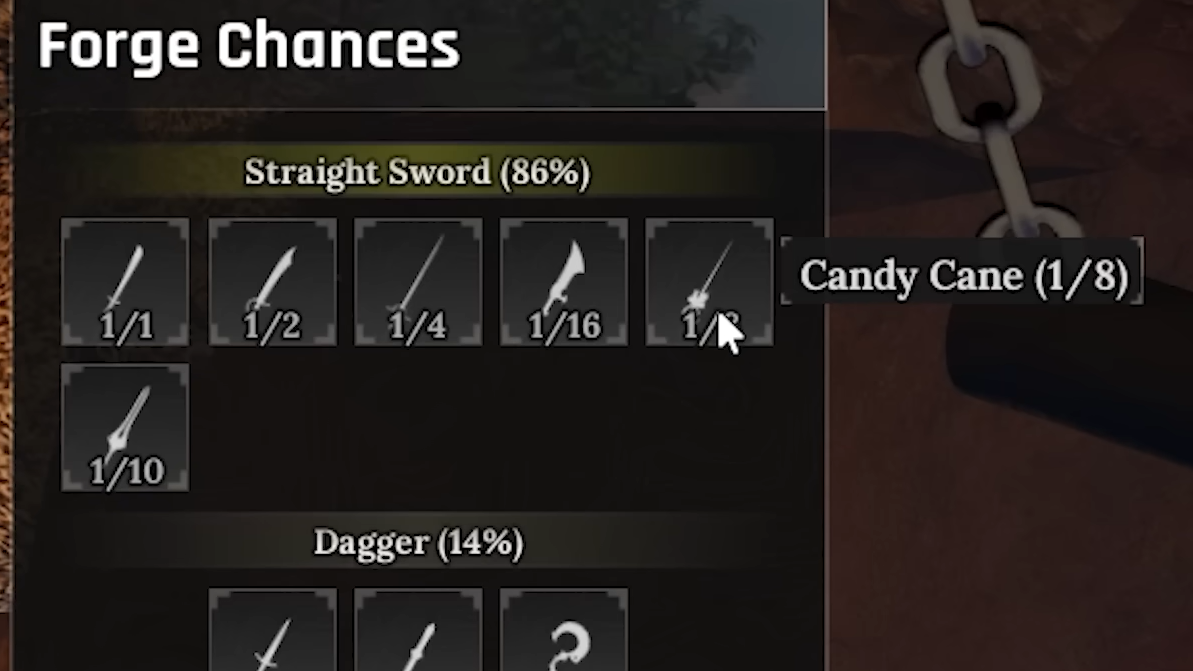
| S | Chaos | Straight Sword | 9.75 | 0.5 s | 9.75 | Exceptionally efficient mix of damage, speed, and reach; extremely rare (1/64). |
| S | Hook | Dagger | 5 | 0.32 s | 6 | Fastest swing speed in the game; absurd with on-hit runes. |
| S | Hammer | Colossal | 22 | 1.24 s | 10 | Heavy damage with manageable recovery; high-end late-game option. |
| S | Scythe | Great Axe | 14.25 | 0.95 s | 9 | Large sweeps and natural AoE make it one of the best crowd tools. |
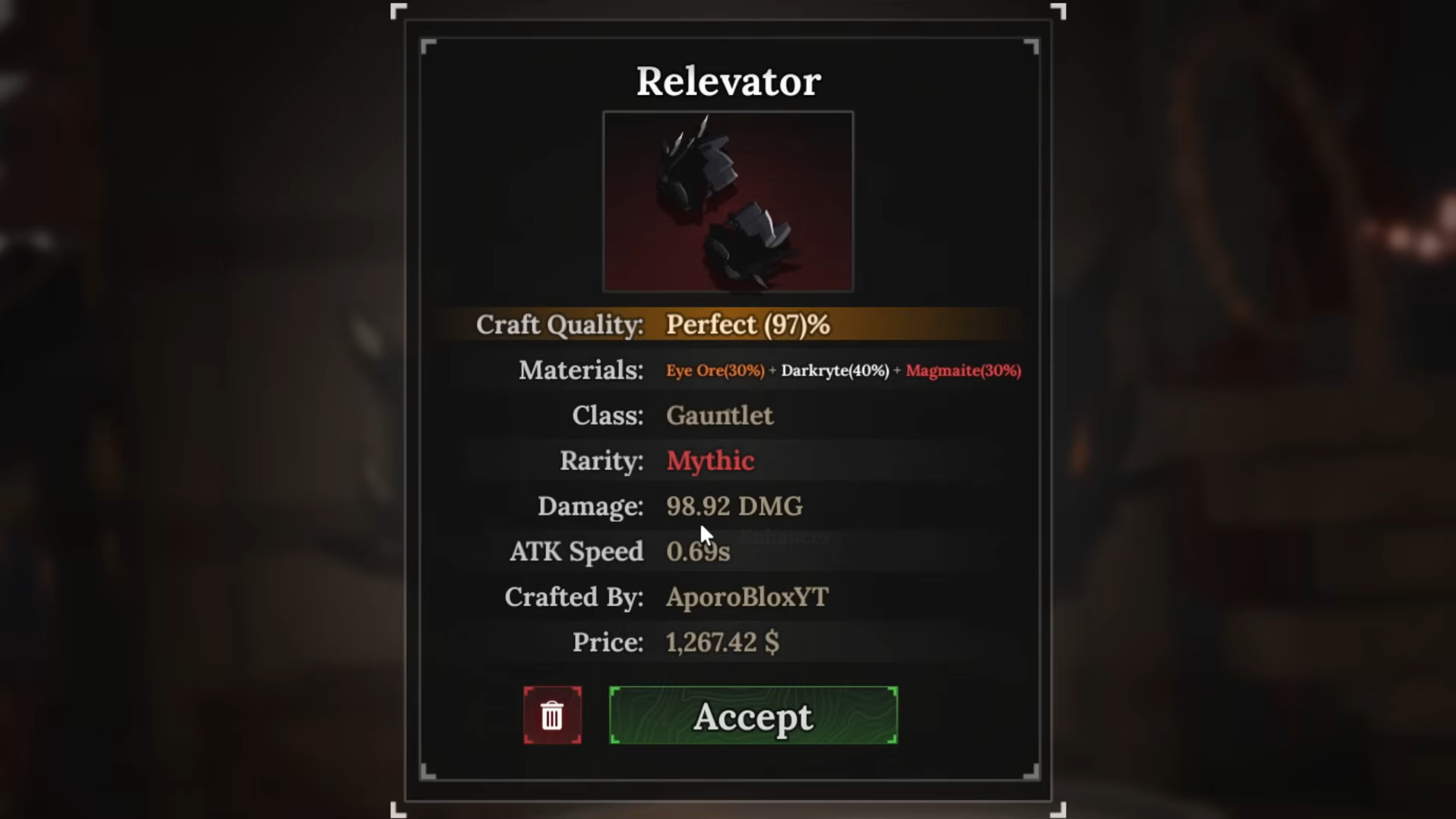
| S | Relevator | Gauntlet | 9.6 | 0.69 s | 6 | Slightly slower than Boxing Gloves, but the extra damage lifts its DPS. |
| A | Skull Crusher | Colossal | 24 | 1.4 s | 10 | Highest single-hit damage for armor-heavy targets; punished hard on misses. |
| A | Dragon Slayer | Colossal | 22 | 1.2 s | 10 | Trades a bit of power for cleaner tempo than Skull Crusher. |
| A | Double Battle Axe | Great Axe | 15.75 | 1.05 s | 9 | Slightly below Scythe but still strong AoE with good rune synergy. |
| A | Crusader Sword | Great Sword | 12 | 1.0 s–1.1 s | 9 | Well-rounded mid‑game fallback with high availability. |
| A | Boxing Gloves | Gauntlet | 8 | 0.59 s | 6 | Lower damage per hit than Relevator, higher hit count for proc-based builds. |
| B | Tachi / Uchigatana | Katana | 8.5–8.925 | 0.6–0.63 s | 9 | Clean hybrid between dagger and sword archetypes, but outclassed later. |
| C | Comically Large Spoon | Colossal | 18 | 1.2 s | 10 | Viable on paper, but strictly worse than other colossal options. |
| C | Great Sword | Great Sword | 20 | 1.2 s | 10 | Baseline big sword; gets eclipsed once you unlock better colossals. |
| D | Ironhand | Gauntlet | 7.6 | 0.5 s | 6 | Outperformed by both Boxing Gloves and Relevator in every metric. |
| D | Long Sword | Great Sword | 12 | 1.1 s | 9 | Marginally slower than Crusader Sword for no payoff. |
Best weapon classes in The Forge (Colossal, Katana, Great Axe, and more)
On top of individual drops, The Forge splits weapons into several archetypes that share similar stat profiles and attack patterns. For long-term planning, it helps to think in terms of “which class do I want to pursue?” rather than chasing every specific roll.
| Class | Example DMG / Speed / Range | Approx. DPS | Role and evaluation |
|---|---|---|---|
| Colossal Sword | 20 DMG · 1.2 s · 10 studs | ~16.6 | Highest reach and stagger, excellent sale value, but slow strings. Top‑tier target for late game. |
| Katana | 8.5 DMG · 0.6 s · 9 studs | ~14.2 | Balanced mid‑weight class with strong speed, reach, and DPS. Ideal for newer players. |
| Great Axe | 15.75 DMG · 1.05 s · 9 studs | ~15.0 | AoE-focused bruiser that sits just under colossal swords while being easier to handle. |
| Gauntlets | 7.6 DMG · 0.5 s · 6 studs | ~15.2 | Short‑range DPS platforms that shine with on-hit runes but demand tight positioning. |
| Dagger | 5 DMG · 0.35 s · 6 studs | ~14.3 | Fastest class in the game; best raw attack frequency, worst reach. |
| Straight Sword | 7.5 DMG · 0.5 s · 8 studs | ~15.0 | Middle-of-the-road jack-of-all-trades; strong early, overshadowed by katanas later. |
| Great Sword | 12 DMG · 1.0 s · 9 studs | ~12.0 | Solid starter big weapon, but lowest baseline DPS and outclassed by colossals. |
Across these classes, a few patterns stand out:
- Colossal Swords and Katanas are the long-term goal. Colossal Swords set the ceiling for reach, damage, and resale value. Katanas provide a remarkably forgiving balance of damage, speed, and range that fits almost any encounter.
- Great Axes are the budget colossals. They replicate a lot of the sweeping coverage of colossals with a slightly worse risk–reward profile. If you can’t consistently craft colossals yet, Great Axes are the next-best heavy path.
- Dagger and Gauntlet classes are rune platforms first. Their raw numbers are competitive, but their main strength is the sheer number of hits they generate for effects like lifesteal, on‑hit burns, and poison.
- Straight Swords and Great Swords are mostly transitional. They bridge the gap up the crafting curve, but almost every build ultimately wants to replace them with katanas or colossals.
Early S-tier picks and how they play
Several weapons consistently land in the very top tier either because they overperform statistically or because they sit in the strongest archetypes.
- Chaos (Straight Sword) – With near‑katana reach, higher damage per hit than most one‑handers, and a 0.5 second attack speed, Chaos is arguably the most efficient single weapon in the game. Its problem is availability: a 1/64 forge rate makes it more of an aspirational chase than a realistic backbone for most players.
- Colossal Swords (Hammer, Skull Crusher, Dragon Slayer, Great Sword family) – This group dominates late‑game PvE. Long hitboxes keep you out of harm’s way, and their heavy stagger can lock tougher enemies in place. The price is commitment; once you swing, you’re exposed, so fights reward clean spacing over mashy aggression.
- Scythe and Double Battle Axe (Great Axes) – These are the best crowd clearers short of the top colossals. Their large arcs and good damage let you erase zombie and skeleton packs before they can surround you, especially once you layer drain or burn runes.
- Hook and the fast dagger trio – Hook, Dagger, Gladius, and Falchion Knife all share nearly identical statlines, with Hook nudging ahead on speed. These shine when you build fully into on‑hit effects and survivability, turning rapid chip damage into meaningful DPS.
- Gauntlets (Relevator, Boxing Gloves) – Gauntlets treat your fists as short-range machine guns. They punch above daggers on DPS while trading away range. In cramped mines and corridors where enemies are already on top of you, they can feel better than any blade.
How forging shapes what you actually get
The Forge doesn’t let you pick exact items from a menu. You influence outcomes through three levers in the crafting process:
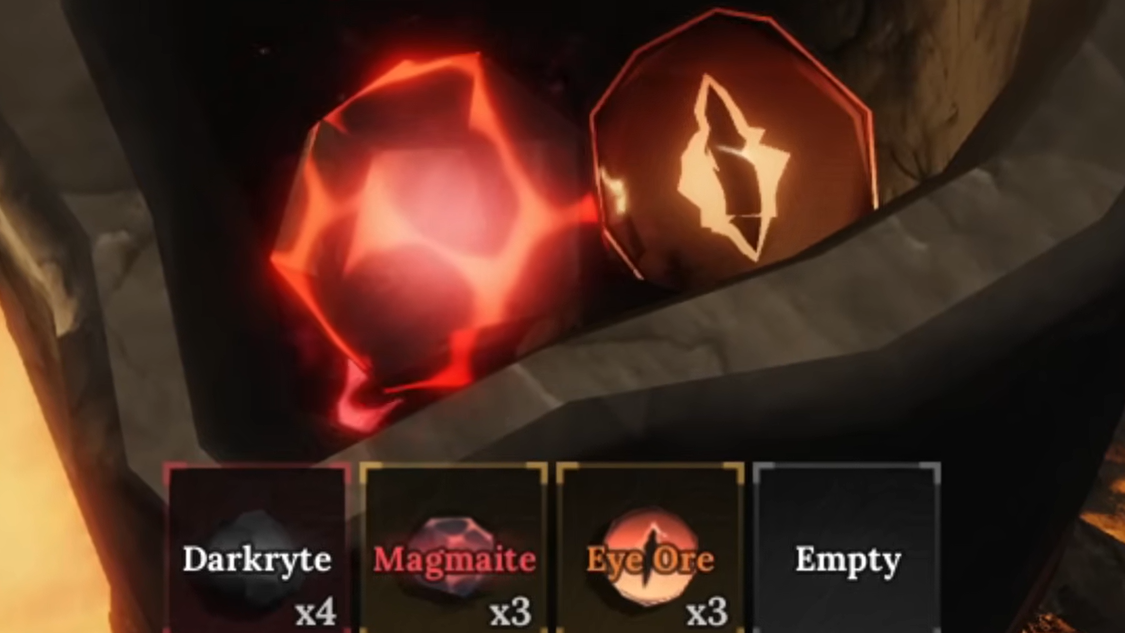
- Ore quantity – Adding more ore increases the odds of rolling heavier weapon classes (Great Swords, Great Axes, Colossal Swords) and reduces the odds of lighter classes like daggers.
- Primary ore color – The color of the main ore in the mix drives the final weapon’s color. It’s purely cosmetic in the current build.
- Ore rarity and the multiplier – Rarer ores increase the internal multiplier on the craft, bumping your final damage. Mixing ores of similar rarity makes that multiplier more predictable.
Weapon stats remain tied to your performance in the forging minigames; hitting more “perfect” segments yields higher quality tiers that translate directly into better damage and sometimes slightly tweaked swingspeed. As a rule of thumb:
- Use fewer ores if you only care about quality and are happy with smaller weapons.
- Use more ores when you’re hunting for a specific heavy archetype and are willing to accept a lower‑quality roll, then upgrade it later with essences.
Runes, enhancements, and why so many weapons feel similar
Right now, most weapon differences are subtle. Within a class, many models share the same base numbers and only swap visuals. This is especially obvious for:
- Daggers – Dagger, Gladius, and Falchion Knife are effectively clones in play.
- Straight Swords – Falchion Sword, Gladius Sword, Cutlass, and Rapier all run the same 7.5 DMG / 0.5–0.59s / 8‑stud baseline.
That sameness is deliberate in the current beta. The real power gradient comes from everything bolted on top:
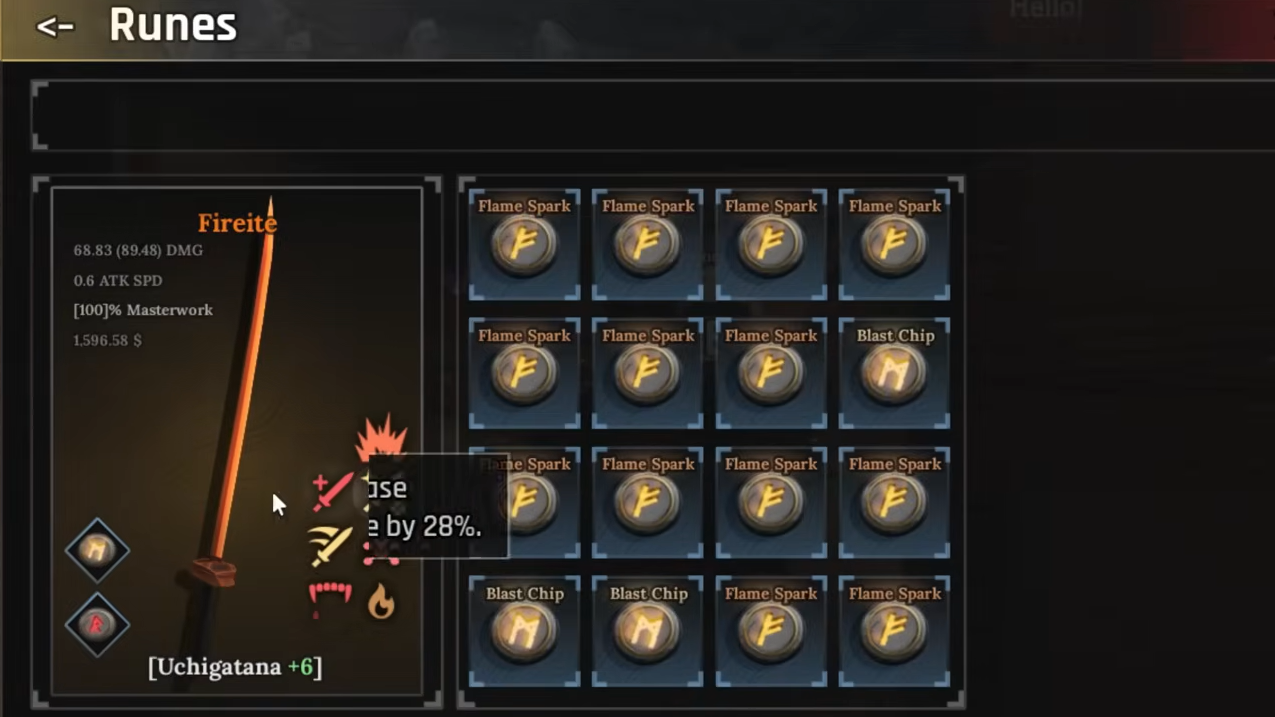
- Enhancing weapons with essences increases their damage and periodically unlocks rune slots (every three enhancement levels).
- Runes add passives such as:
- Drain Edge – siphons health on hit, transforming fast weapons into sustain tools.
- Rage Mark – trades survivability for damage spikes.
- Flaming Spark, Venom Crumb, and similar – add burn or poison over time that scales with repeated hits.
The interaction between class identity and rune portfolio is where the meta emerges. Colossal weapons want big, multiplicative effects that reward a single devastating hit. Daggers and gauntlets want low‑impact, frequent triggers. Straight swords and katanas can lean either way, which is part of why they feel comfortable to most players.
Efficient upgrade paths: what to aim for at each stage
The game’s progression encourages swapping weapons as your ore income grows rather than sticking with a single favorite forever. A simple way to structure upgrades:
- Early game
- Use whatever you forge, but prioritize Dagger/Hook, Gladius Daggers, or any Straight Sword.
- Slot sustain runes (Drain Edge) as soon as you unlock them to reduce potion reliance.
- Mid game
- Shift into Crusader Sword, Tachi, or Uchigatana as your main clear.
- Start experimenting with Great Axes and Great Swords if your ore income supports heavier crafts.
- Late game
- Target Colossal Swords (Hammer, Dragon Slayer, Skull Crusher) and keep one highly upgraded main.
- Maintain a fast secondary (Hook, Boxing Gloves, Relevator, or a good katana) for rune-heavy boss builds or specific enemy types.
- If you ever roll Chaos, it becomes a flexible all-rounder that can replace most straight swords or katanas in your rotation.
FAQ: common weapon questions in The Forge
| Question | Answer |
|---|---|
| What controls a weapon’s color? | The color of the primary ore in the kiln sets the color of the finished weapon. It has no gameplay impact. |
| Why do so many weapons share identical stats? | Several models are currently cosmetic variants inside the same class. They exist for visual variety rather than mechanical depth. |
| What determines which weapon type I get? | The total ore count in a craft skews odds toward heavier or lighter types. More ore means a higher chance for heavy classes. |
| Can I buy weapons from a shop? | No. The loop is built around mining and forging. You can sell unwanted gear for cash, but you can’t purchase specific weapons. |
| Why doesn’t my weapon have rune slots yet? | Rune slots unlock through enhancement. You need to raise a weapon to at least +3 before the first slot appears. |
| What should I do with bad rolls? | Sell them for money and ore space, or use them temporarily while you stockpile ore for another forging attempt. |
The Forge is still in early beta, and weapon balance is deliberately conservative. That makes the current tier lists more about comfort and efficiency than about avoiding truly unusable items. Daggers and gauntlets reward aggressive players who stay in melee, katanas and straight swords suit almost everyone, and the colossal family is the clear destination once your ore pile and minigame skills can support them. As rune options expand and weapons get individual reworks, expect those tiers to shift—but the basic logic of damage, speed, and reach will keep driving which crafts feel best in your hands.